


More news on this day
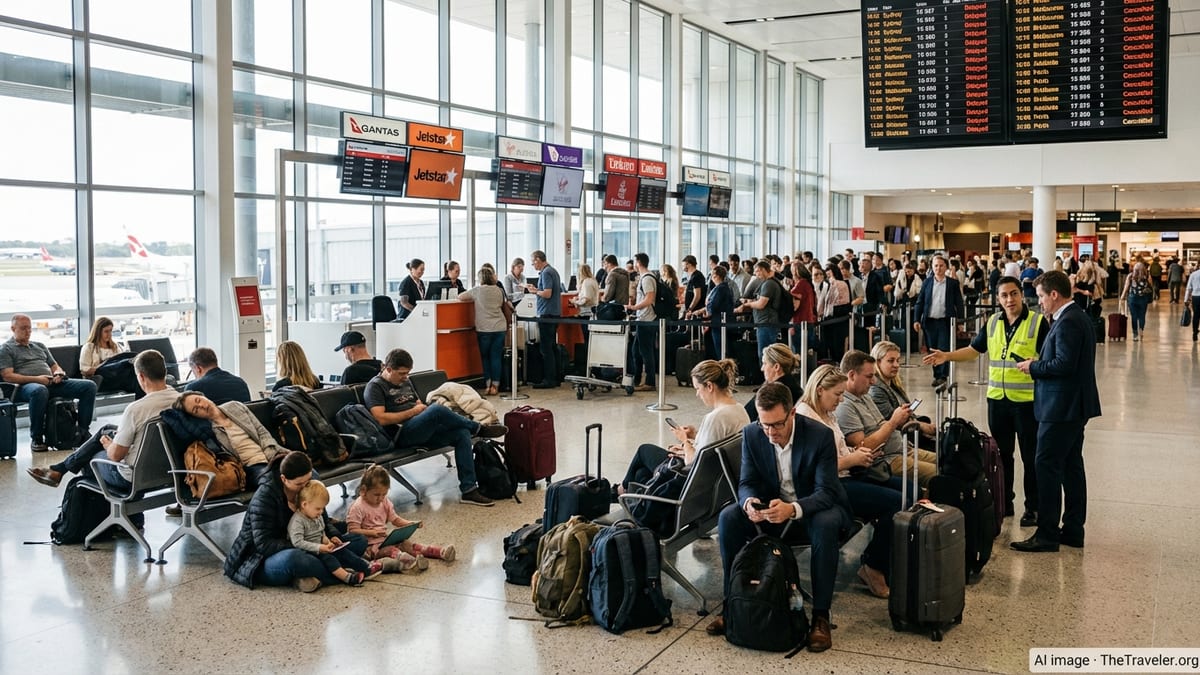
Travelers across Australia and New Zealand are facing widespread disruption as hundreds of flights are delayed or cancelled across major hubs including Melbourne, Sydney, Auckland and Wellington, with publicly available data indicating at least 411 delayed services and 14 outright cancellations affecting carriers such as Virgin Australia, Jetstar, Qantas and Air New Zealand.
Get the latest news straight to your inbox!
Severe Weather and System Strain Hit Key Hubs
Reports from aviation tracking services and airport notices show a sharp spike in disruption across trans-Tasman and domestic routes this weekend, as a strong weather system combines with already tight airline schedules. Gale force winds and rough conditions around Wellington in recent days have added to congestion in the wider network, with cancellations and rolling delays rippling through services that link New Zealand’s capital with Auckland, Sydney and Melbourne.
The situation is particularly acute along the busy Australia–New Zealand corridor, where Melbourne, Sydney, Auckland and Wellington act as essential interchange points for both regional and long haul traffic. When weather closes in on one of these hubs, the impact quickly cascades, with aircraft and crew out of position and limited spare capacity to recover the schedule.
Operational pressures are amplifying the impact of the stormy conditions. Publicly available performance statistics from regulators in both countries already point to elevated cancellation and delay rates over recent months, leaving airlines with little slack in their systems when a major weather event hits. The result is a growing backlog of passengers needing rebooking, accommodation and alternative routings.
Virgin Australia, Jetstar, Qantas and Air New Zealand Among Hardest Hit
Public data indicates that the largest carriers serving the region are experiencing the bulk of the disruption. Virgin Australia and Jetstar, which operate dense domestic networks in Australia as well as key links to New Zealand, have seen numerous services held on the ground or pushed back well beyond their scheduled departure times as weather and air traffic control restrictions take hold.
Qantas, the dominant Australian flag carrier, and Air New Zealand, which anchors much of the country’s domestic and trans-Tasman capacity, are also contending with significant knock on effects. Tracking information shows a mix of lengthy delays on services between Wellington, Auckland and major Australian gateways and a growing tally of cancellations where schedules can no longer be recovered within the day.
Smaller and partner airlines operating under codeshare agreements are also affected as they share aircraft and timetable structures with the major brands. When a mainline flight is postponed or dropped, downstream regional connections can become unviable, further enlarging the circle of disruption for travelers heading to or from secondary cities.
Melbourne, Sydney, Auckland and Wellington Experience Rolling Knock On Effects
Melbourne and Sydney, Australia’s two busiest airports, are serving as both sources and recipients of delays. Aircraft arriving late from New Zealand or other domestic points are departing behind schedule, leading to a domino effect across the day’s rotations. With peak hour runway congestion and occasional spacing requirements imposed by air traffic control during adverse weather, even modest delays can quickly build into multi hour waits.
On the New Zealand side, Auckland is juggling a heavy load of international and domestic operations while coping with incoming flights that are already off schedule. Late arriving trans-Tasman services compress turnaround times and can force airlines to reshuffle aircraft assignments, which in turn can leave some routes temporarily without a viable plane or crew.
Wellington’s exposure to high winds and low cloud frequently makes it one of the first airports in the region to see cancellations when conditions deteriorate. When services to and from the capital are suspended or heavily delayed, passengers who were relying on Wellington as a connection point for long haul journeys often need complete rebookings, intensifying pressure on call centres, airport staff and the remaining available flights.
Travelers Face Long Queues, Rebookings and Limited Alternatives
With at least 14 flights cancelled outright and hundreds running late, passengers across affected airports are contending with long check in lines, crowded departure halls and scarce same day alternatives. Publicly available airline advisories indicate that many services are reaching capacity quickly as displaced travelers are rebooked, particularly on popular evening and early morning departures.
Reports from consumer forums and social media platforms describe travelers being moved to flights later in the day or on subsequent days when there is simply no remaining inventory on their original route. In some cases, passengers are being rerouted via alternative hubs, turning what would typically be a three hour trans-Tasman hop into a much longer multi leg journey.
Accommodation and meal support policies vary by carrier and by whether the disruption is classified as within airline control or weather related. Public information suggests that many travelers are seeking clarification on what assistance is available and how to lodge claims for additional costs once they eventually reach their destinations.
Outlook: More Disruption Possible as Networks Recover
While the most intense weather impacts are expected to ease over the coming days, airline and airport data indicate that recovery from such a large volume of delays and cancellations can take several schedule cycles. Aircraft and crew must be repositioned, maintenance windows rescheduled and passenger backlogs cleared before operations can return to normal levels of punctuality.
Industry performance reports from recent months show that both Australian and New Zealand carriers have been operating close to capacity on key trunk and trans-Tasman routes, leaving limited room to add extra recovery flights at short notice. This structural tightness means that even after the current storm system moves on, residual delays and occasional cancellations are likely to persist while the network rebalances.
Travelers planning to transit through Melbourne, Sydney, Auckland or Wellington over the next several days are being urged by publicly available advisories to monitor their flight status closely, allow extra connection time and be prepared for last minute gate or schedule changes. With more than 400 services already affected, the latest disruption highlights how quickly a combination of severe weather and constrained capacity can upend air travel across the wider Australasian region.