


More news on this day
Severe storms sweeping across Texas on May 20 triggered widespread air travel disruption, with hundreds of flight delays and scores of cancellations rippling through major hubs in Dallas, Fort Worth, Austin, Houston and San Antonio.
Get the latest news straight to your inbox!
Flight Disruptions Mount Across Major Texas Hubs
Publicly available tracking data for Tuesday shows at least 640 flight delays and 86 cancellations linked to Texas airports as thunderstorms and heavy rain moved across the state. The disruption spread across some of the country’s busiest corridors, affecting travel within, into and out of the Lone Star State.
Operational data from national flight status boards indicates that Dallas Fort Worth International and Dallas Love Field experienced the most significant pressure, with rolling ground holds and weather-related flow control slowing departures and arrivals. Similar patterns were visible at Austin Bergstrom, Houston’s Bush Intercontinental and Hobby airports, and San Antonio International, where storms repeatedly forced traffic to be rerouted or slowed.
United Airlines, Southwest Airlines, Delta Air Lines and American Airlines were among the most affected carriers, according to aggregated airline status pages and aviation tracking platforms. Several smaller domestic and regional carriers also reported delays, particularly on routes that rely on Texas hubs as key connection points.
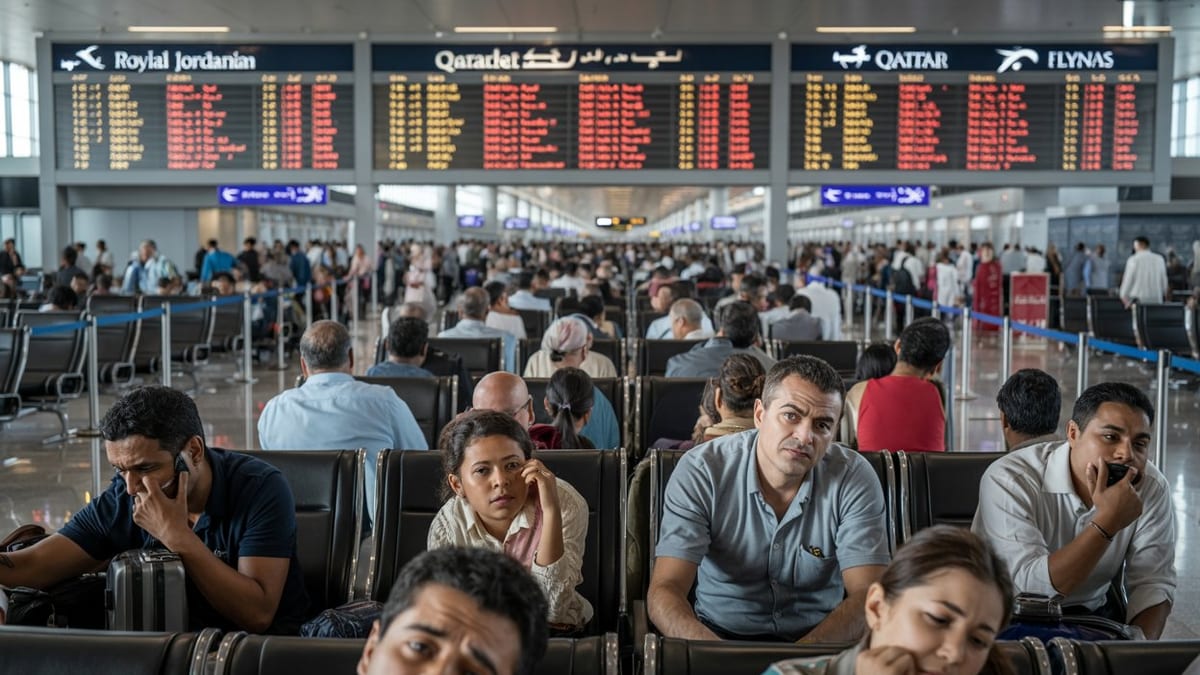
Travelers faced extended waits in terminals as aircraft queued on taxiways or remained at gates awaiting new departure slots. The combination of thunderstorms, reduced visibility and air traffic control spacing requirements left many passengers uncertain about when they would reach their destinations.
Weather System Stalls Over North and Central Texas
Meteorological outlooks for May 20 pointed to a slow-moving system bringing strong thunderstorms, intense downpours and localized flooding risks to parts of North and Central Texas, including the Dallas Fort Worth metroplex, Austin and San Antonio. Forecasters also highlighted gusty winds and frequent lightning as conditions likely to interfere with aviation operations.
National aviation system data describes weather as a leading catalyst for delays when storm cells form near departure and arrival corridors. Even when airports remain technically open, storm proximity can require longer spacing between aircraft, rerouted approach paths and temporary pauses in ground handling while lightning is in the area.
In Texas, a dense highway and air network means that disruption at one major hub quickly spreads. When storms build over Dallas Fort Worth, connecting flights to and from smaller cities across the state and wider region often fall behind schedule. Today’s pattern saw that effect repeated, as cells fired along the Interstate 35 corridor from the Metroplex through Waco to Austin and continued toward San Antonio and the coastal plains.
Flood advisories and urban street flooding in some neighborhoods also slowed ground access to airports, making it harder for travelers and staff to reach terminals in time. This combination of weather in the air and on the roads added to the sense of a system under strain.
Major Carriers Struggle to Rebuild Schedules
American, Southwest, United and Delta all suffered schedule disruptions as the storms crossed key approach and departure routes. Publicly accessible airline status tools showed waves of delayed departures from Texas hubs, followed by late evening arrivals as carriers attempted to reposition aircraft and crews.
American Airlines, with its largest hub at Dallas Fort Worth International, saw knock-on effects across its domestic network as Texas weather slowed aircraft turning through the system. Southwest, which relies heavily on Dallas Love Field and Houston Hobby, recorded clusters of short-haul delays that compounded as the day progressed, particularly on shuttle-style routes within Texas and to neighboring states.
United’s operations at Houston Bush Intercontinental and Delta’s flights serving Dallas and Austin were also affected by rerouted traffic and longer-than-usual taxi times. Regional affiliates operating under the major brands had to adjust to last-minute gate changes and altered routing as aircraft diverted around the strongest storms.
Industry performance data compiled by the U.S. Department of Transportation shows that extreme weather routinely ranks among the primary causes of delays, alongside carrier-related issues and congestion. Today’s pattern fits that broader trend, with storms setting off a chain reaction that carriers may continue to feel in aircraft positioning and crew scheduling over the next 24 hours.
Passengers Face Long Lines and Limited Options
Inside terminals from Dallas to Houston, travelers contended with lengthening queues at check in, security checkpoints and customer service counters. Many passengers sought rebooking on later flights as delays stretched into the evening and some connections became impossible to make.
Display boards at major Texas airports cycled through changing departure times as new information filtered in from air traffic control and airline operations centers. For some travelers, relatively short delays of 30 to 60 minutes were manageable, but others encountered multi hour waits or learned that their flights had shifted to the following day.
Consumer advocates frequently advise travelers caught in weather disruption to monitor both airline apps and third party flight tracking tools, which can provide earlier indications of systemic delays. In events like today’s, rebooking options can narrow quickly as available seats on later flights fill with displaced passengers from earlier cancellations.
Hotel capacity near major hubs such as Dallas Fort Worth and Houston Bush Intercontinental can also tighten when storms trigger widespread disruption. Travelers without flexible plans or travel insurance often shoulder additional out of pocket costs for accommodation and meals when delays or cancellations extend overnight.
Ongoing Risks as Storm Pattern Continues
Forecast discussions suggest that unsettled weather may persist across parts of Texas into the evening hours, creating the potential for further rolling delays. Aviation observers note that even if storm intensity eases, residual congestion in the national airspace system can take hours to unwind once aircraft and crews are out of position.
For travelers scheduled to fly later tonight or early tomorrow, publicly available guidance from airports and airlines emphasizes the importance of checking flight status repeatedly, arriving at terminals earlier than usual and preparing for possible schedule changes. The experience of today’s passengers underlines how quickly conditions can shift when fast developing storms intersect with peak travel periods.
Texas’ central role in domestic aviation means that the effects of today’s storms extend far beyond the state’s borders. Delayed departures from Dallas, Fort Worth, Austin, Houston and San Antonio can cascade into missed connections and late arrivals at airports across the United States, highlighting once again how vulnerable the system remains to sudden weather shocks.
As operations gradually recover, attention will turn to how carriers manage crew duty limits, aircraft rotations and customer recovery efforts. For thousands of travelers stranded or delayed across Texas today, the priority remains simple: finding a way to reach their destinations as the storms slowly move on.