


More news on this day
Atlanta’s Hartsfield-Jackson International Airport is moving toward a fundamental rethink of how it screens passengers, advancing a study of whether to replace federal Transportation Security Administration officers with private contractors in a bid to shield more than 100 million annual travelers from the kind of shutdown-fueled chaos that recently crippled security lines.
Get the latest news straight to your inbox!
Feasibility Study Advances After Shutdown Turmoil
Reports indicate that the Atlanta City Council voted this week to commission a feasibility study on shifting Hartsfield-Jackson’s passenger screening to a private contractor operating under the federal Screening Partnership Program. The measure, which follows earlier calls from council members to explore alternatives, directs consultants to examine the cost, legal framework, staffing implications and operational impacts of moving away from a purely federal model.
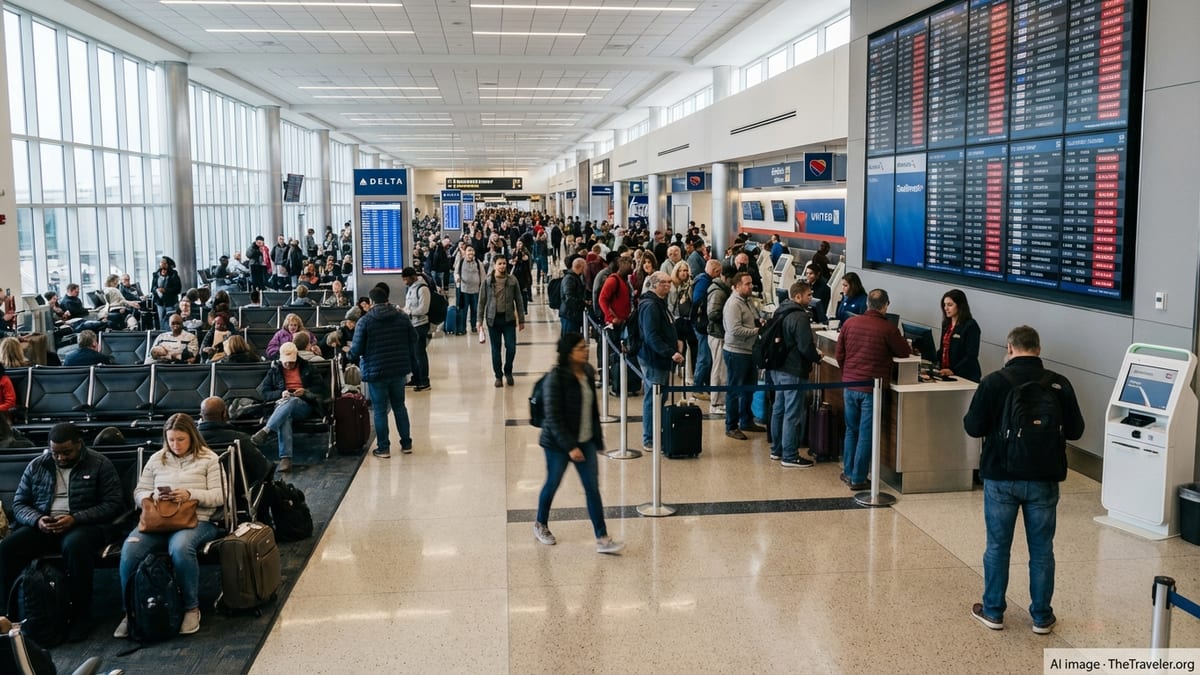
Published coverage of the vote notes that the world’s busiest airport by passenger volume saw wait times stretch past 90 minutes at peak periods during the recent Department of Homeland Security funding lapse, as large numbers of unpaid TSA screeners stopped reporting to work. Airport officials have acknowledged that security bottlenecks disrupted flight schedules and rippled through airline operations, reinforcing long-running concerns about the vulnerability of federal screening to political standoffs.
Under the study, Atlanta is expected to evaluate how a private workforce overseen by TSA might perform during future federal funding crises, and whether contractual guarantees could provide more predictable staffing than the current system, in which most TSA officers are deemed essential but are not paid during shutdowns. The assessment will also look at how quickly any transition could be implemented and what approvals would be required from federal regulators.
World’s Busiest Hub Seeks Insulation From Political Risk
Hartsfield-Jackson processes an estimated 100 million passengers a year, making it the only airport globally that consistently handles traffic at that scale. Publicly available information from aviation analysts shows that this volume leaves little margin for disruption at security checkpoints, where relatively modest staffing shortfalls can cascade into missed flights, delays and missed connections across domestic and international networks.
During the most recent partial shutdown, government data and local reporting described callout rates at Atlanta that were several times higher than normal, with some days seeing roughly a third of screeners absent. As spring and early summer travel ramped up, those absences translated into serpentine queues stretching into terminal lobbies and parking areas, reminding airlines and airport managers how quickly a funding dispute in Washington can jam a crucial piece of infrastructure in Georgia.
Analysts say that unique scale is informing Atlanta’s calculus. No airport with more than 100 million passengers has yet adopted private screening, leaving Hartsfield-Jackson without a direct peer to study. The new feasibility review is expected to include modeling that asks how many missed flights and lost visitor dollars a future shutdown could cause if the status quo remains, compared with potential performance under a contracted model designed to keep staff on regular pay even when federal appropriations lapse.
Private Screening Model Draws Fresh Scrutiny
The Screening Partnership Program, created after the federalization of airport security following the September 11 attacks, already covers roughly 20 U.S. airports, including several busy hubs that rely on private companies to staff checkpoints while TSA retains oversight, standards and control of security procedures. According to industry reporting, those airports have generally reported fewer shutdown-related disruptions in the current funding crisis, since contractors are paid by the airports or local authorities rather than directly by the federal government.
Comparisons with airports like San Francisco International, where contractors conduct screening, have featured prominently in recent commentary about Atlanta’s options. Media coverage has highlighted that wait times at some of those facilities remained within typical ranges even as federally staffed airports saw lines spill into baggage halls and curbside areas, adding fuel to arguments that privatized screening can offer a buffer against the ebb and flow of federal politics.
Critics of privatization, however, point out that contractors still must follow TSA protocols and rely on federal personnel for oversight, meaning they are not completely untethered from Washington. Labor advocates have also raised concerns that large-scale contracting could weaken job protections and pay structures for security workers, potentially affecting morale and retention over time. The Atlanta study is expected to examine how worker pay, benefits and training standards would compare under a private model.
Union Concerns, Passenger Experience at Center of Debate
The recent shutdown placed intense pressure on TSA officers nationwide, with union representatives in Georgia and other states describing employees struggling to afford rent, transportation and groceries while continuing to report to duty. Local news accounts from the Atlanta area detailed stories of missed paychecks, rising sick calls and resignations, as well as warnings from worker advocates that another prolonged funding lapse could trigger a broader exodus from the agency.
For passengers, the effects were visible in social media posts, local television footage and airport advisories urging travelers to arrive three hours or more before departure. Some airlines adjusted boarding times or encouraged customers to reschedule flights out of peak periods, while business groups in Atlanta warned about potential damage to the region’s reputation as a reliable gateway for global commerce and major events.
Any move toward private screening at Hartsfield-Jackson would need to navigate these overlapping interests. Analysts expect intense discussion over whether contracted screeners could improve customer service and queue management while maintaining or enhancing security performance, and how the city could structure contracts to safeguard working conditions. Publicly available information on other Screening Partnership airports suggests that passenger satisfaction scores and wait-time metrics will be closely scrutinized during Atlanta’s review.
National Implications for Airport Security Policy
Atlanta’s deliberations are unfolding as a wider national conversation takes shape over whether airport security should continue to depend so heavily on federal appropriations in an era of recurring shutdowns. Data compiled by oversight bodies show that TSA screened more than 700 million passengers nationwide in a recent fiscal year, underscoring how any large-scale staffing disruption can ripple through the broader economy.
Policy analysts note that if Hartsfield-Jackson ultimately decides to pursue private screening, the move could mark the first test of the Screening Partnership Program at a mega-hub, potentially setting precedents for contract design, performance benchmarks and federal oversight. Other major airports that endured severe shutdown-related delays are expected to watch closely, weighing whether a similar shift could help insulate their operations from future political gridlock.
For now, the Atlanta study represents an early but significant step in that direction. The findings, once released, are likely to shape not just the future of security at the world’s busiest passenger airport, but also the broader debate over how best to protect travelers when government funding and aviation demand collide.