


More news on this day
Severe thunderstorms sweeping across the eastern United States have triggered a fresh wave of flight disruption, with 554 cancellations and 3,434 delays reported nationwide as New York’s JFK Airport, Washington’s Reagan National, JetBlue and American Airlines face mounting operational strain.
Get the latest news straight to your inbox!
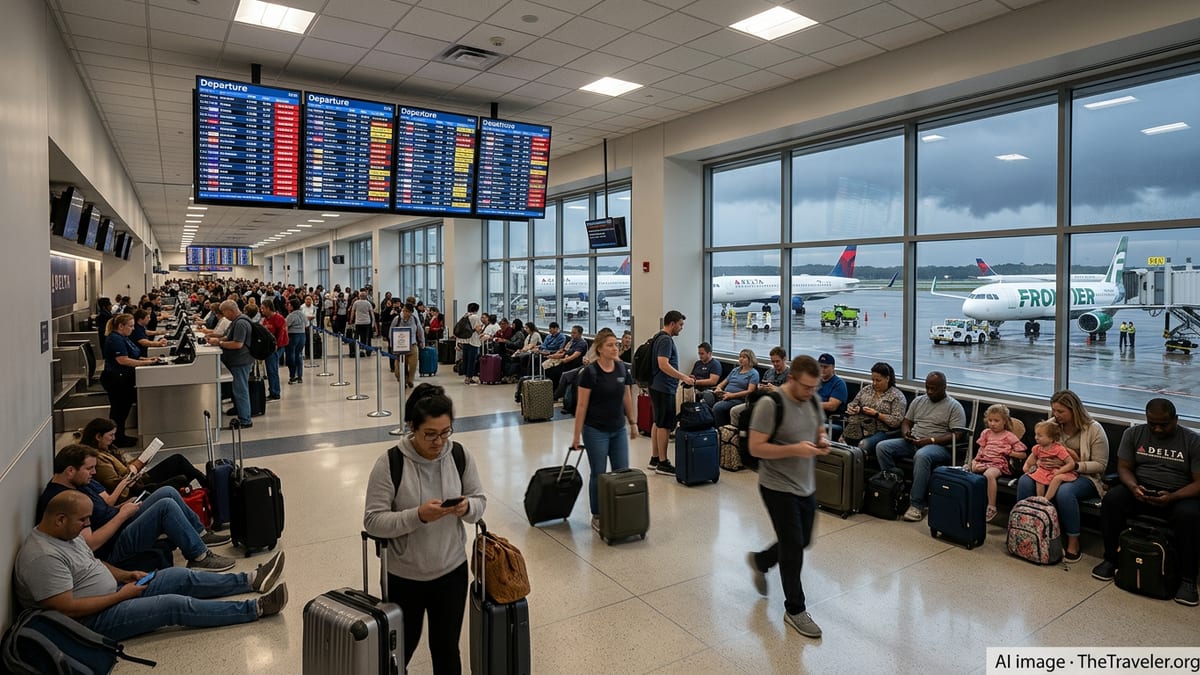
Storm System Batters Key Northeast Hubs
Publicly available tracking data shows that a powerful storm system moving up the East Coast has concentrated its impact on some of the country’s busiest airports, including John F. Kennedy International in New York and Ronald Reagan Washington National in Washington, D.C. Thunderstorms, low clouds and periods of intense rain have combined to reduce arrival rates and force traffic management programs across the region.
According to recent aviation status reports, the Federal Aviation Administration has been using ground delays and occasional ground stops at New York area airports when storms pass directly over critical arrival and departure corridors. These measures limit the number of flights that can land or take off per hour, slowing the overall system even after the heaviest weather moves away.
Operations at Washington Reagan National have also been constrained, with the narrow river approach and restricted airspace around the nation’s capital leaving relatively little flexibility when convective weather is in the area. When that constraint is combined with congestion at New York airports, delays can quickly ripple across the eastern half of the country.
Flight-tracking tallies compiled through the day indicate that, taken together, storms and related air traffic management actions translated into 554 cancellations and 3,434 delays within, into or out of the United States, putting the latest disruption on par with other major weather events seen this summer travel season.
JetBlue Hit Hard At Core JFK Operation
JetBlue appears to be among the hardest-hit carriers in the latest round of storms, reflecting the airline’s heavy dependence on New York JFK as a primary hub. Consumer reports and operational data over recent weeks show that when convective weather lingers over the Northeast, JetBlue’s tightly scheduled operation at JFK can struggle to recover once aircraft and crews fall out of position.
Recent travel waivers and passenger accounts indicate that JetBlue has been contending with repeated cancellations and long delays on key routes into and out of JFK since the first week of July, when holiday traffic and storm systems combined to overwhelm available capacity. In the latest event, additional thunderstorms over the New York region have led to further ground holds at JFK, increasing the pressure on an operation that was already in recovery mode.
Industry observers point to the carrier’s concentration of narrowbody aircraft at a single weather-prone hub as a structural vulnerability during volatile summer patterns. When storms force prolonged reductions in arrival rates, airlines with more diversified networks can sometimes reroute traffic through alternative hubs. JetBlue’s options are more limited when its core New York operation slows, amplifying the impact of each additional round of storms.
Despite these challenges, publicly posted advisories from major airlines, including JetBlue, continue to emphasize that weather-related disruptions remain largely outside carriers’ control, while offering fee waivers and rebooking options to help travelers adjust plans when flights are canceled.
American Airlines Issues Weather Flexibility For D.C. And New York
American Airlines has responded to the spate of thunderstorms by publishing travel alerts that cover the Washington and New York metropolitan areas, including Reagan National and JFK. These alerts, which are updated periodically on the airline’s information channels, typically allow affected customers to move their travel to different dates without a change fee when severe weather impacts their original itinerary.
Recent advisories show that American has been waiving certain fees for passengers scheduled to travel through key East Coast airports during windows of forecast storms. The policy is intended to encourage travelers with flexible schedules to shift away from peak disruption periods, slightly easing pressure on heavily affected hubs and reducing the number of customers stranded in terminals when cancellations escalate.
Operational data indicates that American, like its competitors, has faced both outright cancellations and extensive delays as thunderstorms pass over the corridor from Washington to New York and onward to Boston. As flights bunch up during lulls between storm cells, aircraft can be forced to wait for takeoff slots or holding patterns, compounding delays even when conditions at the field appear to have improved.
Published performance statistics from previous severe-weather days suggest that large network carriers often experience knock-on effects for 24 to 48 hours after the most intense storms, as they reposition aircraft and crews and work through backlogs of displaced passengers. With weather systems continuing to affect the Northeast, American’s latest travel alerts indicate that flexibility provisions may remain in place as conditions evolve.
Passengers Face Missed Connections, Overnight Stays And Crowded Terminals
For travelers, the headline numbers of 554 cancellations and 3,434 delays translate into missed connections, overnight airport stays and crowded rebooking lines at some of the nation’s busiest terminals. Social media posts and passenger forums over recent days describe long waits aboard aircraft at the gate, extended tarmac delays just short of regulatory limits and last-minute cancellations after multiple rolling departure time changes.
Experiences shared from JFK highlight cases in which travelers remained at the airport for many hours as airlines attempted to secure replacement crews once original teams reached duty-time limits due to earlier weather holds. In other instances, passengers reported being rebooked several days later when near-term flights on already busy summer schedules filled up quickly after mass cancellations.
At Reagan National, travelers have documented similar challenges, including early-morning flights that operated on time followed by widespread afternoon and evening disruption as thunderstorms intensified. With gate space at a premium and limited runway capacity, even modest deteriorations in weather conditions have led to crowded terminals and lengthy customer service queues.
Consumer advocates note that while airlines are generally not required to provide compensation for weather-related cancellations in the United States, many carriers do offer meal vouchers or hotel discounts on a case-by-case basis, particularly for travelers stranded overnight far from home. However, publicly available guidance stresses that such assistance is not guaranteed and can vary significantly by carrier and specific circumstances.
Summer Travel Outlook: Weather, Congestion And Recovery Efforts
The latest disruption underscores broader patterns emerging in the 2026 summer travel season, in which recurring storm systems across the eastern United States have collided with near-record passenger volumes. Federal data and industry analysis point to a network operating close to capacity at major hubs, leaving little slack when thunderstorms force even temporary reductions in arrival and departure rates.
Past air travel consumer reports and recent schedule data show that large carriers have tried to build more resilience into their operations by trimming marginal flights at slot-constrained airports such as JFK and Reagan National, while regulators have continued limited waivers that give airlines flexibility in how they use takeoff and landing slots during ongoing staffing and infrastructure challenges.
Despite these efforts, the combination of dense schedules, complex airspace around New York and Washington and increasingly volatile summer weather has kept disruption levels elevated. Airline performance data from recent severe-weather days indicates that system recovery can take several days, particularly when storms arrive in quick succession and affect the same set of airports repeatedly.
With forecasters signaling continued chances of strong storms across parts of the Northeast in the days ahead, publicly available guidance advises travelers to monitor flight status closely, build extra time into connections at major hubs and consider early-morning departures, which historically have a lower risk of cascading delays when afternoon thunderstorms develop.