


More news on this day
Thunderstorms sweeping across the Mid-Atlantic and Northeast on September 1 and 2 disrupted air travel nationwide, with publicly available data showing roughly 200 U.S. flights canceled and more than 2,100 delayed, snarling operations from Washington and Philadelphia to major hubs across the country.
Get the latest news straight to your inbox!
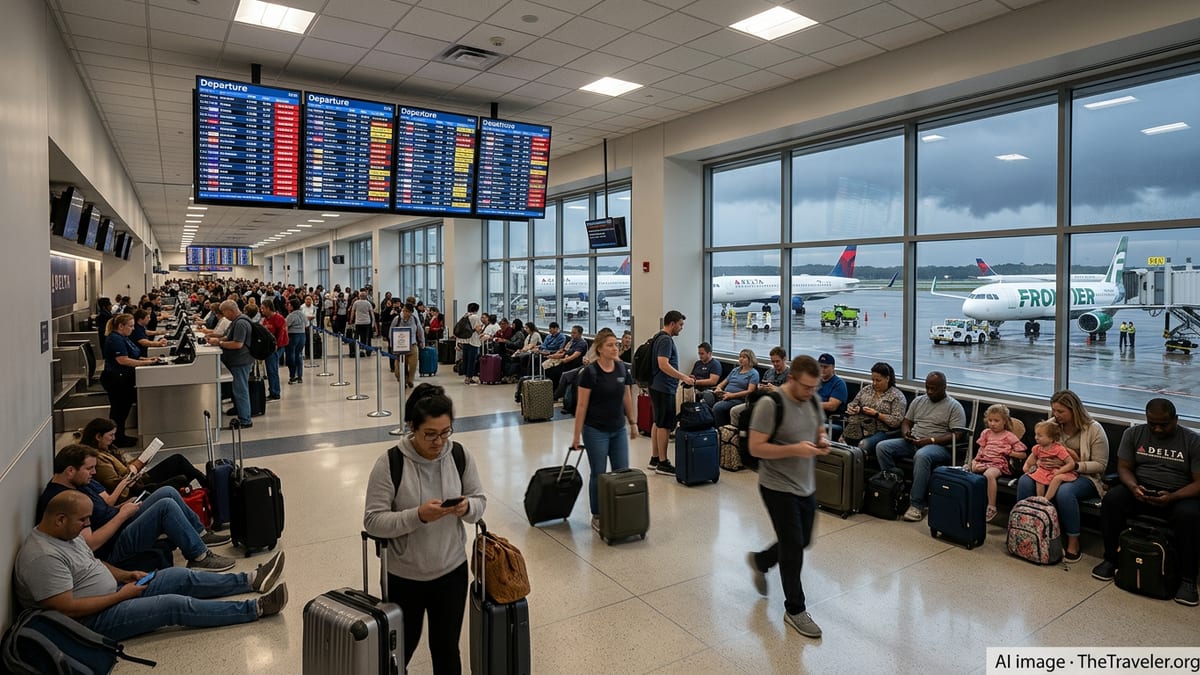
Storm Systems Converge Over Key East Coast Corridors
Reports from flight-tracking services and industry monitors indicate that storms building over the Interstate 95 corridor created a chain reaction of air-traffic constraints on September 1 and 2, 2026. New York-area airports, Philadelphia International Airport and the Washington, D.C.-area fields at Reagan National, Dulles and Baltimore/Washington all faced weather-related traffic management programs that slowed departures and arrivals.
The Federal Aviation Administration’s daily air traffic summaries listed thunderstorms as a primary factor for anticipated delays and possible cancellations at New York, Philadelphia and Washington airports, along with several hubs in Florida, Texas and Louisiana. These constraints required air traffic managers to meter takeoffs and landings, reducing capacity just as late-summer travel demand remained strong.
As storms moved through the region, the impact spread well beyond the immediate weather zone. Aircraft and crews scheduled to operate onward flights from Washington and Philadelphia were pushed behind schedule or diverted, contributing to downstream delays at connecting airports in the Midwest and South. Travel-industry coverage describes this pattern as a familiar late-summer scenario in which a relatively narrow weather band can ripple through the national network.
Industry analysis notes that while the number of cancellations remained in the low hundreds, the far larger volume of delays created widespread disruption for passengers. Many flights operated, but often significantly behind schedule, which in turn increased the risk of missed connections and forced rebookings into already busy later departures.
Washington and Philadelphia Among Hardest-Hit Airports
Publicly available FAA airport status pages for Ronald Reagan Washington National showed a traffic management program in effect due to thunderstorms, with gate holds and taxi-out delays in excess of an hour. Similar weather-driven flow controls were reported for other Washington-area airports, underscoring the concentration of storms over the nation’s capital region during peak operating hours.
Coverage from travel and aviation news outlets highlights Philadelphia as another focal point. The city’s primary airport experienced arrival and departure slowdowns tied to the same storm system affecting New York and Washington, according to aggregated flight-tracking data. As aircraft waited for departure slots or held in arrival patterns, schedules compressed toward later time bands, making it difficult for airlines to recover on the same day.
In parallel, New York’s John F. Kennedy International and LaGuardia reported some of the highest tallies of delays and cancellations among U.S. airports. LaGuardia in particular registered dozens of cancellations, while JFK led in the number of delayed flights, based on data compiled by commercial tracking services and cited in recent travel-news reporting. With so many passengers and aircraft passing through these tightly spaced East Coast hubs, schedule issues there quickly translated to disruptions along the broader network.
Travel-focused coverage notes that these coastal hubs operate with relatively constrained runway and airspace capacity compared with inland airports. When thunderstorms force controllers to reduce arrival rates into Washington, Philadelphia or New York, the impact can be more pronounced than at less congested fields, contributing to the elevated counts of delays and cancellations now being reported.
Nationwide Totals Highlight Systemwide Disruption
By early afternoon on September 2, travel-compensation specialists that monitor real-time disruption data were reporting approximately 896 delayed U.S. departures and arrivals alongside about 200 cancellations nationwide. Those figures, based on aggregated information from flight-tracking platforms, provide a snapshot of the scale of the disruption as storms moved across key routes.
Separate coverage in consumer travel media framed the same event as part of a broader pattern of weather-linked disruptions that have defined late-summer flying across the United States. Recent reports describe repeated days with hundreds of delays and dozens of cancellations whenever storm systems stall over major hubs, affecting both domestic and some transatlantic operations.
Additional industry reporting places Washington, Philadelphia, Chicago, Atlanta and the New York-area airports among the airports most frequently cited during such events in recent weeks. In this latest episode, New York’s LaGuardia recorded one of the highest cancellation counts for a single U.S. airport, while JFK logged the highest number of delayed flights. At the same time, Washington and Philadelphia’s role as connecting points for numerous regional routes helped spread knock-on effects into smaller markets.
Analysts note that while a one-day tally of roughly 200 cancellations is relatively modest compared with severe holiday meltdowns in recent years, the combination of cancellations and more than 2,000 delays can affect a comparable number of passengers. Delays of one to two hours can cascade through the day, leaving travelers stranded overnight if they miss the last available connection to their destination.
Knock-On Effects for Airlines and Passengers
The latest disruptions placed renewed attention on how airlines manage their operations during volatile summer weather. Flight-tracker tallies cited in travel-industry coverage show one major U.S. carrier leading in the number of delayed flights on the affected day, while another recorded the highest number of cancellations among domestic airlines. These figures reflect not only the severity of the storms but also how individual route structures, hub locations and fleet mixes interact with weather patterns.
Travel-rights organizations point out that weather-related events of this nature often leave passengers with limited avenues for compensation under U.S. rules. While carriers typically rebook affected travelers at no additional fare cost when flights are canceled, reimbursement for hotels, meals or other incidental expenses generally depends on the airline’s internal policies rather than regulatory requirements.
Travel-advice articles responding to the disruption emphasize several practical steps for passengers facing similar situations. Recommendations include enrolling in airline apps for immediate rebooking options, checking flight status repeatedly in the hours before departure, and considering earlier flights in the day from weather-sensitive airports like Washington National, Philadelphia or LaGuardia during stormy periods. Some coverage also suggests looking at alternative airports within a metropolitan region to improve the odds of departure.
Industry observers add that days with large but still manageable levels of disruption can offer lessons for both airlines and regulators. Recent FAA advisories reference the use of diversion-recovery tools and other traffic-management techniques designed to move aircraft back into position after storms, in an effort to prevent relatively contained weather systems from spiraling into multi-day operational crises.
Late-Summer Travel Outlook Remains Unsettled
With the Labor Day holiday period approaching, analysts expect weather to remain a central variable for U.S. air travel performance. Late-summer thunderstorms are common across the Mid-Atlantic and Northeast, and when they overlap with peak afternoon departure banks at airports in Washington, Philadelphia and New York, the potential for large numbers of delays and cancellations increases.
Travel-industry commentators note that airlines have adjusted some schedules and added buffer time on routes that have seen repeated disruptions this season. However, the dense nature of East Coast airspace and the limited number of available runways at key hubs mean that even moderate storms can force traffic-management programs similar to those in effect during the latest incident.
For travelers, the experience of hundreds of delayed flights and about 200 cancellations serves as a reminder that planning flexibility remains crucial. Advisers recommend building extra time into tight itineraries, especially when connecting through Mid-Atlantic and Northeast hubs, and monitoring forecasts as closely as fare sales when choosing travel dates.
As airlines and air-traffic managers work through this latest round of disruptions, the focus will remain on restoring schedule reliability without sacrificing safety during periods of convective weather. The events of September 1 and 2 highlight both the vulnerability of the U.S. network to concentrated storm systems and the importance of real-time information for travelers seeking to navigate an increasingly unpredictable summer sky.
AirHelp disruption summary for September 2, 2026
Travel news coverage of U.S. flight delays and cancellations
Travel and Tour News report on 896 delays and 200 cancellations