


More news on this day
Passengers transiting through Doha’s Hamad International Airport faced unexpected disruption this week after multiple flights operated by Qatar Airways, Air Arabia, and Kuwait-bound carriers were abruptly cancelled, stranding travelers and sharpening concerns over the stability of regional air corridors.
Get the latest news straight to your inbox!
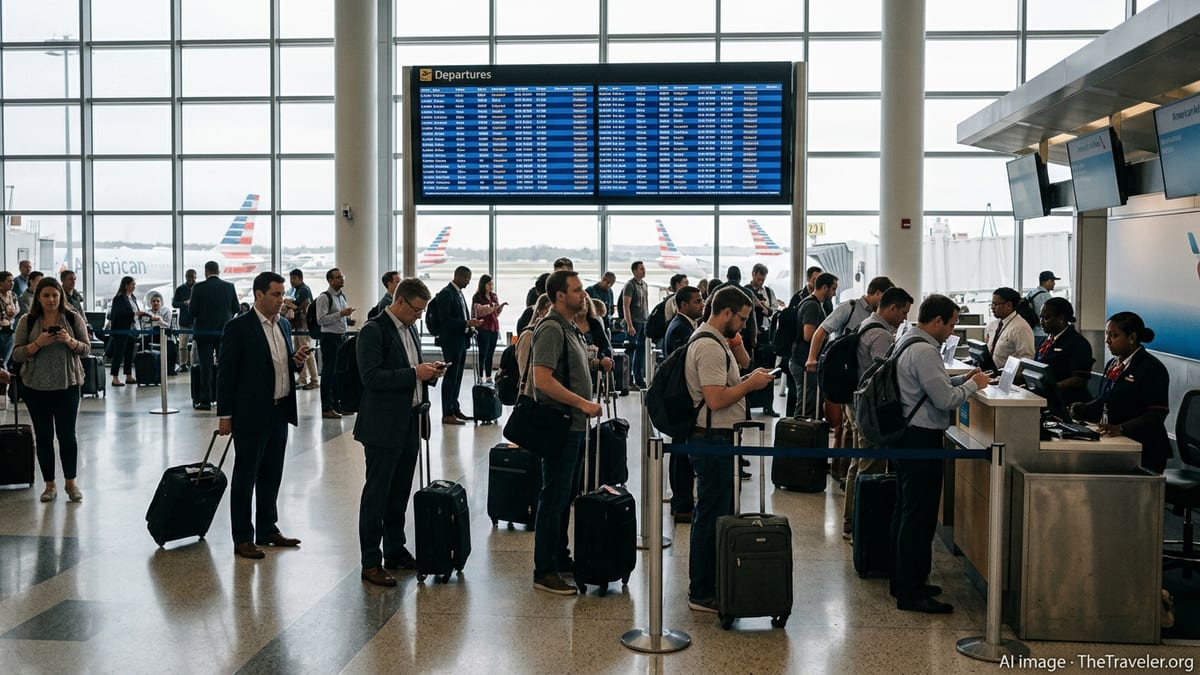
Disruptions Hit Sharjah and Kuwait Departures
Publicly available flight-tracking data and regional aviation coverage indicate that key departures from Doha to Sharjah and Kuwait were among the services affected by a fresh round of operational disruptions at Hamad International Airport. The cancellations came with limited advance warning, leaving passengers delayed in transit and unable to rebook quickly onto alternative departures.
Regional travel reports describe departures to Sharjah, a major hub for low-cost carrier Air Arabia, and to Kuwait City as particularly impacted, with some passengers reporting long queues at transfer desks and uncertainty over revised boarding times. While operations at Sharjah and Kuwait International Airport have been gradually stabilizing after earlier regional turbulence, the latest disruption in Doha underscores how fragile recovery remains.
Available scheduling information suggests that the affected flights were part of a broader pattern of intermittent cancellations across select Middle East routes in recent months, driven by changing airspace conditions and fluctuating demand. Travelers caught in transit at Hamad International Airport have been advised through public advisories to monitor airline channels closely for rebooking options and updates.
Although full route-by-route details have not been published in a single official notice, industry trackers show that these cancelled departures added fresh pressure on an already stretched regional network, particularly for passengers relying on tight connections between Gulf hubs.
Regional Airspace Tension Fuels Ongoing Volatility
The latest cancellations come against the backdrop of wider airspace restrictions and recent security incidents that have reshaped Gulf aviation since late February 2026. Published summaries of regional conditions describe temporary closures, rerouted corridors, and phased airport re-openings across several states, with Kuwait International Airport among the facilities most seriously affected.
Reports on Kuwait’s main airport note that it has been working through a protracted recovery following earlier closures, including damage linked to drone strikes and subsequent rebuilding of terminal capacity. Flights are resuming in stages, with Kuwait-based carriers operating on adjusted schedules while authorities prepare to bring additional terminal infrastructure back online in early June.
Logistics and aviation advisories also highlight ongoing constraints in Qatari airspace, where Hamad International Airport has previously seen periods of large-scale cancellations and suspensions. Earlier this year, analysis from air passenger rights organizations documented hundreds of flights cancelled or heavily delayed within short timeframes at Doha, leaving travelers stranded as airlines worked to realign aircraft and crew rotations.
Although the current wave of cancellations appears more targeted than those earlier mass disruptions, the renewed interruption of Sharjah and Kuwait routes has revived questions about how quickly Gulf air travel can return to predictable, pre-crisis patterns.
Impact on Qatar Airways, Air Arabia, and Kuwait-bound Operators
Qatar Airways, which uses Hamad International Airport as its global hub, has been progressively rebuilding its network with an expanded schedule planned into the northern summer. Public travel alerts on the airline’s channels emphasize that all services remain subject to change or cancellation based on operational, regulatory, and safety considerations, a caveat that has taken on renewed significance amid the latest disruptions.
For Air Arabia, Sharjah’s status as a key base means any interruption on the Doha to Sharjah corridor has outsized implications for connecting traffic across its low-cost network. Aviation analysts note that Sharjah has remained open and operational throughout much of the recent regional turbulence, allowing the carrier to absorb some displaced demand from neighboring hubs, but sudden cancellations in Doha still translate into missed connections and extended layovers for budget-conscious travelers.
Kuwait-bound traffic is experiencing a particularly complex recovery path. Coverage of Kuwait International Airport’s phased reopening shows that Kuwait Airways and Jazeera Airways have been gradually ramping up flights after prior closures and diversions through Saudi airports. New disruptions affecting Doha to Kuwait links therefore compound the difficulties facing passengers who already face rerouted journeys and reduced frequencies.
Industry observers say that while each airline is applying its own playbook on rebooking, refunds, and schedule adjustments, the cumulative effect for passengers is a perception of persistent fragility across Gulf routes, especially for those connecting between multiple carriers across Doha, Sharjah, and Kuwait City.
Stranded Passengers Face Delays, Limited Options
Accounts compiled from passenger-rights platforms and regional media describe scenes of crowded seating areas, lengthy queues at service counters, and confusion over onward travel after the Doha cancellations. Some travelers attempting to reach Sharjah or Kuwait from long-haul origins reported missing connecting flights, with alternative departures either fully booked or scheduled many hours later.
Air travel advocacy groups tracking disruptions at Hamad International Airport in recent months have warned that even a relatively small number of cancellations can leave hundreds of people temporarily stranded due to tight banked schedules and high load factors on Gulf routes. With regional alternatives constrained by airspace and infrastructure issues, rerouting options can be limited, especially for economy passengers and those traveling without flexible tickets.
Public guidance from passenger-rights organizations stresses the importance of retaining boarding passes, monitoring digital channels for notifications, and avoiding ad hoc arrangements that might compromise access to compensation where applicable under relevant regulations. However, the mixed regulatory landscape across different jurisdictions in the Middle East can make it difficult for travelers to clearly understand their entitlements.
In practical terms, many stranded passengers at Doha are left relying on whatever rebooking or care measures individual airlines choose to extend, ranging from meal vouchers and hotel stays to simple schedule changes on later flights. The uneven nature of these responses has been a recurring theme in recent coverage of Gulf disruption events.
Growing Pressure for Greater Transparency and Resilience
The latest cancellations impacting Sharjah and Kuwait routes are intensifying calls, in industry commentary and consumer advocacy circles, for clearer communication and more resilient operations across the Gulf’s interconnected hubs. Observers argue that as carriers promote ambitious summer expansion plans, they must also ensure that staffing, aircraft availability, and contingency planning are robust enough to absorb sudden airspace or security-related shocks.
Aviation analysts point out that airports such as Hamad International, Sharjah, and Kuwait are increasingly functioning as joint nodes in a single regional system, where disruptions at one hub quickly ripple into missed connections and capacity shortages at another. The Doha cancellations affecting Sharjah and Kuwait-bound flights highlight how a localized operational problem can escalate into a broader travel headache across multiple countries.
Commentary in regional business and travel media suggests that airlines serving the Gulf will face mounting scrutiny over how they handle short-notice changes, especially for transit passengers who may be far from their point of origin and more vulnerable to lengthy delays. Calls for improved real-time information, more generous rebooking flexibility, and standardized care policies are becoming more frequent as disruptions recur.
For now, travelers planning to pass through Doha en route to Sharjah, Kuwait, or other regional destinations are being urged by public advisories and travel experts to build additional buffer time into itineraries, track flight status up to the moment of departure, and remain prepared for abrupt schedule changes as the Gulf’s airspace and airport network continues to navigate a turbulent year.