


More news on this day
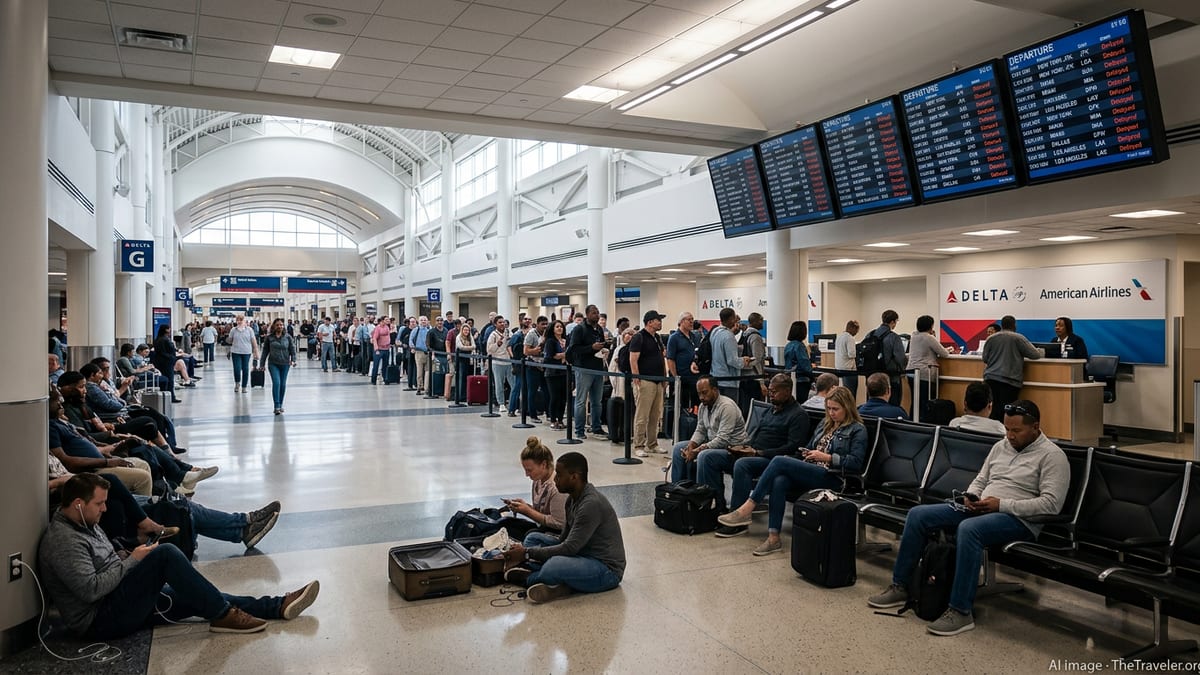
Arriving flights at Ronald Reagan Washington National Airport in Washington, D.C., faced weather-related delays on Tuesday as low clouds and fog reduced visibility along the Potomac River approach, slowing traffic into one of the nation’s busiest close-in airports.
Get the latest news straight to your inbox!
Low Ceilings and Fog Reduce Arrival Capacity
Publicly available data from the Federal Aviation Administration’s airport status tools on May 27 indicate that Reagan National was placed under a ground delay program tied to low ceilings, with patches of fog and mist reported in the vicinity of the airfield. Meteorological observations showed overcast conditions and reduced visibility during the morning hours, a combination that typically requires increased spacing between aircraft on final approach.
When ceilings and visibility fall below preferred thresholds, air traffic managers often reduce the rate at which aircraft are permitted to land. That effect was visible in the program rates set for Reagan National, which showed a capped number of arrivals per hour while the weather remained marginal. As a result, aircraft departing from other airports for Washington were held on the ground or given later departure times to prevent airborne holding in congested airspace over the capital region.
Weather analysis from national aviation forecast charts for the mid-Atlantic region on Tuesday also showed widespread low cloud cover early in the day, supporting the reduced-visibility reports at Reagan National. Conditions of this kind are common along the Potomac corridor, where the airport’s location on a narrow strip of land beside the river can amplify the impact of fog and low clouds on arriving aircraft.
Although temperatures in the Washington area remained relatively mild, the combination of light winds, high humidity and morning cloud cover contributed to the formation of mist and fog around the airport. Those factors are expected to gradually improve as daytime heating erodes the low-level moisture, but the early disruption has already affected a wave of morning arrivals.
Ground Delay Program Extends Travel Times for Arriving Passengers
According to recent operational advisories from the Air Traffic Control System Command Center, the ground delay program for Ronald Reagan Washington National has applied to a broad set of flights departing from major air traffic centers across the contiguous United States. These advisories describe weather and low ceilings as the primary drivers of the initiative, which assigns controlled departure times to inbound flights headed to Washington.
In practice, a ground delay program means passengers bound for Reagan National may see their flights board and push back later than scheduled, or remain at the gate while crews await an updated departure slot. For many travelers, the disruption shows up as moderate but noticeable arrival delays, often in the range of several dozen minutes, though some flights can experience longer waits depending on their origin and scheduled time of arrival.
Monitoring tools that track individual flights into Washington show a mixed picture, with some services arriving close to schedule while others incur additional time both on the ground at departure airports and during approach sequences into Reagan National. Flights scheduled to arrive during the most constrained hours of the program tend to bear the brunt of the delays as controllers meter traffic into the restricted arrival stream.
The use of a structured delay program, rather than large-scale airborne holding, is intended to balance safety and efficiency by keeping most of the waiting time on the ground. While that approach can be frustrating for passengers seated at the gate, it generally reduces fuel burn and minimizes congestion in the crowded airspace around the nation’s capital.
Memorial Week Traffic Adds Pressure to Reagan National Operations
The timing of Tuesday’s weather issues coincides with elevated Memorial Week travel demand, intensifying the impact on passengers headed into Washington. Recent coverage focused on Reagan National’s role in the holiday travel period has highlighted how even modest disruptions can quickly ripple through tightly scheduled operations at the airport, particularly during peak morning and late-afternoon banks.
American Airlines and its regional partners operate a dense schedule at Reagan National, linking the airport to destinations throughout the East Coast and Midwest on relatively short sectors. When weather reduces arrival capacity, these high-frequency routes can experience knock-on delays as aircraft and crews arrive late, compressing turnaround times and complicating efforts to return to the published schedule.
Travel industry reporting for the early part of the holiday week has already noted clusters of delayed flights into and out of Reagan National, with some services arriving well behind schedule and a smaller number canceled. Most of the disruptions appear concentrated among short-haul regional flights, where even moderate arrival delays can represent a significant share of the total planned flight time.
The combination of seasonal demand and weather-driven air traffic constraints means travelers arriving in Washington may encounter longer-than-usual waits at baggage claim, rental car counters and onward connections. Those planning same-day meetings or events after landing at Reagan National face an elevated risk of late arrivals as airlines work through the backlog created by the morning’s reduced arrival rates.
Broader Pattern of Weather-Linked Disruptions in U.S. Airspace
The challenges at Reagan National on Tuesday fit into a wider pattern of weather-related disruptions affecting U.S. air travel during late May. Federal aviation updates for the National Airspace System in recent days have referenced the possibility of ground stops or delay programs at several large hubs, including airports in Atlanta, Dallas and Denver, as storms and low ceilings move through different regions.
Weather remains the primary cause of air traffic delays nationwide, with low visibility, thunderstorms and adverse surface conditions all contributing to constraints on airport capacity. Industry analyses of delay statistics over recent years have consistently shown that the majority of system-impacting delays longer than 15 minutes are linked in some way to weather conditions that limit the safe movement of aircraft.
To manage these events, air traffic organizations rely on a suite of tools ranging from ground delay programs to reroutes around severe weather cells, supported by increasingly sophisticated aviation weather forecasts. At airports like Reagan National, where space is limited and operational flexibility is constrained by local geography and airspace design, these tools are especially important during periods of low clouds and reduced visibility.
Looking ahead, publicly available forecast products for the Washington area suggest gradual improvement in ceiling and visibility conditions later in the day, which could allow arrival rates to increase and delays to taper off. However, with Memorial Week travel still in full swing, even a partial day of disruption at Reagan National is likely to be felt across downstream flights and connections for the remainder of the schedule.