


Great Smoky Mountains National Park has two main “front doors” along Newfound Gap Road: Sugarlands Visitor Center near Gatlinburg, Tennessee, and Oconaluftee Visitor Center near Cherokee, North Carolina. Both are excellent starting points, but they anchor very different styles of trip. Whether you are planning a quick scenic drive, a family weekend with kids, or a quiet wildlife-focused escape, choosing the right side of the park can save you time and shape your entire experience.
Get the latest updates straight to your inbox!
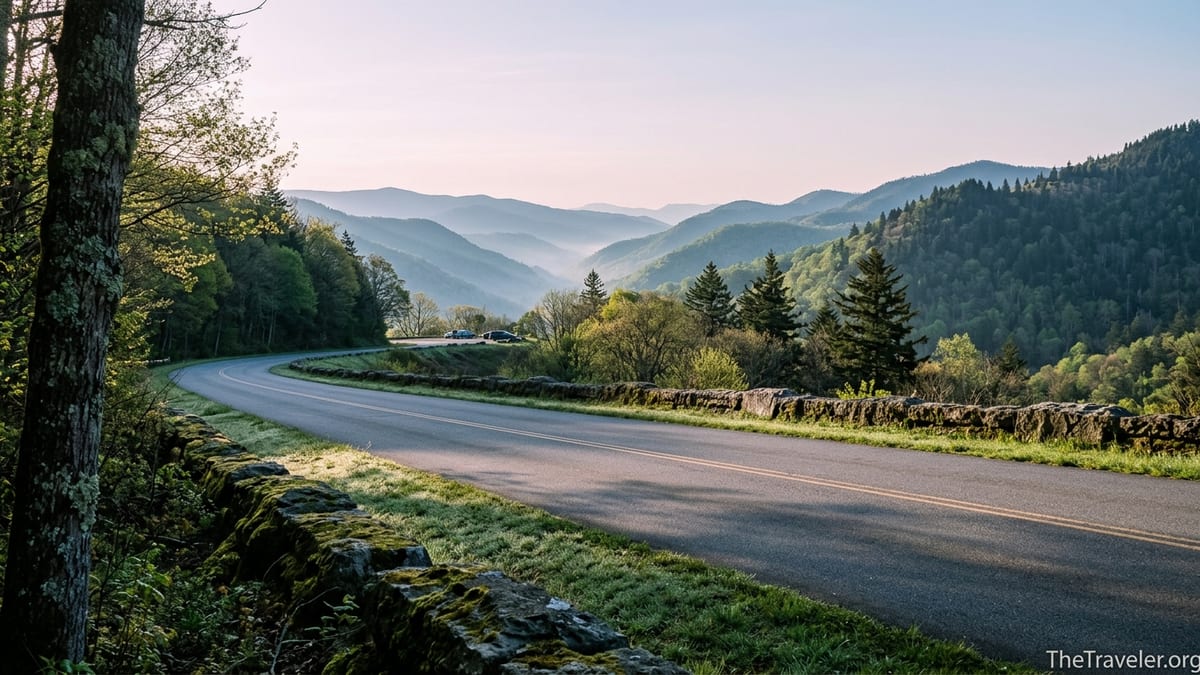
Getting Oriented: Where Sugarlands and Oconaluftee Sit in the Smokies
Sugarlands Visitor Center sits just inside the park boundary from Gatlinburg, Tennessee, at the northern gateway to the Smokies. It anchors the park’s North District and is only a few minutes’ drive from Gatlinburg’s strip of hotels, cabins, and restaurants. For many visitors driving in from Knoxville, Nashville, or much of the Midwest, Sugarlands is the first major stop. Newfound Gap Road starts its climb toward Newfound Gap and the high Smokies right outside the parking lot.
Oconaluftee Visitor Center lies on the opposite side of the mountains near Cherokee, North Carolina. It marks the main entrance for visitors arriving from Asheville, Charlotte, and much of the Southeast. The center sits beside the Oconaluftee River and open meadows, with Newfound Gap Road rising toward the crest of the park in the opposite direction from Sugarlands. The driving time between the two visitor centers is typically about one hour in fair conditions, though it can be longer in heavy traffic or poor weather.
In practical terms, Sugarlands functions as the gateway to the busy, resort-oriented Tennessee side of the park, while Oconaluftee introduces you to a quieter, more rural North Carolina side rooted in Cherokee and mountain farm history. Both connect to the same scenic spine of Newfound Gap Road, but the feel on either end can be very different.
Because the park is large and mountain roads are slow, trying to “do it all” from just one side often means spending more time behind the wheel than on trails or overlooks. Picking your primary visitor center up front helps you cluster hikes, viewpoints, and evening activities more efficiently.
Facilities, Parking, and Practicalities
Sugarlands Visitor Center is one of the best equipped facilities in the park. Inside you will find a staffed information desk, a small natural history museum, restrooms, drinking water, a Great Smoky Mountains Association bookstore, and free ranger-led programs in peak seasons. There is Wi-Fi available and a large, paved parking area with spaces for cars and RVs. However, because Sugarlands is close to Gatlinburg and to several of the park’s most popular trailheads, the lot can fill quickly on summer weekends, fall color days, and holiday periods.
Oconaluftee Visitor Center offers a similar set of basics: maps and information, exhibits on Smokies natural and cultural history, restrooms, bookstore, and a covered porch that often hosts interpretive talks. Just behind the center is the Mountain Farm Museum, a collection of historic log buildings moved from around the park, which effectively extends the visitor experience without additional driving. Parking is free but more limited than at Sugarlands, and the area can feel tight when elk are visible in the surrounding fields and people stop to watch.
Both visitor centers sit just inside the park boundary and require the Great Smoky Mountains National Park parking tag if you plan to park for more than a brief drop-off. As of 2026, day tags remain modestly priced, but visitors should check current rates and buy ahead of time where possible, especially during busy periods. In practice, most travelers build the cost of a parking tag into their overall trip rather than treating it as a separate decision point between the two areas.
If you are traveling in a large RV or towing a trailer, Sugarlands typically feels more forgiving because of its broader main lot and easier approach from the four-lane parkway between Pigeon Forge and Gatlinburg. Oconaluftee’s approach road from Cherokee is also paved and easy, but the immediate area feels a bit more compact when the lot is full and elk watchers line the roadside.
Access to Trails, Waterfalls, and Scenic Drives
Both visitor centers are excellent jumping-off points for classic Smokies scenery, but the specific hikes and drives easily reached from each one differ. From Sugarlands, you are within a short drive of Laurel Falls, the popular paved trail to a photogenic waterfall. Rainbow Falls and the trail to Mount Le Conte are also reached via spur roads not far from the visitor center. The Sugarlands Valley Nature Trail, a short, mostly level walk, begins just down the road and is suitable for many visitors with mobility issues.
From Oconaluftee, you can step directly onto the Oconaluftee River Trail, a relatively flat path along the river that connects the visitor center to downtown Cherokee. This trail is one of the few in the park that allows both dogs and bicycles, which makes Oconaluftee especially appealing for visitors who want to walk with their pets. A short drive away, you will find Mingus Mill, a historic gristmill with on-site demonstrations in season, and access roads leading toward less crowded trailheads and overlooks on the North Carolina side.
For sweeping mountain views, both visitor centers sit along Newfound Gap Road, the main scenic highway that climbs to Newfound Gap and then continues to the opposite side of the park. From Sugarlands, the popular pullouts at Chimney Tops and Alum Cave are convenient early stops. From Oconaluftee, you are closer to the quiet overlooks and picnic areas on the eastern half of the road. In both cases, plan extra time: the drive between a visitor center and Newfound Gap can take 30 to 45 minutes each way when traffic is heavy or weather is poor.
If your priority is quick access to a high density of short, well-known trails and developed overlooks, the Sugarlands side offers more choices within a compact radius. If you prefer longer walks, riverside strolling, and a slightly more relaxed pace, Oconaluftee and its immediate surroundings often feel less pressured.
Town Atmosphere: Gatlinburg vs Cherokee
Choosing between Sugarlands and Oconaluftee is, in practice, often a choice between basing yourself in Gatlinburg or Cherokee. Gatlinburg, a few minutes from Sugarlands, is a busy mountain resort town with a dense strip of hotels, pancake houses, moonshine tastings, miniature golf, and attractions like an aerial tramway and mountain coasters. On a July weekend, you might pay a mid-range nightly rate for a chain hotel room within walking distance of the strip, with parking fees some nights and significant evening noise. For families who want both national park scenery and entertainment options, this mix can be a feature rather than a bug.
Cherokee, near Oconaluftee, has a very different feel. It is the seat of the Eastern Band of Cherokee Indians and focuses on cultural experiences, small motels, and local restaurants. Instead of neon-lined streets, you are more likely to find shops selling local crafts, a history museum, and seasonal outdoor dramas about Cherokee history. Nightly rates at modest roadside lodges around Cherokee can be competitive with mid-range Gatlinburg hotels, but the overall atmosphere is quieter after dark.
For travelers who enjoy walking out of their hotel and into a lively evening scene, Gatlinburg pairs naturally with Sugarlands. You can ride the trolley, stroll the strip, and be at the park boundary in under ten minutes the next morning. For visitors who prefer a slower pace and more direct connection to local culture, Cherokee serves as a comfortable base for repeated visits to Oconaluftee and the less crowded eastern park roads.
It is also worth considering driving patterns. Traffic between Pigeon Forge and Gatlinburg can be heavy at peak times. If you plan to arrive late on a Friday, expect a slow approach to Sugarlands. Approaches to Cherokee from the Blue Ridge Parkway or Interstate 40 are typically less congested, though summer weekends still see steady traffic near casino and town entrances.
Wildlife, History, and Overall Atmosphere
Oconaluftee has a strong reputation for wildlife viewing, particularly elk. Open meadows beside the visitor center and the Mountain Farm Museum often host grazing elk in the early morning and around dusk. During peak viewing periods, rangers may be present to keep people at safe distances and manage roadside parking. For many visitors, a single close but safe view of elk can become the highlight of a North Carolina side trip.
Sugarlands is less associated with marquee wildlife in its immediate fields, but the surrounding forested hollows and streams are good habitat for deer, birds, and smaller mammals. Black bears are found throughout the park; sightings sometimes occur along nearby trails and roads, though visitors should never treat any roadside bear as an attraction. In both areas, you will find frequent reminders to store food correctly and maintain distance from animals.
In terms of historic atmosphere, Oconaluftee’s Mountain Farm Museum offers a concentrated look at 19th-century Appalachian homestead life. Visitors can wander among barns, a farmhouse, a springhouse, and other structures moved from around the region. Combined with Mingus Mill up the road, this cluster gives a strong sense of rural mountain history without requiring long drives to separate valley communities.
Sugarlands tells a slightly different story. The visitor center’s exhibits highlight natural history and the transformation of the Sugarlands valley from small communities to national park headquarters. Short walks from nearby trailheads pass old stone walls, chimneys, and abandoned roadbeds. The feel here is less like a curated outdoor museum and more like a forest gradually reclaiming the remains of former farmsteads and logging sites.
Which Is Better for Your Style of Trip?
If your trip is short and you want maximum scenery per mile with plenty of non-park diversions, Sugarlands is often the better base. A couple visiting for a long weekend, for example, might stay in a mid-range hotel in Gatlinburg, drive or take a shuttle to Sugarlands in the morning, and spend the day combining a moderate hike such as Laurel Falls with overlooks along Newfound Gap Road. Evenings could involve walking to restaurants, tasting local spirits, or riding a gondola to a mountaintop lookout outside the park.
Families with young children also lean toward Sugarlands when they want a backup plan for rainy afternoons. When fog or storms obscure mountain views, it is easy to pivot from a short nature walk near Sugarlands to indoor attractions or an aquarium in Gatlinburg without long drives. Strollers and wheelchairs are common on the paved nature paths and around the visitor center grounds.
Oconaluftee, by contrast, suits travelers who prioritize quieter mornings, cultural experiences, and wildlife viewing over nightlife. A couple staying at a small lodge in Cherokee might walk or drive to Oconaluftee at dawn, stroll the river trail, and watch elk in the fields below the Mountain Farm Museum. Later, they might explore Cherokee’s cultural sites, then return to the park for a late-afternoon drive up toward Newfound Gap when traffic has thinned.
For hikers planning full-day routes on both sides of the park, a split stay can be ideal. Two nights in Gatlinburg with Sugarlands as the main base can cover popular west-side hikes and drives. Then, shifting to Cherokee and Oconaluftee for two nights reduces the time spent crossing the mountains to reach trailheads and scenic spots on the North Carolina side. Although the drive between the visitor centers is scenic, repeating it daily eats into hiking and photography time.
Seasonal Factors and Road Conditions
Weather and seasonal patterns can tip the balance between Sugarlands and Oconaluftee. In summer, the Tennessee side around Gatlinburg can feel especially busy, with peak hotel occupancy, traffic on the spur road between Pigeon Forge and Gatlinburg, and heavy use of nearby trailheads. Oconaluftee and Cherokee tend to feel a bit less crowded, especially on weekdays, although elk viewing and festival weekends can draw substantial numbers of people.
In autumn, both visitor centers serve as gateways to some of the best foliage in the eastern United States. Sugarlands sees surges of visitors drawn by bright maple and oak colors on nearby slopes, as well as easy access up Newfound Gap Road toward high-elevation overlooks. Oconaluftee offers its own mix of gold and red along the river corridor and surrounding ridges, often with slightly thinner crowds on weekdays and more open space along the river trail.
Winter introduces more uncertainty. Portions of Newfound Gap Road can close temporarily due to snow, ice, or rockslides. At times, the stretch between Sugarlands and Newfound Gap has closed while the section between Oconaluftee and Newfound Gap remained open, and vice versa. Travelers visiting in late fall through early spring should check current National Park Service alerts close to their travel dates to understand which side has better access to the high country.
Spring brings wildflowers and rising water levels in streams and rivers. Sugarlands is a popular starting point for short spring bloom walks in nearby coves, while Oconaluftee provides easy access to riverside trails lined with early flowers and emerging green. During wet spells, both areas can experience slippery trail conditions and localized flooding in low spots, so footwear and driving plans should be adjusted accordingly.
The Takeaway
There is no single winner between Sugarlands and Oconaluftee. Instead, each visitor center anchors a different vision of a Great Smoky Mountains trip. Sugarlands pairs naturally with Gatlinburg for visitors who want quick access to famous trails, busy but convenient services, and plenty of after-hike entertainment. Oconaluftee aligns with Cherokee for travelers who value quieter evenings, wildlife viewing in open meadows, and a strong sense of Appalachian and Cherokee history.
When planning your trip, start by listing your top priorities: nightlife or stargazing, elk or aerial tramways, paved nature walks or riverside bike-friendly trails, busy but iconic overlooks or quieter forest roads. Then match those priorities to the strengths of each side of the park. If time allows, consider a split stay or at least a day trip to the opposite visitor center along Newfound Gap Road to see how the park’s character shifts from one gateway to the other.
Whichever area you choose as your base, treat the visitor center as more than a mandatory stop for a map. Talk with rangers about current trail conditions, wildlife activity, and traffic patterns; step through the exhibits; and linger on the short trails that begin just beyond the parking lot. Sugarlands and Oconaluftee are not just information desks. They are introductions to two complementary faces of the Smokies, each capable of shaping a memorable mountain journey.
FAQ
Q1. Which visitor center is better for first-time visitors to Great Smoky Mountains National Park?
For a first trip, Sugarlands is often easier because of its proximity to Gatlinburg, numerous nearby short hikes, and quick access to some of the park’s most popular overlooks along Newfound Gap Road.
Q2. Where am I more likely to see elk, Sugarlands or Oconaluftee?
Oconaluftee is the better choice for elk. The fields around the visitor center and Mountain Farm Museum are well known for regular elk sightings, especially around dawn and dusk.
Q3. Is one side of the park less crowded, Sugarlands or Oconaluftee?
Sugarlands and the Gatlinburg side usually feel busier, particularly in summer and fall weekends. Oconaluftee and Cherokee often offer a somewhat quieter atmosphere, especially on weekdays.
Q4. Which area is better if I do not have a car?
Sugarlands typically works better without a car because Gatlinburg offers more lodging within walking distance and local trolley or shuttle options that connect town to the park entrance area.
Q5. Where should families with young children stay, near Sugarlands or Oconaluftee?
Families who want backup entertainment options on rainy days often prefer Sugarlands paired with Gatlinburg. Families seeking a calmer, less commercial environment may enjoy Oconaluftee and Cherokee more.
Q6. Which visitor center offers better access to short, easy walks?
Both do, but Sugarlands has several short nature trails and nearby paved walks, while Oconaluftee offers the flat Oconaluftee River Trail and easy exploring around the Mountain Farm Museum.
Q7. Is one side better in winter or early spring?
Conditions vary by storm and year. Access to high elevations can shift between the two sides, so winter and early spring visitors should check current road and closure updates rather than favoring one by default.
Q8. Which area is better for learning about local history and culture?
Both centers have exhibits, but Oconaluftee stands out when combined with the Mountain Farm Museum and nearby Cherokee cultural sites that highlight Appalachian and Indigenous history.
Q9. Can I reasonably visit both Sugarlands and Oconaluftee in one day?
Yes, in good weather you can drive between them in about an hour each way, but the round trip plus stops can consume most of a day, so plan accordingly.
Q10. If I only have one full day in the park, which visitor center should I choose?
If you want a mix of classic viewpoints and a busy resort town, choose Sugarlands. If you prefer wildlife, riverside walking, and a quieter base, choose Oconaluftee.