


More news on this day
Airports across Europe’s Schengen Area are grappling with mounting queues and missed connections this summer as the European Union’s new Entry/Exit System strains under peak holiday traffic, raising questions over whether border technology and infrastructure can keep pace with surging demand.
Get the latest news straight to your inbox!
A security upgrade collides with peak season travel
The EU’s Entry/Exit System, fully activated at all Schengen external borders in April 2026, replaces manual passport stamping for most non-EU travellers with a digital register of movements and biometric checks. Publicly available information describes it as a core plank of the bloc’s security and migration strategy, intended to track overstays more accurately and spot identity fraud.
In practice, the first main summer after full activation has exposed significant growing pains. Industry releases and media coverage describe processing times jumping from seconds to more than a minute per traveller during initial biometric enrolment, with the impact multiplied when aircraft arrive with several hundred non-EU passengers at once.
Reports from major hubs indicate that the system performs close to design specifications when operating smoothly, but that any technical slowdown or staffing gap is quickly magnified into long queues. Border posts built around the old, stamp-based model are struggling to absorb the extra time needed for fingerprint and facial scans during the enrolment phase, especially at peak morning and evening arrival banks.
European Commission papers on Schengen governance frame EES as a long-term investment that will eventually speed up repeat crossings once travellers are registered. The current summer, however, is testing that promise in real time as airports juggle short-term disruption against the anticipated future efficiency gains.
Hours-long queues and missed flights for Schengen-bound holidaymakers
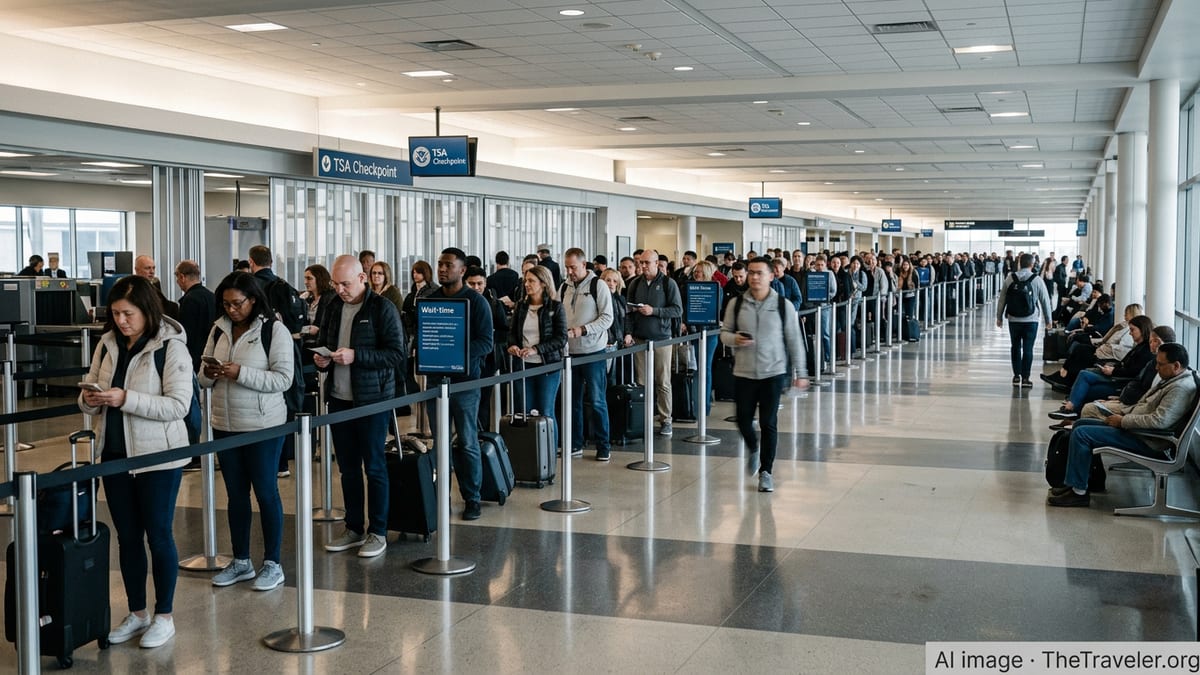
Travel media and passenger accounts point to a patchwork of disruption, with some airports reporting relatively modest delays and others struggling under severe pressure. Euronews and other European outlets describe waiting times of two to three hours at several busy gateways, particularly where multiple long-haul flights land in quick succession.
Airline and airport associations have warned in open letters that queues at certain border control points have already stretched to as much as five hours during peaks, leading to missed onward flights and congested departure halls as passengers are held in line at immigration. A number of carriers have issued customer advisories urging travellers to arrive earlier than usual and to build in longer connection times when entering the Schengen zone for the first time on a trip.
British travellers, now classed as non-EU visitors following Brexit, are among those most exposed to the new regime. UK and Irish media report four-hour waits at some Mediterranean leisure destinations as holiday traffic collides with first-time EES registration, with travellers describing bottlenecks forming where space for queues and kiosk banks is limited.
Regional airports that invested early in additional kiosks and reconfigured queuing areas appear to have fared better so far. However, aviation briefings suggest that even well-prepared facilities face challenges when flights are delayed and arrival waves bunch together, overwhelming theoretical capacity models that assume evenly spaced demand.
Aviation sector urges flexibility as calls grow for temporary relief
Europe’s aviation sector has mounted an increasingly vocal campaign in recent weeks, arguing that the system’s rigid application is incompatible with the realities of peak summer traffic. Joint statements from airport and airline groups highlight what they describe as systemic issues, from software glitches and unreliable data replication to difficulties integrating new kiosks into already constrained terminal layouts.
These organisations have publicly called on EU institutions and national governments to introduce more flexibility during the busiest months. Proposals include temporary waivers or partial suspensions at particularly stressed border points, adjustments to how often biometrics must be re-captured, and more pragmatic use of manual lanes when automated systems slow down.
Industry briefing papers also warn of broader economic risks if the current situation persists. One analysis from the travel sector suggests that regular three-hour border waits could discourage a significant portion of would-be visitors from choosing Schengen destinations, potentially putting tens of millions of arrivals and billions of euros in visitor spending at stake if confidence in Europe as a hassle-free holiday region erodes.
European institutions, for their part, have emphasized in public communications that EES is essential to modernizing borders and that efforts are ongoing with member states to boost staffing, fine-tune procedures and resolve technical issues. Official messaging stresses that disruption is concentrated at specific pressure points rather than universal across the network of Schengen border crossings.
Where delays are hitting hardest this summer
The impact of EES has not been evenly distributed across Europe’s external borders. Reports from low-cost carriers identify several leisure-focused airports in Spain, Italy, France and Greece as particular pinch points, reflecting the high proportion of non-EU holidaymakers and relatively constrained terminal space.
Travel industry coverage has highlighted delays at some Italian and Spanish gateways serving popular beach destinations, where waves of arrivals from the United Kingdom and other non-Schengen markets now require biometric registration. In some cases, local media describe travellers queueing in corridors or on stairways as terminals struggle to accommodate the extra waiting space.
Land and sea borders are experiencing their own challenges. Preparations at Channel ports, Eurostar terminals and Eurotunnel facilities have long focused on how to process car passengers and train travellers who must now step out to use kiosks before proceeding. Some ports introduced partial EES checks earlier in the year to spread the impact, but reports suggest that bottlenecks can still emerge when holiday traffic peaks on Friday evenings and school break changeover days.
By contrast, several northern and central European hubs have reported smoother operations, benefiting from earlier test phases, greater numbers of kiosks per passenger, and more extensive pre-arrival communication. This uneven experience is shaping travel advice, with some consumer publications recommending that passengers factor airport choice into their itinerary where feasible.
What travellers can expect as the season unfolds
With July and August still ahead, travel planners expect further stress on the system as passenger volumes climb toward their seasonal peak. Aviation bodies caution that even if incremental fixes are introduced, travellers should continue to plan for longer processing times at the first Schengen border they encounter on a journey.
Public guidance from airports and airlines now typically recommends arriving earlier than in previous summers, particularly for long-haul flights and itineraries with tight onward connections. Some operators advise at least three hours before departure for non-EU travellers departing from or transiting through busy Schengen hubs, and even more during peak holiday weekends.
Looking beyond this summer, EU institutional reports argue that EES, combined with the forthcoming European Travel Information and Authorisation System, will eventually allow more targeted border controls and a smoother experience for travellers who comply with the rules. The challenge for policymakers and industry is to manage the current turbulence without undermining public confidence in the system’s long-term benefits.
For now, holidaymakers heading to Schengen destinations in 2026 are being urged through published advice to stay informed, allow extra time and remain flexible. As the Entry/Exit System beds in under real-world conditions, this summer is shaping up as a critical test of Europe’s ability to deliver secure borders without derailing the continent’s hard-won reputation as an easy, welcoming destination for international travellers.