


More news on this day
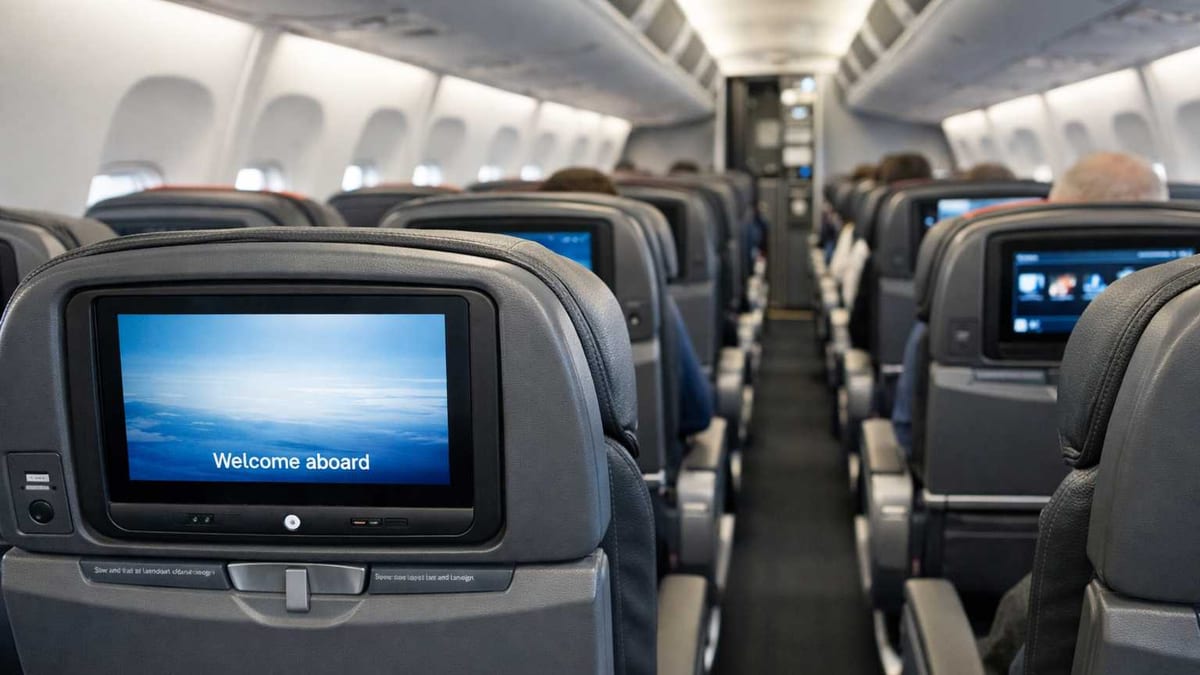
American Airlines is launching a sweeping upgrade of its narrowbody cabins, with plans to install seatback entertainment screens at every seat and significantly increase the number of premium seats across its domestic and short-haul fleet beginning in 2028.
Get the latest news straight to your inbox!
Major Shift in American’s Onboard Strategy
Publicly available information from American Airlines’ latest customer communications indicates that the carrier intends to reverse its previous strategy of removing individual seatback entertainment from most domestic aircraft and relying primarily on passengers’ personal devices. The new plan calls for state-of-the-art 4K screens to be installed at every seat across its narrowbody fleet over the next decade, starting with new deliveries and followed by retrofits of existing aircraft.
The move aligns American more closely with rivals that have used onboard entertainment as a competitive differentiator on U.S. routes. Industry reports note that United and Delta have been steadily expanding the presence of embedded screens on narrowbody jets, positioning them as part of a premium, tech-forward experience. American’s decision signals that the airline sees renewed value in making in-seat entertainment a standard feature rather than an occasional perk.
While the upgrade represents a significant investment, it dovetails with American’s broader push toward what company materials describe as “premiumization” of its fleet. This strategy emphasizes higher-yield seating, upgraded cabins and technology enhancements aimed at both business and leisure travelers seeking a more comfortable flight.
Seatback Screens for Every Narrowbody Seat
According to recent product announcements shared with customers, American will begin equipping all new Boeing and Airbus narrowbody deliveries starting in 2028 with large-format 4K seatback screens. The same generation of displays is expected to be phased in across existing aircraft as they enter scheduled interior retrofit programs later in the decade.
These screens are described as featuring Bluetooth connectivity for personal headphones, USB-C power at each seat and access to an expanded library of movies, television and other digital content. The airline has previously highlighted that its newer cabin concepts pair high-resolution displays with high-speed satellite connectivity, allowing passengers to stream, browse and work more easily during flight.
Unlike earlier iterations of embedded entertainment, the upcoming systems are being positioned as part of a unified digital experience that also includes gate-to-gate usability, intuitive interfaces and integration with personal devices. Industry observers indicate that this approach is designed to reduce friction for travelers who have become accustomed to streaming content seamlessly at home and on the ground.
The rollout will not be immediate. American’s own timelines and investor materials suggest that the process of fitting screens to every narrowbody seat will extend well into the 2030s, reflecting the scale of a mainline fleet that numbers in the hundreds of aircraft. For customers, that means a gradual but visible transition as more routes begin to feature the upgraded cabins.
More First Class and Extra-Legroom Seats
In parallel with the introduction of seatback screens, American is planning a sizable expansion of premium seating across its narrowbody fleet. Company presentations and media coverage of its fleet plans indicate that domestic first class and extra-legroom Main Cabin Extra will represent a larger share of seats on many aircraft types than today.
New Boeing 737 MAX 10 aircraft and reconfigured Airbus A321neo jets are expected to feature 24 domestic first class seats, an increase compared with earlier layouts on comparable narrowbody models. For existing Airbus A319 and A320 aircraft, earlier retrofit plans already called for 12 and 16 first class seats respectively, and the latest materials suggest these aircraft will be included in the next wave of premium-focused interior refreshes.
Analysts following the airline note that American has signaled premium seating growth of more than 20 percent on narrowbody and regional fleets over the mid-2020s, with long-haul lie-flat and premium economy capacity targeted to grow by around 50 percent by the end of the decade. The narrowbody upgrades now being outlined appear to extend that premium focus more deeply into the domestic network, where demand for extra space and priority amenities has remained strong.
By pairing more premium seats with modern in-seat technology, American is aiming to capture higher-spending customers who may have gravitated toward competitors perceived as offering a more polished onboard product.
Cabin Refreshes Extend Beyond Screens
The new announcement builds on a series of interior upgrades that American has been pursuing across its fleet. Prior disclosures to investors and in regulatory filings describe a multi-year program to refresh A319 and A320 cabins with power at every seat, larger overhead bins and updated seating. Similar work is underway or planned for widebody aircraft, including Boeing 777 and 787 jets, to introduce new Flagship Suite business class seats and revamped premium economy cabins.
On narrowbody aircraft, the latest round of changes goes further by reshaping the overall cabin environment. American’s materials describe redesigned seats, enhanced lighting and improved storage solutions, all framed as improvements that will make the cabins feel more spacious and modern despite the additional premium seating.
Regional jets are also being brought into alignment with mainline standards. Information released in 2024 outlined a program to retrofit dual-class regional aircraft with new seat coverings, in-seat power and satellite Wi-Fi, reflecting an effort to provide a more consistent experience for passengers connecting between smaller markets and major hubs.
Taken together, these initiatives represent a broad reconfiguration of American’s onboard experience, affecting almost every aircraft family over the course of the decade.
Competitive and Customer Implications
Industry commentary suggests that American’s renewed focus on seatback entertainment and premium seating is a response to evolving customer expectations and competitive pressure on key domestic routes. For several years, travelers on social platforms and in travel forums have contrasted American’s predominantly screen-free narrowbody interiors with the embedded entertainment common on Delta, United and certain low-cost carriers offering upgraded cabins.
The new plan addresses one of the most visible differences between American and its largest competitors on longer domestic flights, where passengers often spend several hours onboard. With 4K screens, high-speed Wi-Fi and expanded power options, the airline is positioning its narrowbody product as closer in feel to widebody aircraft used on long-haul routes.
At the same time, the increase in first class and extra-legroom seats reflects a broader industry trend of trading some standard economy density for higher-yield seating where demand supports it. Reports on American’s strategy point to strong willingness among certain customer segments to pay for additional space, priority services and enhanced onboard comforts, especially on routes frequented by corporate travelers.
However, the lengthy implementation timeline means that for several years many flights will continue to operate with current interiors, without seatback screens and with existing seat configurations. Travelers can expect a mixed experience during the transition period, with upgraded aircraft gradually entering service alongside older layouts until the retrofit program matures in the early 2030s.