


Summer in the Swiss Alps is about big views with easy access: glacier‑capped peaks, green valleys, blue lakes and an infrastructure of lifts and trains that makes high mountains feel surprisingly reachable. If you are weighing a Swiss Alps summer against beaches or big cities, the key questions are when trails and lifts operate, what you can realistically do in a day, and how weather and altitude shape the experience. This guide focuses on hiking, scenic trains and lake‑and‑mountain days so you can judge if a summer in the Alps fits your style of travel.
Get the latest updates straight to your inbox!
When is “summer” in the Swiss Alps?
In the Alps, summer for visitors is less about the calendar and more about when the snow melts. At village level, such as Interlaken, Lucerne or Chur, low‑elevation paths are usually walkable from late May to October. The classic high‑mountain hiking season on well‑known balcony trails between roughly 1,800 and 2,500 meters often runs from late June through late September, though exact timing shifts year to year with snowfall and spring storms. Travelers should always confirm current operating dates for lifts and mountain railways with each operator for their specific travel year, as maintenance works and weather can lead to earlier closures or short‑notice suspensions.
Conditions also vary by altitude across the season. In June, valley meadows are typically in full flower while higher trails can still hold old snow patches, especially on north‑facing slopes and shaded gullies. July and August are generally the most reliable months for high‑level hiking, with longer daylight and most cable cars and cog railways running daily. By late September, crowds thin and the larch forests in regions such as the Engadine begin to turn golden, but nights are colder and fresh snow can briefly close higher paths. Above around 3,000 meters, such as on permanent snowfields and glacier plateaus, winter conditions often persist year‑round, so routes there are treated as glacial terrain rather than regular hiking.
Transport companies publish detailed summer timetables, often split into early, high and late summer seasons. For example, mountain railways around Zermatt and the Jungfrau frequently list different opening periods for spring, main summer and autumn, and some key cable cars schedule multi‑week maintenance closures in April, May or October. Because these dates are updated annually and can change with technical work, it is important to check current timetables a few weeks before you travel rather than relying on information from previous years or printed guidebooks.
Iconic high‑mountain excursions
For many visitors, a summer Alps trip feels incomplete without at least one major high‑mountain excursion. In the Bernese Oberland, the Jungfraujoch is one of the most famous. Cogwheel trains climb via Kleine Scheidegg to a station at over 3,400 meters, where visitors step out to snow and ice even in July and August. Inside the complex there are viewing platforms, ice sculptures and marked snow areas, and typical visitors might spend two to three hours walking slowly to adjust to the altitude before returning to lower villages like Wengen or Grindelwald for a hike.
Nearby, the Schilthorn above Mürren provides a more panoramic viewpoint with a rotating restaurant and views across the Eiger, Mönch and Jungfrau. In summer, visitors commonly combine a gondola ride up with a mid‑level hike on the way down, for example between Birg and Mürren on clearly signposted paths. These are well within reach of casual hikers used to uneven ground, but conditions can be slippery after rain and altitude means weather can change rapidly, so checking local advisories on the day remains important.
Around Zermatt, two classic viewpoints are Gornergrat and Matterhorn Glacier Paradise. The cog railway to Gornergrat brings you to over 3,000 meters with sweeping views of the Gorner Glacier and a ring of 4,000‑meter peaks. Separate lifts link Zermatt to Trockener Steg and the Klein Matterhorn area, marketed as Matterhorn Glacier Paradise, which gives access to glacier viewpoints and an ice cave at more than 3,800 meters. Operators publish detailed summer timetables and note maintenance periods, so travelers should verify that specific sections of the network are running on their intended dates before committing non‑refundable tickets.
One of the most striking glacier panoramas in Switzerland lies slightly away from the best‑known resorts, at the viewpoints above the Great Aletsch Glacier in the Aletsch Arena. From car‑free villages on the ridge, cable cars lead to Moosfluh, Bettmerhorn and Eggishorn. At Eggishorn, near 2,900 meters, visitors look along almost the entire 20‑kilometer tongue of the longest glacier in the Alps and across to summits such as the Jungfrau and Mönch. Clearly signposted trails and viewing platforms allow people to experience the landscape without stepping onto the glacier itself. As with all glacial areas, walkers should always follow marked trails and observe local safety notices, since rockfall and path erosion have become more common with warming temperatures.
Scenic summer train journeys
Switzerland’s scenic trains are a summer highlight in their own right and an efficient way to link regions while still spending much of the day in the mountains. The Glacier Express connects Zermatt with St. Moritz or Davos in a full‑day ride across bridges, deep valleys and high passes. Panoramic cars with large windows are popular in July and August, and seat reservations are compulsory in these special coaches, with separate reservation surcharges added to regular tickets or rail passes. Reservations can sell out on peak dates, so travelers who are fixed to a single day in high summer should plan several weeks ahead.
The Bernina Express links the Engadine with northern Italy over the Bernina Pass, reaching more than 2,200 meters at its highest point. It crosses stone viaducts and skirts glaciers and turquoise lakes that are usually free of ice by midsummer. Like the Glacier Express, premium panoramic cars on the Bernina Express route generally require advance seat reservations in addition to a valid ticket or pass, while regular regional trains over the same tracks give flexibility to hop on and off with less need for long‑range planning.
Beyond these branded trains, many segments of the so‑called Grand Train Tour of Switzerland cross the high country in summer. Trains through the Gotthard region, across the Lötschberg route or via the Albula line connect large transport hubs with resort towns while offering Alpine scenery from standard intercity or regional carriages. In high season, morning and late afternoon departures can be busy, but most services operate on an hourly or half‑hourly pattern, making it easy to design flexible days that combine a scenic rail section with hiking or lake time at either end.
Travelers comparing a Swiss Alps summer to other European options often underestimate how much of the landscape is accessible without renting a car. It is realistic to plan an entire itinerary that strings together valley towns and mountain villages purely by train and cable car, especially in the Bernese Oberland, Valais and the Engadine. The main trade‑off is cost: scenic trains and mountain lines generally carry supplements, and journeys are not inexpensive compared with standard rail lines in many neighboring countries.
Classic Alpine hikes and glacier viewpoints
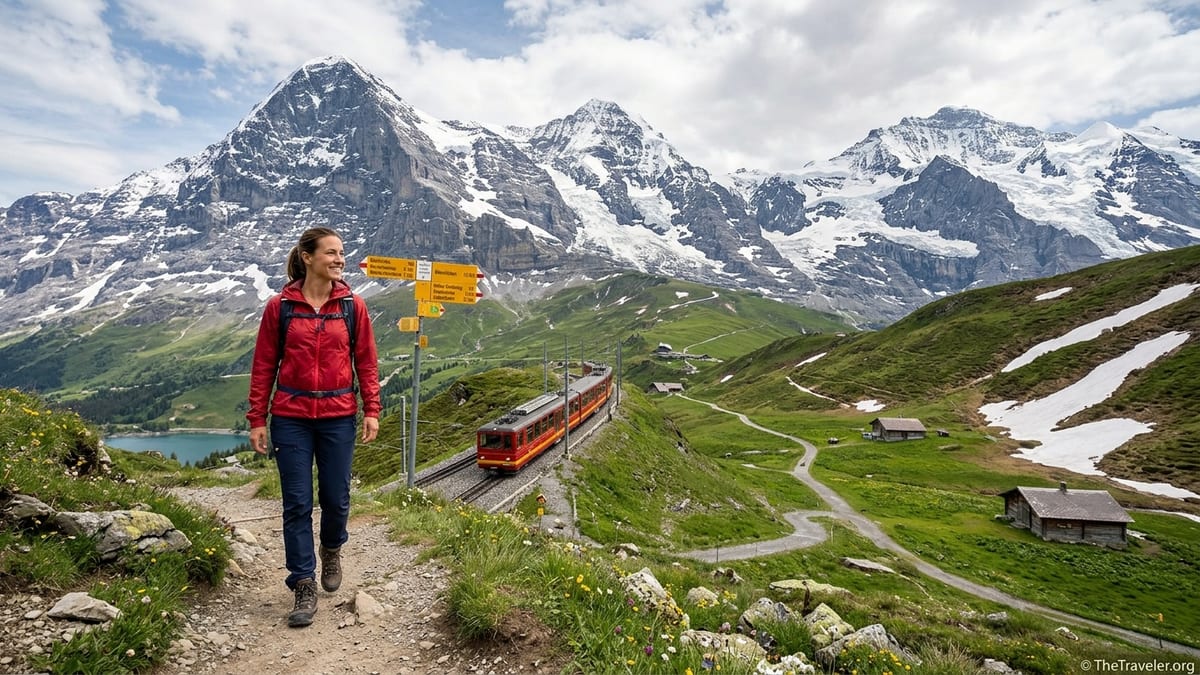
Thanks to well‑marked trail networks, a typical visitor in reasonable shape can experience serious mountain scenery without mountaineering skills. In the Jungfrau region, classic balcony paths between Männlichen and Kleine Scheidegg or around First and Bachalpsee sit between roughly 1,800 and 2,200 meters, with steady gradients and clear yellow signposts. On a clear July or August day, these trails offer close views of the Eiger’s north wall and surrounding glaciers, along with frequent mountain restaurants and signed turn‑offs back to cable car stations.
Around Zermatt, accessible day hikes link viewpoints such as Sunnegga, Blauherd and Gornergrat. Well‑known routes take in small lakes where the Matterhorn reflects in calm conditions, as well as higher traverses that keep the peak in sight for much of the walk. These trails are graded and maintained as hiking routes rather than alpine climbs, but they still demand sturdy footwear, weather‑appropriate clothing and awareness of changing conditions, particularly in the afternoons when thunderstorms are more likely in mid‑summer.
In southeastern Switzerland, the Engadine valley and the area around St. Moritz offer a different character: wide glacial valleys with larch forests and string‑of‑pearls lakes. Day hikes might combine funicular rides or cable cars to mid‑level viewpoints with walks back down through forests and meadows. There are also valley‑floor paths that follow rivers and lakes at gentler gradients, which suit families or travelers adjusting to altitude. Paths are clearly signed, but before setting out, visitors should confirm trail status with local tourism offices or online maps, since temporary closures due to rockfall or maintenance have become more frequent.
For close views of glacier ice without technical equipment, designated viewpoints such as Moosfluh, Bettmerhorn and Eggishorn above the Aletsch Glacier provide safe access to dramatic vistas. Elsewhere, short marked trails from high passes lead to glacier forefields, where ice has retreated in recent decades to reveal new lakes and rubble zones. These areas can be unstable, and water levels can change quickly in warm spells, so walkers should stay on official routes, heed closure signs and avoid venturing onto ice or into steep moraines without a qualified mountain guide.
Alpine lakes and summer water experiences
Alpine water is a major part of the Swiss summer experience, from deep fjord‑like lakes at a few hundred meters above sea level to bright blue glacier‑fed tarns far higher up. Lakes Lucerne, Thun and Brienz, all within reach of the central and Bernese Alps, run dense summer boat timetables. It is common to spend a morning on a mountain excursion and then board an afternoon or early evening cruise, using the boat almost like a floating terrace. On fine days in July and August, outdoor decks fill quickly, particularly on historic paddle steamers, though reservations are typically optional on most scheduled lake boats.
At lower‑elevation lakes, such as Lake Lucerne or Lake Thun, summer water temperatures often become comfortable enough for swimming by mid to late June and can stay pleasant into early September, especially in shallow bays and lidos with facilities. Public bathing areas usually mark safe zones, provide ladders and sometimes charge modest entry fees that include changing rooms and lifeguards. Water quality is generally high, and combining an easy half‑day hike with a late‑afternoon swim is a realistic and appealing plan when heat builds in the valleys.
High mountain tarns present a very different experience. Even in mid‑summer, small lakes near 2,000 meters or more are often fed directly by snowfields or glaciers and remain extremely cold. A quick, bracing plunge may be possible for healthy adults used to cold water, but hypothermia can develop quickly, and rocks can be slippery. There are rarely lifeguards or safety infrastructure at these sites. Visitors interested in wild swimming should judge their abilities conservatively, never jump into unknown depths and avoid swimming alone.
Because lakes sit in narrow valleys with steep slopes, local weather can change rapidly, and afternoon thunderstorms are common on hot days. Before heading out on a long cruise or renting small boats or paddleboards, travelers should check short‑term forecasts and be ready to cut outings short if storm clouds build. Most public lake services operate in a range of conditions, but strong winds, lightning or reduced visibility can disrupt timetables or limit where boats can safely dock.
Model summer days in key regions
In the Jungfrau region, a typical visitor might start an early summer day by taking the train from Interlaken or Lauterbrunnen up to Kleine Scheidegg, then continue to a high viewpoint such as Jungfraujoch if the weather is clear. After a morning on the glacier plateau, they could descend to mid‑level stations like Männlichen or Wengen and walk a few hours on way‑marked balcony trails facing the Eiger. Returning to Interlaken by late afternoon still leaves time for an evening cruise on Lake Thun or Lake Brienz, where the temperatures are milder and the mood shifts from stark ice to gentle water and village scenery.
In Zermatt, a well‑structured day might pair a high viewpoint with a straightforward marked hike. An early cog train to Gornergrat could be followed by an hour or two exploring the viewpoints and learning the names of surrounding peaks. After lunch, visitors might ride partway back down and continue on foot along a signposted path towards Riffelalp or Sunnegga, enjoying regular views of the Matterhorn and several small lakes along the way. Because afternoon storms can develop, it is wise to plan hikes that trend downhill toward Zermatt rather than away from it, and to be back in the village well before dusk.
In the Engadine, a summer day could connect St. Moritz with a mid‑level viewpoint and a gentle valley walk. A visitor might take a morning funicular or cable car to a terrace above the town, spend a couple of hours on a circular panorama path, then ride back down for a late lunch by the lakeshore. The afternoon could be spent on relatively flat trails that link lakes and villages along the valley floor, with options to end the walk at a train station and return by rail. This pattern suits families, photographers and anyone easing into altitude, since there is always an easy exit route back to town.
Travelers who want a focus on glaciers might set aside a day for the Aletsch Arena. They could ride morning cable cars from the valley up to a ridge village and on to a high viewpoint such as Moosfluh or Bettmerhorn, spend time on the signed panorama paths that overlook the Great Aletsch Glacier, then return to the car‑free village terraces for an early evening meal. This structure keeps walking distances flexible while still delivering sustained views of ice and high peaks, and avoids the risks that come with stepping onto glacial terrain without training or equipment.
Weather, gear and safety considerations
Summer in the Swiss Alps brings strong sun, quick changes in temperature and the possibility of sudden storms. Even when valley forecasts show warm days, temperatures at 2,000 to 3,000 meters can be 10 to 15 degrees Celsius lower, and wind chill on exposed ridges can make it feel colder still. Visitors should pack a layering system that includes a moisture‑wicking base layer, a light insulating layer such as a fleece or synthetic jacket, and a windproof and waterproof outer shell. A sun hat, sunglasses with proper UV protection and high‑SPF sunscreen are essential, particularly on snow or near water where reflection increases exposure.
Footwear should be chosen for uneven terrain. Sturdy walking shoes or light boots with good grip are sufficient for most way‑marked hiking trails, while trainers with thin soles are rarely comfortable on rocky ground. A small daypack with water, snacks, a basic first‑aid kit and a light insulating layer is advisable even for short walks from cable car stations. Because altitude and exertion can be dehydrating, it is wise to drink regularly and avoid alcohol before more strenuous hikes. Travelers who are sensitive to altitude should plan gradual ascent profiles and keep the first day at higher elevations relatively short.
Advance reservations are important for certain services in high season. Premium panorama cars on the Glacier Express and Bernina Express generally require seat reservations with separate surcharges, and popular mountain excursions such as Jungfraujoch, the Schilthorn or Matterhorn Glacier Paradise can see busy morning departures, particularly in July and August and on weekends. While same‑day travel is often possible, visitors with fixed dates who want specific trains or times should reserve ahead where possible, especially if traveling in larger groups or during school holidays.
Higher‑risk activities such as glacier trekking, via ferrata routes that use ladders and cables on cliffs, or unmarked alpine ascents should only be attempted with appropriate experience, equipment and, for most travelers, professional guiding. Local alpine clubs, mountain guide associations and tourism offices can recommend certified guides and publish safety advisories. Inexperienced hikers are best served by sticking to graded, signposted hiking paths within their fitness level and weather comfort zone. Before each outing, it is worth checking local trail status boards or official websites for closures due to rockfall, forestry work or storm damage.
Climate change and evolving summer conditions
Climate change is reshaping summer in the Swiss Alps in visible and less visible ways. National monitoring shows that Switzerland has warmed more than the global average over the past century, and official assessments highlight that glaciers are retreating, permafrost is thawing and the frequency of heatwaves and heavy rainfall events is increasing. Environmental agencies note that thawing permafrost and more intense precipitation can raise the risk of rockfalls, debris flows and slope instability, with implications for mountain paths, huts and transport infrastructure. These trends have already led to more frequent re‑routing of trails and occasional temporary closures around unstable slopes.
For visitors, one clear impact is the rapid retreat of glaciers. Viewpoints that once looked down on smooth ice now often reveal bare rock, meltwater streams and newly formed lakes at glacier snouts. While this can create striking new landscapes, it also means that off‑path exploration in these zones is more hazardous, as unconsolidated rubble, hidden crevasses near remaining ice and sudden water level changes make footing uncertain. Authorities and local tourism bodies respond by updating trail markings, installing new safety signs and, in some cases, moving or reinforcing infrastructure such as hut access routes or viewing platforms.
At the same time, official climate reports point out that warmer conditions may lengthen the season and increase demand for summer tourism in the Alps, even as they reduce natural snow reliability for winter sports. Hotter lowlands make cool mountain valleys more attractive for relief from heatwaves, and this can lead to busier July and August periods on popular trails and viewpoint terraces. Travelers planning future trips should expect that both the visual appearance of glaciers and the management of access routes will continue to evolve and should consult up‑to‑date maps and advisories rather than relying on descriptions from older guidebooks.
Because research findings and climate statistics are updated regularly, writers and planners who need precise figures on glacier loss, temperature trends or hazard frequency should turn to recent publications from Swiss federal agencies and research institutions. For trip planning at an individual level, the practical takeaway is to be flexible: choose itineraries with fallback options for poor weather, respect temporary closures aimed at safety, and recognize that some images seen in older brochures may no longer reflect the current landscape.
Is a Swiss Alps summer right for you?
A summer trip to the Swiss Alps rewards travelers who value scenery, active days and mild temperatures over beach heat or nightlife. Hikers and walkers at many fitness levels can find suitable routes on extensive networks of marked paths, photographers benefit from long days with rapidly changing light and weather, and families often appreciate the combination of high‑mountain viewpoints reached by lifts, child‑friendly playgrounds and easy lakeside strolls. The strong integration of trains, boats and cable cars means that even those who do not wish to drive can reach a wide range of landscapes.
There are trade‑offs. Switzerland is one of Europe’s more expensive destinations, and scenic trains, cog railways and cable cars add significantly to daily costs, particularly in peak summer months. Weather is more variable than in classic Mediterranean resorts: a run of perfect blue‑sky days is certainly possible, but so are sequences of cloud, rain or afternoon storms that limit high‑altitude views. Some lifts and trails may be closed at short notice for maintenance, high winds or safety reasons, and exact opening and closing dates shift each year depending on snowfall and operational needs.
Travelers who get the most from a Swiss Alps summer are those who are comfortable planning flexible days with backup options, packing for rapid weather changes and budgeting for a mix of mountain transport, accommodation and food at Swiss price levels. For this audience, the payoff is substantial: access to glaciers and panoramic ridges without technical climbing, refreshing lakes and rivers for swimming or cruising, and a network of scenic trains that can turn simple transfers into memorable journeys. Anyone considering a trip should, shortly before departure, cross‑check lift timetables, trail conditions and any local advisories so that their on‑the‑ground experience matches the promise of the brochures.