


More news on this day
Technip Energies, Airbus, Safran and agricultural processor Tereos are moving toward the creation of a new French joint venture focused on sustainable aviation fuel, aiming to link advanced engineering with domestic biomass to meet Europe’s increasingly stringent decarbonisation goals for air travel.
Get the latest news straight to your inbox!
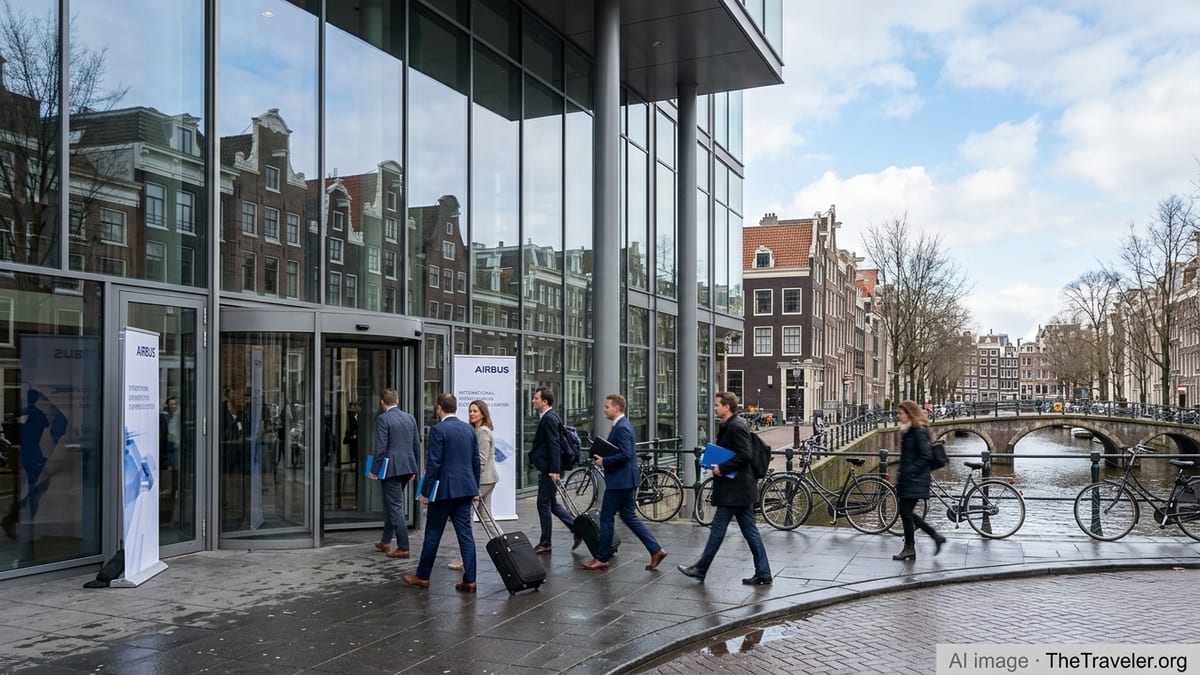
A new industrial alliance around sustainable aviation fuel
The planned joint venture would bring together four companies positioned along different parts of the aviation and energy value chain. Technip Energies has emerged as a prominent engineering and technology provider for low carbon projects, including multiple contracts for sustainable aviation fuel facilities in Europe, while Airbus and Safran are central to the continent’s aircraft and engine manufacturing ecosystem. Tereos adds a major source of agricultural feedstock, from sugar beet to other biomass streams, that can be converted into low carbon fuels.
Publicly available information on the discussions indicates that the partners are exploring a dedicated structure in France to advance sustainable aviation fuel production at industrial scale, with the objective of supplying both domestic and wider European markets. The move aligns with the European Union’s ReFuelEU Aviation regulation, which progressively raises minimum sustainable aviation fuel blending mandates for all departures from EU airports in the coming decades.
By pooling their expertise, the four companies are expected to cover technology design, plant delivery, feedstock sourcing and long term offtake from airlines and aircraft operators. Such an integrated approach is increasingly seen as necessary to unlock investment in new facilities, which require large upfront capital expenditure and long payback periods in a still emerging market.
France positions itself as a sustainable aviation fuel hub
The prospective joint venture comes as France seeks to establish itself as a leading European hub for next generation aviation fuels. Recent project announcements show a growing pipeline of synthetic and bio based fuel plants in regions such as Normandy and the wider Seine corridor, where industrial infrastructure, port access and renewable power connections are already in place.
Technip Energies has highlighted in its recent financial disclosures that sustainable aviation fuel is now a core growth area, with engineering work under way on several commercial scale plants, including projects in northern Europe. Reports on the company’s activities indicate an increasing focus on both hydroprocessed biofuels and so called electro-sustainable aviation fuel that relies on captured carbon dioxide and green hydrogen.
Bringing Airbus and Safran formally into a French sustainable fuel production venture would add a powerful downstream dimension to these efforts. Both manufacturers have been testing higher blends of sustainable aviation fuel in existing aircraft and engines, while also investing in technologies such as hydrogen propulsion and more efficient open rotor concepts that are expected to operate on low carbon fuels over the longer term.
From agricultural residues to jet fuel
Tereos, one of Europe’s largest sugar and starch producers, is expected to play a pivotal role in securing reliable feedstock for the planned partnership. The company processes large quantities of French-grown beet, cereals and other crops, generating side streams such as molasses, vinasse and agricultural residues that can be upgraded into advanced biofuels under current European sustainability criteria.
Industry analysis suggests that pairing such domestic biomass resources with French engineering and aviation demand could create a largely national value chain, from farm to fuel tank. This is in line with policy priorities in Paris and Brussels, which increasingly emphasise energy sovereignty, circular use of agricultural byproducts and measurable reductions in lifecycle greenhouse gas emissions compared with fossil kerosene.
The joint venture discussions reportedly consider multiple technology pathways, including lipid-based routes for first wave capacity and more innovative processes, such as alcohol-to-jet or gasification followed by Fischer-Tropsch synthesis, for subsequent phases. Technip Energies has already accumulated experience in several of these technologies through previous contracts, which would likely be leveraged in any French plants developed with the new partners.
Scaling capacity to meet tightening European mandates
Across Europe, regulators are pushing the aviation sector toward a steep increase in sustainable aviation fuel uptake over the next two decades. Under current plans, a growing share of all fuel uplifted at EU airports will have to come from sustainable sources, with specific subtargets for synthetic fuels derived from renewable electricity. Industry observers note that this will require not only new production capacity, but also coordinated investment in feedstock supply chains, logistics and certification.
The envisioned French joint venture appears designed to address several of these challenges simultaneously. With Airbus and Safran closely tied to airline customers and aircraft operations, the partnership can shape fuel specifications and testing regimes from the outset. Technip Energies would likely manage process design, integration and project delivery, while Tereos would secure long term access to compliant agricultural inputs and help manage sustainability verification.
Market projections compiled by sector analysts show that sustainable aviation fuel remains a niche product today, but could account for a significant portion of global jet fuel demand by the mid 2030s if supportive policies, carbon pricing and corporate decarbonisation commitments continue to strengthen. France’s ambition to capture a share of this growth is expected to influence how rapidly the joint venture moves from framework agreements to final investment decisions on concrete projects.
Broader implications for airlines and travelers
For airlines serving French and wider European routes, the emergence of a new domestic supplier of sustainable aviation fuel would be a welcome development, though the impact on ticket prices and route planning is likely to unfold gradually. Fuel typically represents one of the largest operating costs for carriers, and sustainable aviation fuel is currently more expensive than conventional kerosene, even after accounting for carbon pricing and various incentives.
Analysts following the sector note that partnerships linking aircraft manufacturers, engine makers, technology providers and feedstock suppliers may help narrow this cost gap over time through scale effects and process optimisation. If the joint venture between Technip Energies, Airbus, Safran and Tereos advances as expected, it could provide airlines with greater visibility on long term supply volumes and pricing structures, enabling more robust decarbonisation commitments.
For travelers, the initiative forms part of a broader shift in how aviation’s climate impact is addressed. While more efficient aircraft, improved air traffic management and potential future breakthroughs such as hydrogen-powered flight will all play their part, sustainable aviation fuel is increasingly viewed as the primary lever for cutting emissions from medium and long haul flights in the near to medium term. A French joint venture anchored by these four companies would signal that the industry is preparing to scale this solution in a coordinated way.