


There are places you visit in Great Smoky Mountains National Park, and then there are places you earn. LeConte Lodge, clinging to the western slope of Mount Le Conte at roughly 6,360 feet, squarely belongs to the second category. With no road access, limited reservations, and nearly a century of lore behind it, staying here feels less like booking a room and more like being initiated into one of the Smokies’ most exclusive mountain traditions.
Get the latest updates straight to your inbox!
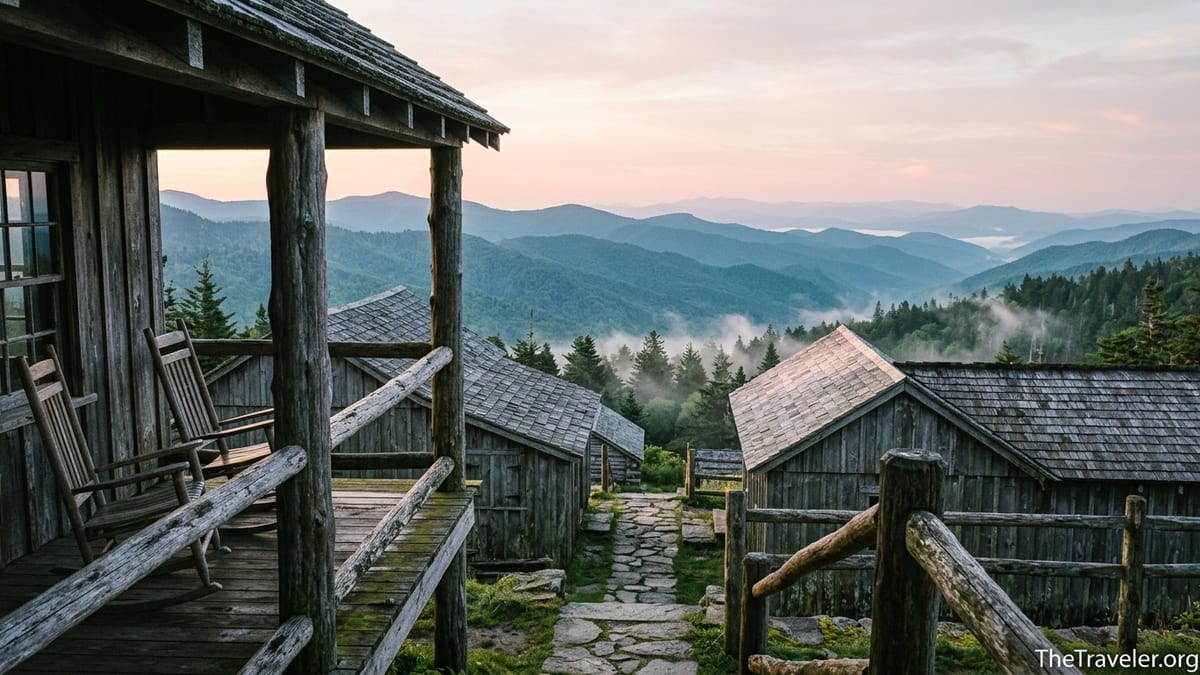
A Lodge You Can Only Reach on Foot
Part of what makes LeConte Lodge feel so exclusive is that everyone who checks in has completed the same basic rite of passage: they hiked up. There is no driveway, no shuttle to the front door, no scenic tramway. The lodge sits high on Mount Le Conte, the third-highest peak in Great Smoky Mountains National Park, and is reached by a network of steep trails that climb roughly 2,500 to 2,800 feet from the valleys below. That simple fact shapes everything about the experience. When you sit down to dinner, every person in the room has just walked five to eight miles to be there.
Most guests arrive via the Alum Cave Trail, the shortest and most popular route at about 5 miles one way. The trail leaves Newfound Gap Road just south of Gatlinburg and threads through old-growth forest, stone staircases, and narrow passages like Arch Rock before breaking out to views from Alum Cave Bluffs and the final ridgeline. Others opt for longer routes such as Trillium Gap, Rainbow Falls, Bullhead, or the Boulevard Trail that ties into the Appalachian Trail. Each approach has its own personality, but all require time, effort, and basic preparation. That barrier to entry instantly separates LeConte Lodge from the drive-up lodges common in other national parks.
Because everyone has made a physical investment, there is a shared sense of arrival when you finally step into the clearing of weathered cabins and spruce-fir trees. Even hikers who are used to long days on trail often pause just before the office to take it in. On busy spring weekends you might see a Tennessee family finishing their kids’ first big mountain, a couple from Ohio crossing Le Conte off a long-held bucket list, and a thru-hiker on a side trip from the Appalachian Trail, all converging in the same rustic compound. The effort smooths out social differences and makes the lodge feel like a small, temporary village of equals.
The Long Game: Lotteries, Waitlists, and Planning Years Ahead
Securing a night at LeConte Lodge feels a bit like winning a small-scale lottery because, in many cases, it literally is. The lodge operates from roughly mid-March through mid-November, and demand for its seven cabins and three multi-room lodges far exceeds supply. For the main season, most spaces are allocated through a reservation request period that typically opens a year in advance. Travelers send in their preferred dates and party sizes, then wait to hear whether they’ve drawn a spot. Some Smokies regulars mail off requests every fall, treating it as an annual ritual regardless of whether they actually snag a room.
Even outside the main request window, getting a bed can require persistence and flexibility. Cancellations do happen, but they can be snapped up quickly. A teacher from Atlanta, for example, might call in early August and discover that the only remaining option is a Tuesday night in October for two instead of the Saturday they hoped for. Adjusting school schedules, finding midweek time off, and rearranging other travel plans suddenly becomes part of the story. When those plans finally come together and the confirmation arrives, it feels less like a standard hotel booking and more like an earned opportunity.
The scarcity is magnified by the lodge’s tiny scale. Capacity is roughly a few dozen guests per night, not hundreds. Cabins are simple wood structures with porches and rocking chairs, some configured for couples and others for small groups or families. Multi-room lodges can accommodate larger parties, often up to eight or ten people, which makes them prized for reunions or multi-generational trips. A family who started visiting when their kids were in elementary school might reserve the same October weekend year after year, eventually watching those kids return as adults with partners of their own. In that way, the reservation process itself helps reinforce the sense of tradition.
The cost also shapes the experience, though not in a flashy way. Overnight rates are more than a typical campground but generally comparable to a modest mountain inn, especially considering that breakfast and dinner are included. Guests know they are paying for something more than bedding and meals: they are buying into a carefully preserved, hard-to-reach slice of Smokies history. The combination of advance planning, limited capacity, and inclusive pricing all contributes to a feeling that you are stepping into a small club rather than simply spending a night in the park.
Stepping Back in Time: Rustic Comfort at 6,360 Feet
Once you arrive, it becomes clear that exclusivity here is not about luxury in the usual sense. LeConte Lodge predates the establishment of Great Smoky Mountains National Park and has retained much of its early-20th-century mountain-camp character. There is no electricity in the guest cabins, no Wi-Fi, no televisions, and no private bathrooms with endless hot water. Instead, you get kerosene lamps, propane heaters, cold spring water at outdoor taps, and shared privies or restrooms a short walk away. The simplicity is deliberate and is part of what regulars cherish.
Inside a typical cabin, you’ll find wooden beds with thick blankets, a small table, maybe some wall hooks, and just enough space to spread out your pack. Instead of flipping on a light switch, you strike a match to light the lamps at dusk, their glow bouncing off log walls. A couple might play cards by lamplight on a chilly October evening while their boots dry beside the heater, hearing muted conversations from neighboring cabins through the wind. For some guests, that first night without a phone signal or outlet in years is as memorable as the view from the summit.
The atmosphere extends beyond the cabins. The dining hall, with its long tables and simple place settings, feels like a cross between a camp mess and a mountain lodge. Guests trickle in before the dinner bell, swapping stories about which trail they used and where they are headed next. On a rainy spring night, you might see damp rain jackets lined up on the porch railing, while inside servers bring out hearty dishes such as roast meat, mashed potatoes, vegetables, hot biscuits, and cobbler. In the morning, breakfast might mean scrambled eggs, grits, bacon, and pancakes, all the sort of filling fare you’re grateful for before beginning a steep descent.
Even details like drinking water and snacks reinforce the backcountry feel. You fill your bottles from designated taps that bring in treated spring water from nearby sources. Coffee and hot chocolate become social rituals in the common room, where guests page through well-thumbed logbooks of past seasons or read notes left by previous visitors. You might see a postcard rack at the office, where you can mail cards that will be carried down the mountain with the next supply run, stamped with a note that they were “lugged by llamas.” Each of these small touches signals that you’ve stepped into a world that chooses tradition over convenience.
The Llama Trains and the Invisible Logistics of Isolation
Staying at LeConte Lodge also plugs you into a remarkable behind-the-scenes operation that most guests only glimpse at the edges. Because there is no road to the lodge, nearly everything that appears on your dinner plate or in the small gift shop has been hauled up the mountain without a motor. For years, strings of pack llamas have been the workhorses of this operation, carrying food, linens, propane, and other supplies up the Trillium Gap Trail several times a week when the lodge is open.
If you happen to hike Trillium Gap on a llama day, you might step aside on the narrow trail to let a patient, sure-footed line of animals pass, each with brightly colored panniers. Families often time their return hike to intersect with the llamas, turning a routine descent into one of the day’s highlights. At the lodge, the animals are unsaddled and tied to a hitching rail near the cabins while wranglers unload everything from canned goods to fresh produce. Guests sipping coffee on the porch might watch the process, surprised to realize that the syrup on their breakfast pancakes or the logs in the wood pile arrived the same way.
The logistics add an extra layer of appreciation. Propane cylinders for heaters, bags of flour for biscuits, replacement sheets and towels, even small souvenirs all share the trail with day hikers and overnight guests. Waste has to go back out too, which further limits what the staff can offer. That is why amenities that seem ordinary at a road-accessible lodge, like endless menu options or daily room service, are absent here. When you understand that everything has to be packed in and out, it becomes easier to embrace simple meals, shared facilities, and a measured pace of life.
Weather also plays a role in the lodge’s remote feel. At over 6,000 feet, Mount Le Conte frequently sits in cloud, with mist blowing through the spruce-fir forest and visibility dropping to a few dozen yards. On those days, supply trips may be rescheduled, and guests learn to accept a certain amount of flexibility. In October, a cold front can bring frost or even early snow, covering the cabin roofs and turning the morning water run into a chilly adventure. The combination of animal-powered resupply and high-elevation weather makes staying here feel like participating in an ongoing logistical experiment that has been refined over decades.
A Living Community of Regulars, First-Timers, and Passing Hikers
One of the strongest reasons LeConte Lodge feels like a tradition rather than simply a destination is the community it attracts. Certain weekends each season feel like reunions. A group of Knoxville friends might be on their thirtieth annual trip, hiking the same trail every spring and always posing for a photo at the same cabin step. An older couple from North Carolina may have spent their honeymoon at LeConte decades ago and now return every few years, comparing current staff names with the ones they remember from earlier visits.
At the same time, there are always first-timers. A family with teenagers might have built up to the hike over several summers, starting with shorter trails in the Smokies and eventually tackling Alum Cave with loaded daypacks. When they arrive at the lodge, still flushed from the climb, long-time regulars often welcome them with genuine enthusiasm, offering tips on where to watch sunset from Cliff Top or the best time to walk out to Myrtle Point at sunrise. That mix of seasoned veterans and wide-eyed newcomers keeps the tradition fresh.
Day hikers and Appalachian Trail backpackers add to the sense of fluid community. Because the lodge is near the top of Mount Le Conte, it attracts a steady stream of visitors who do not stay overnight but stop in to rest, buy a sack lunch, or refill water before continuing on. On a sunny Saturday in June, the front porch benches might hold a trail runner in lightweight shoes, an amateur photographer with a hefty camera, and a Scout troop finishing their first major ascent. Short conversations, borrowed trekking poles, and shared blister tape become part of the social fabric.
Evenings bring the community into sharper focus. After the family-style dinner, many guests walk a short distance to the Cliff Top area to watch sunset over layers of blue ridges stretching toward the Tennessee valley. People who were strangers that morning might stand side by side, swapping cameras for group photos or quietly taking in the view. Later, back in the cabins, the faint glow of lanterns and low voices drifting through the trees remind you that you are part of a small, high-altitude neighborhood that exists for one night only before dissolving again in the morning.
The Views, Rituals, and Little Moments That Make It Iconic
There are famous views in the Smokies that you can drive to in a few minutes, but the ones you reach from LeConte Lodge carry a different weight because you had to work for them. Cliff Top, a short walk through the trees from the lodge, offers a sweeping panorama west over the rolling ridges above Gatlinburg. On clear evenings in late summer, the sky often flares pink and orange, then deepens into indigo as the first lights appear in the valley far below. Many guests plan their hike to arrive in mid-afternoon specifically so they can rest, eat dinner, and make it to Cliff Top in time for sunset.
On the opposite side of the mountain, Myrtle Point faces east and is a favorite for sunrise. Guests who make the early start often leave the cabins in fleece layers and headlamps, following the rocky path across the summit plateau. When the sun lifts over the North Carolina side of the park, the layered ridges gradually emerge from the blue-gray haze. It is common to see people sit quietly on the rocks, coffee mugs in hand, letting the light change without feeling compelled to document every second. The experience becomes more about being present than chasing the perfect photo.
Between those headline moments, it is the small rituals that stick in memory. Stamping a personal hiking log or park passport with a distinctive LeConte Lodge stamp in the office, picking out a simple enamel mug or patch as a souvenir, or jotting a message in the communal guestbook for future visitors to read. Parents often mark a child’s first summit with a quick note: the date, the trail used, and the age at which they first hiked up. Years later, that same child might return as an adult, flipping through old volumes to find the entry their parents wrote.
Weather variations create their own traditions. Locals talk about “cloud days” when the lodge spends hours socked in, with wind sending fog past the cabin windows in fast-moving waves. On those afternoons, board games and borrowed paperbacks appear in common areas, and conversations deepen as people wait for a break in the mist. Then there are the crystalline autumn mornings after a cold front, when the air feels scrubbed clean and you can see sharp ridgelines stacked one behind another all the way to the horizon. Those who have visited multiple times often have a favorite version of Le Conte and can describe it as vividly as a family home.
How to Join the Tradition Without Being Overwhelmed
For travelers used to conventional national park lodges, the idea of hiking all day to reach a rustic cabin can feel intimidating. Yet with realistic planning and expectations, LeConte Lodge is accessible to a wide range of reasonably active visitors. The key is to match your trail choice and timing to your group’s fitness level. A couple in their 50s who walk regularly on rolling terrain might allow six to eight hours for the 5-mile Alum Cave ascent, building in plenty of time for breaks at Alum Cave Bluffs and other scenic spots. Families with younger children often choose longer but somewhat gentler options like Trillium Gap, starting early and packing snacks to keep energy high.
Gear can stay simple. Many guests successfully complete the hike with daypacks carrying extra layers, rain gear, water, and a few personal items for the night. The lodge provides bedding and meals, so you do not need to haul tents, stoves, or food for every meal. Experienced hikers might bring trekking poles for the rocky descents, especially in wet conditions. In shoulder seasons, packing a warm hat and gloves makes lingering at sunrise viewpoints more comfortable. The lodge’s emphasis on basic comfort over luxury also means you do not need specialized clothing; sturdy walking shoes or light hiking boots, a breathable base layer, and a reliable rain jacket go a long way.
Parking and permits add a small but important logistical layer. Great Smoky Mountains National Park now requires paid parking tags for vehicles left at trailheads, and some access points near Gatlinburg can be crowded on popular weekends. Overnight guests often plan to arrive in the area the day before their hike, staying in a motel or cabin nearby so they can reach the trailhead early. Some arrange local shuttles to avoid competing for limited spaces. Being prepared with a parking tag, plenty of time before dark, and a backup trail choice in case a lot is full reduces stress and keeps the focus on enjoying the climb.
Perhaps the most important mental preparation is accepting that you are choosing experience over convenience. You will share bathrooms, walk in whatever weather the mountain gives you that day, eat at fixed meal times, and go to bed under lamplight. In exchange, you will gain an unusually immersive night in one of the country’s most visited national parks while surrounded by only a handful of other people. Framing the trip as a small adventure rather than just another lodging choice helps first-time visitors relax and appreciate why so many people return year after year.
The Takeaway
LeConte Lodge feels exclusive not because it is lavish or expensive, but because it asks something of you. You must plan ahead, commit to the hike, and temporarily trade modern comforts for a simpler way of living at 6,360 feet. In return, you get to step into a tradition that stretches back nearly a century, sharing lamplit dinners, llama-supplied breakfasts, and misty mountaintop views with a small group of fellow travelers who made the same climb.
In a park famous for roadside overlooks and congested motor routes, LeConte Lodge offers something increasingly rare: a place where the journey filters the crowd. When you sign the guestbook, sip coffee on a weathered porch, or watch the sun fade from Cliff Top, you are not just checking off a sight. You are briefly joining a community of people who have chosen to meet the Smokies on foot and to savor a type of mountain hospitality that survives precisely because it has resisted easy access. That is what makes a night at LeConte Lodge feel less like a reservation and more like an earned invitation to one of the Smokies’ most enduring traditions.
FAQ
Q1. How hard is the hike to LeConte Lodge for an average visitor?
The hike is strenuous but manageable for reasonably active people who prepare. Most guests choose the Alum Cave Trail, about 5 miles one way with significant elevation gain. Taking your time, starting early, and building in plenty of breaks makes it achievable for adults and older kids with some hiking experience.
Q2. Which trail is best for first-time guests hiking to the lodge?
Alum Cave is the most popular because it is the shortest and has varied scenery, but it is also steep. Trillium Gap offers a longer but somewhat more gradual climb and the chance to see Grotto Falls and, on certain days, the llama train. Rainbow Falls provides waterfall views but can be rocky and demanding. Choose based on your comfort with distance and steepness.
Q3. What is included in the overnight rate at LeConte Lodge?
The rate typically includes your cabin or lodge room, a hearty family-style dinner, and a full breakfast the next morning. Bedding, propane heaters, and kerosene lamps are provided, so you do not need to carry camping gear. Sack lunches and a small selection of snacks or drinks are usually available for purchase.
Q4. Do the cabins have electricity, heat, or private bathrooms?
Cabins do not have electricity or running water. Light comes from kerosene lamps, and heat is provided by propane or similar heaters. Restrooms and wash areas are shared and located a short walk from the cabins. Spring water is available at outdoor taps for drinking and basic washing.
Q5. How far in advance do I need to book a stay?
Most nights during the March to November season fill many months in advance. The lodge uses an annual reservation request process for the upcoming year, and popular weekends can be claimed quickly. If you are flexible with dates and can consider midweek stays, you may have better luck picking up cancellations closer to your trip.
Q6. What should I pack for a night at LeConte Lodge?
Pack like you are doing a full-day mountain hike with a simple overnight. Bring sturdy footwear, layers for changing temperatures, a rain jacket, headlamp, personal toiletries, and any medications. You will not need a tent, stove, or bedding. Many guests also bring trekking poles, a small change of clothes for the evening, and a lightweight book or cards for down time.
Q7. Can children or older adults comfortably handle the trip?
Yes, many families and older hikers stay at the lodge each season. The key is honest assessment of fitness, choosing the right trail, and moving at a conservative pace. Families often take frequent breaks and turn the hike into an all-day adventure, while older adults might train with regular walks and shorter hikes in the months before their visit.
Q8. What happens if the weather is bad on my hiking day?
Mount Le Conte’s weather can be wet, foggy, or chilly even when the valleys are warm. The lodge operates in a wide range of conditions, so guests are expected to come prepared with rain gear and warm layers. In rare cases of severe storms or unsafe trail conditions, you will work directly with lodge staff or park information to adjust plans, but most of the time you simply hike and enjoy a more atmospheric mountain day.
Q9. Are day hikers allowed to visit the lodge if they are not staying overnight?
Yes, day hikers are welcome to stop at the lodge area during daylight hours. Many people hike up, rest on the porches, refill water, or purchase a snack or sack lunch before heading back down. However, overnight facilities and meals are reserved for registered guests, and everyone is asked to respect quiet hours and cabin privacy.
Q10. Why do so many people return to LeConte Lodge year after year?
Regulars often say they come back for the combination of effort, simplicity, and community. The challenging but rewarding hike, the unplugged nights by lamplight, the shared meals, and the sunrise and sunset viewpoints add up to a ritual that feels both personal and connected to a larger Smokies tradition. For many, returning to Le Conte marks the passing of seasons and life milestones in a way few other trips can match.