


More news on this day
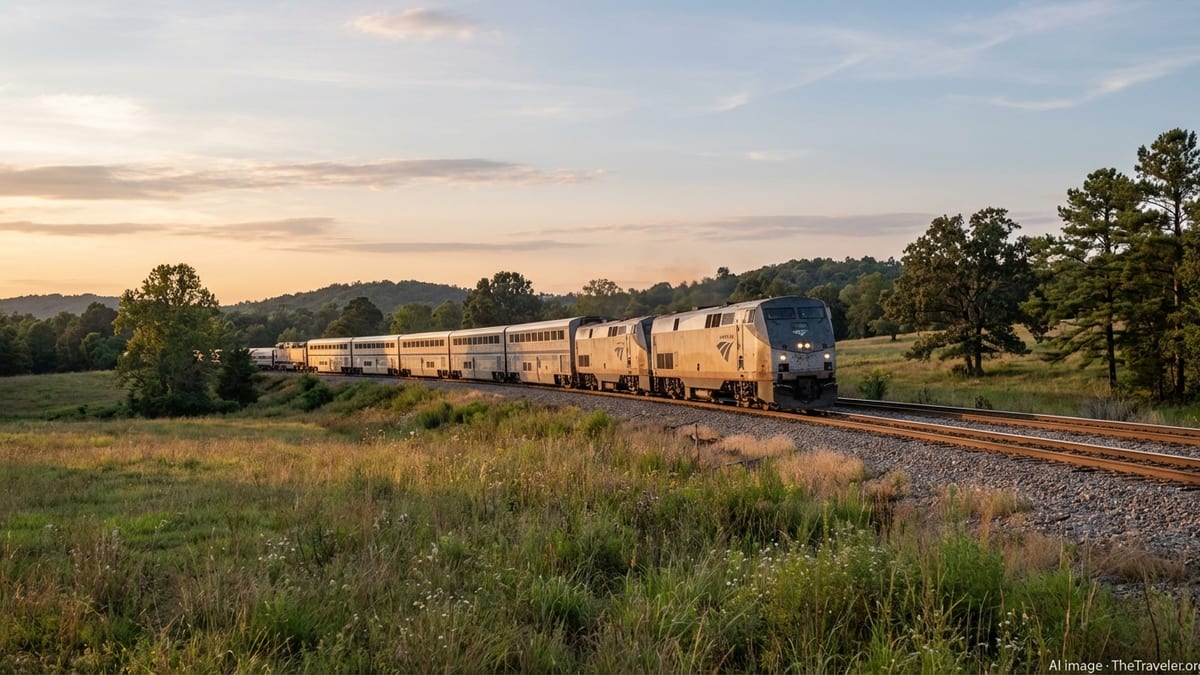
Texas has injected new life into the Amtrak Heartland Flyer, with fresh state funding and regional contributions securing daily service through at least 2026, turning what recently looked like a looming shutdown into a pivotal rail investment along the busy Interstate 35 corridor.
Get the latest news straight to your inbox!
From Imminent Suspension to a Funded Daily Lifeline
Just over a year ago, the Heartland Flyer corridor between Fort Worth and Oklahoma City was widely described as being at risk, with Amtrak warning in mid‑2025 that service could be suspended unless Texas restored its share of operating support. Publicly available information at the time indicated that the train faced termination as early as October 1, 2025, if a gap in Texas funding was not closed, even as Oklahoma continued to budget for its portion of the route.
Since then, a patchwork of short‑term measures and new state commitments has evolved into a more durable funding picture. Reports from the North Central Texas Council of Governments and regional briefings show that regional toll revenue was tapped in 2025 to keep Amtrak’s daily Fort Worth–Oklahoma City train running for roughly one additional year, buying time for lawmakers to negotiate a longer‑term plan for the corridor.
The turning point has come in 2026. According to a late‑August 2026 update from Amtrak’s public media site, Texas has now committed additional state funding for daily Heartland Flyer operations. The action is tied to decisions by the Texas Transportation Commission and the state’s Legislative Budget Board, which collectively clear the way not only for continued baseline service but also for a Dallas–Fort Worth “Big Game Train” extension tied to a major annual football matchup.([media.amtrak.com](https://media.amtrak.com/2026/08/amtrak-and-passengers-grateful-for-texas-funding-of-daily-heartland-flyer-trains/?utm_source=openai))
These decisions have effectively transformed the Heartland Flyer from a train on the brink of cancellation into a confirmed daily service going into 2026, reducing uncertainty for passengers and communities along the route that rely on the connection to the national rail network.
How the New Funding Structure Works
The Heartland Flyer is operated by Amtrak under federal law that requires states to share operating costs for shorter intercity routes. The Texas Department of Transportation and the Oklahoma Department of Transportation jointly cover expenses that exceed fare revenue, using a standardized allocation methodology overseen by a national state‑Amtrak committee.([media.amtrak.com](https://media.amtrak.com/2025/06/heartland-flyer-faces-imminent-suspension-without-funding/?utm_source=openai))
In recent budget cycles, higher operating costs and inflation created pressure on this cost‑sharing model. A 2024 discussion document from the Texas Department of Transportation outlined a requested 4 percent annual inflationary adjustment on top of Texas’s then‑current contribution of about 2.46 million dollars per year, underscoring how fuel, labor and maintenance costs have climbed since the train’s launch in 1999.([ftp.dot.state.tx.us](https://ftp.dot.state.tx.us/pub/txdot/commission/2024/0730/6a.pdf?utm_source=openai))
Oklahoma budget documentation shows that its ongoing support is drawn from a mix of fuel tax, freight car tax and income tax revenues that feed a dedicated revolving fund for passenger rail operations, including the Heartland Flyer.([oklahoma.gov](https://oklahoma.gov/odot/travel/other/banner-project-updates/transportation-system-funding.html?utm_source=openai)) In contrast, Texas historically relied more heavily on general revenue allocations, leaving the train more vulnerable to periodic shortfalls when legislative priorities shifted.
The new 2026 funding commitments in Texas, combined with Oklahoma’s existing rail and tourism fund structure, provide a clearer multi‑year path for the train’s daily operations. While observers note that the corridor will still require periodic renewals in future state budgets, the immediate risk that the service would disappear from timetables in 2025 or 2026 has receded.
Passenger Demand and Economic Stakes Along the I‑35 Corridor
The Heartland Flyer has been in operation since June 15, 1999, serving as the only intercity passenger rail link in Oklahoma and connecting that state to the broader Amtrak system through Fort Worth.([oklahoma.gov](https://oklahoma.gov/odot/programs-and-projects/programs/multimodal/rail-programs/heartland-flyer.html?utm_source=openai)) The route ties into Amtrak’s Texas Eagle and other long‑distance services, effectively turning a 206‑mile corridor into a bridge between the Southern Plains and the national network.
Ridership has shown resilience despite the funding uncertainty. Oklahoma planning documents and recent public discussions around the 2026 State Rail Plan cite rising boardings on the Heartland Flyer, building from tens of thousands of annual passengers before the pandemic to new highs by the mid‑2020s.([oklahoma.gov](https://oklahoma.gov/odot/programs-and-projects/programs/transportation-programs/long-range-transportation-plan/frequently-asked-questions.html?utm_source=openai)) Advocates point to these numbers as evidence that the corridor is evolving from a niche service into a mainstream travel option for students, tourists and business travelers moving between North Texas and central Oklahoma.
Economic analyses referenced in Texas commission materials suggest that passenger rail investments can yield a significant multiplier effect in local economies, with one Texas A&M study indicating several dollars of economic activity generated for every public dollar spent on rail.([media.amtrak.com](https://media.amtrak.com/2026/08/amtrak-and-passengers-grateful-for-texas-funding-of-daily-heartland-flyer-trains/?utm_source=openai)) In practice, that translates into hotel bookings in Fort Worth and Oklahoma City, restaurant spending in smaller station communities, and associated benefits from transit connections and station‑area development.
The 2026 decision to shore up the route is being framed in public documents as a way to protect those economic benefits while giving planners time to evaluate possible enhancements, such as schedule adjustments, station improvements, or future extensions north or south as part of a larger Midwest–Texas rail vision.([oklahoma.gov](https://oklahoma.gov/content/dam/ok/en/odot/programs-and-projects/transportation-programs/lrtp/lrp-2020-2045/oklahoma-2045-lrtp-final-august-2020.pdf?utm_source=openai))
Federal Rail Programs and the Push Toward 2026 and Beyond
Behind the scenes, the funding rescue for the Heartland Flyer is closely linked to a broader wave of federal rail investment sparked by the 2021 Bipartisan Infrastructure Law. That legislation created and expanded competitive programs within the Federal Railroad Administration, including the Federal‑State Partnership for Intercity Passenger Rail and the Corridor Identification and Development Program, which together make billions of dollars available through 2026 for new or improved passenger routes.([railroads.dot.gov](https://railroads.dot.gov/partnership-program?utm_source=openai))
Oklahoma transportation documents identify the Heartland Flyer corridor as a candidate for these federal programs, highlighting potential safety, efficiency and resiliency upgrades along the line.([oklahoma.gov](https://oklahoma.gov/odot/progress-and-performance/federal-grant-awards/fsp.html?utm_source=openai)) Regional planning minutes from North Texas also reference previous expressions of interest submitted to the Federal Railroad Administration that advocate for expanded Heartland Flyer service, including increased frequency and additional stops, alongside other intercity and high‑speed rail concepts.([nctcog.org](https://www.nctcog.org/getmedia/677de0b7-9b24-4039-83b1-a2946741e754/rtcminutesfebruary92023.pdf?ext=.pdf&utm_source=openai))
With operating support now stabilized, Texas and Oklahoma are positioned to compete more effectively for this capital funding. Many of the federal grants require a demonstration of state commitment to ongoing operations before major infrastructure work is approved. By closing near‑term budget gaps and confirming daily service through at least 2026, the two states strengthen the case that any new federal investment along the corridor will be backed by a reliable operating plan.
Policy observers note that the 2027 legislative sessions in both states will remain critical, as legislators will need to decide whether to build on the 2026 rescue with multi‑year appropriations or revert to shorter‑term solutions. For now, however, the combination of state funding and federal program opportunities signals a tangible shift toward treating the Heartland Flyer as a permanent part of the region’s transportation system rather than a temporary experiment.
Shaping Everyday Travel Choices in Texas and the Southern Plains
The stabilization of the Heartland Flyer’s finances arrives at a moment when Texas and Oklahoma are reassessing how residents move along congested corridors. The Fort Worth–Oklahoma City segment parallels Interstate 35, a highway that has become shorthand for long‑distance traffic delays and unpredictable travel times in the growing Dallas–Fort Worth and Oklahoma City metropolitan areas.
Public planning documents from both states frame passenger rail as a complement to highway and air travel, particularly for medium‑distance trips where driving is time‑consuming and regional flights can be expensive or logistically complex.([oklahoma.gov](https://oklahoma.gov/content/dam/ok/en/odot/programs-and-projects/transportation-programs/lrtp/lrp-2020-2045/oklahoma-2045-lrtp-final-august-2020.pdf?utm_source=openai)) In that context, a reliably funded daily train offers a different kind of mobility, giving students, seniors, and non‑drivers a practical way to move between cities without a car.
The 2026 Texas funding action, combined with Oklahoma’s ongoing support, therefore does more than keep a single train on the tracks. It underpins a broader shift in how the region thinks about travel, with corridor‑level planning increasingly focused on network connectivity. Discussions around the Heartland Flyer now intersect with conversations about potential commuter rail between Norman and Edmond, high‑speed rail concepts in Texas, and long‑range plans to link the route north toward Kansas and the national grid of long‑distance trains.([oklahoma.gov](https://oklahoma.gov/content/dam/ok/en/odot/programs-and-projects/programs/transportation-programs/lrtp/lrp-2025-2050/resources/draft-plan-for-public-comment/Draft%202025%20-%202050%20Oklahoma%20Long%20Range%20Transportation%20Plan.pdf?utm_source=openai))
As those ideas progress, the decision to secure the Heartland Flyer’s daily operations through 2026 stands out as a foundational move. It preserves an existing rail spine at a moment when travel demand is rising and federal resources are available, positioning Texas and its neighbors to shape a more diversified, rail‑inclusive transportation future in the years ahead.
Amtrak media release on Texas funding for the Heartland Flyer
Oklahoma DOT Heartland Flyer corridor overview
Oklahoma transportation system funding background
Texas DOT commission materials on Heartland Flyer funding
Federal Railroad Administration Federal‑State Partnership program