


More news on this day
Fresh disruption across the U.S. air network is placing Texas at the center of a new wave of flight chaos, with hundreds of services delayed or grounded and pressure radiating out to major hubs in Illinois, New Jersey, Florida and Toronto as large carriers and regional partners work to stabilize strained schedules.
Get the latest news straight to your inbox!
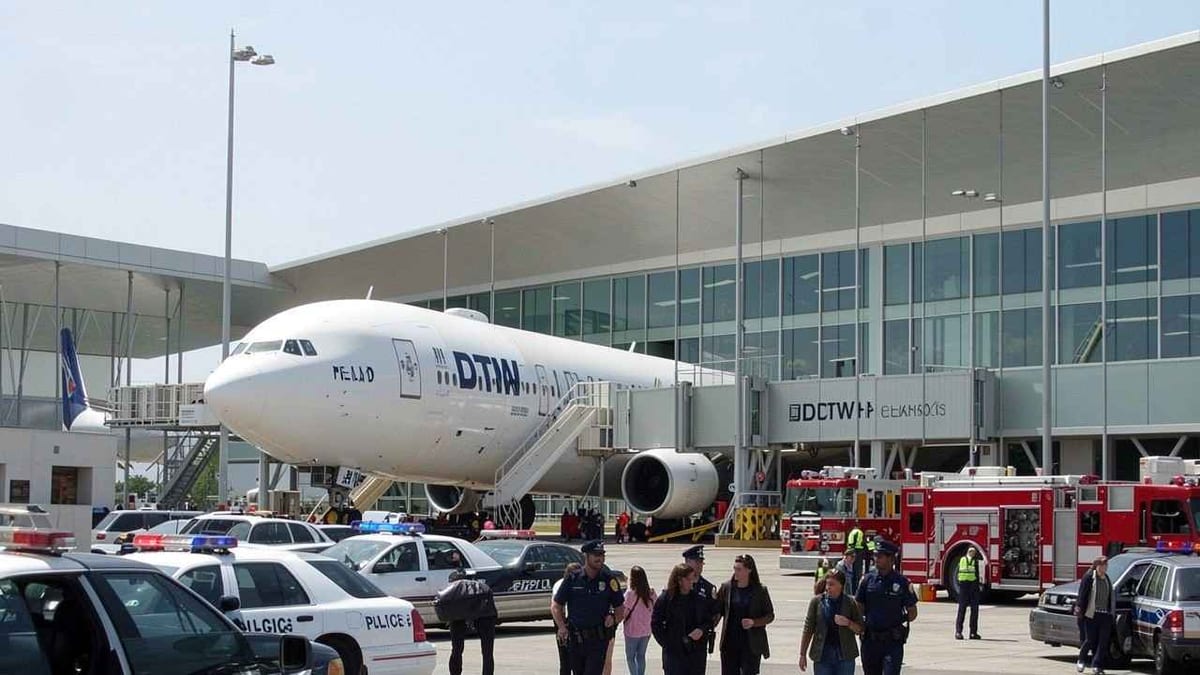
Texas Hubs Emerge as Epicenter of Latest Disruptions
Publicly available flight-tracking data and recent operational updates indicate that Texas airports, led by Dallas Fort Worth International, are again shouldering a disproportionate share of delays and cancellations. Recent tallies from tracking dashboards show more than 550 flights disrupted in one operating window linked to Texas-origin and Texas-bound services, with over 120 departures and arrivals grounded outright as knock-on effects build across the day.
Dallas Fort Worth, the largest hub for American Airlines, has featured repeatedly in recent weeks in national disruption statistics, reflecting how sensitive national schedules have become to problems in North Texas. When severe weather or air traffic management constraints slow departures around Dallas, aircraft and crews quickly fall out of position, creating rolling delays that then show up hours later at connecting points as far away as Chicago, Newark, Orlando and Toronto.
Texas secondary hubs and focus cities, including Houston and San Antonio, are also contributing to the turbulence. Data highlighted by aviation-focused outlets in April and May points to several hundred combined delays at major Texas airports across multiple days, underscoring how a cluster of regional storms and congestion episodes in the state can cascade into a broader national aviation story.
Analysts who track airline operations note that the concentration of connecting traffic through a small number of large hubs gives Texas a pivotal role in the U.S. network. When one of those hubs slows down, the impact is quickly felt on coast-to-coast routes, transborder links into Canada and even some long-haul services that rely on timely feeder flights from Dallas and Houston.
American, United and Air Canada Confront Network Stress
Recent disruption metrics show that American Airlines and United Airlines are once again prominent in daily rankings for delays and cancellations, with regional affiliates and codeshare partners also affected. In the latest wave tied to Texas-centered disruption, publicly compiled data attributes the majority of grounded services to operations linked with the American and United networks, while Air Canada and its regional brands absorb secondary impacts on cross-border services.
American, which depends heavily on Dallas Fort Worth to connect domestic and international flows, is particularly exposed when weather or infrastructure issues disrupt North Texas. Previous incidents in the region, including a radar and communications outage affecting air traffic control last year, demonstrated how quickly the carrier’s schedule can unravel when departures from Dallas are restricted for even a few hours. Similar patterns are evident in the latest disruption, as schedule gaps at the hub translate into missed connections and aircraft arriving out of sequence across the network.
United faces comparable challenges in Illinois and New Jersey, where Chicago O’Hare and Newark Liberty serve as critical hubs. Recent technology problems and staffing-related flow controls have at times forced the airline to throttle back its departures, creating queues of delayed flights that then ripple out to Texas, Florida and Canadian gateways. Past nationwide tech outages at United highlighted the vulnerability of complex legacy systems and the difficulty of restoring normal operations once crews and aircraft drift out of sync.
North of the border, Air Canada and its regional partners have been contending with disruption at Toronto Pearson when U.S. storms or ground delays snarl arrivals from American and United hubs. Published coverage in Canadian and international travel media points to dozens of cancellations and delays on days when U.S. weather fronts sweep through the Midwest and Northeast, illustrating the degree to which Canadian schedules now hinge on the smooth running of cross-border flows.
Midwest, Northeast and Florida Feel the Ripple Effect
While Texas is emerging as the headline epicenter, the operational strain is being acutely felt in Illinois, New Jersey and Florida, where major hubs play dual roles as destinations and relay points. Chicago O’Hare, Newark Liberty and key Florida airports such as Orlando and Fort Lauderdale have recorded high disruption totals on days when storms track across the central and eastern United States, according to compilations by aviation analytics firms and passenger-rights organizations.
In Chicago, where United and American maintain large presences, heavy spring weather combined with national air traffic control initiatives has yielded waves of late departures and missed inbound connections. Flight-tracking dashboards cited by consumer travel sites show that on some recent days, a significant share of O’Hare’s schedule has been affected, with late-evening departures particularly vulnerable once earlier delays compress the available recovery time for crews.
Newark Liberty in New Jersey has been repeatedly highlighted in operational summaries for its susceptibility to both weather and airspace saturation. Flow-control measures introduced by federal air traffic managers in congested Northeast corridors routinely slow the airport’s arrival and departure rates, and when those constraints coincide with storms or technical issues elsewhere in the system, airlines often impose preemptive groundings or reduce schedules to avoid gridlock.
Florida’s role as both a leisure destination and a growing connecting market adds another layer of complexity. Reports compiled during recent U.S. storm systems show that airports such as Orlando and Fort Lauderdale can experience spikes in same-day cancellations when carriers reroute or hold aircraft in Texas or the Midwest. These changes often leave aircraft out of position for northbound evening flights and cross-border services to Toronto and other Canadian cities.
Toronto Links Highlight Cross-Border Vulnerability
Toronto Pearson International Airport, the main Canadian gateway for U.S. traffic, has become a visible indicator of how far Texas-driven disruption can spread. When storms or ground stops in Dallas, Houston, Chicago or Newark slow departures, Pearson may see a surge in late arrivals, missed connections and last-minute cancellations tied to American, United and Air Canada itineraries.
Recent coverage in Canadian aviation and travel publications notes that Pearson has logged dozens of cancellations and extensive delays during major U.S. storm events, even when local weather in southern Ontario has remained comparatively stable. The common thread is the dependency on U.S. hubs for both point-to-point flights and onward connections deeper into the American interior.
Seasonal routes between Florida and Toronto appear particularly sensitive. When Florida departures are held back due to congestion or storms in Texas or the Midwest, aircraft and crews scheduled to operate evening or next-morning services to Canada may never reach their starting points. Travel news outlets have documented cases where a grounded aircraft in Southwest Florida or Central Texas triggers schedule changes hours later on Pearson’s departure boards.
This interconnectedness means that Canadian travelers bound for U.S. destinations may find their journeys disrupted by events occurring far from their origin or destination. With airlines increasingly optimizing aircraft utilization across North American networks, a single grounded jet in Texas can have reverberations as far away as Toronto, Vancouver or Montreal.
Structural Weaknesses in US Aviation Laid Bare
The latest turmoil is reinforcing concerns that structural weaknesses in the U.S. aviation system are leaving passengers vulnerable to increasingly frequent bouts of large-scale disruption. Industry data and watchdog analyses point to a combination of constrained air traffic control staffing, aging technology platforms and hub-heavy airline strategies as key risk factors.
Federal aviation status dashboards show that ground delays and flow-control programs are now common at peak times in crowded airspace over the Northeast, Texas and Florida, even in relatively benign weather. When storms or localized infrastructure outages are layered on top of that baseline congestion, the system’s limited slack quickly disappears, resulting in the kind of multi-state disruption currently being reported.
Airline operational reviews published in recent months have highlighted persistent challenges in crew scheduling and recovery, particularly at carriers that rely heavily on a few megahubs. Once irregular operations set in, aircraft and crews can end up scattered across the network, leading to a sequence of rolling cancellations as carriers attempt to reassemble aircraft, pilots and flight attendants in the right cities within regulated duty limits.
For travelers, the practical impact is a growing sense that major disruptions are no longer rare. Consumer advocates urge passengers to monitor flight status tools closely, build additional connection time into itineraries passing through Dallas, Chicago, Newark and Florida hubs, and remain prepared for rapid changes as airlines respond to the latest pressure points in the U.S. aviation system.