


More news on this day
Severe thunderstorms sweeping across Texas have unleashed a new wave of travel chaos today, stranding thousands of passengers as hundreds of flights in and out of Dallas, Fort Worth, Austin, Houston and San Antonio face rolling delays and cancellations across multiple airlines.
Get the latest news straight to your inbox!
Storm System Slams Major Texas Air Hubs
A powerful storm system crossing North and Central Texas has hammered the state’s busiest aviation corridors, with lightning, low clouds and heavy rain repeatedly halting takeoffs and landings. Publicly available tracking data shows that by midafternoon, Texas airports had logged at least 640 flight delays and 86 cancellations, with Dallas Fort Worth International and Dallas Love Field bearing the brunt of the impact.
Coverage from national and regional outlets indicates that the worst disruptions are centered on the Dallas Fort Worth metroplex, where ground stops and flow control programs have periodically paused arrivals and throttled departures. Houston’s George Bush Intercontinental and William P. Hobby airports, along with Austin Bergstrom and San Antonio International, are also reporting significant operational constraints as storms march east and south.
Weather maps and forecasts highlight a long, unsettled line of storms stretching from the Southern Plains toward the Gulf Coast, creating repeated pockets of severe weather over key Texas population centers. As thunderstorms regenerate along the same corridor, airports are forced into cycles of short lived resumptions of service followed by renewed slowdowns whenever lightning or low visibility returns.
Aviation analysts note that late May is already a high risk period for convective weather in Texas, and that today’s pattern fits a familiar but disruptive template in which one slow moving frontal boundary can destabilize air travel across much of the central United States.
Nationwide Networks Disrupted as Major Carriers Reset Schedules
Operational data and airline dashboards show that United Airlines, Southwest Airlines, Delta Air Lines and American Airlines are all working through mounting delays as crews and aircraft fall out of position. With Dallas Fort Worth acting as American’s largest hub and a critical domestic connection point, schedule disruptions there are quickly spreading to routes far beyond Texas.
Southwest, which relies heavily on Dallas Love Field, Houston Hobby, Austin and San Antonio, is also experiencing knock on effects as its point to point network struggles to absorb repeated weather induced pauses. Reports from flight tracking services indicate clusters of late running departures on short haul Texas and Gulf Coast routes, along with missed connections for travelers bound to the Midwest and Southeast.
United and Delta are seeing indirect but growing impacts as well, particularly on flights that route through Houston or connect with Dallas based services. Publicly available performance data suggests that carriers are proactively trimming some flights and combining others in order to conserve crews and aircraft time, a common tactic when a weather system appears likely to affect multiple waves of daily departures.
Industry observers note that once delays at a major hub stretch past an hour on average, airlines often face difficult decisions on whether to cancel late evening services rather than risk stranding passengers and crews overnight in outstations with limited resources.
Passengers Face Long Lines, Confusion and Limited Options
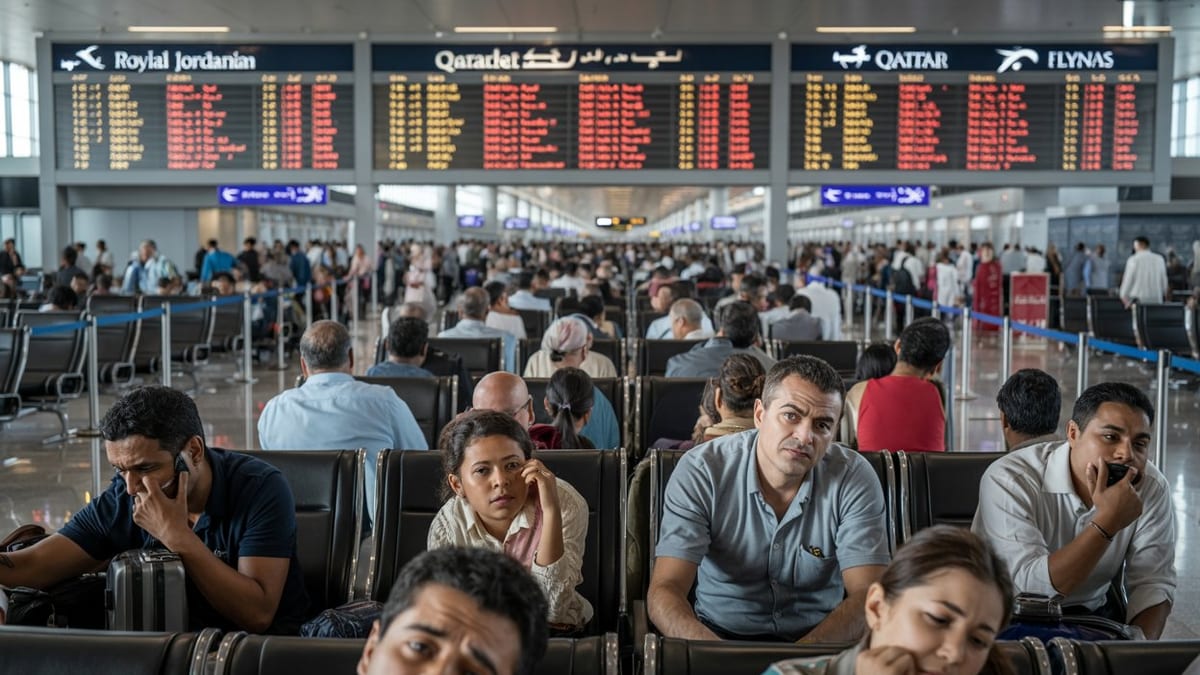
Social media posts, user generated reports and images from inside terminals across Texas depict long queues at customer service counters, crowded gate areas and departure boards filled with rolling delay notices. Many travelers report being held onboard aircraft at the gate or on the taxiway while airlines wait for updated weather and air traffic control guidance.
Publicly available information from consumer advocacy groups suggests that thousands of passengers are dealing with missed connections, abrupt overnight stays and rebookings onto flights one or two days later. With Memorial Day travel demand already building, spare seats on later services are limited, particularly on popular routes out of Dallas, Houston and Austin.
Guidance from travel experts emphasizes that passengers affected by cancellations retain a federal right to a refund if they choose not to travel, regardless of whether weather is to blame. However, hotel and meal coverage is far less predictable for weather related disruptions, as airlines are generally not required to provide compensation when storms are the root cause.
Consumer travel advisories recommend that affected travelers use airline apps and websites to request callbacks or self service rebooking where possible, rather than relying solely on in person queues that can take hours to clear during peak disruption periods.
Texas Ground Stops Highlight Vulnerability of Spring Operations
Recent FAA traffic management updates and airport status pages show that Dallas Fort Worth and Dallas Love Field have been subject to a mix of ground delays, reduced arrival rates and temporary ground stops as thunderstorms pass near key approach paths. These tools allow air traffic managers to meter demand into constrained airspace but can quickly cascade into large backlogs when storms linger.
Analyses of previous Texas storm events indicate that even a short ground stop at a hub like Dallas Fort Worth can ripple across the entire national network, especially when it coincides with banked departure waves designed to feed connections. Once those banks unravel, crews may exceed duty time limits and aircraft may end up in the wrong cities, compounding the initial weather impact.
Transportation researchers and aviation planners have long flagged the vulnerability of tightly scheduled hub operations during the late spring storm season in the central United States. As today’s disruptions deepen, early operational snapshots suggest that the combination of severe weather and high seasonal demand is again testing airlines’ resilience and contingency planning.
In the coming days, performance data is expected to shed further light on how quickly carriers are able to restore normal schedules after this latest round of Texas storms, and whether additional adjustments to spring planning will be needed to reduce the scale of future disruption.
What Travelers Can Do as Disruptions Continue
Publicly available travel guidance around events like today’s Texas storms underscores a few practical steps for passengers still trying to navigate the chaos. The first is to monitor flight status closely, as departure times may change multiple times in a single afternoon while airlines and air traffic control respond to rapidly evolving weather radar.
Experts also suggest that travelers with flexible plans consider voluntarily moving to earlier or later flights in exchange for vouchers or fee waivers when airlines announce broad disruption programs. Doing so can reduce the risk of becoming stuck during the most congested hours, particularly at airports such as Dallas Fort Worth, Dallas Love Field and Houston Bush Intercontinental.
For travelers yet to begin their journeys, booking longer connection windows through Texas hubs and avoiding the last flight of the day on critical legs are recurring recommendations in published advice. On days when storms are forecast, early morning departures are often less exposed to the worst convective activity, even if residual delays from the previous day cannot be fully avoided.
With the current storm system still influencing conditions across the state, forecasts indicate that intermittent travel disruptions may persist into the evening. Airlines are expected to continue adjusting schedules in real time, leaving passengers to balance patience with persistence as they seek alternate ways out of a weather battered Texas airspace.