


More news on this day
A sinkhole discovered on a runway at New York’s LaGuardia Airport has forced the closure of one of the hub’s key landing strips, disrupting flights and stranding travelers across the region as engineers work to assess damage and stabilize the airfield surface.
Get the latest news straight to your inbox!
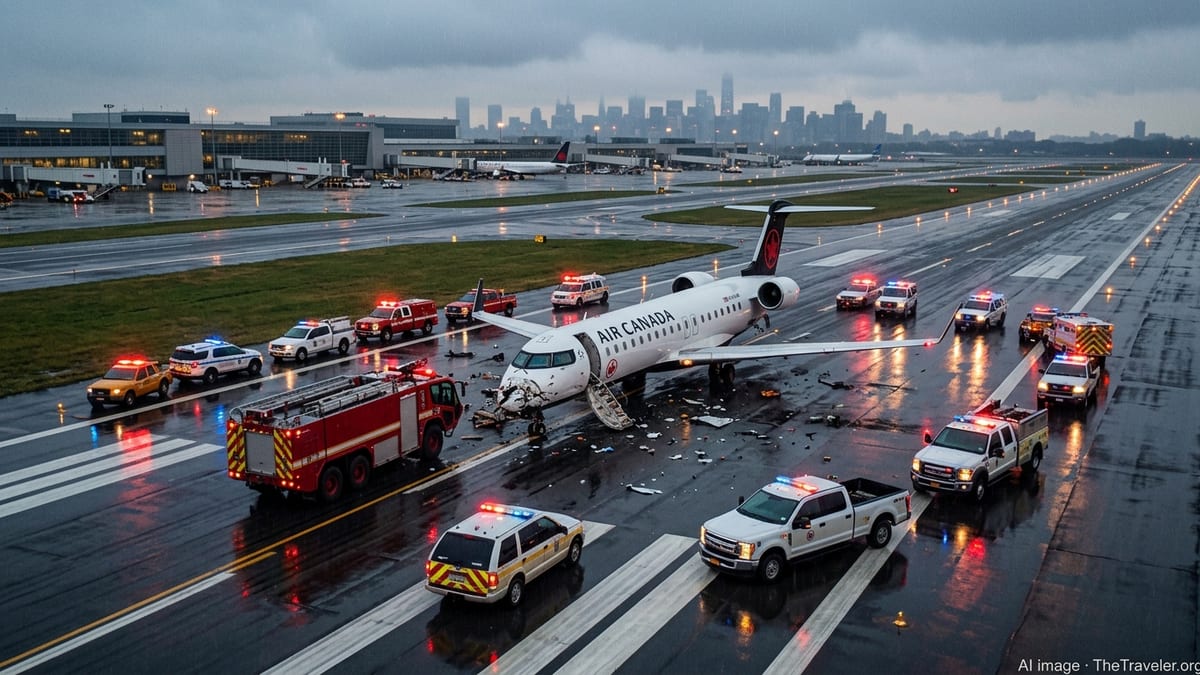
Runway Closure Follows Routine Airfield Inspection
According to published coverage from regional outlets, the sinkhole was identified during a routine inspection of the airfield, prompting an immediate decision to close the affected runway and reroute traffic. Initial images shared by local media show a visible depression in the pavement, with a section of asphalt collapsed into a cavity beneath the surface.
Reports indicate that airport crews moved quickly to cordon off the area and suspend operations on the runway while safety checks were carried out on adjacent pavement and lighting systems. The rest of LaGuardia’s airfield remained available for limited operations, but the loss of one of the airport’s primary runways significantly constrained capacity.
Early accounts suggest the sinkhole is confined to a localized area of the runway, but the underlying cause has not yet been detailed in public reporting. Specialists typically examine subsurface drainage, soil conditions, and recent construction activity when determining how such a void formed beneath a heavily used piece of infrastructure.
Publicly available information shows that LaGuardia has undergone extensive construction in recent years, including new terminals and airfield improvements, increasing attention on how ongoing works and aging infrastructure interact at one of the country’s busiest urban airports.
Delays, Cancellations and Diversions Ripple Through the Region
The runway shutdown quickly translated into widespread schedule disruptions for passengers. Tracking data summarized in media reports shows dozens of delayed flights and a wave of cancellations as airlines adjusted to the sudden loss of runway capacity during an already busy travel period.
Some flights bound for LaGuardia were reportedly diverted to other New York–area airports, including John F. Kennedy International and Newark Liberty International, adding pressure to facilities that are themselves operating near capacity. Travelers connecting onward from LaGuardia faced missed connections, extended layovers, and, in some cases, unexpected overnight stays.
Airlines began issuing travel advisories, with publicly posted notices encouraging affected passengers to rebook, monitor flight status frequently, and allow extra time at the airport. Fee waivers for itinerary changes were introduced by several carriers serving LaGuardia, reflecting the scale of the operational impact.
For New York City and surrounding communities, the disruption at LaGuardia reverberated beyond vacation and business trips. The airport is a critical node for short-haul flights across the Northeast corridor, and reduced throughput can affect regional commerce, time-sensitive cargo, and same-day business travel.
Engineers Assess Subsurface Damage and Repair Options
In the hours after the discovery, engineering and maintenance teams began inspecting the runway structure and the ground beneath it, using information on the airport’s drainage systems and previous construction work to guide their assessment. Industry practice in similar incidents typically involves ground-penetrating radar, core sampling, and visual inspections to ensure that the sinkhole is not part of a wider pattern of subsurface instability.
Publicly available airport documentation shows that LaGuardia’s runways are built atop a complex mix of fill and coastal soil, bordered by water and protective dikes. That setting can make drainage management and long-term pavement performance especially challenging, particularly after heavy rain or freeze-thaw cycles.
Reports indicate that short-term repairs will focus on stabilizing the cavity, rebuilding the base layers, and repaving the damaged section to meet strict Federal Aviation Administration standards for runway friction, load-bearing capacity, and smoothness. Only after inspections confirm that the surface and subgrade meet safety requirements will the runway be cleared to reopen.
Longer term, the incident is likely to prompt a fresh review of airfield maintenance schedules and monitoring tools, including whether more frequent detailed inspections or additional drainage improvements are warranted on heavily used runway segments.
Travelers Face Uncertainty as Reopening Timeline Remains Unclear
As of the latest public reports, no firm timeline has been provided for when the affected runway will fully reopen. The duration of the closure depends on the extent of the underground damage and how quickly crews can complete repairs while working around ongoing operations on other parts of the airfield.
Travelers scheduled to fly into or out of LaGuardia in the coming days are being urged, through airline and airport advisories, to check their flight status frequently and consider flexible arrangements. Some carriers appear to be proactively trimming schedules to reduce last-minute cancellations, while others are consolidating flights to make more efficient use of available runway capacity.
For passengers already en route, the situation adds another layer of unpredictability to a travel landscape that has seen repeated disruptions in recent years from weather, staffing constraints, and infrastructure challenges. Crowded terminals, longer lines, and increased wait times at gates are being reported at LaGuardia as operations adjust to the reduced runway availability.
Travel industry analysts note in public commentary that any prolonged limitations at LaGuardia could prompt some travelers to shift bookings to competing airports or rail services along the Northeast corridor, at least temporarily, until confidence in the airport’s full capacity and reliability is restored.
Spotlight on Aging Infrastructure and Extreme Weather Risks
The sinkhole has renewed scrutiny of the resilience of aging transportation infrastructure in and around New York City. While the precise trigger is still under examination, experts frequently cite factors such as water infiltration, drainage failures, and the cumulative stress of constant aircraft movements as potential contributors to airfield pavement failures.
Recent weather patterns in the region, including periods of intense rainfall, have heightened concerns about saturation of soils and the performance of older stormwater systems. Publicly available engineering literature emphasizes that repeated cycles of heavy rain followed by rapid drying can accelerate erosion of subsurface materials and undermine pavements.
LaGuardia’s experience also echoes previous incidents at other airports where localized sinkholes have forced temporary runway closures, underlining how even relatively small structural failures can have outsized effects on air travel. Each event tends to prompt renewed calls for sustained investment in inspection technology, preventative maintenance, and modernization projects.
For now, the priority at LaGuardia remains restoring the damaged runway to service while maintaining safe operations on the remaining airfield. As more technical details emerge, the episode is likely to feed into broader debates over infrastructure resilience in coastal cities and the resources needed to keep critical travel hubs operating smoothly in the face of environmental and structural stresses.