


More news on this day
A coastal storm over the Eastern Seaboard and record high tides along California’s Pacific shore combined to disrupt Thanksgiving 2026 travel, with hundreds of flights canceled or delayed on November 26 and some coastal communities facing flooding, damaged infrastructure and longer journeys to major airports.
Get the latest news straight to your inbox!
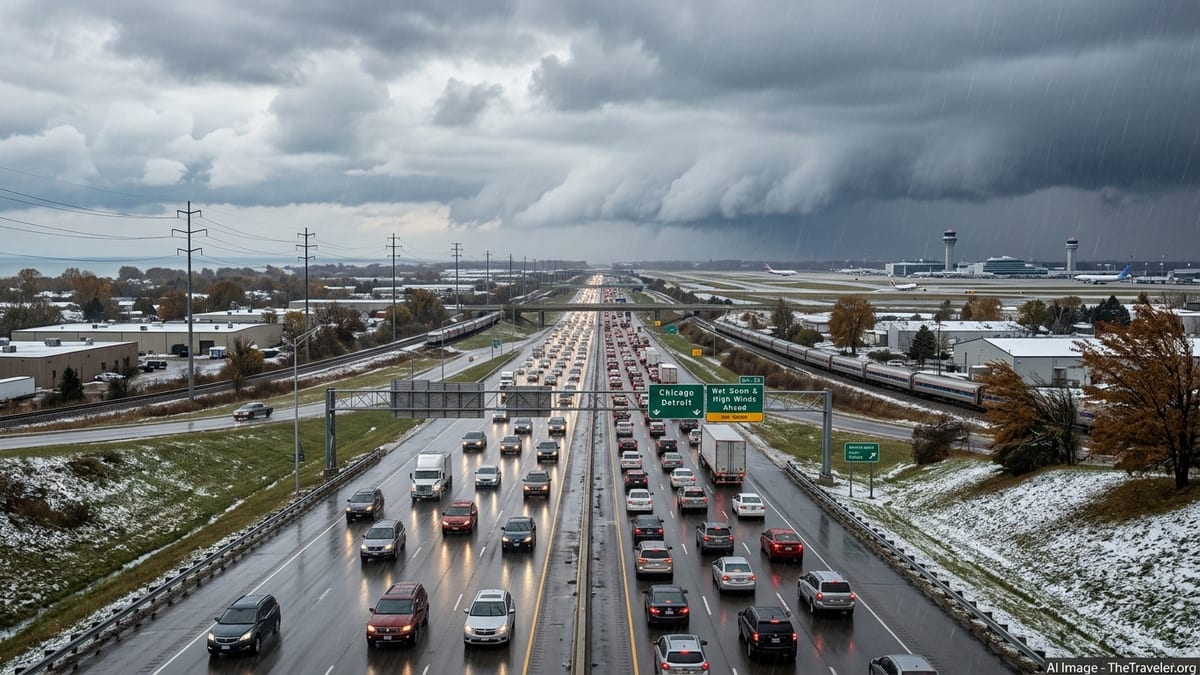
Nor’easter slows key Northeast air corridors on Thanksgiving Day
A coastal low that strengthened into a nor’easter on Thursday 26 November brought heavy rain, strong winds and coastal flooding from the Carolinas to New England, affecting some of the country’s most congested airspace. Forecasts from the National Weather Service ahead of the holiday had highlighted a swath of 1 to 3 inches of rain for many Mid‑Atlantic and Northeast cities, along with onshore winds and high‑tide flooding in vulnerable shoreline communities. As the system peaked on Thanksgiving, it delivered the expected combination of low clouds, reduced visibility and gusty crosswinds at several major hubs.
In the New York area, where three large commercial airports sit close together, surface observations showed gusts in excess of 50 miles per hour at times on Thursday afternoon, well above typical late‑November values. That prompted air‑traffic managers to slow the rate of arrivals and departures into LaGuardia, John F. Kennedy and Newark while bands of heavier rain and stronger winds moved through. Temporary ground delays and increased spacing between aircraft, applied when ceilings or visibility fall below preferred thresholds, reduced hourly throughput and pushed some flights into holding patterns in already crowded holiday skies.
Conditions further south and north along the corridor were similar in character, if not always as intense. Around Baltimore/Washington, Philadelphia, Washington National and Boston, periods of low ceilings and wet runways alternated with brief improvements as the storm center edged north and east. Federal traffic‑management logs published on Thursday showed multiple short‑duration arrival and departure rate reductions at these airports, rather than prolonged closures, but even those measures were enough to generate queues on taxiways and departure banks that departed significantly behind schedule.
Flight disruption numbers and Miami’s separate operational setbacks
Independent tracking data compiled from FlightAware indicated that within, into or out of the United States, 396 flights were canceled and more than 1,000 were delayed by at least 15 minutes on Thursday 26 November. That represents an elevated level of disruption compared with a typical late‑November weekday, but falls short of the scale seen during some past winter‑holiday meltdowns linked to widespread snow or extended operational outages. The bulk of Thursday’s cancellations and longer delays were concentrated at airports most directly under the nor’easter’s rain and wind shield, particularly from Washington to Boston.
These headline figures also glossed over pronounced regional differences. In New York and New Jersey, television and online dashboards on Thursday afternoon showed clusters of delayed departures and arrivals at LaGuardia, JFK and Newark during the storm’s peak, reflecting both weather‑driven air‑traffic control measures and congestion caused by high passenger volumes. In New England and the Mid‑Atlantic, disruption tended to be sharpest in the mid‑ to late‑day departure waves, when airlines operate dense schedules and have fewer empty seats later in the day to help absorb knock‑on delays.
In Florida, travelers encountered lingering effects from a separate incident at Miami International Airport earlier in the week. Local authorities and broadcast outlets reported that a FedEx cargo aircraft overran a runway at Miami on Tuesday 24 November, temporarily taking that runway out of service while investigators and recovery crews worked on site. Although all runways had reopened by Friday 27 November, the incident, combined with thunderstorms in the region, led to dozens of cancellations and hundreds of delays centered on Miami in the lead‑up to Thanksgiving. Some of those disruptions propagated through the network on Thursday, particularly for itineraries connecting through South Florida to the Caribbean and Latin America.
Holiday travel volumes limited room to recover from schedule shocks
The storms arrived during one of the busiest air‑travel periods of the year, limiting the flexibility airlines had to rebook affected passengers. Forecasts from transportation planners and industry groups ahead of the holiday week pointed to tens of millions of people traveling between Friday 20 November and Monday 30 November, with passenger numbers at or near the records set in 2025. Early Transportation Security Administration checkpoint figures through Wednesday 25 November suggested that volumes at major hubs were tracking close to those projections.
High load factors meant that once cancellations and lengthy delays began on Thanksgiving Day, there were relatively few empty seats on later flights to accommodate travelers whose plans were disrupted. At many carriers, the most practical alternatives involved moving to services on Friday 27 November or Saturday 28 November, or in some cases reshaping itineraries to connect through hubs less affected by the nor’easter. For passengers with fixed return dates, such as those needing to be back at work or school early the following week, that constraint could translate into substantial schedule changes compared with original bookings.
In contrast with some previous holiday periods when major storms or prolonged operational breakdowns have triggered multi‑day cascades of disruption, early indicators suggested that U.S. airlines and air‑traffic managers were able to arrest most of the Thanksgiving Day knock‑on effects within about 24 hours. By early Friday, national operations dashboards showed fewer than 100 cancellations across all carriers, with delays more in line with a typical busy Friday schedule. Analysts have pointed to factors such as pre‑emptive schedule thinning, advance publication of weather waivers and some residual additional capacity compared with 2025 as reasons why the system recovered relatively quickly once the nor’easter moved offshore.
King tides, coastal flooding and localized aviation impacts in California
On the opposite coast, a different set of hazards complicated travel near major California airports around the same Thanksgiving window. State agencies and coastal researchers had been warning for weeks that a king‑tide cycle from 24 to 26 November would coincide with an El Niño‑warmed Pacific and a period of long‑period swells, raising the risk of record or near‑record water levels in bays and along open‑ocean shorelines. The California King Tides Project, coordinated by the state’s Coastal Commission, had highlighted these dates as among the highest predicted tides of the 2026–27 winter season.
Those warnings were borne out dramatically on Wednesday 25 November. In the San Francisco Bay Area, tidal gauges recorded some of the highest November water levels on record, and images showed bay water overtopping parts of the city’s Embarcadero waterfront even as most core transport infrastructure escaped serious damage. Along more exposed stretches of the Pacific coast, however, the combination of king tides and large surf produced more severe effects, including flooding of low‑lying streets and damage to seawalls and coastal promenades in several communities.
In Pacifica, a city just south of San Francisco, officials confirmed that around late morning on Wednesday a large end section of the municipal fishing pier collapsed into the ocean after repeated battering by powerful waves. The pier had already been closed to the public since June because of existing structural concerns, but the loss of the seaward portion and fresh damage to parts of the adjacent seawall represented a new setback for a popular local landmark. A U.S. Coast Guard local notice to mariners subsequently recorded the pier as indefinitely closed due to the structural damage. While inspections after the king‑tide episode did not reveal significant harm to runways or terminal facilities at San Francisco International, Oakland or San Jose airports, temporary road closures and flooding in some coastal corridors highlighted how conditions away from immediate airport perimeters can still complicate journeys during a compressed holiday timetable.
Airline weather waivers, passenger rights and what travelers should monitor next
As forecasts made clear that a high‑impact nor’easter would coincide with Thanksgiving on the East Coast, the four largest U.S. carriers published weather‑related waivers designed to give customers limited flexibility to adjust their travel plans. Public advisories from American Airlines, Delta Air Lines, United Airlines and Southwest Airlines all referenced a coastal storm expected to affect operations at major Northeast hubs on Thursday 26 November, while some notices also addressed thunderstorms and the runway overrun incident at Miami earlier in the week.
According to those advisories and subsequent industry summaries, American Airlines’ waiver applied to a group of Northeast airports for travel on Thanksgiving Day, generally allowing customers holding tickets between 23 and 29 November to move their flights without change fees if they kept the same origin, destination and cabin. Where seats in the original fare class were still available, American also waived fare differences for some rebooked itineraries inside that window. United issued a similar “coastal storm” waiver covering Boston, the three Washington‑area airports, Newark, LaGuardia and Philadelphia, among others, permitting ticketed customers to switch to United flights departing between Wednesday 25 and Saturday 28 November without additional fees if their city pairs and cabins stayed the same.
Delta’s travel alert covered a set of East Coast airports, including New York and Boston, and allowed many passengers to change flights within a defined period around the holiday with fare differences waived if travel was completed by Saturday 28 November. Southwest Airlines, which does not normally charge change fees, told customers booked through several East Coast airports on Thanksgiving that they could rebook to other dates within about two weeks while keeping the same origin, destination and fare class without paying a higher fare. Some smaller carriers and low‑cost operators opted for narrower, airport‑specific waivers as conditions evolved, underscoring that travelers should always check their airline’s official travel‑alerts page rather than assuming industry‑wide policies.
Regardless of whether an individual traveler qualified for a particular storm waiver, U.S. Department of Transportation rules continued to define baseline consumer protections. Under current policy, if an airline cancels a flight or makes a significant schedule change and the passenger chooses not to travel, the carrier is required to provide a refund for the unused portion of the ticket, even when the cause is weather or air‑traffic control restrictions. However, U.S. regulations generally do not obligate airlines to cover accommodation, meals or ground transport for passengers stranded by weather‑related disruption, and the extent of any such assistance is typically governed by each airline’s own contract of carriage and, for some customers, by the protections built into their credit‑card or travel‑insurance products.
For travelers still navigating the tail end of the Thanksgiving period, several practical steps remain important. Airlines and regulators are urging passengers to monitor not only the published status of their own departure but also, where systems allow, the status of the inbound aircraft scheduled to operate it, since relatively small earlier delays can cascade through a day’s rotations. Customers considering voluntary date changes are being advised to review waiver terms carefully, as many allow fee‑free moves only if new travel begins within a specified late‑November window or if changes are completed by a set booking deadline.
Meteorological outlooks for the days following Thanksgiving point to a gradually improving pattern over much of the Eastern United States, with only scattered showers and gusty conditions lingering in parts of New England, the Mid‑Atlantic and the Great Lakes. In the West, additional Pacific storm systems linked to the broader pattern that produced this week’s king tides are forecast to bring more rain and mountain snow to areas of Washington, Oregon and the northern Rockies, with the possibility of further localized air‑travel impacts at coastal and mountain airports if ceilings, visibility or crosswinds deteriorate. With Sunday 29 November still expected to be the single busiest air‑travel day of the Thanksgiving window, travelers are being advised to allow extra time for journeys involving weather‑sensitive hubs, coastal approaches or road links that have recently experienced flooding, and to confirm live flight status shortly before heading to the airport.