


More news on this day
A powerful Thanksgiving nor’easter that hammered the Mid‑Atlantic and Northeast with heavy rain, strong winds and coastal flooding on Thursday, November 26, is still rippling through the U.S. air travel network on Friday, November 27, leaving Florida‑bound and Florida‑originating flights facing scattered delays and modest cancellation totals even as weather over much of the state itself steadily improves.
Get the latest news straight to your inbox!
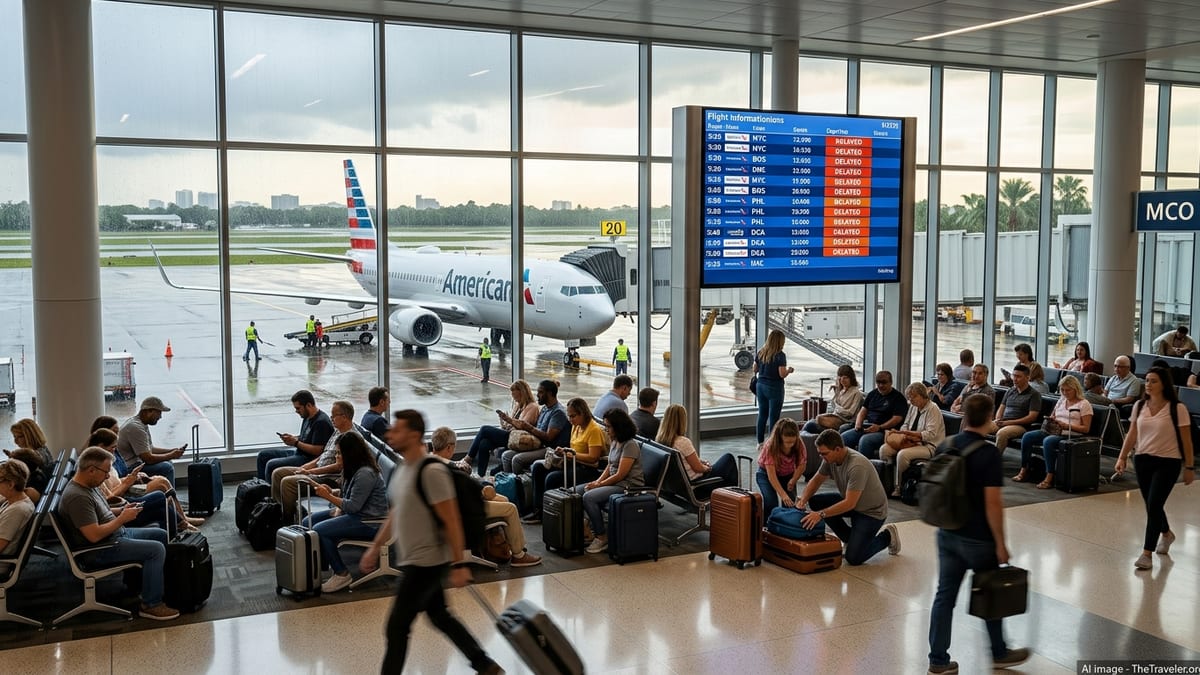
Storm’s peak impact hits East Coast hubs, with Florida feeling the aftershocks
Forecasts issued earlier in the week by the National Weather Service and private forecasters had highlighted the risk that a coastal low tracking up the Eastern Seaboard on Thanksgiving Day would significantly disrupt aviation, particularly along the busy corridor from the Carolinas to New England. By Thursday, November 26, that scenario largely materialized, with the nor’easter bringing widespread heavy rain, gusty winds and coastal flooding to major population centers in the Mid‑Atlantic and Northeast.
Weather discussions from multiple forecast offices described a high‑impact coastal storm affecting FEMA Regions 1, 2 and 3 on Thursday, with peak effects extending into the early hours of Friday. Strong onshore winds, low cloud ceilings and periods of heavy precipitation reduced arrival and departure rates at key hubs including New York City area airports, Philadelphia and Boston, prompting air traffic managers to meter traffic through formal delay programs and, at times, ground stops at specific airports.
Those constraints were concentrated outside Florida but quickly translated into downstream disruption for travelers across the state. Many flights operating from Orlando, Miami, Fort Lauderdale and Tampa on Friday were scheduled to connect with or route through the storm‑affected corridor, meaning that even as Florida skies brightened, aircraft and crews remained tied up in slower‑moving northern airspace.
Friday brings hundreds of Florida delays but a limited number of cancellations
By early Friday morning on November 27, live tracking data compiled by flight status services and media outlets indicated that Florida’s airports were seeing a marked increase in delayed operations relative to a typical autumn Friday. An analysis published late Friday morning reported more than 85 flights canceled at Florida airports out of roughly 445 cancellations nationwide, alongside a substantially larger number of delayed departures and arrivals linked to the lingering East Coast storm impacts.
Major gateways including Orlando International (MCO), Miami International (MIA), Fort Lauderdale‑Hollywood International (FLL) and Tampa International (TPA) featured prominently in delay tallies, reflecting their roles as high‑volume domestic and international hubs. Local weather at many of these airports had already improved from the worst of Wednesday and Thursday’s conditions, but schedules remained under pressure as airlines attempted to move aircraft through constrained northern airspace and clear residual backlogs from the holiday peak.
Despite the elevated disruption, there were no indications by late Friday morning of broad ground stops or ground‑delay programs in effect specifically for Florida’s largest airports. Federal Aviation Administration status feeds and independent monitoring tools pointed instead to more localized traffic management initiatives centered on the Mid‑Atlantic and Northeast, with Florida airports primarily affected through knock‑on timing changes rather than direct capacity reductions at their own fields.
How a distant nor’easter slowed Florida’s busiest holiday routes
The pattern of delays seen on Friday reflected the tight interconnection between Florida’s aviation network and hubs along the East Coast. Aircraft scheduled to operate morning departures from Florida to destinations such as New York, Boston, Philadelphia and Washington, D.C., were often arriving late from storm‑affected airports, compressing turnarounds and pushing subsequent departure times beyond their original slots even under otherwise favorable local conditions.
Air traffic control measures in the Mid‑Atlantic and Northeast, including spacing requirements between arriving aircraft during periods of low cloud and reduced visibility, limited the number of flights those airports could accept per hour. Because many Florida routes rely on the same constrained arrival and departure streams, flights were held at their origin to avoid congestion, producing ground delays in Florida that were ultimately governed by conditions hundreds of miles away.
Airlines responded by adjusting aircraft routings and daily patterns to keep as much of the schedule intact as possible. Instead of canceling large blocks of flights outright, carriers frequently opted to delay departures in hopes that improving weather and gradually easing restrictions in the northern corridor would allow the majority of passengers to travel later in the day. That strategy kept cancellation totals in Florida relatively modest compared with some past holiday disruptions, but it also meant that many travelers experienced departure times pushed back by 30 minutes or more, particularly on routes into the hardest‑hit East Coast markets.
Knock‑on effects for Florida’s main holiday gateways
At South Florida’s two primary international gateways, Miami and Fort Lauderdale, Friday’s delays had particular implications for passengers booked on multi‑segment itineraries. Both airports act as key transfer points between domestic flights along the Eastern Seaboard and international services to Latin America, the Caribbean and Europe. When domestic feeder flights arrived late from storm‑impacted cities, connection windows narrowed and, in some cases, disappeared altogether, requiring rebooking at airport counters and via airline customer service channels.
At Orlando, where a high share of traffic is leisure‑oriented and tied to theme parks and cruises, the timing of the disruption intersected with carefully planned holiday trips. Some cruise departures from Central and South Florida were scheduled for the weekend of November 28–29, leaving passengers arriving on delayed flights with less margin to reach nearby ports. While there were no immediate indications of widespread missed sailings directly attributable to Friday’s delays, travelers arriving late into Orlando, Miami, Fort Lauderdale or Tampa faced reduced flexibility and in some instances needed to adjust ground transport or overnight plans.
Elsewhere in the state, airports such as Jacksonville, Palm Beach and Southwest Florida International in Fort Myers saw a more uneven impact. Local conditions were generally calmer than during earlier November storms, and flights operating within Florida or across to relatively unaffected Sun Belt destinations tended to run closer to schedule. Delays were more concentrated on services linking these secondary airports with major Mid‑Atlantic and Northeast hubs, underscoring the extent to which Friday’s problems were tied to the nor’easter’s lingering footprint rather than fresh severe weather over Florida itself.
What travelers flying to or from Florida should expect next
By Friday afternoon, short‑term forecasts indicated that the Thanksgiving nor’easter would continue to weaken and move farther away from the East Coast into Saturday, with rain and wind gradually subsiding across the Mid‑Atlantic and New England. As that occurs, air traffic managers are expected to ease some of the most restrictive flow measures, which should help reduce delay durations and allow airlines to bring aircraft and crew rotations back closer to normal over the remainder of the holiday weekend.
Residual congestion is still possible through at least Saturday, particularly during peak morning and evening banks at major hubs that were hardest hit on Thanksgiving Day and overnight into Friday. Travelers departing Florida over the next 24 to 48 hours, especially those connecting through New York, Philadelphia, Boston or Washington, are likely to see schedules that are broadly improving compared with Thursday and early Friday but that may continue to feature pockets of delay as airlines work through repositioning aircraft and accommodating customers from earlier disruptions.
For passengers with time‑sensitive plans, the practical advice from recent days remains valid. Checking flight status early and often through airline apps or airport information channels, allowing extra time for connections where possible and considering earlier departures on heavily traveled routes can all help mitigate the remaining knock‑on effects of the Thanksgiving storm. While there were no public indications on Friday of additional large‑scale ground stops or pre‑emptive schedule cuts tied to new weather systems, aviation and weather agencies will continue to monitor conditions through the end of the holiday period, and travelers should be prepared for further localized adjustments if new fronts interact with an already busy national airspace.