


Germany’s Anmeldung system is a core legal obligation for anyone establishing residence in the country. For globally mobile employees, students, and long‑term assignees, understanding how and when to register an address is critical, because this single step underpins access to identification numbers, banking, social systems, and many other administrative processes. This briefing explains how Anmeldung works, who is affected, and what new residents should realistically expect when navigating residence registration.
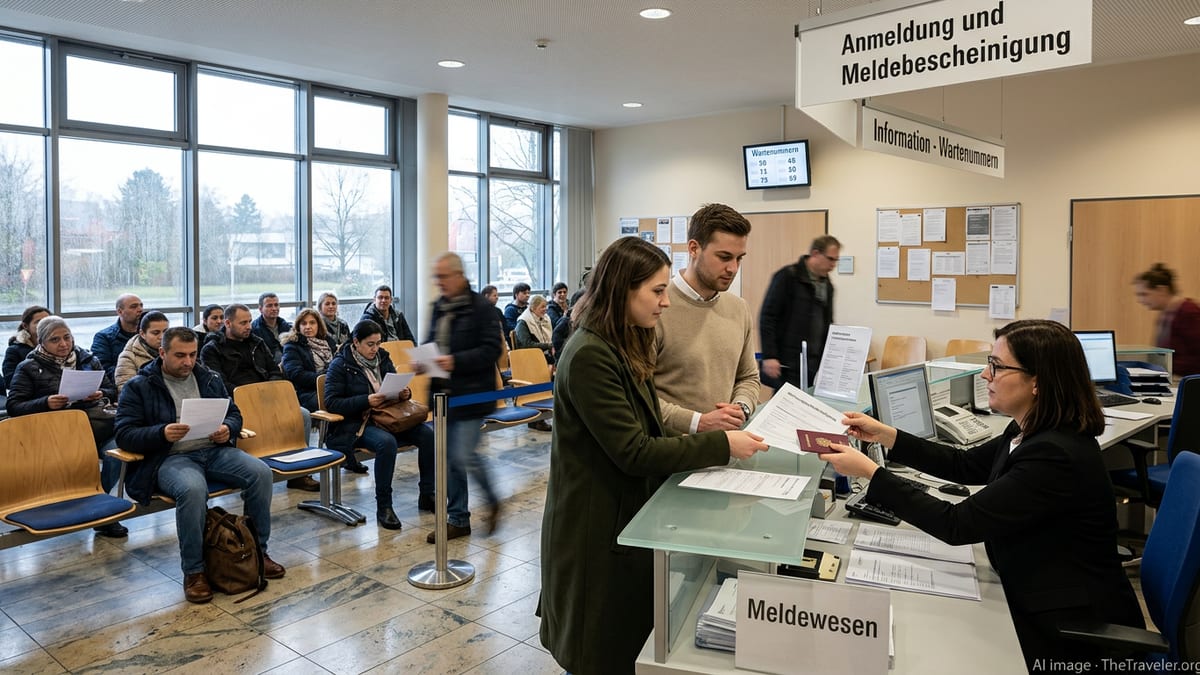
What the Anmeldung Is and Why It Matters
Anmeldung is Germany’s mandatory address registration process. Every person who takes up residence in a German municipality is required to register their address with the local registration office, typically known as the Bürgeramt or Einwohnermeldeamt. The requirement applies equally to German citizens, EU nationals, and non‑EU nationals who are living in the country for more than a short stay. The underlying purpose is population registration, but in practice the Anmeldung acts as a foundational record that many other systems rely on.
When the registration is completed, the resident usually receives a written confirmation of registration, often called Meldebestätigung or Anmeldebestätigung. This document is the primary proof that the person legally resides at the stated address. Public and private institutions commonly request this certificate when opening bank accounts, obtaining a tax identification number, enrolling children in school, or completing other formalities linked to residency.
The Anmeldung system also underpins local taxation and service allocation. Municipalities use registered addresses to determine local responsibilities such as school catchment areas, waste collection arrangements, and in some cases broadcasting contribution assessments. For relocation planning, this means that until Anmeldung is completed, the resident may be effectively invisible to several key systems that assume a registered address as the starting point.
From a compliance perspective, Anmeldung is not optional. The system is grounded in the Federal Registration Act, which harmonized rules across German states and sets out who must register, within what timeframe, and which data must be collected. While practical enforcement can vary by city, the legal framework is uniform across the country and applies to all long‑term residents.
Who Must Register and Typical Timelines
In principle, anyone who moves into a residence in Germany with the intention of staying more than a short period is subject to registration. This includes employees on assignment, international students, cross‑border hires, family members joining a principal applicant, and German nationals returning from abroad. Children must also be registered individually, and households usually complete Anmeldung for all members at the same time.
The commonly referenced rule is that a resident must register at the new address within 14 days after moving in. The 14‑day period is counted from the date of actual move‑in, not the date of entering the country. Newcomers who first stay in hotels or short‑term accommodation without a formal tenancy often only become subject to registration once they move into an address that is formally provided as a residence. Local information portals and welcome centers consistently describe this 14‑day rule, noting that it applies to both first registrations and changes of address after internal moves.
Short visits are treated differently. Stays under three months that do not involve taking up a long‑term residential address typically do not trigger registration. Some municipal guidelines use a 90‑day benchmark for when a stay in Germany is considered long enough to require registration, while still tying the practical obligation to the act of moving into a dwelling. For corporate mobility planning, this distinction matters because business travelers or very short‑term project staff may not need Anmeldung, whereas medium‑term assignees almost always will.
Residents who move within Germany must also keep their registration up to date. A move from one city to another normally involves registering the new address with the new municipality, after which the old registration is automatically updated or cancelled. For internal moves within the same city, a change‑of‑address registration is still required, often processed as an Ummeldung but via the same offices and forms as an initial Anmeldung.
Key Documents and Data Required for Anmeldung
The documentation required for Anmeldung is fairly consistent nationwide, though local offices may add minor variations. At minimum, adults must present a valid identity document such as a passport or national identity card. Non‑EU nationals are typically expected to show the passport that carries their visa or residence permit. Each person being registered must be identifiable, so children may need passports or birth certificates depending on local practice.
A central element is the landlord’s confirmation of residence, known as the Wohnungsgeberbestätigung. Since the Federal Registration Act reforms, landlords or other providers of accommodation are legally obliged to issue this document within a short period after the tenant or occupant moves in. The confirmation usually states the full address, the date of move‑in, the name and address of the landlord or owner, and the names of all people moving into the dwelling. Municipal pages explain that this confirmation is mandatory and that registration offices may reject Anmeldung attempts without it.
Most cities require a completed registration form, often available online, which the applicant submits at the appointment. The form requests basic civil data such as name, previous address, marital status, nationality, religious affiliation, and details of any additional residences. In practice, a single form can often cover a whole household, simplifying the process for families, although each adult may have to sign where indicated.
Depending on the municipality, supplementary documents may be requested, such as a marriage certificate to correctly record marital status, or court documents for name changes. For international assignees, it is prudent to expect that officers may request to see the tenancy agreement as supportive evidence, even where the law does not explicitly list it as mandatory. Preparing a complete documentation set in advance reduces the risk of an unsuccessful visit and the need to rebook appointments.
How the Appointment Process Works in Practice
New residents usually complete Anmeldung in person at the responsible registration office. Larger cities tend to operate an appointment system, while smaller towns may accept walk‑in visitors during specific opening hours. Demand in metropolitan areas can be high, and newly arriving workers frequently report multi‑week waiting periods for the first available time slot, especially at the start of academic terms or peak relocation seasons.
Many municipal guidance pages and relocation support providers note that in practice authorities consider the date of booking the appointment as decisive for compliance with the 14‑day rule, rather than the actual date of attendance. Residents who make a bona fide effort to secure a slot soon after moving in are generally not penalized if the appointment itself falls several weeks later. This informal practice reflects the staffing and capacity constraints widely reported in German public administration.
Some municipalities provide partial digitalization of the process, such as online pre‑registration of data or the possibility to download the registration certificate later. However, full online Anmeldung is not yet consistently available nationwide, and most newcomers should plan on an in‑person visit. During the appointment, staff review documents, enter data into the registration system, and usually issue a registration certificate immediately or within a short time period.
Language can be a practical factor. While many city offices in major hubs are used to dealing with English‑speaking residents, the official working language is German and forms are predominantly in German. New residents without German proficiency may benefit from support provided by relocation agents, local colleagues, or personal interpreters, particularly for clarifying questions on household composition, secondary residences, or previous addresses.
Consequences of Late or Missing Anmeldung
Formally, failure to register within the required timeframe is a regulatory offense. The Federal Registration Act allows municipalities to impose administrative fines for late registration or for failing to register at all. Public commentary and local practice indicate that in everyday cases, penalties for individuals are often modest and can be waived if the delay is clearly linked to appointment shortages rather than deliberate noncompliance.
However, the more significant impact for new residents is indirect. Without a completed Anmeldung, it can be difficult or impossible to obtain a German tax identification number, which employers need in order to apply the correct payroll treatment. Many banks request proof of registration as part of their account opening processes. Other services, such as registration with local utilities, daycare allocation, and in some situations enrolment in municipal schooling, are also typically tied to having a registered address.
Late registration can delay these linked processes by weeks or months. For a corporate assignee, this can translate into payroll complications, reliance on temporary banking arrangements, and uncertainty around school places or childcare options. For individuals arriving without employer support, it can mean slower integration into day‑to‑day systems like digital identity solutions or local tax administration.
In extreme situations where authorities suspect that an address is used only nominally or that residents are not genuinely living where they claim to be registered, registration data may be scrutinized. Landlords who systematically fail to issue proper confirmations or who provide false statements can also face fines. New residents should therefore expect that the address declared at Anmeldung will be treated as their real place of living for administrative purposes.
Special Situations: Temporary Housing, Shared Flats, and Multiple Residences
New arrivals frequently spend initial weeks in temporary accommodation such as hotels, serviced apartments, or friends’ homes while searching for long‑term housing. German guidance generally ties the obligation to register to moving into a residential dwelling that is clearly intended as the person’s main place of stay. Short hotel stays or informal, very short temporary stays with friends typically do not create an immediate registration requirement, although practices can vary and long hotel residencies may be treated differently.
For shared flats or sublets, the key requirement is that the person providing the accommodation is legally entitled to do so and can issue a valid Wohnungsgeberbestätigung. Registration offices may cross‑check information against records of who is already registered at the address. Inconsistent information can lead to questions or rejection of the Anmeldung until confirmation is obtained directly from the legal landlord or property owner. This can be particularly relevant in large cities with a high rate of informal subletting.
Residents who maintain more than one dwelling within Germany must also observe specific rules. One address is designated as the main residence, which has implications for municipal responsibilities and in some cases local taxation such as a secondary residence tax applied in certain cities. The registration form typically asks whether the registered dwelling is the principal or secondary residence. Individuals who keep a home in another country are nevertheless usually expected to designate a main residence within Germany if they spend the majority of their time there.
International assignees posted for limited periods should therefore consider how their pattern of presence aligns with these categorizations. Registration as a primary residence in Germany can have downstream implications for other administrative domains, even if those domains are outside the strict scope of Anmeldung itself, so the decision about which address is declared as main should be taken thoughtfully.
The Takeaway
For new residents, the Anmeldung is a central and unavoidable part of settling in Germany. Legally it is a straightforward population registration requirement with a standard 14‑day window after moving into a residence. Practically, it functions as the master record that unlocks multiple subsequent steps, from obtaining a tax identification number to accessing financial and local administrative services.
From a relocation planning perspective, the most important success factors are timing, documentation readiness, and clarity regarding the actual move‑in address. Early appointment booking is essential in cities with high demand, and reliance on the informal practice that the booking date determines compliance should be treated as a mitigation rather than a strategy. Ensuring that all necessary documents, especially the landlord’s confirmation, are in order before attending the appointment greatly reduces the risk of delay.
While enforcement of fines for late registration may be relatively pragmatic, the indirect costs of incomplete Anmeldung in the form of administrative delays can be significant for both individuals and employers. Prospective residents evaluating a move to Germany should factor the registration process into their arrival and housing timelines and understand that the country’s systems are structured around the assumption that every long‑term resident is properly registered at a current address.
FAQ
Q1. How soon after moving in must a new resident complete Anmeldung?
The general rule is that residents should register their new address within about 14 days after moving into a residence, although practical appointment availability can extend the actual visit date.
Q2. Is Anmeldung required immediately on arrival in Germany if staying in a hotel first?
Typically, registration is linked to moving into a residential dwelling rather than the date of arrival in the country, so a short initial hotel stay does not usually trigger the requirement.
Q3. Do children need to be registered separately during Anmeldung?
Yes. Each child must be registered, often on the same form as the parent or guardian, so that local records and later services correctly reflect the entire household.
Q4. What happens if the Anmeldung is completed late?
Legally, late registration can lead to administrative fines, though in practice many offices focus on whether the resident attempted to book an appointment in time. More commonly, late Anmeldung delays access to services that require proof of registration.
Q5. Can Anmeldung be completed online without visiting an office?
Some municipalities offer online data entry or partial electronic services, but in most cases new residents should expect at least one in‑person visit for identity and document verification.
Q6. Is a landlord’s confirmation always required for Anmeldung?
In most municipalities, the landlord’s confirmation of residence is mandatory and registrations may be rejected without it, because it verifies that the person is legitimately occupying the stated address.
Q7. How does Anmeldung work for sublets or shared flats?
The person who legally provides the accommodation, such as the main tenant or property owner, must issue a valid confirmation. Registration offices may verify that the information matches existing records for the address.
Q8. Do short‑term business travelers need to complete Anmeldung?
Short stays that do not involve taking up a residential address, such as brief business trips or conferences, usually do not require Anmeldung, particularly when they last less than a few months.
Q9. Can one person register the whole family during the appointment?
Often a single adult can register the entire household, provided they bring the required identity documents for each member and any necessary signatures, though local offices may set specific rules.
Q10. Does Anmeldung automatically update when moving to another German city?
No. Residents must actively register at their new address. Once the new registration is processed, the previous registration is generally updated or cancelled in the background by the authorities.