


Yaverland Beach, on the south east coast of the Isle of Wight, is one of those rare stretches of English shoreline that still feels open, spacious and quietly local. Long, flat sands, soft waves in Sandown Bay and a backdrop of chalk cliffs make it perfect for slow, reflective walks. Yet timing matters. The same beach that is almost meditative on a cool March weekday can feel busy on a sunny school-holiday afternoon. If you are planning a trip specifically for quiet coastal walks, it pays to think about seasons, tides, time of day and local events before you go.
Why Yaverland Beach Is Ideal For Quiet Coastal Walks
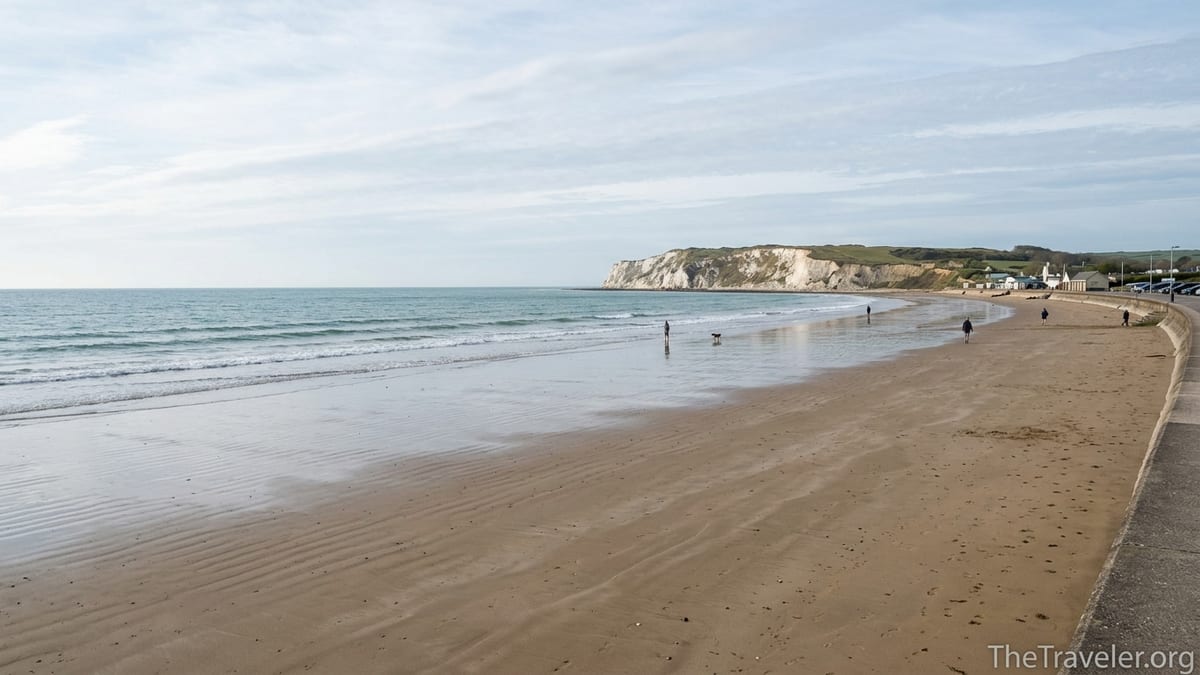
Yaverland Beach sits at the eastern end of Sandown Bay, a broad, south east facing sweep of coast that curves between Culver Down and Shanklin. The beach is known for its long stretch of sand at low tide and relatively gentle, sheltered seas, making it a favourite with families in summer. For walkers, that same geography provides a rare sense of space: when the tide goes out, the sand widens into an enormous, firm expanse that feels purpose-built for striding out without having to dodge shingle banks or rock pools.
Compared with more built-up sections of the bay closer to Sandown Pier, Yaverland tends to feel quieter and more local in character. Facilities are clustered near the car park, where you will find a small beach shop, seasonal cafe and public toilets. Once you start walking away from this hub, either south west towards Sandown or north east towards Culver Cliff, the number of people thins quickly outside peak summer. The result is a beach where you can choose how close or far you stay from the bustle simply by how far you walk.
The beach also connects directly with the Isle of Wight Coast Path, giving you options to extend a simple shoreline stroll into a longer route. Many visitors, for example, park at Yaverland, walk along the sand to Sandown and then return via the promenade or the cliff-top path, creating a relaxed circular walk with changing views of the bay. Others follow the coast in the opposite direction, towards the base of Culver Down, to enjoy the drama of the cliffs and views back towards Shanklin and beyond.
For walkers seeking quiet, the combination of wide sands, good underfoot conditions at low tide and quick transition from amenities to open space makes Yaverland especially appealing. You are close enough to parking, buses and cafes to keep logistics simple, but far enough from amusement arcades and promenade noise to feel that you have escaped to a more natural piece of coast.
Understanding Seasons: When The Beach Is Naturally Quietest
The Isle of Wight has a relatively mild maritime climate, and Sandown Bay typically enjoys average daytime temperatures from around the mid single digits Celsius in winter to the high teens and low twenties in July and August. In practice, that means the beach can be walkable in almost any month, provided you dress for the conditions, but the feel of the place changes significantly through the year.
For the quietest walks, late autumn, winter and early spring are the most reliable choices. From November through March, visitor numbers drop sharply once the school half-term holidays are over. On a typical weekday morning in January, you might share the sand with a handful of dog walkers and perhaps a local runner or two. Cafes may keep shorter hours or close midweek in the coldest months, but the trade-off is a real sense of solitude. A walk from Yaverland towards Sandown at this time of year often means long stretches where the only sounds are waves, wind and the call of seabirds.
Shoulder seasons, especially late April to early June and late September to mid October, are an excellent compromise between comfort and calm. Daytime highs often sit in the low to mid teens Celsius, warm enough for a long walk without heavy winter layers. Weekend days in May and sunny bank holidays will be busier, but if you choose early mornings or late afternoons you can still find broad patches of almost empty sand. Many walkers plan trips for the weeks immediately before or after the main UK school summer holidays to take advantage of lower accommodation prices and quieter ferries as well as gentler footfall on the beach.
High summer from late June through August brings the liveliest atmosphere. Families base themselves around the car park and sand close to the cafes, and on clear days the bay fills with paddleboarders, swimmers and kayakers. If your priority is quiet walking rather than swimming and sunbathing, summer is still possible, but you will need to time your walks more carefully, anchoring them around early and late in the day and avoiding peak dates when big events and local carnivals are running across the island.
Timing Tides & Daylight: Practical Planning For Walkers
Yaverland is at its best for walking when the tide is low. At low tide, the beach opens out into a broad ribbon of compact, wet sand that is easy on the knees and ideal for steady pacing. At high tide, especially during large spring tides, the water can come much closer to the seawall and rocks, narrowing the strip of easy walking and sometimes leaving softer, drier sand that is harder work underfoot. For a relaxed experience, aim to start your walk an hour or two either side of low tide, when the sand is at its widest.
The tide in Sandown Bay typically follows a semi-diurnal pattern, with two high and two low tides each day, roughly twelve hours and twenty-five minutes apart. In practice, this means that if low tide falls mid-morning one day, it is likely to be around late morning or lunchtime on the following day. Many UK travelers use tide apps or online tables to check times for Yaverland or nearby Sandown before setting out, and then plan their day around that window. For example, you might take a 9.30 am low tide as your cue to be on the beach shortly after breakfast, finishing your longest stretch of walking before lunchtime.
Daylight is another key factor if you want quieter walks. In high summer, sunrise can be shortly after 5 am and sunset well after 9 pm, giving enormous flexibility to walk when few others are around. A dawn walk from Yaverland towards Culver Down on a clear July morning often means shared space only with dog walkers and the odd paddleboarder. In winter, daylight is far more limited, with December afternoons darkening by around 4 pm, so you may want to begin mid-morning and keep an eye on the clock to avoid finishing in fading light, particularly if you plan to use the cliff-top path.
Wind direction also influences how peaceful the bay feels. Yaverland faces south east, so winds coming in from the south west can be partially sheltered by the curve of the land, while strong easterlies blow more directly onshore and can feel colder and more exposed. Checking a local forecast for Sandown or Yaverland on the morning of your walk can help you decide whether to bring an extra windproof layer or perhaps opt for a more sheltered inland section of the Isle of Wight Coast Path if conditions look rough.
How To Avoid Crowds: Days, Hours & Local Events
Even in summer, Yaverland Beach has pockets of quiet if you choose your moment. The most dependable strategy is to walk early or late in the day. Between roughly 10 am and 4 pm in July and August, the beach near the car park and cafe fills with families and day trippers. By contrast, if you are willing to set an alarm and be on the sand by 7 am, you are likely to find wide open stretches, even on weekends. Similarly, after 6 pm, many visitors retreat to holiday parks, pubs or self-catering cottages, and the beach begins to empty again.
Midweek is generally calmer than weekends during peak season. If your schedule allows, plan your longest walks for Tuesday to Thursday, especially in August. Many island events, fetes and regattas fall on Fridays, Saturdays and Sundays, which can increase traffic through Sandown, as well as footfall around the bay. During school terms, term-time weekdays in May or June are often especially peaceful, with a noticeable uptick only if a school trip or coach party is scheduled to explore the Dinosaur Isle museum next to the beach.
Local events are worth checking if quiet is your priority. The Isle of Wight Festival, held near Newport in June, draws thousands of visitors to the island, which can make ferries, buses and roads livelier, even though Yaverland itself is some distance away. In high summer, Sandown and nearby towns host traditional carnivals and the Sandown Bay Regatta along the seafront. On days when these are running, particularly late July and early August, expect more people in town and more activity on the promenade leading towards Yaverland, even if you can still find calmer space once you walk further along the sand.
Lastly, think about how you use the beach itself. Even at busy times, many people cluster within a short distance of amenities. If you start at the Yaverland car park and walk south west along the sand towards Sandown, the initial section may be busier, but after 10 to 15 minutes of steady walking the crowds thin. Walk in the opposite direction towards Culver Cliff and the atmosphere becomes more tranquil more quickly, with mainly local dog walkers and a few determined hikers heading this way. Keeping moving rather than stopping close to the main entrance is often all you need to reclaim a sense of quiet.
Walking Conditions, Safety & Realistic Expectations
For most of its length, the sand at Yaverland is firm and level at low tide, which makes it forgiving on knees and ankles. Solid walking shoes or trainers are usually sufficient; in dry summer weather, many visitors happily walk barefoot along the waterline for shorter distances. If you plan a longer route of several kilometres, particularly in cooler months when the sand can be cold underfoot, comfortable, waterproof walking shoes or light hiking boots are a better choice. The main practical consideration is that the upper beach can slope more steeply in places near the seawall, so many walkers favour the flatter, compacted section closer to the retreating tide.
The backdrop of cliffs at the northern end of Yaverland is striking, but they demand a degree of caution. Locals often advise avoiding walking directly under the cliffs, particularly after heavy rain or during winter storms, because of the risk of small rockfalls and unstable sections. The safest option for a quiet coastal walk is usually the open sand a reasonable distance from the cliff base. If you are tempted to explore fossil-rich areas further along the bay, keep an eye on the tide time and always give yourself enough margin to get back without being squeezed between rising water and the cliff line.
Facilities at Yaverland are good for such a natural-feeling stretch of beach. A large pay-and-display car park sits just behind the sand, and public toilets are available close by. A seasonal cafe and a simple beach shop cater to daytime visitors, selling hot drinks, ice creams, basic snacks and beach items. In high summer, you might pay typical UK seaside prices, such as a few pounds for a coffee or soft drink and somewhat more for simple hot food. Outside the peak months, opening hours can be shorter and some facilities may close on quieter weekdays, so it is sensible to bring water and a snack of your own, especially if you plan a long walk at off-peak times.
Weather changes quickly around the English Channel, and even in late spring a bright morning can give way to showers and brisk winds. Layered clothing is the best approach. Many walkers carry a packable waterproof jacket and a hat year-round, plus gloves from late autumn through early spring. In summer, do not underestimate the strength of the sun: the open sand and water reflection can make conditions feel more intense than the air temperature suggests. A light long-sleeved top, sunscreen and a bottle of water will help you stay comfortable if you are out on the beach for several hours.
Suggested Quiet-Walk Itineraries Around Yaverland
One of the simplest and most satisfying walks for quiet-seekers is the out-and-back along the sand between Yaverland and Sandown. Start from the Yaverland car park around an hour before low tide. Head south west along the shoreline, keeping the water on your left, and enjoy the broad views of Sandown Bay opening up ahead. After about 20 to 30 minutes of easy walking, you will approach Sandown Pier and the livelier seafront. If your goal is to stay in a calmer zone, you can turn back before you reach the busiest arcades and cafes, giving yourself around an hour of continuous walking on largely open sand.
For a slightly longer route with variety, combine the beach and the promenade. Begin again at Yaverland at low tide, walking along the sand towards Sandown. Once you reach the town, climb up to the seafront promenade for the return leg. The paved path runs above the beach and has benches at intervals where you can pause to watch the waves. This combination lets you experience both the wide, open feel of the sand and the raised views back to Culver Down, while also making use of cafes or kiosks in Sandown for a coffee before you stroll back.
If you want a wilder, more dramatic feel, consider walking from Yaverland towards the base of Culver Down. Turn left as you face the sea, heading north east with the cliffs gradually rising ahead of you. The further you go, the fewer people you are likely to see, particularly outside the height of summer. On a quiet winter afternoon, this section can feel strikingly remote for such an accessible location. Be very mindful of the cliff line and the tide times, however, as this stretch offers less room to retreat once the water starts to climb up the sand.
Fit walkers may also like linking Yaverland with higher-level viewpoints. From the beach, you can head inland to pick up paths leading eventually towards Brading Down, a hill that overlooks Sandown Bay and provides panoramic views of the coast. A typical half-day could involve a low-tide walk along the beach in the morning, followed by a short drive or bus ride to a starting point for a modest hill walk in the afternoon, giving you two very different perspectives on the same stretch of coastline.
Accommodation, Transport & When To Base Yourself Nearby
For travelers who want to structure several days around quiet coastal walks, it can be helpful to stay as close as practical to Yaverland or Sandown Bay. The immediate area behind Yaverland Beach is relatively undeveloped, with a few holiday parks and caravan sites rather than a dense town centre. More varied accommodation lies a short distance away in Sandown and Shanklin, where you will find small hotels, guesthouses and self-catering apartments. Prices fluctuate with the season: a modest seafront guesthouse in Sandown, for example, might cost substantially less per night in March or October than in peak August.
Reaching Yaverland typically involves crossing to the Isle of Wight by ferry or hovercraft from ports such as Portsmouth, Southampton or Lymington, then either driving or taking local buses to Sandown. If you are bringing a car, visiting outside school holidays not only keeps the roads quieter but can also make ferry crossings cheaper, particularly on midweek journeys. Once on the island, Yaverland is a short drive from Sandown town centre, with straightforward parking at the beach. Drivers who prefer emptier car parks and shorter ticket queues often opt for early arrivals, before mid-morning on busy summer days.
If you are travelling without a car, local buses link Sandown with other island towns, and some services run along the seafront. In summer, additional tourist-oriented routes can make it easier to reach trailheads or combine coastal walks with inland attractions. For quiet-focused trips, staying in Sandown or Shanklin and using a combination of walking and local buses often works well, allowing you to catch early services towards Yaverland, enjoy a long walk at low tide, then return in the afternoon without worrying about parking or driving after a tiring hike.
Given the island’s popularity as a summer holiday destination, booking accommodation early helps if you want a specific type of stay, such as a small, adults-focused bed and breakfast or a cottage within easy walking distance of the bay. Outside peak periods, you may find greater flexibility and occasionally lower nightly rates, which can make it more feasible to base yourself for several days and time your walks for the quietest tides and weather windows rather than squeezing everything into a single weekend.
The Takeaway
Yaverland Beach rewards the traveler who plans with quiet in mind. Its long, flat sands, generous low tides and direct access to the Isle of Wight Coast Path make it an excellent base for slow, reflective walks in almost any month of the year. Yet the experience you have depends heavily on when you arrive. Choose a calm weekday in spring, with a mid-morning low tide and a light onshore breeze, and you are likely to enjoy wide, open views with only a scattering of fellow walkers. Arrive on a sunny August bank holiday at peak afternoon, and the same bay can feel cheerful but much more crowded.
For the best blend of peace, comfort and practicality, aim for late spring or early autumn, plan your walks around low tide and favour early mornings or evenings, especially at weekends. Keep an eye on local event calendars, bring appropriate layers for the changeable coastal weather and treat the cliffs with respect by staying to the open sand. Whether you prefer a gentle hour’s stroll between Yaverland and Sandown or a longer exploration towards Culver Down, thoughtful timing will help you experience this stretch of the Isle of Wight coast at its most serene.
FAQ
Q1. When is the single best month to visit Yaverland Beach for quiet walks?
For many visitors, May or late September offers the best balance of mild weather, longer daylight and relatively low visitor numbers, especially on weekdays.
Q2. What time of day is usually quietest on Yaverland Beach in summer?
In July and August, early mornings before about 9 am and evenings after 6 pm are typically the calmest, even on warm, sunny days.
Q3. How important is it to visit at low tide for a good walk?
Low tide is very helpful. It exposes a wide band of firm sand that makes walking easier and gives you more space to spread out away from other visitors.
Q4. Are winter walks on Yaverland Beach enjoyable or too cold?
Winter walks can be very rewarding and quiet. With warm layers, a hat and gloves, many people enjoy clear, crisp days between November and February.
Q5. Is Yaverland Beach usually crowded during the Isle of Wight Festival?
The festival happens near Newport, not on the beach itself, but the island is busier overall. Ferries and buses may be livelier, though you can still find quieter times on the sand.
Q6. Can I walk safely under the cliffs at the far end of Yaverland?
It is better to be cautious. Locals often recommend avoiding walking directly under the cliffs, especially after heavy rain, and always checking tide times before going far along this section.
Q7. Are there facilities open outside the main summer season?
Public toilets near the car park are generally available, but cafes and the beach shop may keep shorter hours or close on quiet weekdays from late autumn to early spring.
Q8. Is Yaverland Beach suitable for people who prefer paved paths?
The beach itself is sandy, but you can combine your walk with the paved seafront promenade between Sandown and Shanklin if you prefer firmer, even surfaces.
Q9. Do local events like carnivals make the beach very busy?
Carnivals and the Sandown Bay Regatta bring more people to the area, particularly on summer weekends. If you want quiet, avoid those specific dates or walk early in the day.
Q10. Is it realistic to visit Yaverland for a peaceful day trip from the mainland?
Yes. With an early ferry or hovercraft and a planned return crossing, many travelers fit in several hours of quiet walking at Yaverland and still get home the same evening.