


More news on this day
Flights into Ronald Reagan Washington National Airport faced mounting delays and diversions on July 14 after a security-related "VIP" ground stop sharply curtailed arrivals into one of the country’s busiest close-in airports.
Get the latest news straight to your inbox!
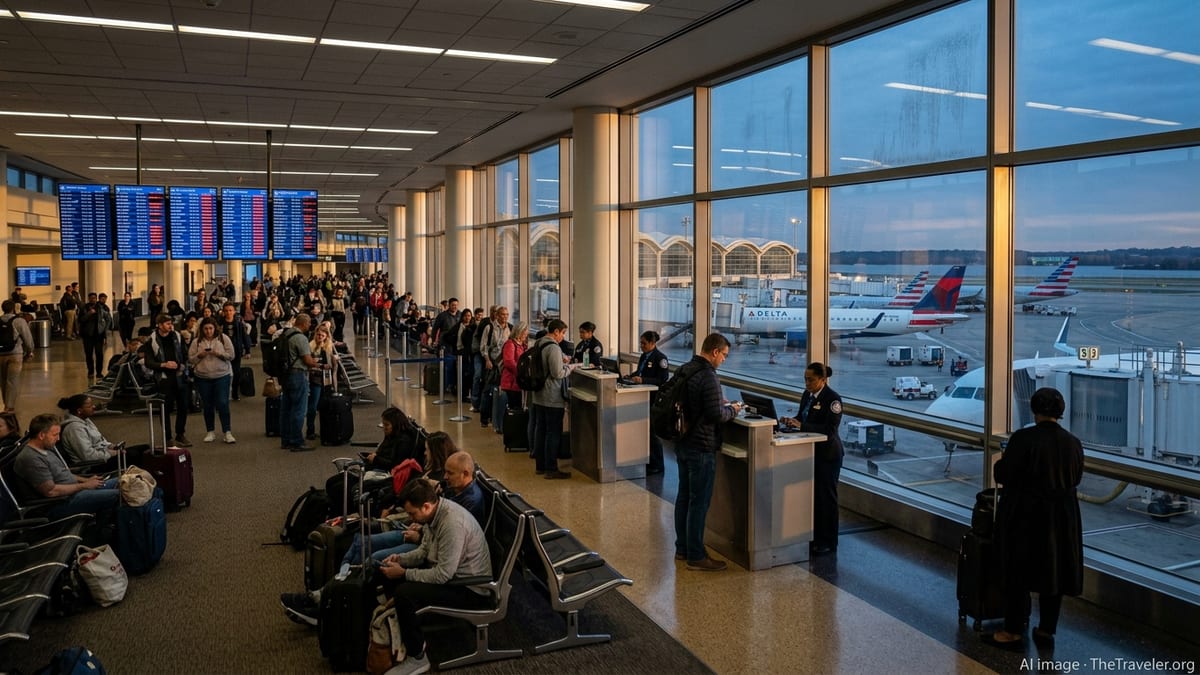
Ground stop halts DCA arrivals for hours
Publicly available air traffic advisories show that arrivals to Ronald Reagan Washington National Airport were held on the ground at airports across the eastern United States beginning late Monday morning, with the Federal Aviation Administration describing the event as a security-related "VIP" movement. The stop initially covered the period from 11:30 a.m. to 2 p.m. Eastern time, but was subsequently extended as traffic backed up throughout the system.
Local broadcast coverage in Washington reported that the halt affected flights inbound from more than a dozen domestic airports, effectively pausing a significant portion of midday arrivals. Although departures from DCA were able to continue in limited fashion, the reduction in inbound volume quickly translated into rolling delays for passengers already in the air and for those waiting to board at outstations.
Unlike typical weather slowdowns, a VIP ground stop is driven by security procedures in the National Capital Region’s tightly controlled airspace. That distinction contributed to the abrupt nature of Monday’s disruption, with little advance notice appearing in public FAA planning documents before the restrictions took effect.
Travelers report diversions, long tarmac waits
Real-time flight tracking data and airline status pages showed a cascade of knock-on effects through the early afternoon. Inbound flights to DCA from major hubs such as Atlanta, Chicago and Dallas were placed into extended ground holds before departure, while some aircraft already en route were rerouted to alternate airports when arrival slots into the Washington area disappeared.
Posts on traveler forums and social media described passengers sitting on the tarmac for more than an hour awaiting updated departure times, with some reporting that their flights had been boarded and then held at the gate when the extension of the ground stop became apparent. Others recounted diversions that lengthened journeys by several hours, including families traveling with young children and passengers trying to make tight connections onward from DCA.
By midafternoon, airline status tools listed a growing tally of delayed and canceled operations touching the airport, a pattern consistent with previous disruptions at the constrained riverfront facility. Because DCA has limited runway capacity and operates under strict slot controls, even short periods of halted arrivals can take much of the day to unwind once traffic resumes.
Cause labeled only as generic "VIP" activity
As of Tuesday afternoon, publicly posted information from the FAA categorized the trigger for the ground stop only as a VIP event, language commonly used for presidential travel, visiting heads of state or other sensitive security movements around Washington. The description did not identify a specific flight or individual, and no additional explanatory notices appeared on publicly accessible federal advisory pages.
Online discussion among frequent flyers and aviation observers highlighted the opaque nature of such security holds for the traveling public. Some users pointed to earlier planning documents noting that VIP movements were expected to feature more prominently in traffic management for DCA following recent safety reviews, while others contrasted Monday’s extended halt with the shorter pauses that have historically accompanied routine motorcades or ceremonial flyovers.
In the absence of detailed official explanations, airlines and passengers were left to interpret short references to VIP activity embedded in route planning tools and delay summaries. For most travelers, the only visible sign of the event was a departure board filled with rolling estimated times and generic references to air traffic control programs.
Why VIP ground stops hit DCA especially hard
Aviation policy filings and safety documentation describe Reagan National as one of the most operationally constrained major airports in the United States, owing to its single main runway configuration, proximity to the Potomac River and location just across from downtown Washington. The airport sits inside a web of special-use airspace that sharply limits where planes can arrive and depart, particularly when additional security restrictions are layered on top.
Industry analyses submitted to federal regulators in recent years have noted that DCA consistently ranks among the country’s leaders in ground delays and ground stops relative to its size, with VIP and military activity cited as a recurring factor. When a security perimeter is tightened for a short window around the capital, controllers have few alternatives for rerouting traffic in the immediate vicinity, resulting in rapid spillover to airports hundreds of miles away.
These structural constraints mean that what appears to be a short planned hold on paper can translate into an extended period of irregular operations throughout the afternoon and evening. As arrival banks are compressed or canceled, outbound flights lose their inbound aircraft, and fresh crews can time out as they wait for aircraft to reposition, further compounding the disruption.
What affected passengers can do next
Travel experts recommend that passengers affected by sudden VIP-related delays treat them similarly to severe weather events when seeking remedies. While airlines generally categorize air traffic control holds as outside their direct control, same-day rebooking options are often available through mobile apps or airport agents when a ground stop ripples through a carrier’s schedule.
For travelers who experienced diversions or excessively long tarmac waits, documentation such as screenshots of status updates and boarding passes can be useful when submitting feedback to airlines or travel insurers. Some carriers offer meal vouchers or partial credits during extensive disruptions, particularly if delays extend into the evening or cause missed connections onto the last flights of the day.
Ahead of future trips into or out of Washington, frequent flyers suggest building extra buffer time into itineraries that rely on DCA, especially during peak political and ceremonial periods when high-profile visits are more common. Keeping a close eye on real-time FAA traffic management advisories and airline alerts on the day of travel can provide early hints of developing VIP activity, even when the underlying security details are not disclosed.