


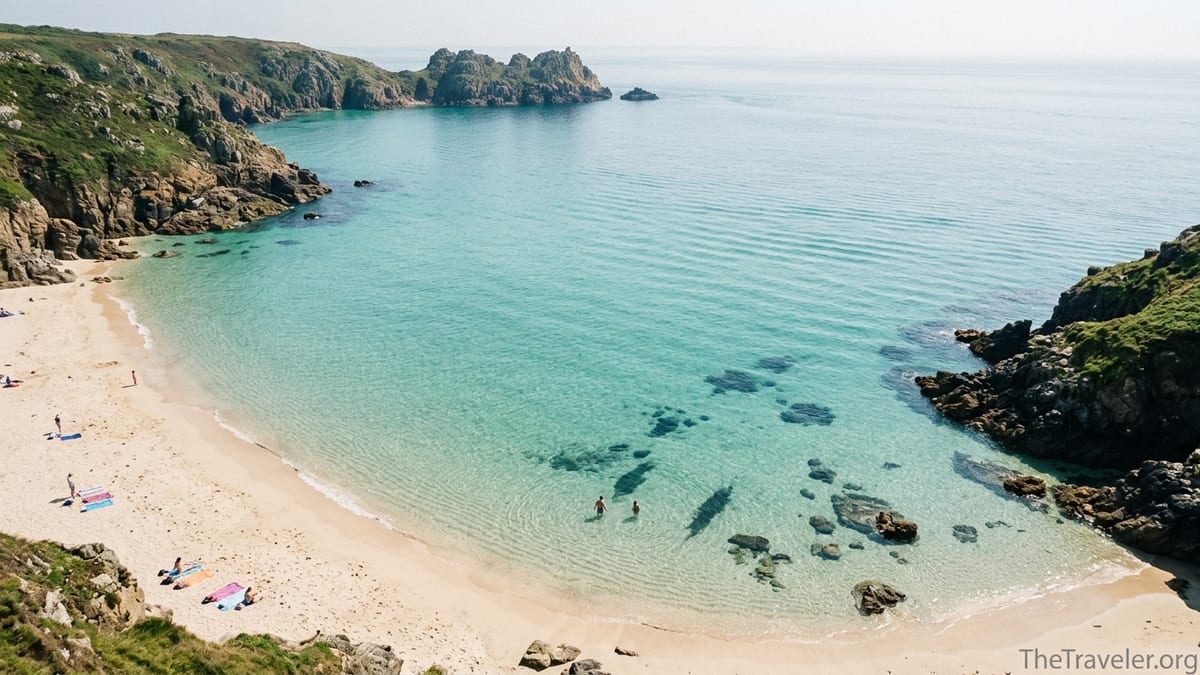
When people picture crystal-clear water, they often think of the Mediterranean or the Caribbean, not the British Isles. Yet right now, a handful of UK beaches are earning attention for remarkably clear, clean seas, helped by strict water quality standards and a growing focus on coastal protection. From sheltered Cornish coves to white-sand Scottish bays that could pass for the Maldives on a sunny day, these are the places where you are most likely to find transparent, shimmering water on your next UK break.
How to Find Clear Water Beaches in the UK Right Now
“Clearest water” is not an official category, so the best way to identify UK beaches with transparent seas is to look at a combination of factors. The most important is official water quality testing. Across England, Wales and Northern Ireland, bathing waters are sampled regularly in season and rated on a four-point scale, with “Excellent” the highest grade. Many of the clearest beaches also carry Blue Flag or equivalent awards, which require consistently high water quality and good management.
The second indicator is geography. Sheltered coves with light-coloured sand or pale shingle tend to look clearer because sunlight penetrates deeper and the seabed reflects the light. Steep, rocky headlands can protect the bay from swell and sediment, while offshore reefs break the waves before they hit the shore. That is why parts of the Jurassic Coast in Dorset and the Lizard in Cornwall can appear almost turquoise on a calm day.
Third, timing matters. After periods of settled, dry weather, the sea is usually at its clearest because there is less runoff from rivers and fewer storms to churn up sand. On the other hand, after heavy rain or strong winds, even usually pristine spots can look murkier for a day or two. Travellers planning a trip this summer are wise to check recent local reports and, where available, the latest bathing water updates from national environment agencies.
Finally, expectation is key. UK waters are cooler than southern Europe for much of the year, so clarity can be startling when you first wade in. On a sunny afternoon in late June in Cornwall or Northumberland, it is not unusual to be able to see your feet clearly in waist-deep water and to spot shoals of sand eels or small pollock nosing around the rocks.
Cornwall’s Turquoise Coves: Porthcurno, Pedn Vounder and Kynance
Cornwall is home to some of the UK’s most photographed “tropical-looking” bays, and several are currently singled out in travel features and swimmer forums for strikingly clear water. Around the far west, Porthcurno and neighbouring Pedn Vounder (also known as Green Bay) are classic examples. On a calm tide, the sandy seabed and high granite cliffs combine to give the sea a vivid, glassy turquoise that would not look out of place in Greece. Swimmers often report being able to see fish and their own shadow on the sand several metres below.
In practice, visitors experience these beaches as wild and natural rather than manicured. Porthcurno has basic facilities and a car park set back from the sand, with typical summer parking charges comparable to other Cornish hotspots. Pedn Vounder, by contrast, is accessed by a steep, partly scrambly path and is not patrolled, so it suits confident walkers and swimmers. At low tide the sandbar here creates shallow, crystal-clear lagoons where the water warms noticeably, a favourite for early-season dips when the open sea still feels biting.
Further east on the Lizard Peninsula, Kynance Cove regularly appears in round-ups of the UK’s most beautiful beaches, with aerial photos showing almost unreal bands of turquoise and aquamarine between dark serpentine rocks. When the swell is low, the water here can be exceptionally transparent around the rocks and sea caves. On a clear June morning, you can often watch crabs moving among the kelp from the cliff path above. Facilities have improved in recent years, but this is still a place where the tidal range matters: at high tide the sand almost disappears, and the swimming area shrinks dramatically.
Travel-wise, clear-water hunters should build in flexibility. These Cornish coves can feel overcrowded in school holidays, which not only affects the atmosphere but also stirs up sand in the shallows. Many regulars now time their visits for midweek mornings, arriving early enough to secure parking and enjoy the clearest conditions before the busiest part of the day.
Dorset’s Jurassic Coast: Man O’ War, Durdle Door and Lulworth
Few UK coastlines look more like a postcard than the Jurassic Coast in Dorset, and sections of it are increasingly praised for clear, calm water in settled weather. Man O’ War Beach, the crescent-shaped cove immediately east of the famous Durdle Door arch, often surprises visitors who walk over the headland expecting rough surf. Instead they find a semi-enclosed bay where an offshore rock reef softens incoming waves and, on still days, leaves the surface glassy and almost lake-like.
Recent travel pieces highlight this cove as an alternative to the main Durdle Door beach, particularly for travellers interested in swimming or snorkelling rather than just taking photos from the cliff path. On a bright afternoon, the combination of white chalk cliffs, pale shingle and gently shelving seabed gives the water an almost luminous clarity. People paddleboarding here often comment that they can see right to the bottom, spotting starfish and weed beds without needing a mask.
Just around the corner, Durdle Door itself can also offer surprisingly transparent water between sets of waves, particularly towards the eastern end of the bay away from the heaviest foot traffic. However, official local guidance periodically warns that both Durdle Door and Man O’ War have shelving beaches and can be affected by rip currents, so they are marketed as scenic rather than as family paddling spots. Visitors considering a swim are advised to pick calm days, stay close inshore, and avoid entering the water in big surf, especially when there are no lifeguards present.
A little to the east, Lulworth Cove provides another classic clear-water scene. The near-circular inlet, carved by the sea through layers of rock, is naturally sheltered from most swells, which often leaves the water smooth enough for kayaking tours and beginner paddleboard rentals. On a sunny day in July, the water inside the cove frequently appears emerald or turquoise, with visibility good enough that hire operators sometimes provide clear-bottom kayaks for guests keen to peer at the seabed as they paddle.
South Coast Standouts: Bournemouth, Swanage and the Isle of Wight
While Cornwall and Dorset get much of the social media attention, a number of south coast resorts are quietly maintaining reputations for clean, clear water backed by award schemes. Bournemouth and neighbouring Poole beaches, for example, have repeatedly received Blue Flag recognition in recent seasons and are promoted locally for their high water quality. On calm summer mornings, when the English Channel is flat, the sea here can look unexpectedly translucent, especially along the eastern stretches away from the busiest piers.
Families staying in the area often choose these beaches precisely because they combine clarity with amenities. The gently shelving sands make it easy to wade out and still see your toes, and lifeguard cover operates on the main central sections in high season. Deckchair rentals, beach huts and nearby cafes add to the classic resort feel. Water sports centres based along the promenade offer paddleboard and kayak hire, with instructors timing beginner sessions for slack tide when currents are minimal.
To the south-west across the water, the Isle of Wight is having a moment in current “best beaches” lists thanks in part to its clear shallows. Yaverland Beach in particular has been singled out in recent rankings for its wide, golden sand and clear, shallow water backed by colourful cliffs. On a sunny day with a light offshore breeze, the sea here often looks pale blue and surprisingly transparent for such an accessible, family-friendly spot. Local operators run kayak and paddleboard tours that hug the shoreline, making the most of the visibility around rock ledges and chalk stacks.
Further around the bay, smaller beaches such as Colwell and Totland on the island’s north-west side can offer strikingly clear, calm conditions when the wind is in the right direction. These pebbly shores shelve into deeper water more quickly, which suits confident swimmers who want a brisk dip with open views across the Solent and the mainland. It is common to see people arriving early evening in summer with picnic baskets, taking advantage of the long light and glassy water once the day-trippers have left.
Northern Gems: Northumberland, Yorkshire and Beyond
The north and north-east of England may have cooler sea temperatures than the south, but they also offer some of the clearest coastal water in the country on calm days. Less river pollution, fewer major harbours and a largely undeveloped coastline mean that places like Northumberland can feel unexpectedly pristine. Beaches such as Bamburgh and Beadnell frequently attract praise from walkers and swimmers for water that looks bottle-green and transparent over the pale sand.
In recent Blue Flag announcements, several north-east beaches have been recognised for excellent water quality, including stretches around Whitley Bay and Tynemouth. Locals often point out that the best clarity typically follows a run of light offshore winds, when the surf drops and the sea takes on an almost oily smoothness. On such days, snorkellers might head to sheltered corners around rocky points to look for crabs and anemones, while paddleboarders cruise just beyond the breaking waves in water clear enough to watch the shadows of fish gliding beneath the surface.
Further south along the Yorkshire coast, smaller bays like Runswick and Sandsend near Whitby can also deliver impressive clarity when conditions align. These are more traditional seaside villages than major resorts, with simple beach cafes, small car parks and a few local guesthouses. Yet on a still August morning, the combination of clean sand, modest crowds and weak surf can leave the shallows looking almost transparent. Cold-water swimmers and surf clubs alike praise these beaches for feeling wild and open while remaining relatively easy to reach by road or rail.
Travellers heading north for clear water should pack accordingly. Even in high summer, sea temperatures on this stretch of coast are often several degrees cooler than in the south-west. Many regulars invest in short wetsuits, readily available from surf shops in Tynemouth, Scarborough or Whitby, both for warmth and for extra buoyancy when swimming beyond the first sandbar.
Scottish and Welsh Beaches That Look Almost Tropical
For the most strikingly clear water anywhere in the UK, many seasoned beachgoers will point you to the far north and west. In Scotland’s Outer Hebrides, for example, beaches such as Luskentyre on Harris and Seilebost across the bay are frequently compared to the Caribbean in press photos and traveller accounts. Here, fine white sand and an absence of major settlements combine to produce water that can appear remarkably transparent, particularly on calm days when the wind swings offshore.
On a bright August afternoon, it is often possible to stand knee-deep at Luskentyre and see the ripples on the sand several metres ahead, with shifting bands of turquoise stretching far into the Sound of Taransay. Despite the almost tropical appearance, the water remains cold enough that most swimmers rely on thick wetsuits, which are available for hire from outdoor shops in Stornoway or Tarbert. The remoteness also means fewer crowds and very limited facilities, so visitors typically bring their own food, warm layers and anything needed for the day.
Elsewhere on the west coast, the Morar Sands between Arisaig and Mallaig, and stretches of the Isle of Mull and Skye, can also offer beautifully clear shallows when conditions are kind. These are classic road-trip beaches, often discovered via small lay-bys off the main route, with short paths leading through dunes to unexpectedly vivid blue water. Late spring and early autumn can be especially rewarding, with long light, fewer midges than high summer, and a good chance of a calm day during blocking high-pressure systems.
Wales, too, has its share of crystalline bays. The Pembrokeshire coast is home to beaches such as Barafundle and Broad Haven South where, on a sunny tide, the sea can look almost Mediterranean against pale sand and limestone cliffs. Official Blue Flag and Green Coast awards in Wales highlight 20-plus beaches with consistently excellent water quality. In practice, that often means visibility in the shallows good enough for beginner snorkellers to see wrasse and sand eels nosing around the rocks within a few metres of shore.
Planning a Clear-Water Trip: Practical Timing and Safety Tips
Finding clear water in the UK is as much about timing and conditions as it is about choosing the right beach. For most of England and Wales, the best window for both clarity and relative warmth runs from late June through early September, when sea temperatures reach their seasonal peak and there is a reasonable chance of high-pressure systems bringing calm seas. In Scotland and the far north, mid-July to late August usually offers the mildest water, though hardy swimmers are increasingly taking to the sea year-round with appropriate gear.
When planning a specific day, travellers should pay attention to three main factors: recent weather, wind direction and tide. Several days of dry, settled weather typically improve visibility, while strong onshore winds and storms can churn up sand and reduce clarity significantly. Offshore or light cross-shore breezes, by contrast, tend to flatten the sea and create the glassy conditions that photographers love. Tide matters as well. In places like Pedn Vounder or Barafundle, low to mid tide often exposes sandbars and shallow lagoons where the water both looks and feels clearer and slightly warmer.
Safety is an essential part of any clear-water search. Some of the most photogenic coves, such as Man O’ War or Kynance, have steep paths, uneven steps and limited lifeguard cover. Visitors should wear sturdy footwear for the descent, avoid climbing on unstable cliffs and always check local signs before swimming. Even on apparently calm days, hidden rip currents can develop next to headlands or where waves funnel through narrow gaps in reefs. When in doubt, it is wise to stay in waist-deep water, swim parallel to the shore rather than straight out, and never jump from cliffs or rocks without local knowledge and official approval.
Finally, responsible behaviour helps keep the water clear for everyone. That means taking all litter home, avoiding disposable barbecues on fragile dune systems, and using toilets rather than the sea. In some remote Scottish and Welsh locations, there may be no facilities at all, so visitors are encouraged to plan ahead and follow “leave no trace” guidance. Supporting local cafes and businesses that invest in beach clean-ups and sustainable tourism projects is another tangible way to help preserve these clear-water havens.
The Takeaway
Right now, some of the most invitingly clear water in the UK can be found in Cornish coves like Porthcurno and Kynance, on Dorset’s Jurassic Coast around Man O’ War and Lulworth, along the well-managed resort sands of Bournemouth and the Isle of Wight, on the open shores of Northumberland and Yorkshire, and on remote stretches of the Scottish and Welsh coasts. What unites these places is not tropical heat but a combination of clean water, light-coloured sand or shingle, and shelter from heavy swell.
Travellers willing to watch the forecast, time their visits for settled spells, and walk a little further from the car park are likely to be rewarded with seas that are far clearer than many expect from the UK. Add in early-morning or evening visits to dodge the busiest crowds, and even well-known beaches can feel close to pristine.
With ongoing efforts to improve bathing water quality and a growing appreciation for cold-water swimming and low-impact coastal tourism, the prospects for UK clear-water beach breaks look brighter than ever. For now, pack a wetsuit, a pair of goggles and a sense of adventure, and you may find that the clearest water you swim in this year is far closer to home than you imagined.
FAQ
Q1. Which UK beach has the clearest water right now?
The answer changes with weather and tides, but Cornish coves such as Porthcurno and Pedn Vounder, and Scottish beaches like Luskentyre, are regularly praised for exceptionally clear water in current travel reports.
Q2. When is the best time of year to find clear water in the UK?
For most of the UK, late June to early September offers the clearest combination of warmest sea temperatures, calmer conditions and good visibility in the water.
Q3. Does a Blue Flag guarantee crystal-clear water?
Not exactly. Blue Flag status confirms consistently high water quality and good management, which helps, but clarity on any given day still depends on weather, swell and tides.
Q4. Are clear-water UK beaches suitable for families?
Many are. Managed beaches like Bournemouth, Swanage and parts of the Isle of Wight combine clear shallows with lifeguards, toilets and cafes, making them ideal for families on calm days.
Q5. Do I need a wetsuit to swim at these beaches?
In high summer, hardy swimmers go without, but water temperatures are cool compared with southern Europe. A short wetsuit makes longer swims more comfortable, especially in the north and in Scotland.
Q6. How can I check current water quality before I go?
Environment agencies in England, Wales, Scotland and Northern Ireland publish bathing water results in season, while local councils and tourism boards often share recent updates and any warnings.
Q7. Are these clear-water beaches very crowded?
Some, like Kynance or Durdle Door, can be extremely busy in school holidays. Others, especially in the Hebrides or remote parts of Wales, remain quiet but require longer travel and fewer facilities.
Q8. Can I snorkel at UK clear-water beaches?
Yes. On calm days, sheltered coves in Cornwall, Dorset and Pembrokeshire, as well as parts of Northumberland and the Hebrides, offer good visibility for basic snorkelling close to shore.
Q9. What should I pack for a clear-water beach day in the UK?
Alongside swimwear, bring warm layers, a towel or robe, sturdy shoes for paths, sun protection, plenty of water and snacks, and optional kit like wetsuits, goggles or snorkels.
Q10. Is it safe to visit these beaches in winter for clear water?
Winter can bring very clear seas but also strong storms, large waves and cold water. Only experienced cold-water swimmers should enter the sea then, with proper gear and close attention to forecasts and local advice.