


Coney Island is one of New York City’s most nostalgic escapes, a rare place where you can ride a century-old wooden coaster, step onto a historic boardwalk, and be on the subway home before dark. The catch is that Coney Island is no longer a sleepy seaside playground; on summer weekends the crowds, queues and overlapping ticket systems can make a one-day visit feel chaotic and expensive. With a bit of strategy, though, you can ride the icons, enjoy the beach, and taste the classics without losing hours in line or burning through your budget. Here is the smartest way to tackle Coney Island’s theme parks in a single day.
Know the Layout: Two Parks, One Boardwalk
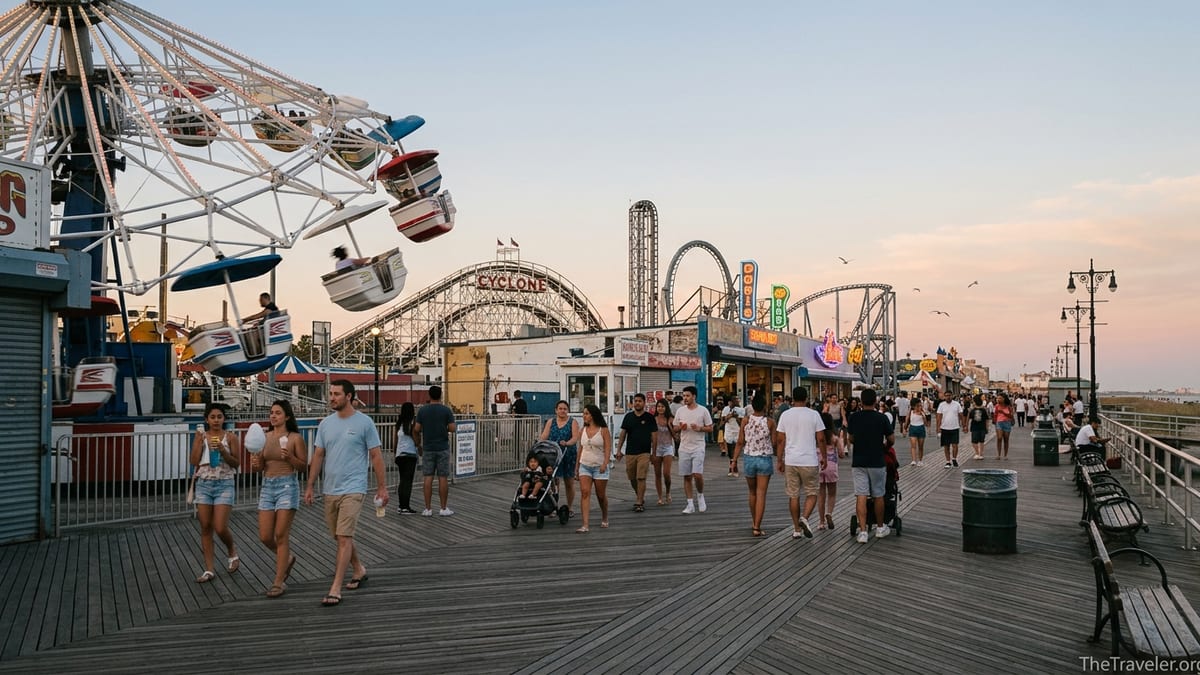
The first smart move is understanding that “Coney Island theme park” is really a cluster of attractions, not a single gated park. The two main amusement parks are Luna Park in Coney Island and Deno’s Wonder Wheel Amusement Park. They sit side by side around the Riegelmann Boardwalk, with the beach on one side and Surf Avenue on the other. In practice you will walk in and out of both parks several times during the day without passing a traditional front gate.
Luna Park operates the bulk of the modern rides, including the Coney Island Cyclone wooden roller coaster and steel coasters like Thunderbolt and Phoenix, as well as a collection of flat rides and family attractions. Admission to the grounds is free; you pay per ride using credits or time-limited wristbands. Deno’s Wonder Wheel Park is smaller and feels more old-school, anchored by the 150-foot-tall Wonder Wheel ferris wheel and a dense cluster of kiddie rides and classic flats, from spinning teacups to the Spook-A-Rama dark ride. Like Luna Park, Deno’s has no general admission fee; you pay per ride using points.
Because rides are scattered among open streets and the boardwalk, first-time visitors often waste time hunting for entrances or circling back to rides they missed. To stay efficient, mentally divide the area into three strips: Surf Avenue, where you will find the Cyclone, Thunderbolt, and the original Nathan’s Famous; the central midway around Stillwell Avenue, where Luna Park’s entrance plazas cluster; and the boardwalk line, where Deno’s Wonder Wheel sits between the beach and Luna Park’s seaside rides. Planning your day by zone rather than individual ride cuts down on crisscrossing through crowds.
Another key detail is seasonality. Coney Island’s beaches generally operate from Memorial Day weekend through early September, with lifeguards on duty during daytime hours in that window, while the boardwalk itself is open year-round. The amusement parks typically open on spring weekends and move to daily operation for the core summer season, then taper back to weekends in early fall. Exact calendars change year to year, so the smart approach is to check both Luna Park and Deno’s official park calendars for your specific date before you build a minute-by-minute plan.
Choosing the Right Day and Time to Go
Your choice of day can matter as much as your choice of rides. On peak Saturdays in July and August, waits for headline attractions like the Cyclone or Wonder Wheel can climb to 45 minutes or more by mid-afternoon, especially when tour groups arrive. On shoulder-season weekends in May or September, or on school days in June, the same rides can have near walk-on waits for long stretches of the day. If your dates are flexible, a sunny weekday in late May, June (outside of holidays), or early September will usually deliver more rides per hour than a crowded midsummer Saturday.
Opening strategy can also save serious time. Deno’s Wonder Wheel Park currently lists kiddie rides opening around 11 a.m. and adult rides at noon during the summer season, while Luna Park often opens its gates around midday as well, though individual ride opening times can stagger slightly. A smart one-day plan is to arrive in Coney Island 30 to 45 minutes before your first park opens. That gives you time to orient yourself, use the restrooms at Coney Island–Stillwell Avenue station, stash anything you do not want to carry all day, and get to your first ride queue just as it opens.
Evening can be a second sweet spot. Many New Yorkers arrive mid-afternoon, leading to long lines between roughly 2 p.m. and 6 p.m. On days when the parks stay open into the night, lines often slacken after 8 p.m. except for the very top-billed rides. If you can stay late, it is often easier to reride favorites like Phoenix or the Wonder Wheel after sunset, when families with small children begin to drift toward the subway.
Weather should influence your decision, but not in the obvious way. A cloudless 85-degree Saturday almost guarantees big crowds. A slightly overcast day in the 70s, with a small chance of showers, can mean lighter attendance and therefore shorter waits, as long as there are no heavy storms in the forecast that might shut rides temporarily. Since both parks reserve the right to adjust hours based on weather or private events, always confirm park opening status on the morning of your visit.
Getting There the Smart Way and Setting a Home Base
For most visitors, the most efficient way to reach Coney Island is by subway. The Coney Island–Stillwell Avenue terminal is served by four lines, typically the D, F, N, and Q trains, all of which run from Manhattan and other parts of Brooklyn. Exit at Stillwell Avenue and Surf Avenue, and you emerge in the heart of the action, within a five-minute walk of both Luna Park and Deno’s attractions. West 8 Street–NY Aquarium station is another option but is less central for the rides and is not step-free, so Stillwell Avenue is the better choice for first-time visitors and anyone with mobility concerns.
Travel time from Midtown Manhattan to Stillwell Avenue is usually around 45 to 60 minutes, depending on your starting point and any service changes. Given occasional late-night track work and weekend diversions, it is wise to check the MTA’s day-of service updates in the morning. Aim to tap in with a bit of buffer; if you want to be in front of the Cyclone at noon, plan to be on a train that arrives by 11:15 a.m. That makes space for minor delays and still lets you start your day unhurried.
If you are driving, budget extra time and money for parking. Street parking near the boardwalk is very limited on summer days, and meters often have short time limits. Several private lots near Surf Avenue and Neptune Avenue charge day rates that commonly range from around 20 to 35 dollars on peak summer weekends, with prices more modest on less busy days. Factor that into your cost comparison with subway fares; for a small group staying late into the evening, splitting parking can make sense, but solo visitors often find the subway cheaper and less stressful.
Whatever your arrival mode, establish a simple “home base” to orient your day. Many visitors use the plaza outside Coney Island–Stillwell Avenue station as a meeting point, since it is easy to find and visible on most maps. Another popular choice is the area by the original Nathan’s Famous on Surf Avenue, about a three-minute walk from the station. Choosing one of these locations as your default regrouping spot makes it simpler to handle a split party or a dead phone battery: everyone knows where to return if separated, without calling or texting.
Tickets, Wristbands and How to Avoid Overpaying
Coney Island’s biggest budgeting trap is that Luna Park and Deno’s Wonder Wheel use separate ticket systems, and most signature rides cost more than a typical city subway fare. Paying ride by ride can quickly become more expensive than you expect. The core decision you will need to make upon arrival is whether to buy time-based wristbands or ride credits at Luna Park and how many ride points you need at Deno’s.
Luna Park typically sells wristbands that allow unlimited rides for a set window of time, such as four hours, valid on most attractions but usually excluding true premium rides like the Cyclone and sometimes Thunderbolt. These wristbands can be good value on moderately busy days if you intend to ride at least a dozen attractions, especially family rides and mid-tier coasters. If, for example, individual rides average around 4 to 7 dollars in ride credits and you know your group will want to sample almost everything, a wristband that costs roughly the equivalent of 8 to 10 rides can pay off quickly.
For travelers who care mainly about a short list of headliners, a more targeted strategy is often cheaper. The Cyclone typically has its own separate ticket price, which in recent seasons has been in the high teens per ride for adults, with possible slight discounts for rerides in the same session. Thunderbolt also tends to be priced as a premium coaster. Instead of buying broad wristbands, you might load a smaller ride credit package that comfortably covers the Cyclone, Thunderbolt, one or two additional Luna Park rides, and then turn your focus to the beach and the boardwalk, where strolling is free.
Deno’s Wonder Wheel Park uses a points system, with classic attractions priced according to intensity and rider height. For example, the Wonder Wheel often sits near the top tier, while kiddie rides cost fewer points. Families might start by purchasing a mid-range package sized to give each child three or four rides plus a lap on the Wonder Wheel together. Couples focused on the park’s icons could instead buy just enough points for the Wonder Wheel and one or two additional attractions like Spook-A-Rama or the small yet surprisingly brisk family coaster.
A practical money-saving tip is to avoid stacking more pre-paid credits or points than you can realistically use in one day. On hot, crowded afternoons, many visitors find themselves tiring sooner than expected, especially if they also spend time at the beach. Instead of buying the largest package by default, estimate your ideal ride count per person, then check whether a mid-sized package plus a few a la carte add-ons will likely cost less than a premium bundle. Also watch for weekday promotions or off-peak discounts on each park’s official site when choosing your date.
Morning Strategy: Hit the Icons Before the Crowds
A well-paced one-day itinerary typically begins with the biggest coasters and signature rides, when you are fresh and lines are still short. After arriving around opening time and orienting yourself, consider starting on Surf Avenue with the Coney Island Cyclone, especially if you are a coaster fan. This nearly century-old wooden coaster is one of the few attractions with a separate queue and ticket structure, and its capacity can lead to growing waits by mid-afternoon. Riding within the first hour often means a wait closer to 10 to 20 minutes instead of 45.
Immediately after the Cyclone, shift toward Luna Park’s main cluster of rides near Stillwell Avenue. This is a good window to target high-demand attractions like Thunderbolt, which offers a vertical lift and looping layout visible from the boardwalk, or Phoenix, a modern compact coaster with inversions and hang time. If lines are still modest, you can often fit two or three of these standout rides into the late morning window before crowds peak, especially on weekdays or non-holiday Fridays.
Families with young children might flip the script and begin their day in Deno’s Wonder Wheel Park, focusing on the kiddie section that opens around 11 a.m. On days when adult rides open slightly later, this can give kids multiple laps on teacups, mini-trains and small spinners while the rest of Coney Island is still ramping up. Because Deno’s is more compact than Luna Park, you can monitor how quickly queues are growing and decide when to shift toward the larger coasters or to the beach.
Whichever starting point you choose, try to cluster your rides geographically. Instead of walking back and forth between Surf Avenue and the boardwalk after each attraction, finish the major rides in one zone before moving on. A sample morning could look like this: Cyclone and a second lap if you love it, then Thunderbolt and one additional Luna Park flat ride near Surf Avenue, followed by a short break for water or a snack, then a stroll toward the Wonder Wheel area as midday approaches. You will reach lunchtime with most of your high-priority thrills already checked off.
Midday: Eat Smart, Rest Wisely and Survive the Peak
Between roughly noon and 4 p.m., Coney Island tends to be hottest and busiest. Lines grow, sidewalks tighten, and tempers can fray if you have not built in time to rest, hydrate and eat. This is the moment to switch from aggressive ride-hopping to a more relaxed pace centered on food, shade, and the beach or aquarium, with only occasional forays back into lines for mid-tier attractions.
For many visitors, lunch at the original Nathan’s Famous on Surf Avenue is part of the ritual. The iconic neon sign and expansive menu of hot dogs, fries and clam dishes are as much a photo stop as a meal. Lines can wind out the door on sunny weekends, so arriving before noon or after 2 p.m. can shave off a substantial wait. If the main stand looks overwhelmed, there are often smaller Nathan’s outlets closer to the boardwalk where you can grab the same basic hot dog and crinkle-cut fries with shorter queues, though the atmosphere is less historic.
If you prefer something lighter or less busy, consider ducking into one of the smaller boardwalk food stands that sell pizza by the slice, sandwiches, kebabs, or fresh lemonade. Prices along the boardwalk are not cheap compared with inland Brooklyn, but they are competitive for a major tourist area. A realistic budget for a counter-service lunch is in the ballpark of 15 to 25 dollars per person, depending on whether you order extras like fried seafood or dessert. Bringing a refillable water bottle and a few sealed snacks such as granola bars can cut down on impulse purchases and help with the afternoon energy dip.
Midday is also an excellent time to step away from the rides entirely. A short swim or stroll along the sand can be reset for overstimulated children, while adults can rest under umbrellas or near the shade of the old parachute jump tower at the far western end. In the height of summer, lifeguards usually staff the beaches during daytime hours within the official swimming season dates. If you want something indoors and educational, the New York Aquarium sits a short walk from the parks and offers air conditioning, restrooms and family-friendly exhibits that can easily fill 90 minutes.
To avoid losing your momentum, set a clear time to “re-enter” ride mode, such as 3:30 or 4 p.m. After a swim, aquarium visit or boardwalk wander, regroup at your chosen home base, check lines at a nearby ride or two, and decide whether to return to Luna Park, Deno’s, or simply reserve your remaining ride energy for the evening.
Afternoon and Evening: Boardwalk Vibes and Night Rides
By mid to late afternoon, your goal should shift from riding everything to curating the last few hours of your day around atmosphere. This is when Coney Island’s non-ride experiences shine: street performers on the boardwalk, kids building sandcastles, and the subtle glow of neon beginning to appear as the sun drops. The smartest strategy is to keep ride expectations modest, focus on a short list of remaining must-dos, and let the rest of the time fill with exploration.
If you have not yet ridden the Wonder Wheel, aim for late afternoon or early evening. The changing light over the Atlantic and the Brooklyn skyline makes for spectacular views, and you can choose between swinging and stationary cars depending on your tolerance for swooping motion. Lines may be longer than in the morning, but the payoff in atmosphere is significant, particularly if you time your ride for golden hour when the sun is low and warm.
Evening is also the time when Luna Park’s lights come into their own. Coasters like Phoenix and Thunderbolt feel more dramatic against a darkening sky, and mid-tier rides such as spinning pendulums, drop towers and wave swingers look more visually impressive when lit. On nights with scheduled fireworks, usually on select summer Fridays or special holidays, consider planning an early dinner and then returning to the boardwalk around showtime, letting the display be your capstone before a final couple of rides.
As the night goes on, keep an eye on your energy level and transportation options. Subways back to Manhattan and Queens run late, but late-night service adjustments can slightly increase travel times. People traveling with children or with long commutes ahead often target a departure around 9 or 10 p.m., while those staying in Brooklyn or nearby may stretch to park closing time. Either way, plan a simple “exit sequence”: last ride, a final walk along the boardwalk or quick dessert stop, restroom break at Stillwell Avenue, then straight onto the train platform to avoid end-of-night dithering when everyone is tired.
Practical Tips for Lines, Safety, and Comfort
Small practical choices can make a big difference in how enjoyable a packed Coney Island day feels. Clothing and footwear are a good starting point. Even if you plan to swim, arrive in comfortable walking shoes or sturdy sandals rather than flip-flops, which can be awkward for standing in long queues or riding coasters. Pack a change of clothes or a compact towel in a lightweight backpack rather than a bulky beach bag; several rides have on-platform storage shelves or lockers, and larger bags may not be allowed on some high-intensity attractions.
Sun protection matters more in Coney Island than many visitors expect. Much of your time will be spent on exposed pavement or boards without shade, both in queues and on the beach. A brimmed hat, sunglasses and sunscreen reapplied every couple of hours can prevent the classic end-of-day sunburn that makes subway seats uncomfortable. On breezy days, the ocean wind can mask how strong the sun is, so do not rely solely on temperature to gauge the risk.
For lines, a few tricks help. Check each ride’s posted or app-listed wait time as you walk by, but also take a quick look at the actual queue. Because Coney Island’s rides are often visible from the midway, you can see whether switchbacks are full or whether the line is spilling past the main entrance. If the Cyclone’s queue passes outside its covered area, for example, that is a visual cue that you might return later if your schedule is flexible. Consider using the longest waits for low-energy activities you need to do anyway, such as letting kids rest in strollers or planning your dinner choice.
Safety on the boardwalk is generally straightforward, but common-sense precautions apply. Keep your phone secure when leaning over railings or taking photos on the Wonder Wheel or the pier. Watch small children near the waterline, especially when waves are stronger, and respect posted signs about swimming hours and lifeguard coverage. Biking and electric scooters are typically restricted on the most crowded stretches of the boardwalk, but you may still see riders at less busy times; keep to the right when walking and avoid abrupt stops in the middle of dense foot traffic.
Finally, set expectations within your group. A candid morning conversation about must-do rides and flexibility helps avoid afternoon disagreements when energy dips. For instance, one teen might prioritize reriding the Cyclone, while a younger sibling may care more about time in the sand. If you know that in advance, you can build the day around two or three non-negotiable experiences for each person and treat everything else as a bonus.
FAQ
Q1. Can I visit both Luna Park and Deno’s Wonder Wheel in one day without feeling rushed?
Yes, if you arrive around opening time, prioritize your must-do rides early, and accept that you will not ride everything. Most visitors can comfortably experience several Luna Park coasters, the Wonder Wheel, a handful of additional rides, plus some beach or boardwalk time in a single full day.
Q2. Is it cheaper to buy a Luna Park wristband or pay per ride?
It depends on how many rides you want and the day’s crowd level. If you plan to ride a broad mix of attractions for several hours, a time-based wristband often costs less than buying each ride individually. If you only care about a few premium coasters like the Cyclone and Thunderbolt, paying per ride with a smaller credit load is usually more economical.
Q3. Do I need separate tickets for the Wonder Wheel?
Yes. The Wonder Wheel is part of Deno’s Wonder Wheel Park, which uses its own points-based ticketing system. Luna Park wristbands and ride credits do not cover the Wonder Wheel, so you will need to purchase Deno’s ride points specifically for it and any other Deno’s attractions you want to ride.
Q4. What is the best time of day to ride the Cyclone?
The first few hours after opening are usually the best for shorter waits, often around late morning or early afternoon depending on the season. Lines can grow to much longer waits later on peak summer days, so riding early gives you a smoother start to your day and frees you up for other experiences afterwards.
Q5. Can I swim at the beach and still do the theme parks in one day?
Yes, many visitors combine a few hours of rides with a swim or sunbathing session. A smart pattern is to hit key rides before midday, relax on the beach or visit the aquarium during the hottest and most crowded mid-afternoon hours, then return to the parks or boardwalk for evening rides and sunset views.
Q6. Is Coney Island suitable for young children?
Very much so. Deno’s Wonder Wheel Park has a substantial kiddie section with gentle rides designed for younger children, and Luna Park offers several family attractions with lower height requirements. The beach, boardwalk games and ice cream stands also give kids non-ride ways to enjoy the day.
Q7. How long does it take to get to Coney Island from Manhattan?
On the subway, plan for around 45 to 60 minutes from Midtown Manhattan to Coney Island–Stillwell Avenue, depending on your starting station and any service changes. From Lower Manhattan, travel time is often closer to 40 to 50 minutes, but always check day-of schedules for track work or delays.
Q8. What should I wear for a full day at Coney Island?
Wear comfortable walking shoes or secure sandals, lightweight clothing suitable for both walking and rides, and bring layers if you will stay after sunset when the ocean breeze can feel cool. A hat, sunglasses and sunscreen are essential, and a small backpack works better than a large beach bag for navigating rides and crowds.
Q9. Are there vegetarian or picky-eater food options?
Yes. In addition to classic hot dogs and seafood, many boardwalk and Surf Avenue stands sell pizza by the slice, fries, pretzels, corn, salads, and simple snacks like ice cream and popcorn. While options vary by vendor, most mixed groups can find at least a few vegetarian and kid-friendly choices without leaving the main amusement area.
Q10. Is Coney Island safe at night for tourists?
In normal conditions, the main amusement area, boardwalk and routes to the subway remain busy and feel reasonably safe into the evening, especially on weekends and event nights. As in any crowded urban area, keep an eye on your belongings, stay in well-lit, populated areas, and travel with companions when possible. Most visitors ride the subway back to other parts of the city without incident.