


More news on this day
Thousands of air passengers across Europe are facing long delays, missed connections and overnight stays in terminals as a fresh wave of disruption delays 4,769 flights and cancels a further 278 services, heavily impacting operations for British Airways, Lufthansa, KLM and other major carriers at hubs including London and Munich.
Get the latest news straight to your inbox!
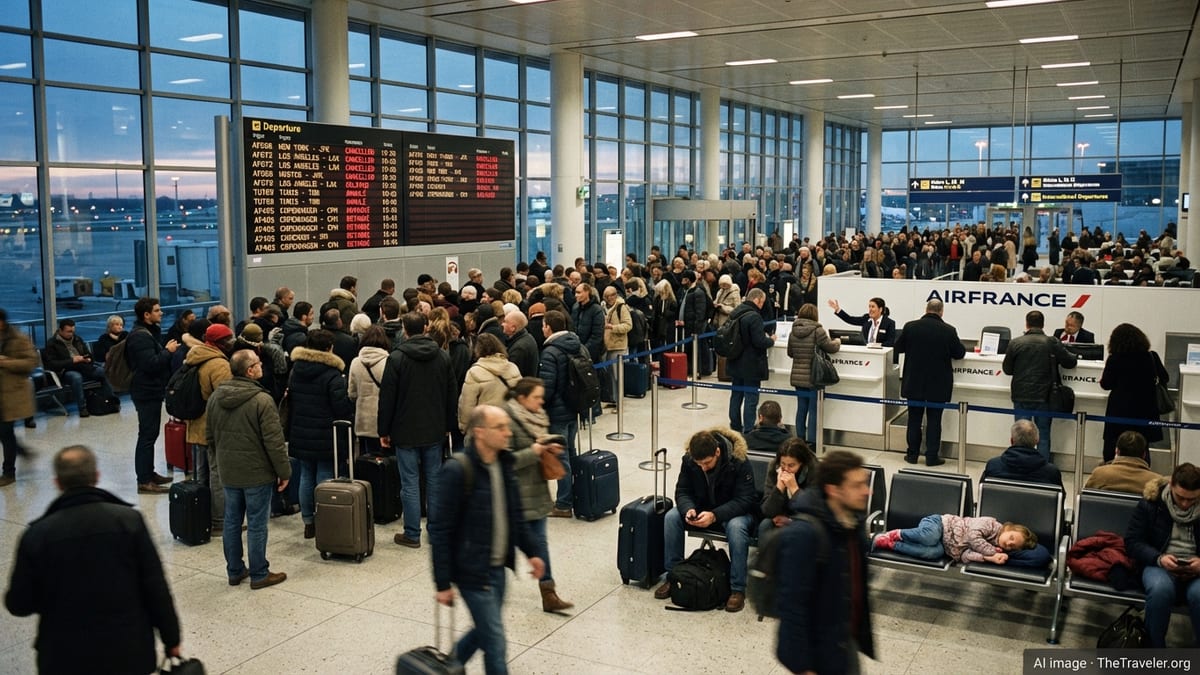
Hubs From London To Munich Buckle Under Strain
Publicly available flight-tracking data indicates that the latest disruption has rippled across some of Europe’s busiest hubs, with airports in the United Kingdom, Germany, Italy, Spain and the Netherlands all reporting significant backlogs. London Heathrow and London Gatwick have seen hundreds of delayed departures and arrivals after a period of unsettled weather and capacity constraints, while Munich and Frankfurt have struggled to absorb knock-on disruption within tightly scheduled hub operations.
Reports from aviation analytics platforms show that carriers using these hubs as key transfer points have been particularly exposed. British Airways has faced acute pressure at Heathrow as delays on short-haul European services from Spain and Italy have cascaded into missed long-haul connections. Lufthansa’s network through Munich and Frankfurt has been hit by a combination of earlier operational issues and fresh capacity challenges, leaving passengers stranded mid-journey and forcing extensive rebooking efforts across the alliance network.
Amsterdam Schiphol, a core base for KLM, has also emerged as a choke point. Recent monitoring of European traffic patterns suggests that even modest timetable disruptions at Schiphol can quickly spill over into neighboring hubs, affecting flights to and from London, Paris, Zurich and other major cities. With gates, crews and aircraft already tightly allocated for the peak summer season, recovery from a single day of irregular operations is taking longer than many travelers expect.
In Italy and Spain, where Rome, Milan and Barcelona handle large volumes of intra-European holiday traffic, high load factors and limited spare capacity have amplified the impact of the latest wave of delays and cancellations. Passengers on feeder routes to northern Europe have reported missed onward connections, extended tarmac waits and long overnight queues at service desks.
British Airways, Lufthansa And KLM Among Hardest Hit
Data from passenger-rights organisations and schedule-monitoring services indicates that British Airways, Lufthansa and KLM are among the most affected airlines in the current disruption, alongside a broad mix of full-service and low-cost carriers. The three flag carriers operate dense networks linking secondary European cities with long-haul hubs, which makes them especially vulnerable when multiple regions experience weather or air traffic control constraints on the same day.
British Airways services from London to Italian and Spanish destinations have recorded elevated delay levels as aircraft and crews cycle late through the system. According to recent operational summaries, Heathrow’s limited runway capacity leaves little room to recover from clusters of late inbound flights, so disruption in southern Europe and the Netherlands has quickly translated into aircraft waiting for departure slots in the United Kingdom.
Lufthansa has been managing the knock-on effects of earlier disruption episodes at Frankfurt and Munich, including previous days with hundreds of delays and cancellations linked to congestion and industrial action. Network analysts note that once a hub loses a sizable portion of its daily schedule, aircraft and crews may be out of position for several days, increasing the risk of further delays when additional weather or staffing challenges emerge.
KLM has encountered similar difficulties at Amsterdam, where its extensive short-haul timetable feeds transatlantic and intercontinental services. When multiple feeder flights from countries such as Spain, Italy and the United Kingdom are delayed, large numbers of passengers miss onward connections and must be rebooked, putting further pressure on already stretched seat inventory during the summer holiday period.
Passenger Experience: Missed Connections And Overnight Stays
Accounts gathered from consumer forums and social media paint a picture of crowded terminals, long customer-service lines and uncertainty for travelers attempting to piece together disrupted journeys. Many passengers on British Airways, Lufthansa and KLM services have described arriving late into hubs such as London or Munich only to learn that their onward flights had already departed or been cancelled earlier in the day.
In some cases, passengers on multi-leg itineraries have reported being stranded far from their final destinations, particularly when last connections of the day were cancelled after repeated rolling delays. Families returning from holidays in Spain and Italy, as well as business travelers connecting from northern Europe through London or Amsterdam, have described searching for scarce hotel rooms near airports or attempting to reroute themselves via alternative carriers at short notice.
Operational data suggests that the combination of 4,769 delays and 278 cancellations across multiple countries has created a widespread network effect, with disruptions on one leg often triggering missed or misaligned connections on the next. Because aircraft are operating at high load factors, airlines have had limited scope to absorb disrupted passengers onto later flights, increasing the likelihood of overnight stays and extended layovers.
Travel agents and online booking platforms have reported elevated levels of itinerary changes and refund requests as passengers seek faster or more reliable alternatives. Some travelers with flexibility have opted to postpone trips to the most congested hubs, rerouting via smaller airports or choosing rail for shorter journeys where possible.
Weather, Capacity And Staffing Fuel Ongoing Volatility
A combination of adverse weather, constrained airport capacity and lingering staffing challenges has underpinned the latest bout of European flight disruption. Recent storms over parts of the United Kingdom and continental Europe prompted air traffic control restrictions and temporary runway closures at key hubs, reducing the number of movements airports could safely handle per hour. Even short-lived ground stops have produced multi-hour queues for takeoff and landing slots.
At the same time, major airports such as London Heathrow, Amsterdam Schiphol, Munich and Barcelona are operating close to their declared capacity during peak summer periods, leaving little slack to absorb irregular operations. Industry data for the first half of 2026 points to a persistent rise in average delay minutes per flight, as airlines attempt to restore pre-pandemic schedules while contending with complex staffing and infrastructure constraints.
Ground handling and security operations remain another pressure point. Reports from aviation industry briefings indicate that some airports continue to experience shortages of ground staff, baggage handlers and technical personnel, which can slow turnarounds and exacerbate boarding delays. When combined with high passenger volumes and tight connection windows, these factors increase the probability that isolated issues evolve into network-wide disruption.
Observers note that while individual airlines have made efforts to add resilience, such as slightly lengthening scheduled turnaround times or trimming marginal frequencies, the overall system remains vulnerable when several stress factors collide. The current wave of delays and cancellations illustrates how quickly small disruptions at multiple airports can converge into a broader breakdown affecting thousands of travelers.
What Stranded Travellers Can Do Under European Rules
Publicly available consumer guidance highlights that passengers affected by delays and cancellations in Europe may have specific protections under European and United Kingdom regulations, depending on the cause and length of the disruption and the itinerary involved. Travelers departing from or arriving in the European Union, the United Kingdom, or on carriers based in those jurisdictions are often entitled to assistance and, in some cases, financial compensation.
Passenger-rights organisations advise that those caught up in the current disruption should retain boarding passes, booking confirmations and any written communications from airlines, including delay notices or rebooking messages. These documents can be important when filing claims for reimbursement of meals, accommodation or alternative transport, or when seeking statutory compensation where applicable.
Travel experts generally recommend that stranded passengers use airline apps and websites to monitor real-time flight status and rebooking options, since call centres and airport desks may experience significant backlogs during major disruption events. Where same-day alternatives are limited, it may be worth exploring routes via secondary hubs or considering surface transport for shorter intra-European segments, particularly between neighboring countries.
With disruption likely to remain a feature of the peak summer season, aviation analysts suggest that travelers build additional buffer time into itineraries involving critical connections, especially when transiting through busy hubs such as London, Munich, Amsterdam, Rome or Barcelona. Flexible tickets, comprehensive travel insurance and careful attention to minimum connection times can help mitigate the impact if future waves of delays and cancellations mirror the current pattern.