


More news on this day
Thousands of air travelers across the United States faced another day of severe disruption on June 10, as tracking data showed at least 91 flight cancellations and 3,895 delays affecting major carriers and regional partners from Chicago and New York to Orlando, Anchorage and beyond.
Get the latest news straight to your inbox!
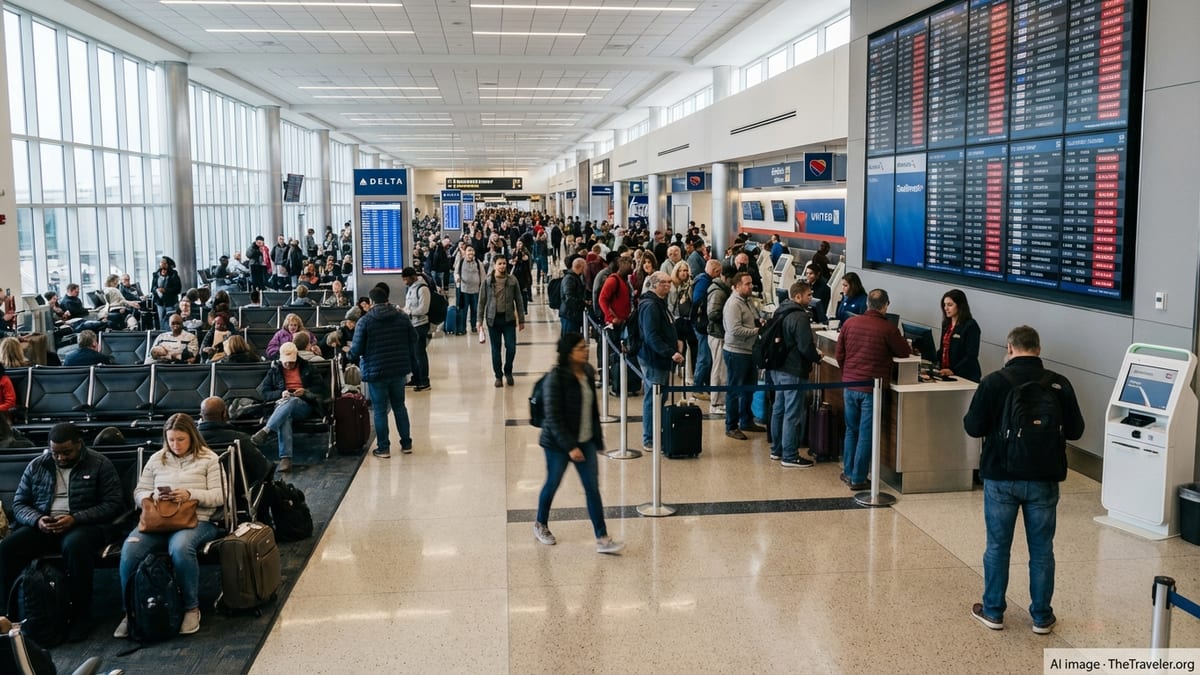
Ripple Effects Across Major U.S. Airports
Publicly available flight-tracking figures for Wednesday, June 10, indicate that operations within, into and out of the United States remained under heavy strain, with delays concentrated at large hubs and popular leisure gateways. Chicago, New York, Houston, Charlotte, Orlando, San Diego and Anchorage all reported disrupted schedules, with departure and arrival boards showing long lists of late flights in the morning and afternoon peaks.
The pattern follows several days of elevated disruption earlier in the week, when hundreds of cancellations and more than 7,800 delays were recorded across U.S. airports. By comparison, the current tally of 91 cancellations and nearly 3,900 delays still represents a difficult travel day, but falls short of the most severe recent spikes.
In Chicago, where both O Hare and Midway handle large volumes of connecting and point to point traffic, delayed departures on key routes to and from Orlando, Houston and East Coast cities contributed to rolling knock on effects. New York area airports, including LaGuardia and Newark, saw similar issues as late inbound aircraft and congestion in the national airspace system pushed back departure times.
Further south, disruptions in Houston and Charlotte added to the national picture, affecting travelers trying to connect across the central and eastern United States. On the West Coast, San Diego reported delays tied to both inbound congestion and tight turn times for aircraft, while in Alaska, Anchorage experienced holdups on long haul services linking the state to Chicago and other major mainland hubs.
Mainline and Regional Carriers Under Pressure
The latest operational data shows that the impact was spread across a mix of mainline and regional airlines. Large network carriers such as Delta Air Lines, United Airlines, Southwest Airlines and Alaska Airlines all reported delayed or cancelled departures, particularly on busy domestic trunk routes and hub to hub connections.
Regional operators including SkyWest and Republic, which provide feeder services under the brand umbrellas of larger airlines, were also heavily involved. Because these carriers operate tightly scheduled fleets that connect smaller cities into hub airports, a delay on even a handful of flights can quickly cascade across multiple routes and time bands.
Analysts note that this interdependence between mainline and regional operations can amplify the effect of relatively small disruptions. When a regional flight arrives late into a hub like Chicago or Charlotte, passengers may miss onward connections on larger jets, forcing rebooking and contributing to crowds at customer service desks even if the onward flights themselves depart close to schedule.
Low cost and point to point operators, including Southwest, faced particular challenges at leisure focused airports such as Orlando and San Diego. These airlines often rely on rapid turnarounds and high aircraft utilization, so a burst of minor delays during early morning operations can carry through the entire day.
Weather, Congestion and Operational Constraints
While severe storms did not dominate the weather picture in the same way as during some earlier disruption events this year, scattered thunderstorms, low visibility and localized ground stops in parts of the country contributed to the latest wave of delays. Aviation observers highlight that even non extreme weather can slow departures and arrivals enough to create significant queues in busy terminal airspace.
Publicly available guidance from the U.S. Department of Transportation describes how delays and cancellations are typically categorized into air carrier issues, such as maintenance or crew availability, and broader system factors linked to weather and traffic management. On days like June 10, the data often shows a blend of these causes, with staffing and aircraft positioning constraints interacting with weather and congestion.
Industry reports indicate that many airlines are still operating with relatively little spare capacity in their fleets and crew rosters heading into the peak summer period. This leaves less margin to recover when a storm cell, technical inspection or crew timing restriction interrupts the planned schedule at a key hub.
At large connecting airports, congestion can also play a decisive role. When arrivals bunch up after an earlier ground delay, ramp space, gates and baggage systems can all become bottlenecks, further slowing the flow of aircraft and passengers and extending delay times well into the evening.
What Today’s Numbers Mean for Travelers
For passengers, the national tally of 91 cancellations and 3,895 delays translates into a wide range of on the ground experiences, from minor schedule adjustments to missed connections and overnight stays. Travelers passing through major hubs such as Chicago, New York and Houston were among the most exposed, given these airports central roles in domestic and international networks.
Reports from flight status boards show that some routes experienced repeated pushbacks of departure times rather than outright cancellations, resulting in long periods of uncertainty at gate areas. On heavily used corridors, such as services linking New York and Chicago or flights between the Midwest and Florida, delays in the one to two hour range were common during peak periods.
In Anchorage and other smaller but strategically important airports, even a single delayed or cancelled departure to a major hub can significantly disrupt travel plans, because alternative options are limited and may operate only once per day. Travelers on long haul services from Alaska to Chicago and onward destinations faced the risk of misconnecting and having to be rebooked on later flights through different hubs.
With airlines focused on keeping as much of the schedule operating as possible, many passengers eventually reached their destinations, but often after extended waits on the ground or on board aircraft. Crowded gate areas, longer lines at concessions and pressure on airport staffing added to the strain at several of the busiest locations.
Looking Ahead to the Peak Summer Travel Period
The disruption figures recorded on June 10 arrive as airlines prepare for what is expected to be one of the busiest U.S. summer travel seasons in recent years. Forecasts from industry groups and previous weeks of traffic data point to sustained high demand for domestic leisure trips and international connections through large hubs.
Recent days of elevated delays and cancellations have revived questions among travelers and consumer advocates about the resilience of airline operations under heavy loads. Public analyses of federal on time performance statistics show that, while many large carriers have improved reliability compared with the most disrupted periods of the pandemic era, systemwide performance remains vulnerable to clusters of storms, air traffic control constraints or maintenance issues at just a few key airports.
Travel experts suggest that, as the summer peak intensifies, days like June 10 may become more common when modest weather systems combine with tight schedules. For passengers, that could mean building in additional buffer time for connections, monitoring flight status closely before leaving for the airport and preparing for the possibility that even a routine domestic journey might involve unplanned waits.
For the industry, the latest round of disruptions underscores the continuing challenge of balancing full aircraft and ambitious schedules with the need to maintain reliability across a complex national network. How airlines and infrastructure providers manage that balance in the coming weeks will help determine whether today’s figures remain a troubling outlier or a preview of a longer, more turbulent summer.