


More news on this day
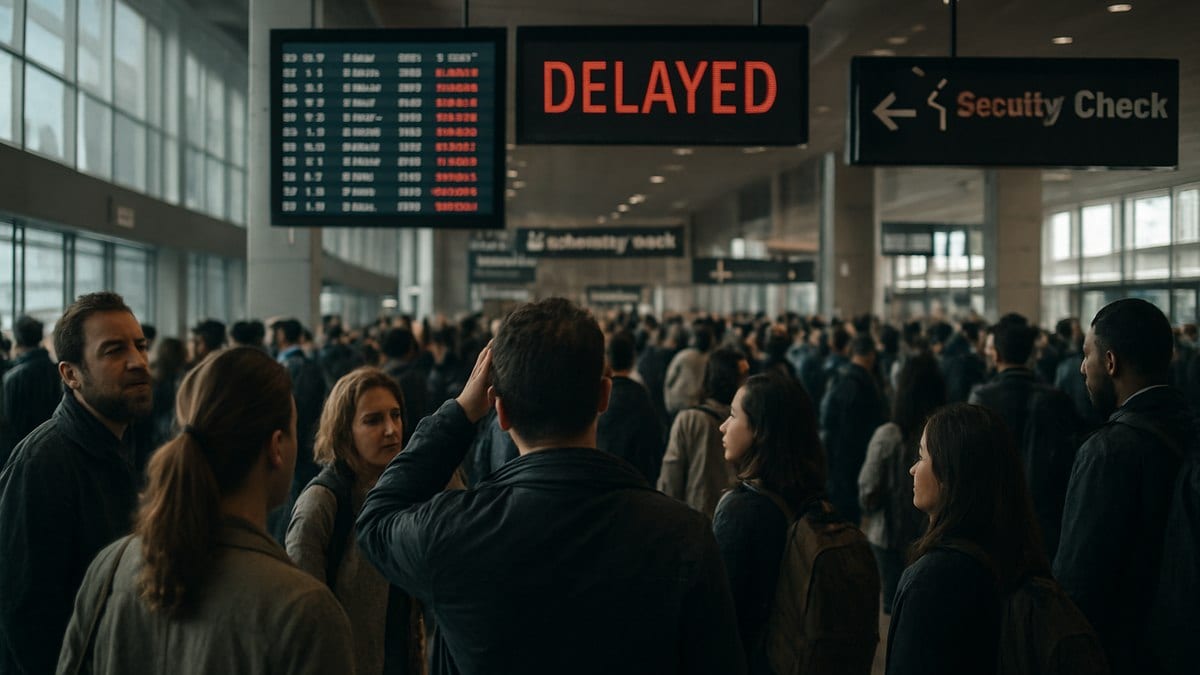
Thousands of airline passengers across the United States faced hours-long delays and unexpected overnight stays on April 19 as severe weather and knock-on congestion disrupted operations at six major hub airports, snarling travel at the height of a busy spring weekend.
Get the latest news straight to your inbox!
Storms and Congested Skies Trigger a New Wave of Disruptions
Tracking data and aviation analytics for April 19 indicate that a line of thunderstorms sweeping across the central and southeastern United States intersected some of the country’s most important aviation corridors, forcing ground stops and flow restrictions at multiple hubs. As arrival rates were cut and departure queues grew, minor delays rapidly escalated into large-scale disruption across the network.
Publicly available flight boards and delay trackers showed operations at Chicago O’Hare, Atlanta Hartsfield-Jackson, Dallas Fort Worth, Denver International, New York’s LaGuardia and Newark Liberty under sustained strain, with each airport reporting triple-digit delays or significant clusters of cancellations during peak periods. Those six hubs form a dense web of domestic and international connections, amplifying the impact when weather or congestion interrupts normal schedules.
Industry data from recent months highlight how fragile the system has become under heavy demand. Government performance comparisons show that major hubs such as Atlanta, Chicago, Dallas and Denver already run tight to capacity in normal conditions, leaving relatively little slack when storms, staffing gaps or runway work force traffic to be slowed or rerouted.
Analysts note that the April 19 chaos follows a winter and early spring marked by repeated large-scale disruptions, including January’s far-reaching Winter Storm Fern and the mid-March Blizzard Iona, both of which triggered thousands of cancellations and multi-day recovery efforts. The pattern has left airlines operating with thinner buffers of rested crews and spare aircraft as summer approaches.
Six Interconnected Hubs, One Nationwide Ripple Effect
The six affected hubs play outsized roles in U.S. air travel, and their simultaneous disruption on April 19 multiplied the effect on passengers well beyond the cities where the delays originated. Chicago O’Hare and Atlanta Hartsfield-Jackson rank among the world’s busiest airports by movements, serving as primary connection points for vast networks of domestic and international flights.
Dallas Fort Worth and Denver act as central gateways that funnel traffic between the coasts and the interior, while LaGuardia and Newark are crucial for business and leisure travel in the dense New York metropolitan area. When these airports experience even modest operational constraints, missed connections and rolling delays quickly appear on routes that do not pass directly through the storm zones.
Reports from airline operations updates and traveler postings on April 19 pointed to long lines at rebooking counters, packed gate areas and luggage piling up in claim halls as travelers scrambled for options. In some cases, passengers who completed a first leg into a hub found their onward flights cancelled or heavily delayed, forcing unexpected overnight stays and extensive itinerary changes.
Airlines implemented a familiar set of responses, including waivers allowing customers to rebook without additional fees, efforts to consolidate lightly booked flights, and the use of larger aircraft on core trunk routes where equipment and crew were available. However, once irregular operations spread across six major hubs, spare capacity to absorb disrupted travelers became limited.
O’Hare Under Pressure as Federal Flight Cuts Loom
Chicago O’Hare’s role in the April 19 disruptions drew particular attention, coming just days after federal regulators outlined plans to require airlines to trim schedules at the airport during peak summer periods in an effort to combat chronic congestion. The proposed reductions, described in a recent federal order, call for cutting hundreds of flights per day on the busiest days to align schedules with the airport’s realistic arrival and departure capacity.
O’Hare already has one of the nation’s highest volumes of connecting flights and a track record of significant delay exposure. Recent reporting shows that when arrival rates are reduced, airlines typically prioritize long-haul and heavily connected services, leaving shorter regional routes more vulnerable to cancellation. On days like April 19, that dynamic can strand travelers in smaller cities who rely on O’Hare as their primary link to the national network.
Previous analyses by aviation consultants and government agencies have shown that sustained congestion at O’Hare can send delay waves through airports across the Midwest, East Coast and even overseas, as aircraft and crews arrive late or out of sequence. The latest episode is likely to renew debate over whether schedule reductions alone will be sufficient to improve reliability without significant investment in air traffic staffing and airport infrastructure.
Travel-focused outlets have documented how even relatively contained weather events at O’Hare this spring led to hundreds of delays and cancellations, reinforcing concerns that the system is operating close to its limit. Against that backdrop, the combination of April 19 storms and high demand left little margin for recovery during the day’s busiest travel windows.
Atlanta, Dallas and Denver Extend the Disruption Footprint
Atlanta Hartsfield-Jackson, Dallas Fort Worth and Denver International deepened the nationwide impact of the April 19 disruptions. Each airport has extensive connecting banks that rely on precise timing, and each has contended with major weather and capacity issues in recent seasons, including winter storms, thunderstorms and runway or taxiway work.
Earlier this year, cold-weather systems and ice in the South forced sweeping cancellations in Dallas and Atlanta, while Denver has repeatedly been affected by snow and wind events that limit arrivals and departures. According to airline performance reports and independent trackers, those airports have seen spikes in delays whenever storms converge with peak demand periods, a pattern that appeared again on April 19.
When Atlanta’s schedule is constrained, connections across the Southeast and to the Caribbean, Central America and parts of South America can be disrupted for hours. Dallas Fort Worth serves as a key bridge to the Mountain West, West Coast and Latin America, while Denver links a large network of Rocky Mountain and Great Plains cities to transcontinental routes. The combination of all three hubs facing weather or congestion on the same day greatly increased the number of travelers affected.
Carriers with large presences at the three airports have signaled in prior earnings and operations briefings that they are re-examining schedule robustness, crew placement and de-icing or storm-response infrastructure. The events of April 19 are likely to feed into those internal reviews as airlines weigh how much operational slack they can afford to add while still meeting demand.
New York–Area Hubs Highlight Network Fragility
LaGuardia and Newark, two of the principal gateways for the New York metropolitan area, rounded out the list of six hubs at the center of the April 19 turmoil. Both airports are capacity constrained in normal conditions and regularly rank high for delays, particularly when low clouds, gusty winds or thunderstorms limit runway configurations.
Historical performance data compiled by transportation agencies and private analytics firms show that New York-area airports are among the nation’s most delay-prone. When disruptions at LaGuardia and Newark coincide with issues at inland hubs such as O’Hare and Atlanta, the result can be a cascade of missed connections and rolling delays for flights linking the Northeast to the rest of the country.
On April 19, congested departure queues and holding patterns in the congested Northeast corridor added to recovery challenges for airlines already juggling crew time limits and displaced aircraft elsewhere in the network. Travelers connecting through New York from smaller regional markets reported, via public social media posts and travel forums, being rebooked through alternate hubs or facing multi-stop itineraries in order to reach their destinations.
The New York disruptions also underscored how quickly minor schedule slippage can snowball. A short ground delay early in the day can displace aircraft rotations for hours, and once arrival and departure slots are out of alignment, it can be difficult for carriers to re-synchronize without canceling flights to create breathing room. On a day when multiple hubs are affected at once, that strategy becomes far more painful for passengers.
Travelers Face Long Lines, Limited Options and Ongoing Uncertainty
For travelers on the ground on April 19, the systemwide vulnerabilities translated into very tangible frustrations. Images and descriptions circulating in public channels pointed to crowded terminals, lengthy customer service queues and difficulties securing same-day rebookings out of affected hubs.
Some airlines encouraged passengers with flexible plans to voluntarily move trips to later dates, while others urged customers to use mobile apps and websites rather than airport counters for rebooking. Those tools helped some travelers find earlier connections or alternative routings, but options thinned as the day wore on and seats on later flights filled.
Aviation experts have repeatedly recommended that passengers build additional buffer time into connections, particularly when itineraries rely on busy hubs in seasons prone to storms. Data from government and industry reports show that early-morning departures and nonstop routes tend to have lower disruption risk, though they are not immune when large-scale weather systems or airspace constraints arise.
With the summer travel season approaching and federal agencies pushing schedule adjustments at overcrowded hubs, April 19 serves as another reminder of the delicate balance between capacity and reliability in the U.S. air travel system. For thousands of stranded passengers, it was a stark demonstration that any one day’s weather or congestion can have nationwide consequences when multiple critical hubs are hit at once.