


More news on this day
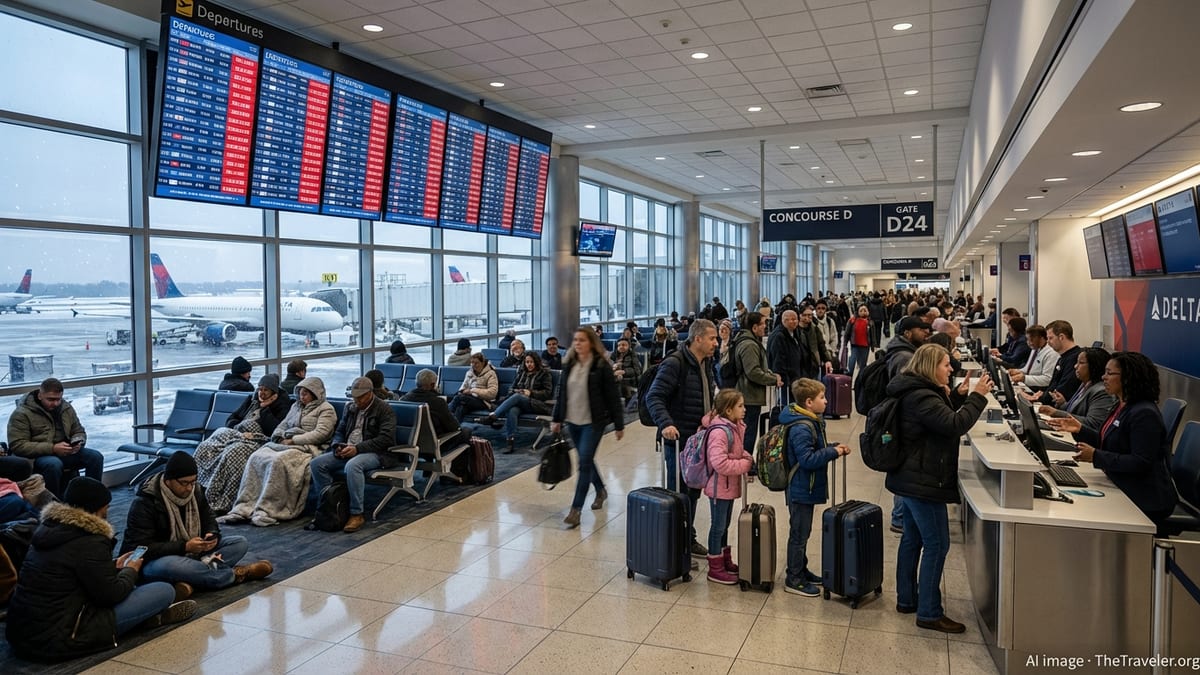
Thunderstorms sweeping across North Texas on June 19 brought Dallas Fort Worth International Airport to a near standstill, stranding thousands of travelers and disrupting American Airlines and Envoy Air flights bound for major hubs including Atlanta, Chicago, Miami, New York City, Mexico City and Providenciales.
Get the latest news straight to your inbox!
Storms Stall One of the World’s Busiest Hubs
The latest round of severe thunderstorms moved into the Dallas Fort Worth area early Friday, June 19, producing heavy rain, lightning and low visibility across the metroplex. Public weather reports describe slow-moving cells and training storms over North Texas, a pattern that typically forces air-traffic managers to reduce arrivals and departures for safety.
Dallas Fort Worth International Airport is one of the world’s largest connecting hubs, and American Airlines relies on it as the centerpiece of its domestic and international network. Even short weather-related pauses at DFW can ripple throughout the system; with sustained thunderstorms in the area, those ripples quickly became widespread disruption.
Publicly available flight-status boards and aviation-tracking services for Friday showed waves of delays building from the early morning schedule, followed by a growing number of cancellations as aircraft and crew became out of position. The combination of ground holds, diversions and equipment swaps left terminals crowded and many passengers facing missed connections.
Local coverage of the storms in North Texas highlighted treacherous driving conditions and flooding on key highways, compounding the difficulties for travelers attempting to reach or leave the airport during the morning peak.
American and Envoy Flights to Key Gateways Hit Hard
As the line of storms sat over the region, American Airlines mainline operations and its regional affiliate Envoy Air experienced significant disruption on routes linking Dallas Fort Worth with major U.S. and international gateways. Flights to Atlanta, Chicago, Miami and New York City, many of them heavily booked with connecting passengers, were among the most affected.
Schedule data for June 19 indicated rolling delays on multiple departures from DFW to these cities, with some services pushed back by several hours and others removed from the schedule entirely as the day progressed. Similar patterns were visible on American and Envoy flights from Dallas Fort Worth to Mexico City and to Providenciales in the Turks and Caicos Islands, routes that depend on tight connection windows from across the United States.
Regional jets operated by Envoy Air play a crucial role in feeding American’s long haul and transcontinental departures out of Dallas Fort Worth. When storms interrupt these smaller spokes, passengers bound for onward flights to coastal hubs and international destinations often arrive too late to make their connections, forcing widespread rebooking.
According to publicly accessible operational summaries, American has already been contending with a packed summer schedule and high load factors, leaving limited slack in the system when weather disrupts a major hub. The thunderstorm impact at DFW on June 19 added fresh strain at a time of robust demand.
Thousands of Travelers Face Long Delays and Overnight Stays
With storms interrupting operations through much of the day, passengers connecting through Dallas Fort Worth encountered long lines at customer-service centers and crowded gate areas as they attempted to secure new itineraries. Social media posts and travel forums reflected reports of travelers stuck in terminals for many hours, some describing missed weddings, cruises and international connections.
Travelers on flights toward Atlanta, Chicago, Miami and New York City reported multiple rolling departure-time changes, followed by cancellations as crew duty-time limits and aircraft rotations became insurmountable. Similar experiences were shared by those heading to Mexico City and Caribbean destinations, where reduced flight frequency makes same-day recovery especially difficult once a flight is scrubbed.
When severe thunderstorms cause disruptions, airlines typically are not required to provide compensation, because the cause is categorized as a weather event outside carrier control. Reports from recent North Texas storm episodes indicate that hotel availability near DFW can tighten quickly during major disruptions, leaving some stranded passengers to sleep in terminals or seek accommodation farther from the airport.
For many travelers, the impact extends beyond the initial delay. Missed onward connections can mean arriving at final destinations a day or more late, with additional costs for meals and ground transport that are often only partially covered by travel insurance or credit card benefits.
Weather and Network Constraints Limit Recovery Options
Operational analyses of American Airlines in recent seasons have noted that the carrier runs an intensive banked hub structure at Dallas Fort Worth, designed around waves of arriving and departing flights to maximize connections. While this model is efficient in stable conditions, it leaves the airline highly sensitive to localized weather events that strike during peak banks.
Thunderstorms in the DFW area can force air-traffic managers to implement ground stops or slowdowns, sharply reducing the number of arrivals and departures allowed per hour. When this occurs during a bank, dozens of flights can be delayed at once, and aircraft may be held on the ground at outstations to prevent congestion in the storm zone.
Industry guidance on weather operations describes how intense convective activity near departure or arrival paths can also block key corridors to and from the East Coast, the Midwest and Latin America. For American and Envoy flights linking Dallas Fort Worth with Atlanta, Chicago, Miami, New York City, Mexico City and Providenciales, this can translate into longer routes, fuel constraints or additional holding patterns, further complicating recovery.
Operational documents and earlier summaries of American’s performance during severe weather events highlight additional challenges such as crew scheduling limitations and finite spare aircraft. Once thunderstorms disrupt the tightly timed system for several consecutive hours, it can take much of a day, and sometimes longer, to return operations to normal, even after the storms move away.
Passengers Urged to Monitor Flights and Consider Alternate Routings
Given the sensitivity of Dallas Fort Worth to convective weather during the summer, publicly available travel advisories frequently recommend that passengers connecting through the hub build extra time into itineraries, particularly when traveling to or from storm-prone regions. Flexible tickets or itineraries that avoid last departures of the night can reduce the risk of unplanned overnight stays when thunderstorms erupt.
Airline and airport communication channels typically update flight status in near real time, though travelers on June 19 reported that frequent schedule changes made it challenging to plan ahead. Travel experts often advise monitoring flights through multiple tools, including airline apps and third-party trackers, to spot rebooked segments or last-minute gate changes as soon as they occur.
For those headed to destinations such as Atlanta, Chicago, Miami, New York City, Mexico City and Providenciales, alternative routings through other hubs may be an option when Dallas Fort Worth is heavily affected by weather. However, with peak-season demand across the United States and Caribbean, open seats on same-day alternatives can be scarce once a major disruption unfolds.
With North Texas entering the heart of its summer thunderstorm period, the June 19 disruption illustrates how quickly severe weather over a single hub can cascade across an airline’s national and international network, leaving thousands of passengers temporarily stranded far from their final destination.