


More news on this day
Thunderstorms rolling across Colorado’s Front Range have triggered a ground delay program at Denver International Airport, disrupting midsummer travel as flights into and out of one of the nation’s busiest hubs face cascading delays.
Get the latest news straight to your inbox!
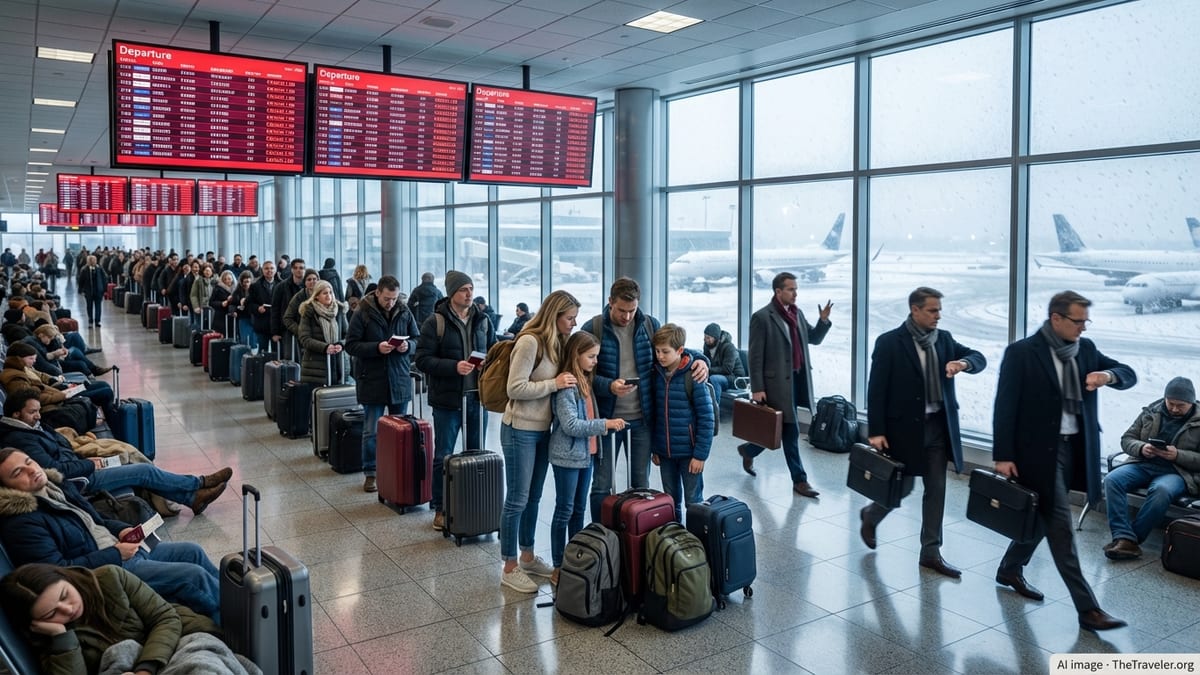
Weather Cells Force Slowdown at Major Rocky Mountain Hub
According to flight operations data and federal air traffic advisories, storms building over the Denver area prompted air traffic managers to reduce the flow of aircraft into Denver International Airport on Thursday, shifting the airport into a ground delay program rather than a full systemwide ground stop. The move slowed both arrivals and departures as controllers worked to route aircraft safely around convective cells.
Publicly available aviation advisories describe thunderstorms and microburst potential in the vicinity of Denver, with intense cells passing near primary arrival and departure corridors. When storm cores line up with these high-traffic routes, standard procedures call for reducing the rate of landings and takeoffs, forcing aircraft on the ground at their origin to wait for an available arrival slot in Denver.
Tracking services show that average delays quickly climbed from minor schedule slippage into more substantial hold times as traffic banks built up around the storms. Airlines adjusted departure times from key feeder airports in the western and central United States, while some flights already airborne were placed into airborne holding patterns or given extended routings to wait out the worst of the weather.
Reports from passengers at Denver International Airport describe full gate areas and busy concourses as travelers watched departure boards shift from “on time” to “delayed” across multiple carriers. While the airport remained open and operating, the slower arrival and departure rate translated into missed connections and rebookings during one of the summer travel season’s busiest periods.
Ground Stop, Ground Delay and What They Mean for Travelers
Federal aviation data makes a distinction between a ground stop, which temporarily halts certain flights to an airport, and a ground delay program, which meters traffic through longer, planned arrival times. In the case of Denver’s latest disruption, thunderstorms in the region prompted a throttling of traffic rather than a complete shutdown, but the practical effect for many passengers was similar: longer waits on the ground and in the air.
In a typical ground delay program, air traffic managers assign each arriving flight a controlled time of arrival. If storms reduce the number of aircraft that can land each hour, those target times spread out, and aircraft are held at their departure airports until a slot is available. This approach is designed to limit airborne holding near the destination, where storms and congestion can increase operational risk.
Ground stops tend to be shorter, often tied to rapidly evolving storm cells directly over or adjacent to the airport that prevent safe takeoffs and landings altogether. Publicly posted advisories in recent weeks show that Denver has shifted between these tools several times as storms have flared along the Front Range, reflecting the region’s pattern of fast-developing afternoon convection during late spring and summer.
For travelers, the distinction often comes down to whether they are sitting at the gate waiting to depart, or circling in holding patterns near Denver while controllers work within reduced arrival rates. Either way, severe thunderstorms in Colorado or along common approach routes can ripple outward across airline networks, affecting flights in cities far beyond the immediate storm zone.
Front Range Storm Season Keeps Pressure on Operations
Climatological data and aviation case studies indicate that Denver’s location near the eastern edge of the Rocky Mountains leaves it exposed to frequent convective activity during the warm season. Storms can form quickly along the foothills and push eastward across the metropolitan area, occasionally bringing large hail, damaging winds and cloud-to-ground lightning that interfere with normal airport operations.
Recent months have seen multiple rounds of severe weather impacting Denver International Airport, including earlier ground stops and delays tied to thunderstorms and strong winds. Air traffic advisories highlight repeated references to weather as the primary constraint on capacity, underscoring how often summer operations at Denver hinge on the timing and intensity of these systems.
Studies of national air traffic performance show that convective weather remains one of the leading causes of delays at major U.S. airports, with widespread impacts when storms line up across multiple air routes. When Denver is affected, disruptions can be felt from the West Coast to the Midwest, especially on routes that funnel through the airport’s large connecting banks.
Construction and airfield projects in the Denver area, described in recent infrastructure outlooks, can further limit flexibility during storm periods by closing some taxiways or stands. While these projects aim to improve long-term capacity, they can complicate ramp management when traffic backs up due to weather.
Advice for Passengers Navigating Weather Disruptions at Denver
Travel data and airlines’ public guidance suggest several strategies for minimizing the impact of thunderstorm-driven delays at Denver International Airport. Passengers with tight connections through Denver during peak thunderstorm hours in the afternoon and early evening may face a higher risk of missed flights when storms trigger traffic management programs.
Travel planners often recommend building longer connection windows during the summer in cities prone to convective weather, including Denver. Booking earlier departures in the day, before typical storm development peaks, can reduce exposure to the most active weather period. When storms do form, travelers with flexible itineraries may have better odds of successful same-day rebooking.
Published airline and airport guidance emphasizes the importance of monitoring flight status frequently on carrier apps or information screens, as traffic programs can change with little notice when storm cells intensify or weaken. When a ground delay program is in effect, posted departure times from origin airports may shift multiple times as new arrival slots into Denver are calculated.
For travelers already at Denver International Airport when storms move in, rebooking options, access to customer service and awareness of available amenities can make extended waits more manageable. While weather-related disruptions are a regular feature of midsummer operations at the airport, planning around the region’s storm patterns can help limit their impact on individual trips.
Broader Network Effects Across U.S. Summer Travel
Denver’s role as a central hub in the national airspace system means that local thunderstorms can translate into far-reaching disruption, particularly during peak summer travel. When arrival rates into the airport are cut, flights scheduled from smaller regional airports may be held at the gate for hours, effectively exporting Denver’s weather problem to other cities across the West and Midwest.
Performance analyses of previous extreme weather events in the United States show that these chain reactions can significantly increase passenger dwell times and total trip duration. As more flights fall behind schedule, available aircraft and crews may no longer be in position for later legs, adding further delays unrelated to the original storms.
The latest ground delay program in Denver fits into a broader pattern of weather-related constraints affecting multiple U.S. hubs this summer. Public reports from aviation agencies and airlines outline traffic management programs and weather waivers spanning several regions, illustrating how a single line of thunderstorms can touch many points on the air travel map in the course of a day.
For Denver International Airport, the episode is another reminder of the operational challenges that come with its location and climate. As storms continue to develop along the Front Range through the heart of summer, travelers and airlines alike are likely to face additional rounds of weather-driven slowdowns before conditions ease later in the season.