


More news on this day
Flight operations at Chicago O’Hare International Airport have come under renewed scrutiny after a string of dramatic tire failures on departing and arriving jets triggered runway inspections, diversions and mounting questions over what is driving the sudden spike in incidents.
Get the latest news straight to your inbox!
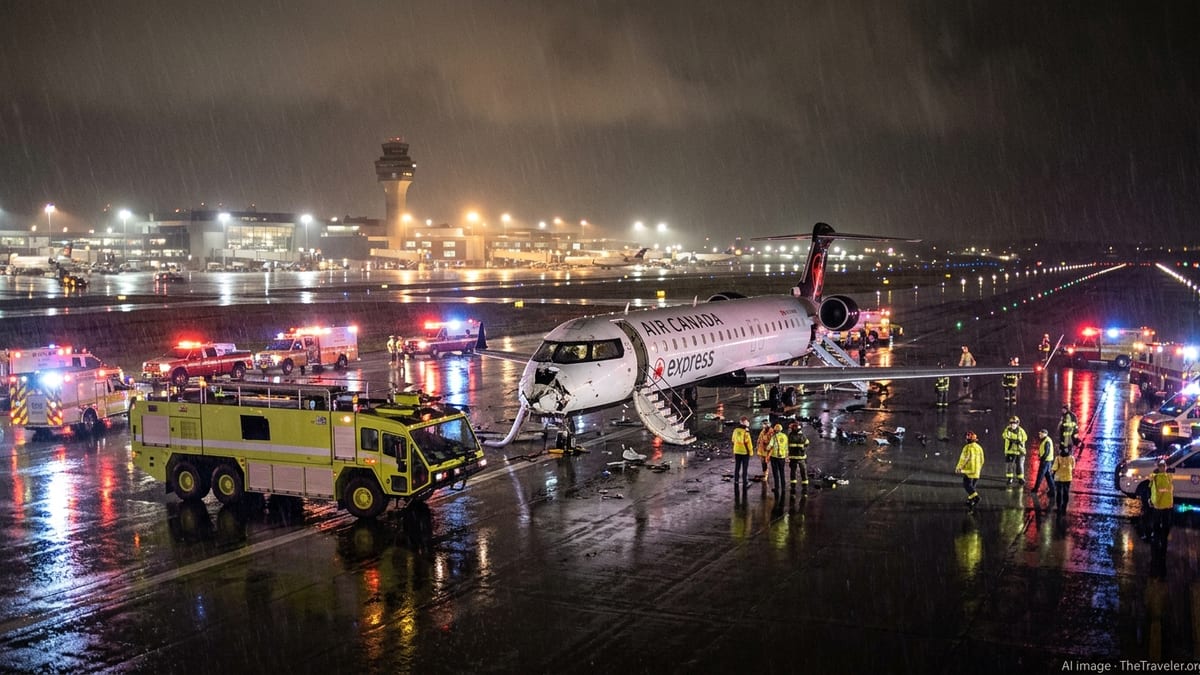
Cluster of Tire Blasts Fuels Safety Questions
In the span of several days, Chicago O’Hare recorded multiple high-profile tire failures involving major U.S. carriers, prompting a broader look at runway conditions and aircraft maintenance at one of the world’s busiest hubs. Reports indicate that at least three commercial jets experienced blown or severely damaged tires during takeoff or landing, forcing emergency stops, runway evacuations and temporary traffic delays as debris checks were carried out.
According to published coverage, an American Airlines flight landing at O’Hare earlier this week suffered two blown tires on touchdown. The Boeing 737 remained on the runway while passengers were transported by bus back to the terminal, and the aircraft was later towed away for inspection, with no injuries reported among passengers or crew.([nbcchicago.com](https://www.nbcchicago.com/news/local/emergency-vehicles-surround-american-airlines-plane-on-ohare-tarmac/3976571/?utm_source=openai))
Just hours later, a United Airlines flight arriving from Omaha reported a tire failure while exiting the runway, becoming the second aircraft that day at O’Hare to experience a landing-gear tire problem. In a separate incident days earlier, a United jet accelerating for departure aborted its takeoff when multiple tires blew at high speed, leaving rubber fragments scattered along the pavement and forcing passengers to deplane on the runway.([nbcchicago.com](https://www.nbcchicago.com/news/local/united-passengers-deplane-on-ohare-runway-after-tire-blows-during-take-off/3975058/?utm_source=openai))
Publicly available flight-tracking and delay data show that these events temporarily constrained runway capacity, contributing to short-lived arrival and departure hold-ups across the airfield as ground teams inspected surfaces, cleared disabled aircraft and confirmed that taxiways and runways were safe to reopen.([nbcchicago.com](https://www.nbcchicago.com/news/local/united-passengers-deplane-on-ohare-runway-after-tire-blows-during-take-off/3975058/?utm_source=openai))
FAA Opens Probe as Runway Inspections Intensify
The Federal Aviation Administration has confirmed an investigation into the series of tire failures at O’Hare, with particular focus on three closely spaced events involving American and United aircraft. According to recent coverage, the agency is reviewing maintenance records, runway inspection logs and air traffic control data to determine whether the incidents share a common factor or represent a statistical cluster at a high-traffic airport.([cbsnews.com](https://www.cbsnews.com/chicago/news/united-plane-aborts-takeoff-chicago-ohare-tire/?utm_source=openai))
Published FAA guidance describes a standard response whenever a commercial jet reports a tire failure on or near a runway. The aircraft is secured, passengers are disembarked if necessary, and airfield crews perform a detailed “foreign object debris” inspection to locate and remove any rubber fragments, wheel parts or metal that could endanger subsequent flights. Runway damage, if present, is typically documented, temporarily repaired and monitored while investigators analyze the sequence of events.([faa.gov](https://www.faa.gov/newsroom/statements/accident_incidents?utm_source=openai))
At O’Hare, one of the world’s largest air-traffic nodes by aircraft movements, even a single disabled jet on a primary runway can reverberate quickly across the schedule. The recent tire failures prompted partial closures and routing changes while checks were carried out, but publicly available information indicates that the airport remained operational, with delays measured in minutes rather than hours on the days in question.([nbcchicago.com](https://www.nbcchicago.com/news/local/united-passengers-deplane-on-ohare-runway-after-tire-blows-during-take-off/3975058/?utm_source=openai))
Investigators are expected to examine whether runway surface conditions, high summer temperatures, braking loads, or underlying maintenance issues played a role. Similar investigations elsewhere have previously traced tire-related runway events to a mix of factors, including brake system anomalies, worn components and the presence of stray debris that can slice or puncture rubber at high speed.([spectrumlocalnews.com](https://spectrumlocalnews.com/content/dam/News/static/pdfs/tx/Report_DCA24LA095_193772_11_12_2025_11_59_57_AM.pdf?utm_source=openai))
Passenger Disruption and Visible Chaos on the Tarmac
For travelers caught on board the affected flights, the mechanical jargon translates into a jarring experience, often punctuated by screeching brakes, the smell of burnt rubber and the sight of emergency vehicles rushing into position. Video and images circulated by local outlets and passengers show aircraft surrounded by fire trucks and airport response vehicles on O’Hare’s runways and taxiways after the recent tire events, with travelers deplaning via mobile stairs and boarding buses amid flashing lights.([nbcchicago.com](https://www.nbcchicago.com/news/local/emergency-vehicles-surround-american-airlines-plane-on-ohare-tarmac/3976571/?utm_source=openai))
One United departure that aborted takeoff after a series of blown tires left passengers stranded on the runway while crews assessed potential gear damage and inspected for loose debris. According to published accounts based on air traffic control audio, pilots in nearby aircraft reported seeing chunks of tire scattering behind the stricken jet as it rolled to a stop, underscoring the risk that sharp fragments can pose to other aircraft using the same surface.([goodmorningamerica.com](https://www.goodmorningamerica.com/news/story/united-flight-aborts-takeoff-chicago-ohare-due-blown-135625737?utm_source=openai))
Local news outlets have documented additional tire-related incidents at O’Hare in recent months, including an American Airlines flight that arrived from Miami with flat main-gear tires and required a prolonged runway-side response. While such events remain rare relative to the airport’s enormous daily flight volume, the visual drama of emergency vehicles and disabled jets on the tarmac has amplified public attention and fueled social media speculation about the state of the runways.([cbsnews.com](https://www.cbsnews.com/chicago/news/american-airlines-flight-miami-chicago-flat-tires/?intcid=CNR-02-0623&utm_source=openai))
Travelers transiting through O’Hare during the disruptions faced missed connections and cascading delays, yet the quick containment of each incident and the absence of reported injuries have also highlighted the layered safety buffers built into large-airport operations. Crews moved passengers off affected aircraft, airlines arranged substitute planes or rebookings, and airport teams reopened runways after inspections, allowing traffic to resume even as formal investigations continued.([cbsnews.com](https://www.cbsnews.com/chicago/news/united-plane-aborts-takeoff-chicago-ohare-tire/?utm_source=openai))
Runway Safety in the Spotlight at a Mega-Hub
The recent tire failures arrive against a wider backdrop of ongoing safety scrutiny at Chicago O’Hare. Historical investigation records show that regulators have repeatedly reviewed the airport’s runway and taxiway operations over the decades, from runway incursions to landing overruns and mechanical emergencies, often recommending changes in procedures, training and surveillance technology.([data.ntsb.gov](https://data.ntsb.gov/carol-repgen/api/Aviation/ReportMain/GenerateNewestReport/63386/pdf?utm_source=openai))
O’Hare’s high density of movements, extensive runway network and exposure to extreme seasonal weather all shape the risk environment for landing gear and braking systems. On short winter days, aircraft face icy or slushy pavements and deicing fluids; in summer, heavy jets landing on hot asphalt can place significant thermal and mechanical stress on tires and brakes. Investigative reports from other airports have linked tire anomalies to issues such as antiskid system faults or cross-wired sensors, raising the possibility that a combination of factors can precipitate a failure even when individual components meet certification standards.([spectrumlocalnews.com](https://spectrumlocalnews.com/content/dam/News/static/pdfs/tx/Report_DCA24LA095_193772_11_12_2025_11_59_57_AM.pdf?utm_source=openai))
Runway maintenance programs at large hubs typically include regular surface inspections, friction testing and prompt repair of pavement defects, alongside sweeping for foreign object debris. Publicly available documentation indicates that O’Hare has progressively modernized its runways and taxiways, replacing older configurations and adding new surfaces to reduce bottlenecks and improve safety margins. Even so, the latest tire incidents are likely to renew focus on how effectively inspection regimes and real-time monitoring are catching hazards that could threaten landing gear at high speed.([en.wikipedia.org](https://en.wikipedia.org/wiki/O%27Hare_International_Airport?utm_source=openai))
Aviation analysts note that while dramatic, tire blowouts rarely result in serious injury when crews retain directional control and fire risk is managed quickly. The deeper concern often centers on what the failures might signal about underlying trends in maintenance practices, supply-chain quality or airport infrastructure. As the FAA review moves forward at O’Hare, airlines and regulators are expected to watch closely for any patterns that call for fleet-wide inspections, procedural updates or targeted runway work.
What Travelers Passing Through O’Hare Should Know
For passengers with upcoming trips through Chicago, recent events may raise questions about personal safety and the likelihood of further disruptions. Historical data on U.S. commercial aviation show that tire failures, while unsettling, represent a small fraction of overall incidents and are usually contained by aircraft design, crew training and emergency response protocols. The swift handling of the O’Hare cases, with no reported injuries despite high speeds and full passenger loads, aligns with that broader track record.([faa.gov](https://www.faa.gov/newsroom/statements/accident_incidents?utm_source=openai))
Travelers concerned about operational turbulence are more likely to feel the impact through delays than through elevated physical risk. A single runway closure to accommodate an inspection or disabled jet can ripple through O’Hare’s tightly packed schedule, causing missed connections and rebookings across multiple airlines. Monitoring flight status apps, allowing extra connection time and staying flexible with re-routing options remain the most practical strategies for minimizing the inconvenience if another tire-related incident occurs.
The coming weeks will determine whether the latest tire failures at O’Hare are categorized as an unusual cluster in an exceptionally busy environment or an early signal of a specific maintenance, equipment or infrastructure vulnerability. As investigators dig into flight data, maintenance logs and runway records, the high-profile hub is poised to remain at the center of the conversation about how modern air travel manages rare but attention-grabbing mechanical shocks on the runway.
NBC Chicago: Emergency incident involving American Airlines plane at O’Hare
NBC Chicago: United passengers deplane on O’Hare runway after tire blows during takeoff
CBS Chicago: FAA investigating after 3 planes had tires blown out at O’Hare
ABC News: United flight aborts takeoff at Chicago O’Hare due to blown tires