


More news on this day
Thousands of holidaymakers are facing unexpected extra nights in Thailand as Emirates joins Air India, Qatar Airways, Thai Airways, Singapore Airlines and Etihad Airways in a rolling wave of delays and cancellations that has crippled key routes between India, the Gulf and Southeast Asia, leaving Phuket and Bangkok struggling to clear a mounting backlog of stranded passengers.
Get the latest news straight to your inbox!
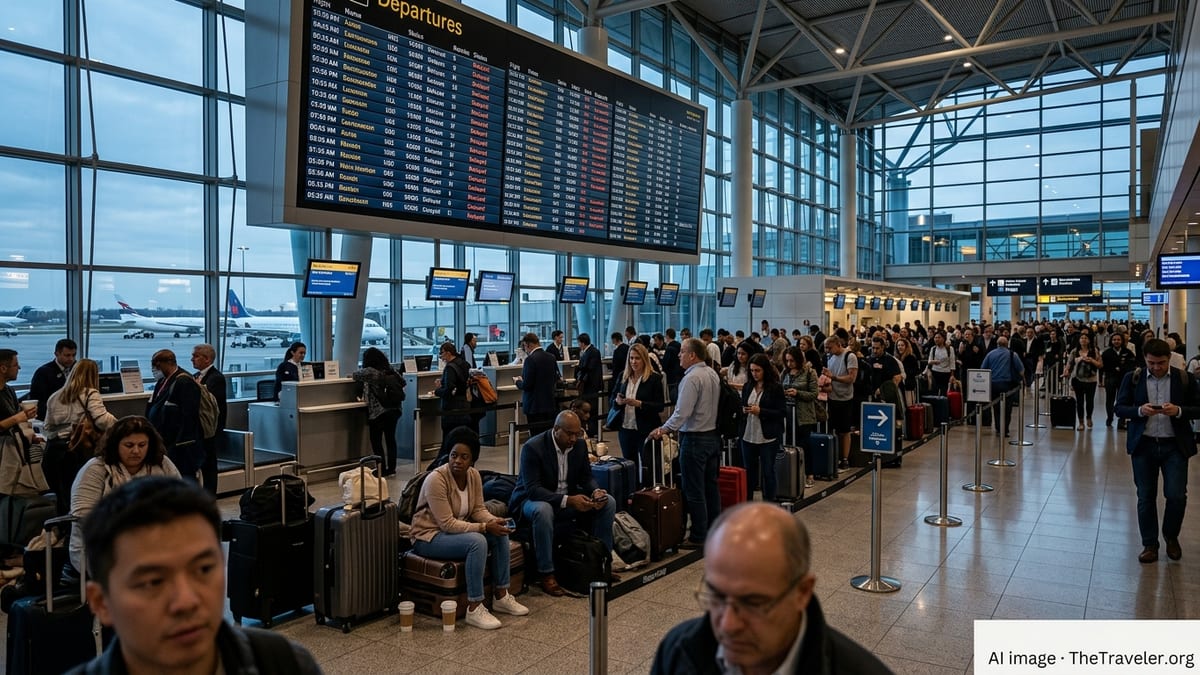
Chain reaction from Middle East flight rerouting
Published coverage indicates that renewed turbulence in Middle East airspace has forced multiple full service carriers to divert, curtail or reschedule flights that typically connect India and the Gulf with Southeast Asia. Emirates, Qatar Airways and Etihad Airways, which normally operate dense schedules across these corridors, are reported to be adjusting routings, adding fuel stops or trimming frequencies as they navigate longer flight paths and congestion on alternative routes.
Network changes are also being reported at Air India, which has already announced a three month reduction of several international services from June in response to soaring jet fuel prices tied to regional instability and higher operating costs. Publicly available information on recent schedule adjustments shows a focus on medium haul routes linking India with Southeast Asia and the Gulf, amplifying the strain on already busy leisure markets such as Phuket.
These disruptions have coincided with the early stages of the northern summer travel peak, when Thailand’s beaches and resorts typically see a sharp rise in visitors from India, the United Arab Emirates and other Gulf states. The combination of altered routings, reduced frequencies and knock on operational delays is creating bottlenecks at key transfer points, especially Bangkok’s Suvarnabhumi Airport and Phuket International Airport.
Travel industry analysts note that when several large carriers adjust schedules on overlapping corridors at the same time, the practical impact for passengers tends to be concentrated at major resort gateways. Phuket, which relies heavily on wide body services from the Gulf and on feeder traffic via Bangkok, has become one of the most visible choke points in the current disruption.
Suvarnabhumi logs heavy delays as schedules slip
Operations data aggregated from flight status platforms shows Bangkok Suvarnabhumi recording well over 200 delayed movements in a single 24 hour window as the latest disruption phase has unfolded, with a noticeable cluster on services linking Bangkok to key regional hubs such as Phuket, Singapore and major Gulf cities. Many of these flights are operated or codeshared by Thai Airways, Singapore Airlines, Emirates, Qatar Airways and their partners, amplifying the network wide effect of each delay.
Domestic sectors between Bangkok and Phuket, including high frequency services marketed by Thai Airways and codeshare partners, have experienced rolling delays as aircraft and crews arrive late from disrupted long haul and regional routes. When an inbound aircraft from the Middle East or India is delayed or diverted, knock on effects can cascade through the day’s roster, causing subsequent departures to slip and compress airport capacity during peak banks of flights.
Publicly available information from aviation data providers indicates that Suvarnabhumi has been operating close to or above its declared capacity at times, even after recent infrastructure upgrades intended to boost annual passenger throughput. In this environment, a sudden spike in off schedule operations can quickly overwhelm stand allocation, ground handling and immigration processing, leading to longer queues and extended connection times for transit passengers.
Although many of the individual delays are measured in minutes or a few hours, the cumulative effect across hundreds of flights has been to push a significant number of evening and overnight departures into the early hours of the following day. For travelers relying on tight self organised connections rather than protected through tickets, missed onward flights and unexpected overnight stays have become increasingly common.
Phuket becomes a pressure point for stranded tourists
At Phuket International Airport, the operational picture is being shaped by its heavy reliance on international leisure traffic from the Middle East, India and other Asian markets. The airport’s published route map shows wide body services by Emirates, Qatar Airways, Etihad Airways and Singapore Airlines, alongside dense regional and domestic schedules operated by Thai Airways and low cost carriers that funnel tourists to the island’s resorts.
When inbound flights from the Gulf or India arrive late, are consolidated or are cancelled outright, the immediate result is a growing pool of passengers in the terminal awaiting alternative arrangements. Airport statistics for recent seasons highlight strong growth in arrivals from Middle Eastern and South Asian markets, meaning that even a modest percentage of disrupted flights can translate into thousands of stranded travelers over several days.
Local tourism operators report that hotels near the airport and in major resort areas such as Patong, Karon and Kata have seen a surge in last minute walk in bookings from travelers whose return flights have been pushed back or rerouted. Some guests are extending their stays by several nights while they wait for seats on replacement services via Bangkok, Singapore or Kuala Lumpur, adding unexpected costs but also injecting unplanned revenue into the local economy.
Taxi and transfer services around Phuket have also come under pressure as late night and early morning arrivals are rescheduled with limited notice. With ground transport and accommodation absorbing much of the immediate impact, the airport itself has avoided the extreme scenes of overcrowding seen during earlier global aviation crises, but passenger frustration and fatigue are clearly on the rise.
India and UAE passengers among hardest hit
The current wave of disruption has landed particularly hard on travelers moving between India, the United Arab Emirates and Thailand, corridors that depend heavily on the very airlines now restructuring their schedules. Air India’s previously announced cuts to selected international routes from June, framed by the carrier as a response to record fuel prices and broader operational challenges, have coincided with rerouting and schedule changes at Emirates, Etihad Airways and Qatar Airways.
Publicly available flight data shows that many passengers who would normally fly nonstop or with a single short connection between Indian cities, Gulf hubs and Phuket are now being rebooked onto more complex itineraries, often involving an additional change of aircraft at Bangkok or Singapore. Each extra transfer point introduces another opportunity for missed connections when upstream flights are delayed.
For the UAE in particular, where Emirates and Etihad function as global super connectors, even small schedule changes propagate quickly through international networks. Travelers originating in Europe, North America or Africa and heading to Phuket via Dubai or Abu Dhabi are encountering longer journey times, extended layovers and, in some cases, overnight stays arranged at hub airports while they wait for onward seats to clear.
Indian outbound passengers, a fast growing segment for Thai beach destinations, face a similar pattern. With some direct and one stop options constrained, demand is spilling onto alternative routings via secondary hubs and low cost carriers, creating pockets of overcrowding on previously lightly used connections and driving up last minute fares on remaining seats.
Airlines and airports work to clear backlog
According to published airline notices and timetable updates, carriers are attempting to stabilize operations by adjusting schedules several days ahead, swapping aircraft types to add capacity on the most heavily affected routes, and consolidating lightly booked services to free up crews and aircraft for recovery flights. In practical terms, this has meant the appearance of ad hoc extra sections on certain Bangkok and Phuket departures, as well as retimed flights that depart outside their usual slots.
Airport operators in Bangkok and Phuket are responding by extending operating hours where possible, reallocating stands to prioritize long haul departures and redeploying resources at security and immigration to deal with late night surges. Travel advisories circulated by tourism and aviation bodies are urging passengers to arrive early, allow longer connection windows and stay closely informed about real time flight status through official channels.
Industry observers caution that, while the most acute phase of the disruption may ease as airlines complete their schedule reshuffling and as traffic patterns adjust to new routings around Middle East airspace, residual delays and occasional cancellations are likely to persist in the short term. The interconnected nature of modern airline networks means that operational shocks in one region can continue to ripple through distant markets such as Phuket for days or even weeks.
For now, thousands of tourists remain in a holding pattern in Thailand’s main tourist gateways, turning what was meant to be a straightforward beach escape into a lesson in the fragility of global air connectivity. How quickly Phuket, Bangkok and the major Gulf and Indian carriers can restore reliable schedules will help determine whether this episode is remembered as a brief flare up or a more prolonged test of the region’s aviation resilience.