


More news on this day
Trabzon’s long-discussed light rail project has moved from planning to implementation with the signing of the Phase 1 construction contract, a milestone seen as pivotal for reshaping mobility in the Black Sea city.
Get the latest news straight to your inbox!
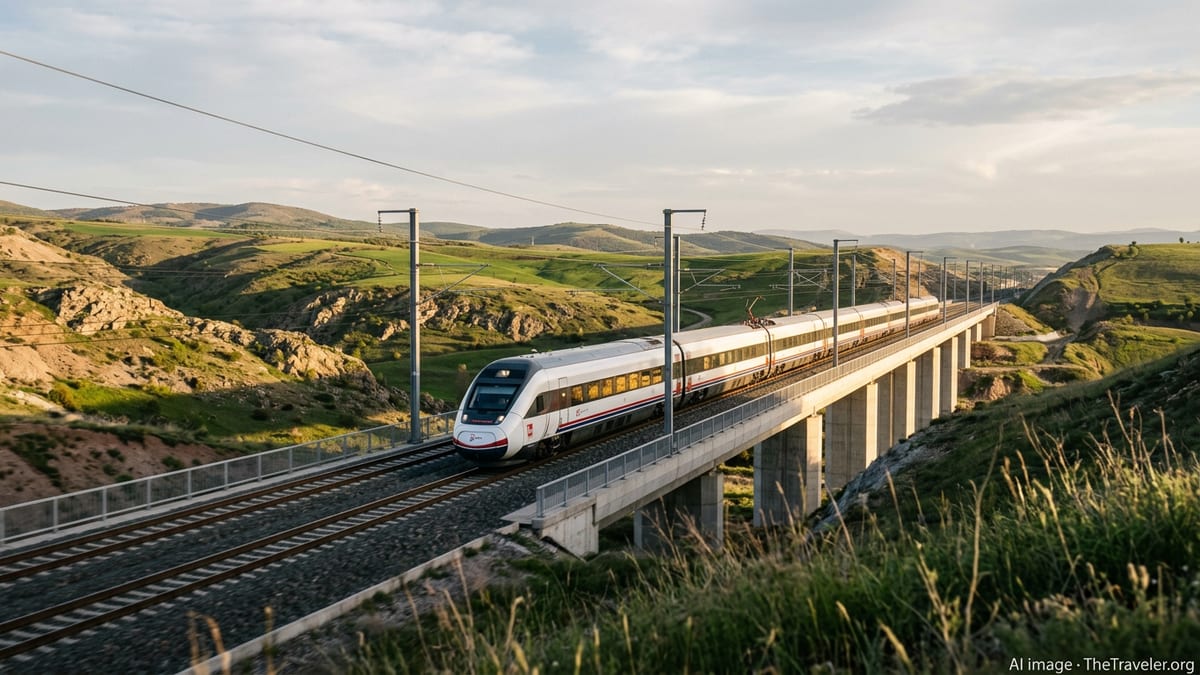
Contract Signing Caps Years of Planning
Reports from regional outlets indicate that the Phase 1 construction contract for Trabzon’s urban light rail line has now been formally signed, following the approval of the first-stage tender earlier this summer. The agreement is described as covering both civil works and core systems, signaling that the project is entering a full delivery phase rather than a limited preparatory stage.
Publicly available information shows that the contract follows an earlier procurement in which multiple consortia submitted bids for the “Trabzon Tramway Line Phase 1 Construction and Electromechanical Systems Supply, Installation and Commissioning” package. Subsequent evaluations led to the selection and approval of a winning offer, clearing the way for the final contract.
Local coverage notes that the project is being advanced under the coordination of Turkey’s Ministry of Transport and Infrastructure, through its Directorate General of Infrastructure Investments, in cooperation with Trabzon Metropolitan Municipality. This institutional framework is presented as part of a broader national program to expand rail-based urban transit in fast-growing regional centers.
The contract signing is seen within the city as the moment when a long-debated scheme becomes a concrete infrastructure program, with defined timelines, costs and delivery responsibilities. Commentators in Trabzon’s transport community frame it as a pivot from conceptual designs and route discussions toward construction sequencing and implementation logistics.
Route, Length and Stations in Phase 1
According to previously published route descriptions, Phase 1 of the Trabzon light rail will run for roughly 15 to 16 kilometers between the planned city hospital area and Trabzon Airport, forming a high-capacity east west spine along the coastal corridor. The alignment is expected to serve major trip generators, including the new city hospital, the football stadium, central arterial roads and the airport approaches.
Planning documents and local news coverage indicate that the first phase will feature around 16 stations, designed to connect residential districts with employment, health and education centers. Future extensions are foreseen to link the initial segment to other hubs such as Meydan Square, Karadeniz Technical University, the intercity bus terminal and nearby districts including Yomra and Akçaabat as later phases are realized.
Technical descriptions shared in earlier tenders and investment program notes suggest that a significant portion of the route will be grade separated, using tunnels and viaducts to avoid conflicts with dense surface traffic and the constrained coastal topography. This approach is presented as a way to maintain reliable travel times and reduce disruptions on existing road corridors.
While detailed construction drawings are not yet in the public domain, commentators following the project say the first phase is expected to be compatible with later extensions, both in terms of station platform lengths and systems design. That framework is intended to allow the corridor to scale up over time as passenger demand grows and funding for subsequent stages becomes available.
Part of a 32-Kilometer Metropolitan Transit Vision
The light rail line is one element of a wider metropolitan transport strategy for Trabzon, which aims to shift more trips from private vehicles and minibuses to higher-capacity, lower-emission modes. Earlier planning work outlined an ultimate network length of around 32 kilometers with more than 30 stations, tying together the city’s core, eastern and western suburbs.
According to published transport plans and investment program listings, the rail project sits alongside other major schemes such as the multi-phase Trabzon Southern Ring Road and a reorganization of bus and minibus operations in the historic center. Together, these initiatives seek to relieve chronic congestion on the coastal highway and central streets, which serve both local residents and a growing number of domestic and international visitors.
Analysts in Turkey’s urban transport sector note that Trabzon’s inclusion in the central government’s investment program for urban rail marked an important policy shift. The city joins a group of provincial capitals where the state has taken on a substantial role in financing and delivering rail systems, supplementing local authority resources.
As with similar projects in mid-sized Turkish cities, the Trabzon line is framed as both a mobility upgrade and an economic development tool. Supporters argue that more predictable travel times, stronger links between residential areas and job centers, and improved access to the airport and hospital clusters could make the city more competitive in tourism, services and logistics.
Timeline, Construction Phasing and Next Steps
Statements in earlier public briefings referred to 2026 as a target period for commencing major works on the light rail corridor. With the contract now signed, attention in Trabzon has turned to the practicalities of mobilization, including site handovers, utility relocation and the detailed phasing of tunneling, viaduct construction and station building.
Local reports suggest that the first visible activities are likely to emerge around key nodes such as the city hospital zone and airport approaches, where the rail infrastructure and associated road adjustments will be most extensive. Construction is expected to be sequenced to manage traffic impacts on the heavily used coastal corridor, though specific staging plans have not yet been fully disclosed to the public.
Observers point out that the project’s engineering complexity, particularly the mix of underground and elevated segments, could place pressure on schedules and budgets. However, proponents highlight the experience gained from earlier rail projects elsewhere in Turkey as a factor that may help contain risk and streamline delivery.
Once civil works and systems installation progress, subsequent milestones will include tracklaying, power and signaling integration, testing and trial operations. Only after a period of test running and safety verification will regular passenger services begin, meaning that the visible signing of a contract is only the first in a series of steps toward a functioning light rail line.
Implications for Residents and Visitors
For Trabzon residents, the Phase 1 contract is widely interpreted as the first tangible sign that a new mode of daily travel is on the horizon. Urban commentators note that if the line performs as planned, it could significantly reduce journey times between dense residential quarters, key employment areas, the stadium, the hospital district and the airport, particularly during peak tourist seasons.
Businesses in hospitality and retail sectors are also watching the project closely. According to local economic coverage, easier access to coastal hotels, historic areas and shopping districts could support efforts to extend visitor stays and disperse tourism spending more evenly across the city.
Environmental and quality-of-life considerations are another part of the debate. Publicly available planning material for Trabzon’s wider transport strategy highlights goals such as cutting local air pollution, reducing noise in central corridors and making streets more pedestrian friendly by lowering traffic volumes. A frequent, electric, rail-based service is positioned as a core instrument for meeting those objectives.
While the project’s full impact will only become clear once trains are running, the signing of the Phase 1 contract is viewed as a decisive move toward a different model of urban mobility on Turkey’s eastern Black Sea coast. For a city long dependent on its coastal highway, the coming period is set to redefine how residents, commuters and visitors move through Trabzon.