


More news on this day
Services on Britain’s busiest intercity rail corridor were severely disrupted after a trackside fire damaged infrastructure on the West Coast Main Line, forcing widespread cancellations, diversions and speed restrictions for much of the day.
Get the latest news straight to your inbox!
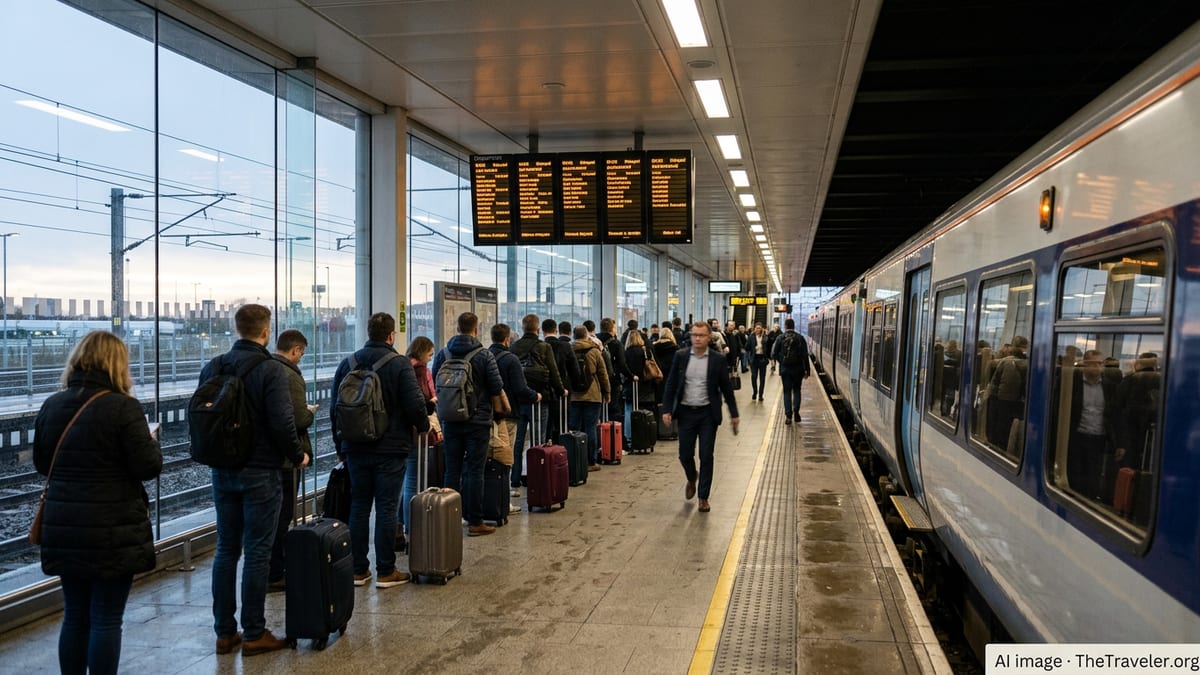
Blaze hits critical section of West Coast Main Line
According to early operational updates, the incident began when a fire broke out beside the track on a heavily used stretch of the West Coast Main Line, the primary rail artery linking London with Birmingham, Manchester, Liverpool and Glasgow. The blaze damaged lineside equipment and affected the overhead power supply, bringing trains to a standstill on one of the most intensively used long‑distance routes in the country.
Industry reports indicate that services were initially held at signals as staff assessed the damage, before large sections of the timetable were progressively thinned out. Some trains were terminated short of their destinations, while others were rerouted over slower diversionary lines not designed to handle such high frequencies of intercity traffic.
Operators on the corridor, which typically carries a mix of high‑speed intercity, regional and freight traffic, advised passengers to delay non‑essential journeys. Publicly available information showed that disruption was expected to last for many hours while damaged equipment was made safe and inspected.
Severe knock‑on delays for intercity and commuter passengers
The West Coast Main Line is widely described in performance statistics and industry briefings as one of the UK’s most crowded pieces of rail infrastructure, carrying millions of journeys each year between London Euston and major cities in the Midlands, North West and Scotland. When a failure occurs on such a constrained corridor, the resulting congestion can take many hours to clear even after repairs are carried out.
On the day of the fire, passengers reported long waits on trains held in queues, as well as last‑minute platform changes at key hubs. Timetables rapidly became out of sequence, with some services running in convoy and others being removed entirely to create gaps in the flow of traffic. With limited spare rolling stock and crew, restoring a stable pattern of trains proved challenging.
The disruption was not confined to long‑distance services. Commuter routes feeding into the same main line experienced crowding and cancellations as train operators attempted to free up paths for priority intercity services. This created pressure at intermediate stations where local passengers rely on frequent stopping services for work and education travel.
Impact on tourism and same‑day business travel
The timing of the incident on the nation’s busiest north–south rail spine had an immediate effect on tourism and short‑notice business trips. The West Coast Main Line is a preferred option for domestic leisure travellers heading to cities such as Manchester and Liverpool for events, football fixtures and weekend breaks, as well as to the Lake District and onward connections to Scotland.
Travel planners noted that visitors arriving from overseas were particularly exposed, as many itineraries assume a reliable high‑speed link from London to the rest of the country. With direct trains heavily delayed or cancelled, some travellers faced missed hotel check‑ins, rearranged tours and additional accommodation costs while they waited for later departures.
Business travellers, who often rely on same‑day out‑and‑back journeys between London and regional cities, also faced disruption. Meeting schedules and conference appearances had to be rearranged at short notice, and many passengers were left seeking refunds or compensation once the extent of the delays became clear in operator performance data.
Replacement transport, diversions and limited resilience
Information from journey planners showed a patchwork of contingency measures, including limited rail replacement buses on some affected stretches. However, the sheer volume of passengers normally carried by the West Coast Main Line meant that road transport could only absorb a fraction of normal demand. Congestion on parallel motorways and trunk roads also lengthened journey times for those switching from rail to car or coach.
Some operators ran trains via alternative routes where capacity allowed, but these lines often lack the electrification, signalling and platform lengths required for full‑length intercity services at normal speeds. Diversions added substantial time to journeys and created bottlenecks at junctions not designed for such heavy long‑distance flows.
Rail performance analyses in recent years have frequently highlighted how incidents involving overhead line equipment, track faults or lineside fires can trigger disproportionate disruption on Britain’s busiest corridors. With limited spare capacity on either parallel railways or the strategic road network, a single infrastructure failure can reverberate for an entire operating day.
Renewed scrutiny of infrastructure reliability and summer preparedness
The track fire has prompted renewed scrutiny of how resilient the UK rail network is to heat‑related and lineside incidents, particularly as passenger numbers grow and summers trend hotter. Past performance reports have documented spikes in delays during warm weather periods when track, signalling and overhead power systems come under additional strain.
Safety and engineering briefings regularly emphasise vegetation management, drainage, and proactive inspections as key measures to reduce the risk of trackside fires and equipment failures. However, the latest disruption demonstrates that even with preventive work, incidents can occur in locations where there are few alternatives for rerouting high‑speed traffic.
Industry commentators note that forthcoming upgrade programmes on major routes are intended to increase both capacity and reliability, with more robust power systems and digital signalling. Yet these works themselves can involve extended closures and temporary timetables, leaving passengers caught between short‑term disruption and the promise of a more dependable service in the future.
For travellers, the incident is a reminder to check live journey information before setting out, allow additional time for critical connections, and consider flexible tickets where possible during peak summer months. For the rail industry, it adds another example to the growing debate over how to harden the UK’s busiest routes against the next unexpected fire or infrastructure failure.