


More news on this day
Emergency crews and rail contractors are working along the Laurens and Greenwood county line in South Carolina after a multi-car freight train derailment sent more than a dozen cars off the tracks near Lake Greenwood early Monday.
Get the latest news straight to your inbox!
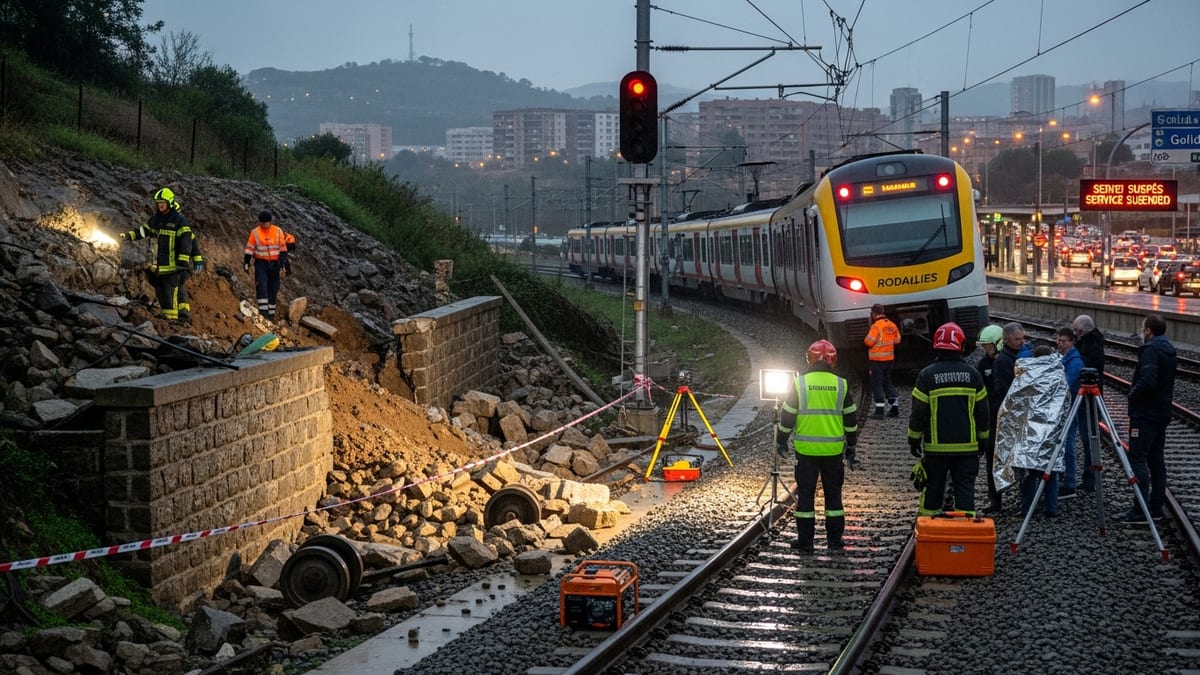
Derailment near county line disrupts key Upstate rail corridor
Reports from regional outlets describe the derailment occurring along a freight corridor that runs near the border between Laurens County and Greenwood County, a lightly populated but strategically important stretch of track used to move industrial goods across South Carolina. The incident was reported early Monday, July 27, with local fire services sharing initial images of multiple cars lying off the rails in a wooded area.
According to published coverage, approximately 17 rail cars left the tracks, some of them grain or hopper cars, scattering debris along the right of way. The derailment occurred away from major road crossings, which limited direct impact on motorists but complicated access for first responders, who had to navigate rural roads and utility paths to reach the scene.
Rail traffic in the immediate area was halted while inspections of the tracks and remaining equipment were carried out. Neighboring communities in both Laurens and Greenwood counties experienced an uptick in emergency vehicle traffic as fire, rescue, and hazardous materials teams converged on the site.
Emergency response focuses on fire risk and environmental safeguards
Publicly available information from local emergency agencies indicates that fire crews, hazmat teams, and county emergency management staff prioritized fire suppression capability and containment measures upon arrival. With a long line of derailed cars resting in brush near Lake Greenwood and surrounding waterways, responders worked to assess any leakage from the cars and to reduce ignition risks.
Images and video shared by county fire services show crews staging engines and tankers along narrow access roads, then deploying hose lines and portable water sources closer to the derailed equipment. Rail-contractor response teams were observed bringing in heavy machinery to stabilize cars and begin the process of clearing the line.
While early accounts did not indicate major fires, responders treated the scene as a high-risk environment given summer heat, dry vegetation, and the unknown condition of all car contents during the first hours after the derailment. Agencies in both counties continued to monitor air quality and runoff patterns as a precaution.
No injuries reported as crews work to protect Lake Greenwood
Regional news reports and county updates have not cited any injuries to train crew members or first responders. The derailment location, away from residential areas and road intersections, reduced the likelihood of direct impacts on bystanders, a contrast to several recent derailments nationally that have occurred near busy corridors.
Local government updates emphasize that Lake Greenwood remains open and safe for recreation, noting that early assessments found no evidence of hazardous releases into the lake itself. Emergency managers nonetheless highlighted the sensitivity of the watershed and the need for continued monitoring as rail cars are re-railed or scrapped and contaminated ballast, if any, is removed.
Boaters and lakeside property owners were advised to stay clear of any visible response activity near the derailment corridor. Recreational businesses around the lake continued normal operations while keeping an eye on cleanup progress along the nearby rail line.
Investigation and cleanup expected to extend over several days
Based on similar derailments in the region, clearing a 17-car incident can require several days of intensive work as investigators document the scene, damaged track is removed, and specialized cranes reposition or dismantle rail cars. Rail companies typically coordinate with contracted salvage crews, track inspectors, and environmental consultants during this process.
Publicly available information shows that the focus in the short term is to reopen the line safely, with crews replacing compromised track segments, tamping new ballast, and validating signaling systems before any trains are allowed to pass. Until that work is complete, freight movements through this part of the Upstate will be rerouted or delayed, affecting shippers that rely on the corridor.
Though the precise cause of the derailment has not yet been detailed in public reports, investigators are expected to examine track conditions, recent maintenance records, train speed, loading patterns, and any mechanical issues with the rail cars involved. Findings from such inquiries can take weeks or months to be compiled and released.
Rail safety under scrutiny after a series of recent derailments
The Laurens and Greenwood county line incident is the latest in a string of freight derailments nationally that have drawn renewed public attention to rail infrastructure and safety practices. Recent events, including freight and commuter train derailments in other states, have highlighted the challenges of maintaining heavily used tracks in extreme temperatures and varied terrain.
Transportation safety data consistently show that most derailments occur in rail yards or remote segments of track, often without mass casualties, but each event can carry significant environmental and economic stakes. Communities near key freight corridors are increasingly focused on how quickly rail operators identify track defects, replace aging components, and plan for responses when trains leave the rails.
For travelers, the derailment near the Laurens and Greenwood county lines serves as a reminder that disruptions to freight routes can have ripple effects across the broader transportation network, from delayed shipments that support tourism businesses to potential knock-on impacts on passenger rail where tracks are shared. Observers across the Upstate will be watching how quickly the line reopens and what future safety measures emerge as details of the incident become clearer.