


More news on this day
Rail operations remain disrupted near the Laurens and Greenwood County lines in South Carolina as crews continue repairs following a 17-car freight train derailment that occurred early Monday near Whitten Road.
Get the latest news straight to your inbox!
Derailment Near County Line Disrupts Rail Corridor
Published coverage indicates that the derailment took place shortly after 5 a.m. near Whitten Road, close to the boundary between Laurens and Greenwood counties. Seventeen freight cars left the tracks, scattering rail equipment across a stretch of right of way that serves as a key freight link through the Upstate region.
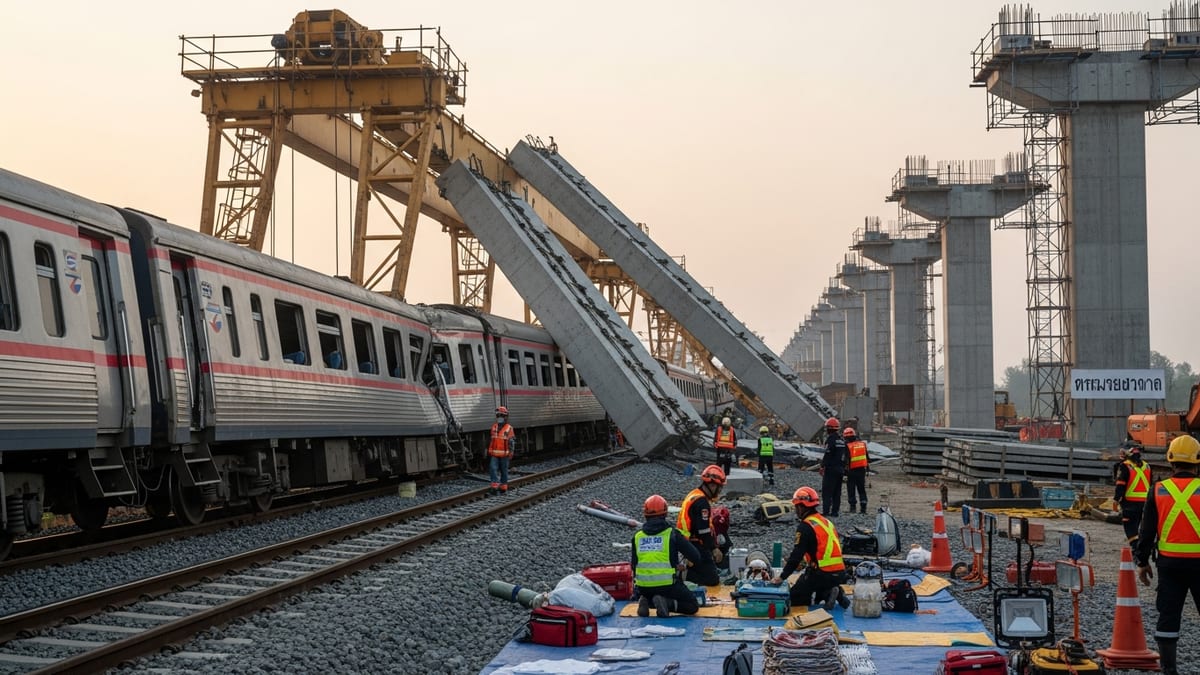
Initial images shared by regional outlets show several cars tilted or on their sides along the track, with earth-moving machinery and heavy trucks brought in to support recovery. The incident occurred on a corridor that carries mainly freight traffic, limiting direct impact on passenger services but creating knock-on delays for connecting lines and nearby road crossings.
According to publicly available information, local fire and emergency crews from Laurens County were among the first to respond, with neighboring departments and rail contractors later joining the operation. The area around the derailment was secured while teams assessed track conditions, evaluated the cars involved and planned the sequence for rerailing and removal.
Reports so far have not indicated widespread injuries, allowing efforts to focus on clearing equipment and stabilizing the line. For travelers and residents who rely on surrounding highways and secondary roads, the incident has largely meant detours, short-term closures and increased heavy-vehicle traffic associated with repair work.
Repair Crews Focus on Track, Ballast and Signaling
Once the scene was stabilized, rail specialists began the meticulous process of lifting or cutting away damaged cars and inspecting the underlying infrastructure. Industry practice in such derailments typically involves segmenting the work into three core tasks: recovering rolling stock, rebuilding the track structure and verifying signaling and communications before trains resume normal speed.
Publicly shared photos suggest that sections of track near the Laurens-Greenwood line suffered visible damage, including displaced rails and disturbed ballast. Crews have been seen using cranes and side-boom tractors to move derailed cars clear of the right of way, making room for track gangs to remove bent rails, compromised ties and fouled stone.
After debris is cleared, new ties and continuous welded rail are usually installed, followed by fresh ballast that is tamped and aligned to restore the correct geometry. Signaling equipment and grade-crossing protections along the affected stretch must also be tested to ensure detection systems, lights and gates operate properly. Only once these steps are complete can freight traffic fully return, often under temporary speed restrictions while the repaired section is monitored.
Given the derailment’s location near a county line and close to local roads, coordination with transportation and public works departments has been essential to managing construction-style closures and moving heavy machinery in and out of the site. Travelers in the region may continue to encounter intermittent lane restrictions and slow-moving convoys as the work progresses.
Environmental and Safety Assessments Underway
Train derailments that involve freight traffic can raise concerns about fuel spills, cargo leaks or damage to nearby waterways. In this case, local government information emphasizes that nearby Lake Greenwood remains safe following the derailment, indicating that early environmental checks have not identified serious impacts to the popular recreation area.
Standard response procedures in rail incidents typically involve monitoring soils, drainage ditches and any creeks adjacent to the right of way. Recovery teams look for evidence of diesel fuel releases from locomotives, hydraulic fluid from machinery or contents from any freight cars that may have been breached. If necessary, absorbent booms, vacuum trucks and soil removal are used to contain and remediate contamination.
For residents and visitors using campgrounds, marinas and vacation rentals along Lake Greenwood, the current messaging suggests that swimming, boating and fishing activities can continue as normal. At the same time, travelers may notice additional utility vehicles, testing crews and occasional short-term access limits on smaller lakeside roads as inspections continue.
The incident also reinforces broader safety guidance for those driving or cycling near rail corridors in rural areas. Even while repairs are ongoing, grade crossings may reopen in stages, and warning devices can operate more frequently as test trains move through. Travelers are advised to treat any active signals conservatively and allow extra time when crossing the line between Laurens and Greenwood counties.
Travel and Tourism Impacts Around Lake Greenwood
Lake Greenwood and the surrounding countryside draw visitors for fishing tournaments, family cabins and short driving getaways from Greenville, Columbia and Augusta. While the derailment is primarily a freight and infrastructure event, it has had secondary effects on travel routines in the area, particularly for those arriving via regional highways that intersect with the rail corridor.
Reports indicate that road access near Whitten Road and several nearby connectors has been periodically restricted to make room for cranes, lowboy trailers and ballast trucks. Drivers heading to lakeside vacation rentals or public boat ramps have encountered marked detours, temporary one-lane traffic patterns and delays during peak work hours.
Local tourism businesses and lodging operators are encouraging guests to allow additional travel time and to stay in contact regarding the best routes into waterfront areas. Many of the most popular recreation spots around Lake Greenwood remain reachable via alternate roads, but the usual fastest routes may not be available during heavy construction periods on the rail line.
For visitors planning upcoming weekends, flexibility remains important. Leaving earlier in the day, following posted detours closely and checking regional news updates before departure can help reduce stress and keep trip plans on track while cleanup and repairs continue.
How the Derailment Fits Into a Wider Rail Safety Picture
The incident near the Laurens-Greenwood county line comes during a year in which rail safety has drawn renewed public attention, both in the United States and abroad. Recent derailments and line disruptions in other regions have underscored how localized rail incidents can ripple outward to affect commuters, freight schedules and tourism-dependent communities.
Research on freight rail risk highlights that while rail remains significantly more fuel efficient than road transport for heavy cargo, derailments can involve multiple cars simultaneously, increasing the potential for infrastructure damage and service disruption. Regulators and railroads have responded over time with stricter track inspection regimes, advanced defect detection technologies and route planning that seeks to balance efficiency with safety.
For travelers in the Upstate of South Carolina, the current derailment serves as a reminder of how closely road and rail networks are intertwined. A problem confined to a relatively short stretch of track can trigger lane closures, detours and altered travel times across multiple counties, particularly in areas where only a few roads cross a major railway.
As repairs advance near Whitten Road and normal operations resume, attention is likely to shift from emergency response to lessons learned about corridor resilience, communication with nearby communities and contingency planning for both freight and leisure travel. Visitors heading toward Lake Greenwood and the rural routes between Laurens and Greenwood can expect gradual improvement in traffic flow as rail service stabilizes in the days ahead.