


Central New Jersey packs an unexpected amount of history, culture, and character into a fairly compact area, and two of its most contrasting destinations sit less than 15 miles apart: Trenton, the gritty state capital on the Delaware River, and Princeton, the polished university town wrapped around one of the world’s most famous campuses. If you only have time for one base, or a short stop in each, understanding how they actually feel on the ground will help you decide which visit fits you better.
Get the latest updates straight to your inbox!
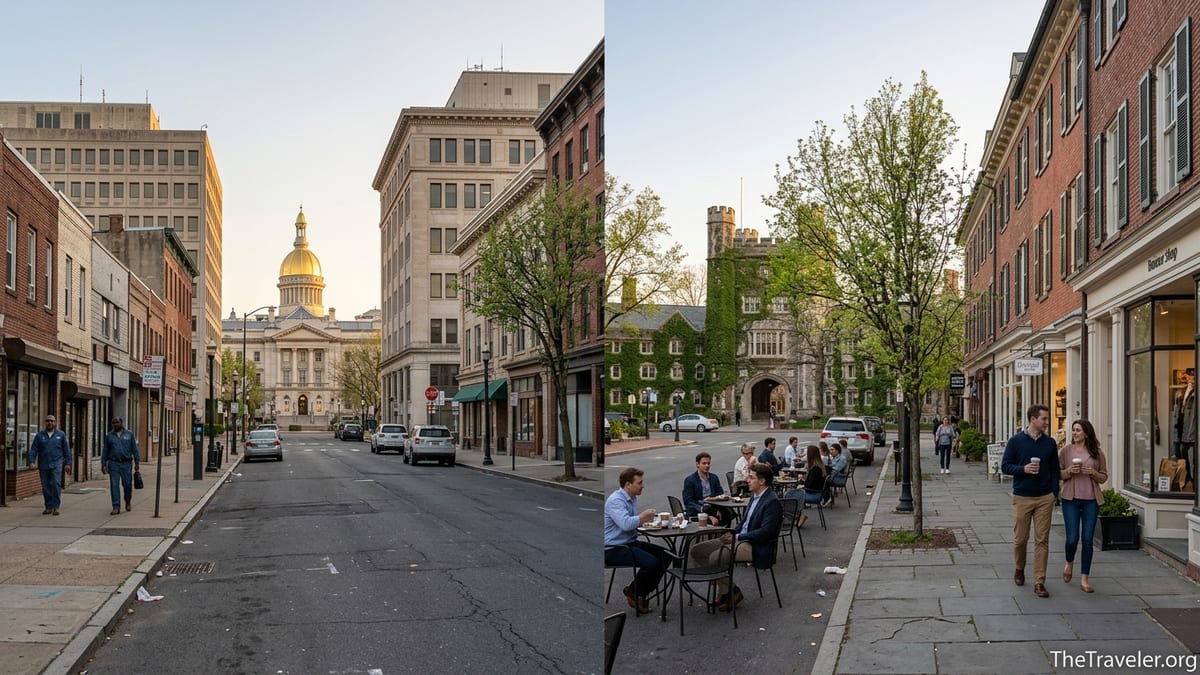
First Impressions: Atmosphere and Vibe
Trenton and Princeton may share the same slice of Central Jersey, but emotionally they are worlds apart. Trenton feels like a working capital city with layered history and visible struggle: government buildings, older rowhouses, stretches that are quiet and others that feel rough around the edges. You are likely to park near the New Jersey State House or the State Museum and walk past office workers on their lunch breaks, community activists tabling on a corner, and kids cutting through small parks toward the river.
Princeton, by contrast, presents as a postcard. Ivy‑draped stone buildings, manicured lawns, and tidy streets lined with cafés and boutiques create a polished small‑city environment. The downtown core around Nassau Street and Palmer Square is compact enough that you can walk almost everywhere, and there is a constant hum of students, locals, and visitors moving between the university campus and the shops.
If you enjoy urban edge, political symbolism, and finding beauty in unlikely corners, Trenton’s authenticity may appeal. If you are more drawn to walkable, comfortable settings with a built‑in sense of safety and ease, Princeton will likely feel more welcoming. Many travelers choose to day‑trip into Trenton for specific sites, then base themselves in or around Princeton for the evenings.
Both cities are easily reachable from New York or Philadelphia by train or car in roughly one to one and a half hours depending on traffic, so either can work as a quick escape or as a central hub for a wider Mercer County itinerary.
History on the Ground: Revolution, Statehood, and Storytelling
Trenton’s greatest strength as a visitor destination is its Revolutionary War and state history. Within a few walkable blocks you can stand near the site of the First Battle of Trenton at Mill Hill, explore the state’s political heart at the New Jersey State House, and step into the 18th‑century Old Barracks Museum, which interprets the city’s role during the war. History buffs can easily spend half a day here moving between museums and historic markers, often with relatively small crowds compared with bigger East Coast cities.
The New Jersey State Museum, adjacent to the State House area, combines natural history, cultural exhibits, and fine art under one roof. Travelers regularly mention seeing everything from dinosaur fossils discovered in New Jersey to galleries of regional paintings, all in a building that is free or low‑cost to enter. For visitors who like to connect a modern capital to its deeper roots, Trenton rewards slow walks and time spent reading plaques and exhibits.
Princeton offers a different flavor of American story, blending Revolutionary history with the evolution of a world‑class university. The Princeton Battlefield State Park, a short drive from downtown, preserves open fields where George Washington’s troops fought in January 1777, complete with a historic house and interpretive displays. Back in town, the Princeton University campus itself is a living history lesson, with buildings dating to the 1700s set beside contemporary architecture.
If you want your history wrapped in immaculate lawns and collegiate architecture, Princeton has the edge. If you prefer to see how history and present‑day social realities intersect, Trenton offers a more layered, less curated experience.
Art, Culture, and Museums: Where To Feed Your Curiosity
For a city of its size, Trenton punches above its weight in arts institutions, though they can feel dispersed. The New Jersey State Museum is the standout, with galleries that range from prehistoric New Jersey geology to contemporary art. Visitors regularly note that you can view some of the oldest rocks on the planet in one gallery and then step into an exhibition of modern paintings a few steps away. Combined with the nearby State Archives and the historic William Trent House, Trenton appeals to travelers who like deep dives into regional heritage.
Princeton, however, is the clear winner for travelers who prioritize art and culture. At the heart of campus, the newly reopened Princeton University Art Museum occupies a striking contemporary building and is free to enter. Inside, you will find a globally focused collection that moves from ancient artifacts to modern installations. Recent coverage has highlighted the museum as one of the country’s most exciting new cultural spaces, and travelers routinely describe it as a surprise highlight equal to big‑city museums, but with shorter lines and a more relaxed pace.
Beyond the museum, Princeton’s cultural fabric extends into the streets. The Putnam Collection of outdoor sculpture scatters works across campus lawns and courtyards, turning a simple stroll into an open‑air gallery. Downtown, spaces such as Art@Bainbridge and other small galleries near Nassau Street host rotating contemporary shows, while the Princeton Public Library, one of the busiest in New Jersey, functions almost like a civic living room with lectures, readings, and family programming.
If your ideal trip centers on world‑class art in a walkable, village‑like setting, Princeton is the more satisfying base. If you enjoy the interplay of history, politics, and local culture, and do not mind a less polished environment, Trenton’s museum cluster offers solid value and fewer crowds.
Street Life, Dining, and Night: How Each City Feels After Dark
In Trenton, the city’s energy tends to peak around office hours and scheduled events such as concerts, legislative sessions, or festivals. Outside of those times, especially in the evenings, many blocks around the government district can feel quiet or under‑lit. There are local favorites for food, including long‑running diners, Latin American restaurants, and neighborhood pizza spots, but as a visitor you need to be intentional about where you go and when. Many travelers choose to visit Trenton during the day and then head back to another town for dinner and nightlife.
Princeton, by comparison, offers a compact downtown that stays lively into the evening, especially during the academic year and on weekends. Palmer Square functions as Princeton’s living room, with restaurant patios, ice‑cream and coffee lines, and people lingering on benches with shopping bags. You can grab artisanal ice cream in the square, step into a bakery on a side street for a late croissant, or settle into a farm‑to‑table restaurant like those along Witherspoon Street for a more formal meal.
Nightlife in Princeton leans more toward conversation than clubs: wine bars, upscale pubs, and dessert cafés where people meet after a performance or lecture. Seasonal events such as summer “after sunset” evenings in Palmer Square or winter tree‑lighting celebrations bring live music and family activities into the streets. If you prefer relaxed evenings with strolls, storefront‑browsing, and a choice of late‑night snacks, Princeton delivers a far fuller experience than Trenton.
Budget is one clear difference. A casual dinner for two in Princeton at a mid‑range sit‑down restaurant can easily reach 60 to 100 dollars before tip if you include drinks and dessert. In Trenton, neighborhood eateries and diners are often more affordable, with hearty meals under 20 dollars per person common outside of special venues. If price is your priority and you are comfortable exploring, Trenton has an advantage; if ambiance matters more, Princeton is the better fit.
Nature, Parks, and Active Time Outdoors
Despite its reputation as a government and industrial city, Trenton has pockets of green that reward curiosity. Mill Hill Park, near the historic district, preserves a stretch of the Assunpink Creek and offers a peaceful lawn framed by brick rowhouses. On a sunny afternoon, office workers eat lunch on benches and local families walk dogs along the paths. Along the Delaware River, small parks and overlooks give glimpses of bridges and passing boats, though the riverfront is not as fully developed for strolling as some travelers might expect.
For a broader outdoor experience, many visitors pair a daytime history stop in Trenton with a side trip to nearby green spaces outside the city limits, such as Washington Crossing State Park or parks along the Delaware & Raritan Canal. These areas offer hiking and biking trails, picnic spots, and bird‑watching, with the capital serving primarily as an urban cultural stop rather than the center of outdoor activity.
Princeton, on the other hand, folds nature directly into its daily life. The university campus alone offers shaded walkways, quadrangles, and quiet courtyards where you can sit with a coffee and watch student life unfold. Just beyond downtown, Lake Carnegie provides a scenic backdrop for walks and jogs, with rowing shells often gliding across the water at dawn or dusk. Trails along the Delaware & Raritan Canal near Princeton attract runners, cyclists, and families out for easy weekend rides.
If hiking and gardens are high on your list, Princeton also positions you close to attractions like Grounds For Sculpture in nearby Hamilton, an expansive outdoor art park set across landscaped grounds with ponds, trees, and large‑scale sculptures. Travelers frequently combine a half‑day there with time in Princeton’s downtown, creating a full, varied itinerary without long drives. For visitors who want nature woven seamlessly into a walkable trip, Princeton is the more satisfying choice.
Costs, Logistics, and Safety Considerations
Practicalities often determine which Central Jersey stop makes more sense. Trenton is served by a major train station on the Northeast Corridor, with both commuter and intercity services. From the station, it is a short ride or a moderate walk to the State House area, museums, and parts of downtown. Parking around government buildings is typically structured in garages and surface lots, with weekday competition from employees but more flexibility on weekends.
Princeton’s main visitor access point is the Princeton Junction station on the same rail line, followed by a short shuttle train or bus ride into town, or a rideshare that takes around 10 to 15 minutes depending on traffic. For drivers, Princeton offers several municipal garages near Palmer Square and along the edge of downtown, as well as metered street parking. On busy fall weekends, when football games, campus events, and foliage trips coincide, garages can fill and traffic around Nassau Street can slow significantly, so arriving earlier in the day is wise.
In terms of accommodation costs, Princeton is generally more expensive than Trenton and surrounding suburbs. A central hotel near Palmer Square can easily run from the mid‑200s to 400 dollars per night on popular weekends, reflecting both limited inventory and strong demand. More budget‑friendly chain hotels, including conference‑oriented properties, sit a short drive away in nearby Plainsboro or along highway corridors, often between 120 and 200 dollars per night outside major event dates.
Safety perceptions also differ. Trenton has neighborhoods where visitors should be cautious, especially after dark, and it is wise to stick to well‑traveled areas around the State House complex, museums, and clearly active commercial streets, particularly if you are unfamiliar with the city. In Princeton, most visitors feel comfortable walking around the core late into the evening, thanks to steady foot traffic and good lighting, although standard city awareness still applies. If you are traveling with small children or feel anxious in more distressed urban environments, Princeton is likely to feel noticeably more relaxed.
Who Each City Fits Best: Matching Destinations to Travel Styles
If you are a dedicated history enthusiast, civics teacher, or traveler who loves to understand how government works, Trenton will speak directly to your interests. Standing under the golden dome of the State House, walking past protest banners or school groups on civics tours, and stepping into the Old Barracks or Trent House creates a tangible sense of New Jersey’s role in the American story. You might combine those stops with a quick, budget‑friendly lunch at a local café and still have time to continue on to another part of the state the same day.
Trenton can also appeal to photographers and urban explorers who are drawn to the tension between past and present: faded industrial facades, murals celebrating community resilience, and historic districts like Mill Hill, where restored brick homes line narrow streets just a few blocks from more challenged areas. This is not a polished destination, but for some travelers that is exactly the point.
Princeton is a better match for travelers who want a single place that blends walkability, culture, and ease. Couples planning a low‑key weekend, families with school‑age children curious about college life, and solo travelers who enjoy museums and cafés will find plenty to do within a small radius. A typical day might include a morning at the Princeton University Art Museum, lunch on Witherspoon Street, an afternoon walk along the canal towpath, and an evening ice cream run to Palmer Square.
If you are choosing where to base yourself, many visitors treat Princeton as home base and visit Trenton as a focused day trip. That approach lets you dip into Trenton’s history and state institutions without needing to navigate its less visitor‑friendly nightlife and lodging scene, while still enjoying Princeton’s compact, comfortable downtown for meals and evenings.
The Takeaway
Trenton and Princeton share a patch of Central New Jersey and even a county, but they offer very different kinds of trips. Trenton is the capital city where Revolutionary battlefields, state government, and under‑the‑radar museums tell a complex story about power, history, and community. It rewards focused, daytime visits from travelers who are comfortable with a grittier cityscape and who care deeply about how places evolve.
Princeton, centered on its famous university, feels purpose‑built for a relaxed, culture‑rich getaway. World‑class art in a free campus museum, leafy quads, boutique‑lined streets, and easy access to parks and sculpture gardens make it an obvious choice for long weekends, anniversary trips, or family outings with older kids.
If you have only one day and want clarity, choose Princeton if you are seeking charm, walkability, and a well‑rounded experience that feels effortless. Choose Trenton if you want to stand inside New Jersey’s political and Revolutionary heart, even if that means accepting a more uneven urban fabric. With a bit more time, the best Central Jersey strategy is not either/or at all: base yourself in Princeton, carve out a half‑day in Trenton for history and state‑level perspective, and let the contrast between the two deepen your understanding of this often‑overlooked slice of the Garden State.
FAQ
Q1. Is Trenton safe to visit for tourists?
Trenton is safe to visit in daylight if you stay in well‑traveled areas such as the State House complex, New Jersey State Museum, and key historic sites, using normal city awareness. Many visitors prefer to leave the city before late evening and overnight in nearby towns like Princeton or suburban areas with more developed hotel districts.
Q2. Is Princeton worth a trip from New York or Philadelphia?
Yes. Princeton works very well as a day trip from either city, with travel times typically around one to one and a half hours by train or car. Once there, you can easily fill a day with the university art museum, campus walks, shopping and dining around Palmer Square, and nearby trails along the canal or Lake Carnegie.
Q3. Can I visit both Trenton and Princeton in one day?
It is possible to visit both in a single day, especially by car. A realistic plan would be to spend the morning in Trenton visiting the State House and State Museum, then drive or take the train to Princeton for an afternoon on campus and dinner downtown. You will only get a taste of each place, but the contrast can be rewarding.
Q4. Which city is better for families with kids?
For most families, Princeton is the easier choice. Children often enjoy the open campus lawns, the art museum’s accessible exhibits, and simple pleasures like ice cream in Palmer Square. Trenton’s museums and Revolutionary sites can be very educational, particularly for older kids studying American history, but the city overall can be more challenging to navigate with young children.
Q5. Where should I stay if I want to explore Central New Jersey?
Princeton and its nearby suburbs make a practical base, with a mix of boutique hotels in town and chain properties a short drive away. From there you can day‑trip to Trenton for history, to Grounds For Sculpture in Hamilton for outdoor art, or to canal and riverfront parks for hiking and biking.
Q6. Do I need a car to get around Trenton and Princeton?
You can reach both cities by train, but having a car offers much more flexibility. In Princeton, the core is walkable once you arrive, although a car helps if you want to reach the battlefield, Lake Carnegie, or nearby towns. In Trenton, a car or rideshare simplifies moving between the train station, State House area, and any outlying neighborhoods or parks.
Q7. How expensive is it to visit Princeton compared with Trenton?
Princeton is noticeably more expensive for lodging and dining, especially in the downtown core. Central hotels and sit‑down restaurants often price at a premium. Trenton’s food options and surrounding suburban hotels tend to be more budget‑friendly, though the city has fewer tourist‑oriented amenities overall.
Q8. What is the best time of year to visit?
Spring and fall are ideal for both cities. In Princeton, those seasons bring pleasant temperatures, campus events, and colorful trees, making walking especially enjoyable. Trenton’s outdoor sites, such as battlefields and riverfront parks, are also more appealing in mild weather. Summer can be hot and humid, while winter visits tend to center on indoor museums.
Q9. Are there good dining options in both cities?
Yes, but the experiences differ. Princeton offers a dense cluster of cafés, bakeries, and restaurants around Nassau Street and Palmer Square, ranging from casual spots to upscale dining. Trenton has beloved neighborhood eateries and diners, often at lower prices, but they are more spread out and not all are geared toward visitors, so a bit of research before you go is helpful.
Q10. Which city offers more nightlife and evening activities?
Princeton has more to do in the evenings, with restaurants, dessert shops, pubs, and seasonal events that keep the downtown active after dark. Trenton’s downtown tends to quiet down once government offices close and scheduled events end, so most visitors look elsewhere for nighttime entertainment and choose to experience Trenton primarily during the day.