


Triglav National Park protects the wild heart of the Slovene Alps, a high limestone world of turquoise rivers, glacial lakes, and steep, grey peaks crowned by Mount Triglav. For travelers, it is both surprisingly accessible and surprisingly serious. One hour you can be sipping coffee in Ljubljana; the next you are at the shore of Lake Bohinj or on a bus climbing toward the Vršič Pass. This guide gathers the latest practical information, classic hiking routes, and realistic examples from recent visitors so you can plan a safe, memorable visit that respects one of Europe’s finest alpine parks.
Get the latest updates straight to your inbox!
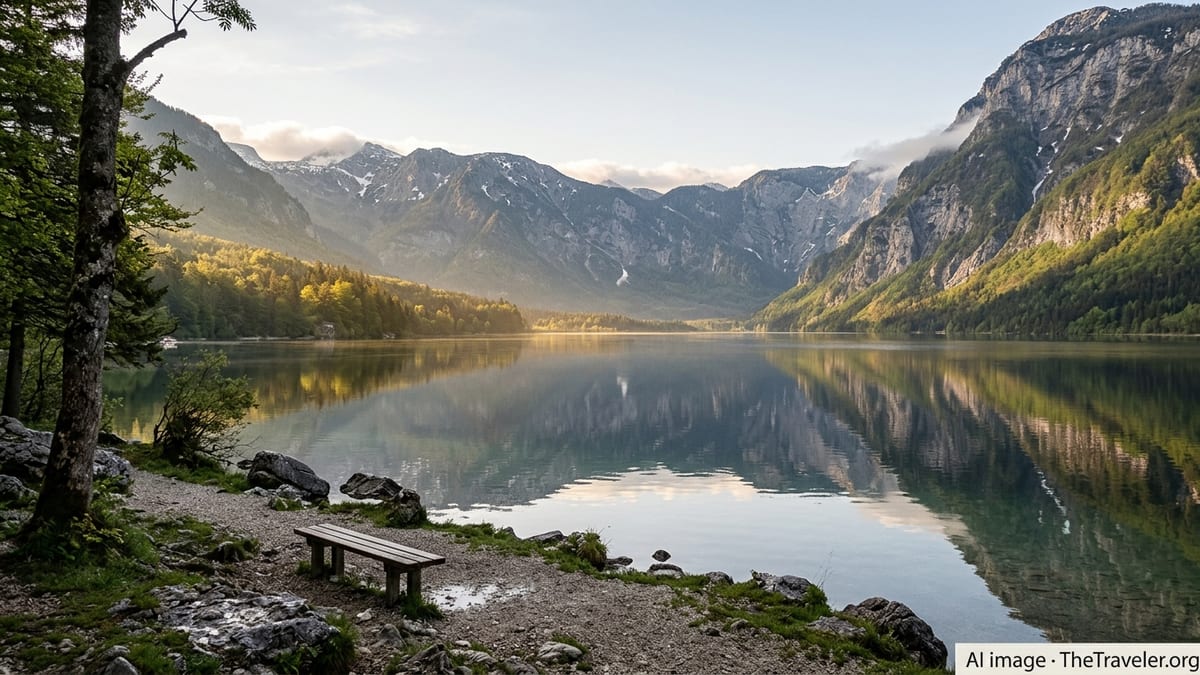
Understanding Triglav National Park Today
Triglav National Park is Slovenia’s only national park and covers almost the entire Julian Alps in the northwest of the country. It surrounds, but does not include, Mount Triglav’s summit plateau as a separate protected area, forming a single contiguous high mountain region with deep valleys like Bohinj, the Soča, Vrata, and the Trenta Valley. The park was formally established in 1981, though protection efforts began decades earlier, and it is now managed under a long term plan that runs through 2025. In practical terms, this means tightly controlled development, strict rules around camping, drones, and traffic, and a strong emphasis on public transport.
The park has no general entrance gate or ticket; you can drive or ride a bus straight from places like Bled, Kranjska Gora, or Bovec into the protected area. Instead, fees are charged at specific attractions or facilities. For example, there is typically a small per person fee to walk into Vintgar Gorge or to access the Savica Waterfall trail, and some car parks near popular valleys and trailheads charge per hour or per day. A visitor information centre ticket in Bohinj has recently been quoted at around 6 euros per adult including a small exhibit, but simply hiking into the park does not carry a fee.
Because Triglav National Park protects an authentic working landscape, you will see active pasture, forestry work, and local villages. Mountain huts are run mainly by the Alpine Association of Slovenia and local clubs, and park rangers share space with shepherds and farmers. Travelers planning hut to hut trips or summit attempts increasingly book well in advance for July and August and use official information centres in Bohinj, Bled, Trenta, or Kranjska Gora for up to date trail conditions and seasonal closures.
The park is a genuinely alpine environment. Even in late June, snow can linger on north facing slopes and on the high approaches to Mount Triglav and the Seven Lakes Valley. Several recent trip reports from 2025 and early 2026 mention that many high huts do not reliably open until mid or even late June, with most peak season operations between early July and mid September. If you are planning a family hut to hut trek or a Triglav ascent, current-year opening dates and snow reports are essential.
Best Base Areas and Scenic Places
Most visitors experience Triglav National Park from a handful of valleys and passes that each offer a different angle on the Julian Alps. The easiest starting point for many is Lake Bohinj, a long, glacier carved lake in the Bohinj Valley surrounded by steep forested slopes. From the village of Ribčev Laz at the eastern end of the lake, you can walk the flat lakeshore trail, take a boat ride in summer, or catch local buses to the Savica Waterfall car park or the Vogel cable car base station at Ukanc. Bohinj is quieter and more immersed in the park than the more famous Lake Bled and makes a strong base for hikers.
On the northern side of the park, Kranjska Gora is the main gateway to the dramatic Vršič Pass and the upper Soča Valley. Day trippers often drive or take a seasonal bus over Vršič from Kranjska Gora, stopping at the Russian Chapel, the Vršič summit area, and the viewpoint over the turquoise Soča River before descending toward Bovec. This loop, which can be completed in a full day with short walks, gives a striking sense of the rugged limestone peaks without committing to long hikes. Several hikers in recent seasons also recommend the easy path to the source of the Soča near the top of the pass as a worthwhile short excursion.
For travelers focused on rivers, canyons, and water activities, the Soča Valley towns of Bovec, Kobarid, and Tolmin sit just outside or on the edge of the park boundary but function as southern bases. Outfitters in Bovec offer rafting, canyoning, and guided hiking in and around the park, while Tolmin is known for the Tolmin Gorges and easy access to lower elevation walks. Although the Soča’s rapids and canyons are world famous, much of this activity actually takes place in buffer zones around the park rather than deep inside its core, which is important when you compare guide offerings and rules.
Closer to Ljubljana, Lake Bled and the Radovna Valley serve as another entry point. Bled itself lies just outside Triglav National Park, but short drives or bus rides take you into the Radovna Valley, the starting point for hikes to the Krma and Vrata valleys and to sights such as Peričnik Waterfall in the Vrata Valley. Many visitors base themselves at Bled’s hotels or guesthouses, rent a car for a couple of days, and do day trips into the park to avoid moving luggage every night. This approach works particularly well if you combine a sightseeing focus with one full day hike.
Classic Trails and Hut to Hut Routes
Triglav National Park is crisscrossed by well marked red and white blazed trails with clear time estimates at junctions. For first time visitors, a few routes appear repeatedly in recent trip reports, tour operator offerings, and park brochures. One of the signature multi day itineraries is the Seven Lakes Valley (Triglav Lakes Valley) hut to hut route. A common three to four day version starts at the trailhead above Lake Bohinj, climbs via the Komna plateau to Dom na Komni hut, continues through the Triglav Lakes Valley past Double Lake to Zasavska koča na Prehodavcih, then drops toward the Soča Valley or loops back via other huts. Guided day hikes to the Double Lake typically involve about 17 to 18 kilometres of walking and around 800 to 900 metres of elevation gain and are described as long but technically straightforward.
For hikers who want to sample high level terrain without a long approach, the Vogel plateau above Lake Bohinj is a popular solution. The Vogel cable car, which operates roughly from 8:00 to 18:00 in the main season, rises from near lake level to around 1530 metres, with additional ski lifts reaching about 1800 metres. In winter it is a ski area; in summer and shoulder seasons it serves as an immediate starting point for marked hiking trails to viewpoints like Orlova Glava and toward the Komna area. A typical day might involve taking a mid morning cable car, hiking three to five hours on easy to moderate trails, then descending by late afternoon, with the flexibility to adjust based on weather.
Mount Triglav itself is the most famous summit objective. Standard two day ascents usually start from trailheads like Rudno Polje or the Krma Valley, overnight at mountain huts such as Dom Planika or Kredarica, and tackle the final via ferrata section to the summit on day two. Elevation gains of around 1300 metres from Rudno Polje to the high huts are typical. The last stretch to the 2864 metre summit is exposed and protected with steel cables and pegs. Many local guides strongly advise against attempting it in bad weather or on icy, early season terrain without experience and proper equipment.
For less demanding days, there is a wealth of shorter hikes around alpine pastures and waterfalls. Families often choose the walk to Savica Waterfall above Lake Bohinj, which involves a moderate stair climb from a paid car park, or the Peričnik Waterfall trail in the Vrata Valley, where a short but sometimes slippery path takes you behind the curtain of falling water. Easier valley trails such as those around Lake Bohinj’s north shore or the Peč viewpoint above Lake Bled provide wide, well trodden paths and big scenery with minimal risk for those unused to steep alpine terrain.
Season, Weather, and Safety Considerations
Conditions in Triglav National Park change dramatically with the seasons, and those changes have become more erratic with recent weather patterns. In broad terms, June through September is the main hiking season. However, several recent hikers planning family hut to hut trips report that early June can still feel like late spring in the high mountains, with hard snowfields blocking passes, metal cables half buried in snow, and many high huts either closed or only partially open. For this reason, local advice increasingly points to mid July through early September as the most reliable window for multi day high routes, while June and October are better suited to lower valley and mid elevation walks.
Summer brings its own hazards. Heatwaves can push valley temperatures well above 30 degrees Celsius, turning exposed scree slopes into baking ovens by midday. Thunderstorms frequently build on hot afternoons, especially in July and August, and can be violent, with hail and sudden drops in temperature. Slovenian rescue teams regularly warn that many accidents involve hikers starting too late, being caught on an exposed ridge during a storm, or underestimating the effect of heat and dehydration on long routes such as the Triglav summit trail.
Fundamental precautions are strongly emphasized by park authorities and experienced locals. They recommend matching your route to your fitness and experience, starting early in the day, carrying warm layers even on apparently hot mornings, and turning back if weather deteriorates. Essential kit for typical summer hikes includes robust hiking boots with good tread, a waterproof shell, sun protection, a paper map or downloaded offline map, snacks, and at least 1.5 to 2 litres of water per person. Trip reports from the 2025 season note that bottled water at high huts such as Kredarica or Planika can cost around 5 euros for a 1.5 litre bottle, so refilling whenever potable sources are available is both cheaper and lighter on waste.
Winter and shoulder seasons add further complexity. Between roughly November and April, much of the high terrain is under snow, avalanche risk becomes a constant factor, and many facilities close or switch to winter mode. In these months, visitors focus on downhill skiing at areas like Vogel or on lower elevation backcountry outings with guides. Spring hikers in April and May are better off treating Triglav National Park as a snowbound alpine region, sticking to lower trails and viewpoints and waiting for reliable summer conditions before venturing high.
Park Rules, Ethics, and Practical Costs
Unlike in some regions where backcountry camping is widely tolerated, Triglav National Park enforces strict rules on overnight stays. Camping and bivouacking outside designated huts and official campsites are generally prohibited within the park. Rangers do occasionally fine visitors who pitch tents near lakes or along high routes, and local communities have become increasingly vocal about so called wild camping as visitor numbers rise. The expectation is that multi day trekkers will spend their nights in mountain huts or in legal campsites in surrounding valleys.
Drones are also tightly regulated. Park regulations restrict flights below 1000 feet above ground level, and recreational drone use is effectively prohibited without a special permit. Exemptions are typically only granted for specific scientific, surveying, or film making projects in coordination with the park authority. For ordinary visitors, the simplest approach is to leave drones at home and focus on photography from the ground to avoid legal trouble and to preserve the park’s soundscape.
Costs within the park vary by activity but can be estimated with real world examples. As of the 2025 to 2026 season, a day ticket for the Vogel cable car and ski area in winter is around 45 euros per adult; in summer, prices for cable car rides are lower and may be offered as single or return tickets priced roughly in the tens rather than dozens of euros. Mountain huts typically charge separate rates for basic dormitory style accommodation and for meals. Travelers commonly report paying in the region of 25 to 40 euros per person for a bed in a shared room and another 10 to 20 euros for a simple dinner, with breakfast extra. Cash remains useful, since some smaller huts have unreliable card connectivity.
Car parks at popular trailheads such as Savica, Vrata Valley, or Vintgar Gorge usually charge either by the hour or per day, often using automated machines. While prices change frequently, budgeting 10 to 20 euros for a full day of parking at major hotspots is a sensible starting point. Public transport options, including regional buses and summer shuttles, are often cheaper and are actively promoted by the park as a way to reduce congestion in narrow valleys. In 2025, for instance, the park and regional authorities highlighted expanded shuttle networks and an “e van” service for certain routes, encouraging visitors to leave cars outside the most sensitive zones.
Getting Around: Transport and Gateways
Despite its dramatic appearance, Triglav National Park is relatively easy to access by public transport from Ljubljana and other Slovenian cities. Regular buses link Ljubljana with Lake Bled and Lake Bohinj, with connections onward to villages like Ukanc near the Vogel cable car. Travelers posting in early 2026 describe taking a morning bus from Ljubljana’s main station to Bohinj, spending the day on the lake and at Savica Waterfall, and returning on an evening bus without needing a car. Train options also exist to Bohinjska Bistrica on the Bohinj railway line, with buses or taxis for the final leg to the lake.
To reach the northern sectors, buses run between Ljubljana and Kranjska Gora and further toward the Italian border, with seasonal drivers continuing over the Vršič Pass to Bovec and the Soča Valley. Summer shuttle services are often added to this basic network, including bike carrying buses and small electric vans that serve specific valleys. Schedules change annually and are usually published in spring, so checking the latest information a few weeks before your trip is essential if you plan to move around the park without a car.
If you do rent a car, be prepared for narrow, winding mountain roads with tight hairpins, especially on Vršič Pass and on side roads into valleys like Vrata. Some high altitude roads, such as those toward the Mangart Saddle, may be closed for construction, maintenance, or rockfall mitigation, and may require paying attention to parking reservation systems or occupancy updates published by the park. In recent years, authorities have provided real time or near real time information on car park occupancy in sensitive areas like Vrata and Mangart, encouraging visitors to change plans rather than block roads.
Cycling is a growing way to experience the park, particularly on quieter roads and designated bike routes. E bikes are widely available for rent in Bled, Bohinj, and the Soča Valley, allowing reasonably fit riders to tackle long gradients without excessive strain. However, cyclists must share narrow roads with cars and buses and should carry lights, helmets, and high visibility clothing, especially if planning early morning starts or late returns. Certain hiking trails are off limits to bikes, so checking local maps and signs is important to avoid conflicts.
Choosing the Right Experience for You
Because Triglav National Park offers everything from lake strolls to serious mountaineering, the most important decision is matching your plans to your experience and comfort level. For many first time visitors with limited alpine background, a base in Bohinj or Bled with two or three day hikes is ideal. A realistic three day plan might include a lakeshore circuit and Savica Waterfall on day one, a Vogel cable car day hike on day two, and a drive or bus trip over Vršič Pass into the Soča Valley on day three. This mix delivers waterfalls, lake views, and high panoramas without committing to exposed ridges or long hut to hut crossings.
More experienced hikers might aim for a three to five day hut to hut journey focused on the Seven Lakes Valley or a combination of high ridges and alpine pastures. One family in a late 2025 forum discussion described planning a four to five day loop with a 10 year old child, deliberately scheduling mid July dates to avoid snow, keeping daily elevation gains moderate, and accepting that the routes would be busy in exchange for stable conditions and open huts. Their approach, balancing ambition with safety and booking huts early, is typical of how locals now advise non expert visitors to plan.
Summit focused travelers intent on climbing Mount Triglav itself should seriously consider hiring a certified local guide, particularly if they lack via ferrata experience. Guiding companies based in Bled, Bohinj, and the Soča Valley generally offer one and a half to two day Triglav ascents including helmet, harness, and via ferrata kit. While these trips are not cheap, they add expertise in route choice, weather assessment, and emergency response, which can be critical in a complex alpine environment. Many guides also adjust plans on the fly, switching to alternate summits or lower routes if conditions deteriorate.
Even if your ambitions are modest, it pays to think about crowds and timing. Iconic locations like Savica Waterfall, Peričnik Waterfall, and the main viewpoints over Lake Bohinj and Lake Bled can be very busy in peak summer afternoons. Starting early, visiting on weekdays, or targeting shoulder season weeks in late September can transform the experience. Winter visits oriented around skiing or snowshoeing are best based out of established resorts like Vogel, Kranjska Gora, or Bohinj, where avalanche forecasts and marked winter routes are readily available.
The Takeaway
Triglav National Park rewards those who come prepared. Its turquoise rivers, hanging valleys, and limestone walls are not just pretty scenery but part of a living, working alpine landscape shaped by centuries of pastoralism and more recent conservation. For travelers, this means accepting a few constraints, from no wild camping and strict drone rules to the need to book huts early and to adjust plans based on weather and snow. In return, you gain access to one of Europe’s most compelling mountain regions within easy reach of a small, welcoming capital.
Whether you paddle across still water on Lake Bohinj at sunrise, step off the Vogel cable car into a sea of peaks, or watch the Soča flash through its gorges from a shady trail, the park offers countless moments that feel far bigger than its compact size on the map. Begin with honest self assessment of your fitness and experience, add up to date local information, and leave room for flexibility in your itinerary. Triglav National Park will do the rest, providing the weather cooperates, and will almost certainly leave you planning a return.
FAQ
Q1. Do I need a ticket or permit to enter Triglav National Park?
In general there is no entrance ticket or border gate for Triglav National Park. You can drive or take a bus directly into the park area. However, some specific attractions such as Vintgar Gorge or Savica Waterfall charge separate entrance or parking fees, and mountain huts and campsites charge for overnight stays.
Q2. When is the best time of year to hike in Triglav National Park?
The main hiking season typically runs from June to September, but high routes and huts often open fully only from mid July to early September, depending on snow. June and October are usually better suited to lower elevation walks, while winter and spring require mountaineering skills or guided activities.
Q3. Can I wild camp or bivouac in the park?
Wild camping and bivouacking outside official huts and designated campsites are generally prohibited in Triglav National Park. Rangers sometimes fine people who pitch tents near lakes or trails. Multi day hikers are expected to sleep in mountain huts or legal valley campsites instead.
Q4. How difficult is it to climb Mount Triglav?
Climbing Mount Triglav is a serious alpine hike with an exposed via ferrata section near the summit. Standard routes involve around 1300 metres of ascent to a high hut on day one and a steep, cable protected ridge on day two. It is not suitable for complete beginners without guidance, especially in bad weather or early season snow.
Q5. Is Triglav National Park suitable for families and beginners?
Yes, if you choose appropriate activities. Families and beginners often enjoy lakeside paths around Bohinj, the walk to Savica Waterfall, easy valley trails in the Soča and Radovna valleys, and short outings from the Vogel cable car. Exposed ridges, long scree traverses, and early or late season snow should be avoided without experience.
Q6. Do I need a car, or can I use public transport?
You can visit many parts of Triglav National Park by bus and, in some cases, by train combined with local buses. Regular services run from Ljubljana to Bled, Bohinj, and Kranjska Gora, and seasonal shuttles and e vans supplement these in summer. A car offers more flexibility but is not essential, especially for shorter trips focused on popular valleys.
Q7. What should I pack for a summer day hike?
For a typical summer day hike, pack sturdy hiking boots, a waterproof jacket, warm layers, sun protection, at least 1.5 to 2 litres of water, snacks, and a map or offline navigation. Weather in the Julian Alps can change quickly, and afternoon thunderstorms are common in July and August, so extra clothing and an early start are wise.
Q8. Are drones allowed in Triglav National Park?
Recreational drone use is effectively not allowed in the park. Regulations restrict low altitude flights, and permits are generally granted only for specific scientific, surveying, or professional filming projects. Visitors are advised not to fly drones to avoid fines and to protect wildlife and other visitors’ experience.
Q9. How expensive are mountain huts and food in the park?
Prices vary by hut, but as a rough guide, expect to pay in the range of 25 to 40 euros per person for a bed in a shared dormitory, with dinners often costing another 10 to 20 euros. Bottled water and snacks at high huts are more expensive than in the valleys, so many hikers carry extra food and refill water when safe sources are available.
Q10. Is it safe to hike alone in Triglav National Park?
Many people hike solo on well marked trails, especially in popular areas during peak season, but solo hiking always carries more risk. If you hike alone, choose non technical routes, check the forecast, start early, tell someone your plan and expected return time, and carry essential safety gear. For exposed or complex routes, or outside high season, consider joining a group or hiring a guide.