


More news on this day
TUI River Cruises has reached a significant milestone in its fleet development as TUI Luzia, the brand’s first purpose-built river vessel, has now touched water, marking the next stage in construction ahead of its planned debut on Portugal’s Douro River in summer 2027.
Get the latest news straight to your inbox!
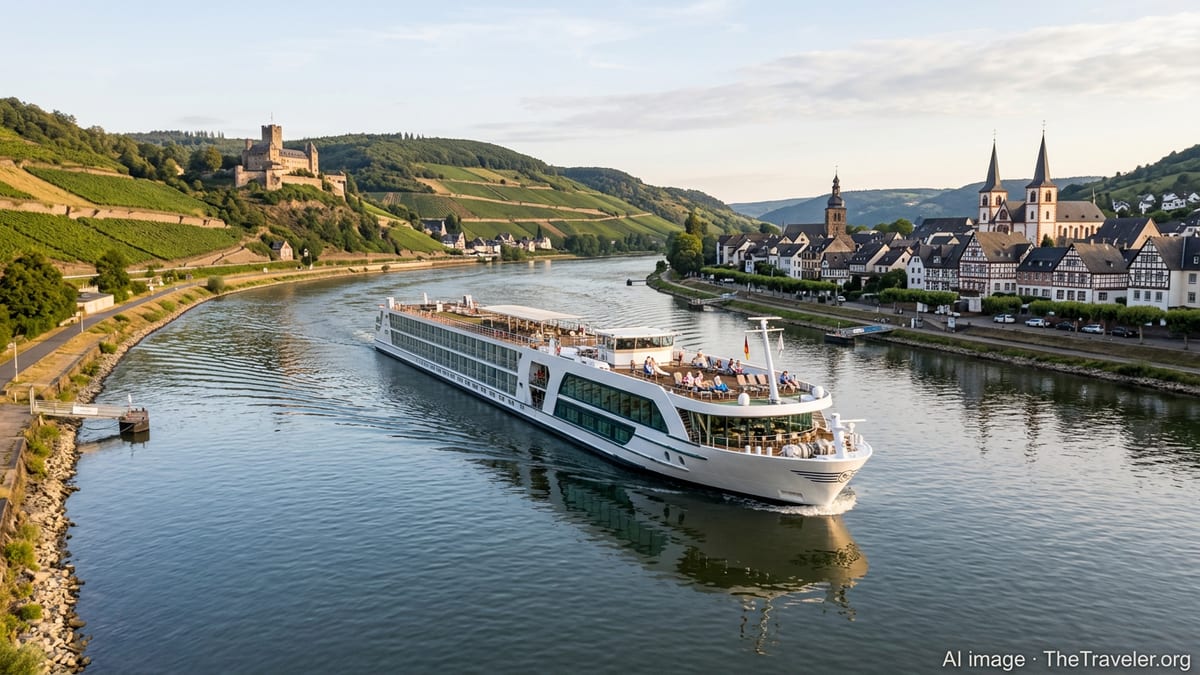
A First Purpose-Built Ship for the Growing Brand
TUI Luzia is set to become the first new-build ship for TUI River Cruises, a line that has so far grown by refurbishing existing river vessels across Europe. Industry reports indicate that the ship is being constructed specifically for the line’s needs rather than converted from an older hull, underlining a shift from opportunistic fleet expansion to long-term, purpose-designed growth.
The vessel is expected to carry around 111 passengers across four decks, positioning it at the intimate end of the river cruise market. Early specifications show a focus on combining a compact footprint suited to the bends and locks of the Douro with contemporary interiors designed for adults-only itineraries, in line with the rest of the TUI River Cruises offering.
The step from refurbishment to new-build construction is seen by analysts as a sign of confidence in the river segment, particularly given broader plans to grow the TUI River Cruises fleet to ten ships by 2028. The moment TUI Luzia touches water is viewed within the sector as a tangible marker that these long-term investment plans are moving from paper to reality.
The ship’s name, derived from the Portuguese word for “light,” is being interpreted as a nod to sunlit Douro landscapes and to the role the vessel is expected to play in broadening the brand’s geographic footprint.
Designed for the Douro’s Demands
TUI Luzia has been conceived specifically for operation on the Douro, one of Europe’s most scenic yet technically demanding river cruise routes. The waterway’s narrow locks, low bridges and winding course require custom dimensions and careful weight distribution, factors incorporated into the ship’s blueprint from the outset.
Publicly available information shows that the ship will feature a top deck with a shallow pool and sunlounger area, allowing guests to make the most of the Douro’s typically warm, dry summers while still operating within height and weight restrictions imposed by the river’s infrastructure. Designers have had to account for seasonal water-level variations and the need for reliable maneuverability through a series of dams and locks.
Inside, plans point to an emphasis on light-filled spaces, floor-to-ceiling windows and a relatively high proportion of cabins with outward-facing views, in keeping with the line’s strategy to showcase river scenery as a key part of the onboard experience. The compact passenger capacity is expected to foster a quieter, more relaxed atmosphere compared to larger ocean-going vessels.
The Douro deployment will also diversify TUI River Cruises’ regional offering, which has so far concentrated on established routes such as the Rhine and Danube. Industry observers view this as a calculated move into a river that has seen strong demand from British and Northern European travelers in recent years.
Shaping TUI River Cruises’ Expansion Strategy
TUI Luzia’s progress through construction coincides with a wider growth plan for TUI River Cruises. Corporate disclosures outline a trajectory that would take the fleet from six ships in 2026 to ten by 2028, supported by additional new-build orders for next-generation vessels planned for European rivers.
These new ships are being described in trade coverage as designed with the foundations for alternative fuels, particularly methanol, reflecting a medium-term view of tightening environmental regulation on inland waterways. Although TUI Luzia is not being presented as an alternative-fuel ship from launch, its development sits within a broader corporate narrative that links fleet renewal with evolving sustainability targets.
The brand’s recent history has been characterized by carefully timed investments: refurbishing ships such as TUI Aria to increase capacity, expanding itineraries to new ports in Central and Eastern Europe, and now commissioning purpose-built tonnage. Analysts suggest that the combination of refurbishment and new-build strategies allows TUI River Cruises to balance cost control with the need to offer modern product features.
TUI Luzia is therefore being viewed not only as a standalone vessel but also as a pilot platform for design concepts, onboard layout and service patterns that may influence subsequent ships slated to enter service towards the end of the decade.
Onboard Experience: Full Board Plus and Flexible Spaces
Preliminary information about TUI Luzia’s onboard concept points to a Full Board Plus model as standard, with guests able to upgrade to an all-inclusive package. This approach aligns with the broader TUI strategy of clearly defined price points, while giving travelers latitude to tailor their onboard spend.
The ship is expected to feature a main restaurant and at least one additional social and dining space. Early descriptions highlight a venue known as Cinder, a bar and informal eatery that will serve self-serve lunches and daily drinks. This flexible use of space reflects a wider trend in river cruising, in which smaller ships seek to provide multiple ambiences within a relatively limited footprint.
Cruise industry commentary notes that river ships, unlike many ocean vessels, must prioritize efficient use of every square meter to accommodate technical plant, crew areas and guest facilities without compromising cabin size. TUI Luzia’s layout is anticipated to follow this principle, with an emphasis on simple passenger flows and multiuse public rooms that can transition between daytime relaxation and evening entertainment.
For travelers familiar with the line’s existing ships on the Rhine and Danube, TUI Luzia is likely to feel stylistically aligned but with refinements tailored to the Douro, including more emphasis on outdoor viewing spaces and shaded seating areas to manage the region’s summer heat.
Implications for the Douro and European River Market
The arrival of a dedicated new-build from a major European tour operator is expected to further elevate the Douro’s profile among international travelers. Over the past decade, the river has shifted from niche status to a mainstay of the European river cruise portfolio, supported by improvements to port infrastructure and a growing focus on regional wine and gastronomy.
TUI Luzia’s planned 2027 deployment comes at a time when capacity on Europe’s rivers is gradually increasing but remains constrained by infrastructure and environmental considerations. Industry analysts suggest that shipbuilders and operators are increasingly focused on efficiency, emissions reduction and shore-power compatibility to meet both regulatory requirements and local community expectations.
TUI Group has highlighted innovation and environmental performance in its wider cruise operations, and observers will be watching to see how design and operational learnings from the new generation of vessels filter back into the river fleet. While technical details for TUI Luzia remain limited, its construction milestone signals a broader shift toward more modern and specialized river hardware.
For the European river cruise market, each new purpose-built ship represents both additional capacity and a statement about long-term confidence in demand. With TUI Luzia now in the water and progressing toward outfitting, river cruise watchers will be tracking how the vessel’s introduction shapes competition on the Douro and influences traveler expectations for small-ship cruising in the years ahead.