


For US-based travelers who fly Turkish Airlines or want cheap Star Alliance redemptions, the Turkish Airlines Miles&Smiles Premier Visa Signature credit card can be a powerful tool. It earns Miles&Smiles miles directly, adds valuable travel perks, and can be a shortcut to aspirational trips like business class from the US to Europe using relatively few miles. Yet the card is new enough, and the rules complex enough, that it is easy to misjudge the value, fumble the application, or get stuck with fees you did not expect. This guide walks you through how the card really works in mid‑2026 and how to get it without making costly mistakes.
Get the latest updates straight to your inbox!
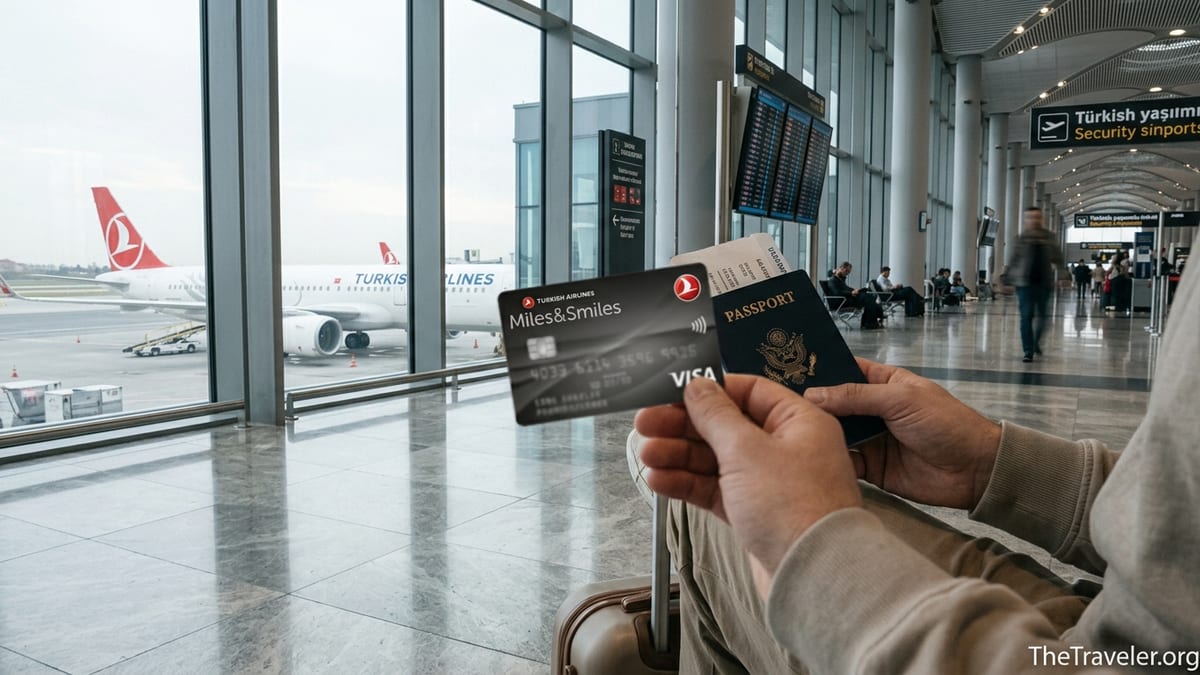
What the Miles&Smiles Premier Visa Actually Is
The Turkish Airlines Miles&Smiles Premier Visa Signature credit card is a co-branded US credit card issued in partnership with Imprint, designed for American members of Turkish’s Miles&Smiles frequent flyer program. You earn Miles&Smiles miles on your everyday spending, which you can then redeem for flights on Turkish Airlines and Star Alliance partners like United, Lufthansa, and Swiss. The card is targeted at travelers who either fly Turkish several times a year or want to tap into Miles&Smiles’ attractive award pricing from the United States.
The card charges an annual fee of about 99 dollars, billed on your first statement and every anniversary after that, which immediately sets it apart from no-fee airline cards. In exchange, it layers in airline-related perks, elevated earning on Turkish purchases, and access to Visa Signature benefits such as hotel and car rental offers. For a traveler who makes one or two round-trips to Istanbul from the US each year, or regularly books Star Alliance award flights, that fee can be recouped quickly. For someone who only flies Turkish once every few years, it can easily end up an unnecessary cost.
Because Imprint is a relatively new issuer in the consumer credit space, its underwriting and account servicing processes feel slightly different from legacy bank products from Chase or Citi. You apply online through a Turkish-branded portal, link a US checking account, and manage the card’s settings digitally. Understanding how this model works is crucial so you do not misread the approval language or accidentally hurt your credit profile.
Most importantly, this is not a generic travel cash‑back card. Your rewards are locked into Miles&Smiles miles, which are incredibly valuable for some trips and less flexible than bank currencies for others. Before you apply, it is worth deciding whether you are comfortable with that level of program loyalty.
Key Benefits, Earning Rates, and Where the Real Value Lives
The Miles&Smiles Premier Visa is built around earning airline miles quickly where you spend most. Exact earning bands can change, but the general structure gives the highest earning rate on Turkish Airlines purchases, a solid multiplier on travel or dining, and a baseline earn rate on everything else. A common pattern in mid‑2026 is something like 3 miles per dollar on Turkish Airlines tickets and onboard purchases, 2 miles per dollar on general travel, and 1 mile per dollar on everyday purchases. That means a 1,200 dollar round trip from New York to Istanbul bought directly from Turkish could earn around 3,600 miles from the card alone, before you even count flight miles from actually flying.
Where this becomes powerful is when you combine card earnings with Miles&Smiles’ award chart. On Star Alliance partners, it is still possible to book one‑way business class from the US to much of Europe for roughly 45,000 miles, and round‑trip economy tickets between the US and Turkey can hover around 90,000 miles in many cases. That means the 60,000 to 80,000 miles you might earn from a welcome bonus plus several months of targeted spending can realistically cover a transatlantic trip in a premium cabin, particularly if you can be flexible about dates and routing.
The card’s travel perks typically include standard Visa Signature protections such as secondary rental car coverage, some trip interruption coverage, and access to the Visa Signature concierge for reservations and travel planning. While these are not as rich as the protections on higher‑end premium cards, they are a noticeable upgrade from holding no travel card at all. If you regularly rent cars in Turkey or elsewhere in Europe, that rental coverage alone may save you from buying expensive agency insurance at the counter.
One subtle but important benefit is the ability to keep your Miles&Smiles account active. Turkish miles can expire after a set number of years, and extending them often requires paying a fee. Earning activity from the credit card can help demonstrate account usage and support your long‑term strategy, especially if you are slowly building toward a specific award trip such as a family vacation to Cappadocia or a honeymoon through Istanbul, Rome, and Paris.
Common Mistakes When Applying and How to Avoid Them
Travelers are often drawn in by marketing headlines like “Fly to Europe in business class for only 45,000 miles” and rush to apply without examining the details. A classic mistake is applying for the Premier Visa purely for a big welcome bonus when you have no realistic plan to redeem Miles&Smiles miles in the next couple of years. Someone who flies mostly domestic US routes on low‑cost carriers, rarely touches Star Alliance, and does not plan an international trip can easily end up paying the 99 dollar annual fee year after year while their miles sit unused.
Another common error is misunderstanding the credit underwriting process. Because the card is issued by Imprint rather than a traditional big bank, the approval flow may ask you to connect to your checking account or verify your income in different ways. Some applicants stop halfway, assuming they were denied, when in fact the application is just pending documentation. That can lead to multiple applications submitted in frustration, potentially generating several hard pulls and more confusion. The smarter path is to complete all requested steps once, then wait for a clear email confirmation of approval or denial instead of trying again immediately.
A third costly mistake is ignoring how the welcome bonus spending requirement fits into your real budget. For example, if the bonus requires 5,000 dollars in purchases within three months, but your normal spending is closer to 1,200 dollars over that period, you may be tempted to overspend on discretionary items or prepay large bills with fees. One US‑based reader of The Traveler described charging an unnecessary 2,000 dollar furniture upgrade and carrying a balance at a high interest rate just to finish the requirement. In the end, the bonus miles cost them far more than a paid economy ticket to Istanbul would have.
Finally, applicants sometimes assume that holding the Premier Visa alone will grant them Miles&Smiles Elite or Elite Plus status. While some international co‑branded cards in other markets do offer status or status miles, the US Premier Visa does not automatically make you an elite. If you are counting on lounge access or priority services for a complex family trip through Istanbul, double‑check your actual Miles&Smiles status rather than assuming the card itself unlocks those privileges.
Planning Your Strategy Before You Hit “Apply”
The best way to avoid regret is to map out how the card will fit into your next 12 to 24 months of travel before you ever see a credit pull. Start with a concrete itinerary plan. Perhaps you want to fly Los Angeles to Istanbul in business class next May, or you are hoping to book United or Lufthansa business from Chicago to Munich using Miles&Smiles miles. Pull up sample award searches in the Miles&Smiles interface to confirm that routes you care about typically price at around 45,000 to 60,000 miles one‑way in business, and note how frequently seats appear on your preferred dates.
Then, look at your existing credit cards. If you already hold a premium travel card with broad travel credits and lounge access, the Premier Visa’s main job might be as a mileage‑earning tool rather than a perks card. You could, for example, decide to put all Turkish ticket purchases and some international dining on the Premier Visa to earn Miles&Smiles directly, while still charging hotel stays and non‑Star Alliance flights to a card that earns flexible bank points. The key is deciding which categories you will actually shift, instead of vaguely hoping to “use it a lot.”
Budget realistically for the welcome bonus. If you typically spend 1,500 dollars a month on combined groceries, gas, and discretionary shopping, then a 5,000 dollar requirement over three months is manageable without lifestyle inflation. If your monthly spending is closer to 800 dollars, you might wait to apply until you know you have a major expense coming, such as paying for a 3,500 dollar Turkish Airlines family itinerary or covering a semester of university tuition that accepts card payments with minimal fees.
Also consider your overall credit profile. Adding another annual‑fee card when you are already juggling several can increase the risk of missed payments or confusion over due dates. Set up automatic payments from day one, ideally in full, so you never fund your miles with interest charges. If you are planning to refinance a mortgage or take out a major auto loan within the next few months, you may want to hold off on any new credit applications, including this card, to present a cleaner profile to lenders.
Maximizing Miles&Smiles Redemptions With the Premier Visa
Once you have the card in hand and the miles start to post, the next set of pitfalls comes from using Miles&Smiles poorly. Turkish’s program is known for generous pricing but also for a sometimes finicky website and limited partner availability. To get good value, you need patience and a willingness to search for options over multiple days and routes. For instance, if you want to fly business from Washington, DC to Paris using Miles&Smiles miles, it may be easier to find availability via Istanbul or on partners like Swiss or Austrian rather than insisting on a nonstop on a specific date.
Think in concrete numbers. Suppose your Premier Visa welcome bonus and first‑year spending yields 80,000 miles. One classic strategy is to use 45,000 miles for a one‑way Star Alliance business class ticket from New York to Frankfurt or Zurich, and save the remaining 35,000 for a shorter‑haul trip, such as economy flights within Europe or a one‑way economy ticket between the US and Turkey. Alternatively, you could save until you reach around 90,000 miles and book a round‑trip economy itinerary between the US and Istanbul, which often prices at about that level, particularly when flying on Turkish metal.
The card’s ongoing earning can also be targeted at top value redemptions. Frequent US‑to‑Turkey travelers can charge their annual summer trip tickets to the Premier Visa, earning 3 miles per dollar or more and then rolling those miles into a future award to another destination. For example, a family that spends 3,000 dollars each year on Turkish flights from Chicago to Istanbul could earn roughly 9,000 miles annually from the card alone, enough over a few years to top off an account for an extra award ticket to London or Madrid.
Be attentive to surcharges and fees on some partner awards. While the miles price may be low, taxes and carrier‑imposed surcharges can vary by airline and route. Booking Lufthansa business class to Europe with Miles&Smiles miles might involve higher surcharges than flying United or Turkish Airlines. When you search, always compare the total cash due at booking for a couple of different options so that you do not accidentally spend 45,000 miles and 400 dollars in fees when another routing would have required 45,000 miles and only 120 dollars.
Fees, Interest, and Fine Print That Trip Up Cardholders
Even savvy travelers sometimes lose money on airline cards by underestimating ongoing costs. The Premier Visa’s annual fee, around 99 dollars, is the obvious one. At a minimum, your first‑year benefits should exceed that amount in real value. For example, if the welcome bonus enables a 1,500 dollar business class ticket you would not otherwise buy, and you are comfortable valuing that at roughly 600 dollars of personal value, the 99 dollar fee is easily justified. In contrast, if your use case is a single 200 dollar economy flight, the math becomes weaker.
Interest charges are another common trap. Like most co‑branded airline cards, the Premier Visa carries a variable annual percentage rate that is not designed for revolving balances. If you charge a 1,000 dollar Turkish ticket to the card and then take six months to pay it off, the interest could wipe out the value of the miles earned, especially if the APR sits in the low‑to‑mid‑20 percent range. Treat this card as a tool for rewards and protections, not as a line of long‑term financing. Set up automatic full‑balance payments and consider keeping a back‑up emergency fund rather than letting your travel habits run on credit.
It is also important to understand how refunds and chargebacks affect your miles. If you book a Turkish Airlines ticket using the Premier Visa, earn miles from the spend, and then later cancel for a refund, the associated miles from the card spend may be clawed back. That is perfectly normal from the issuer’s perspective, but it can be confusing if you are planning an award trip around those miles. Always wait until bonuses and statement cycles have fully closed and the travel plans are locked in before committing miles to a critical redemption like a complex multi‑city honeymoon.
Finally, read the rewards and benefits terms carefully for any references to lounge access or upgrade certificates. Some US travelers have mistakenly assumed that “Visa Signature” plus “airline card” implies automatic lounge entry, only to find themselves turned away from Turkish’s flagship Istanbul lounge because their boarding pass did not show Elite or Elite Plus status. The card can complement elite status, but it is not a substitute for it.
Real‑World Scenarios: Who Should and Should Not Get This Card
Consider three typical readers of The Traveler. First is Sara, a New York–based consultant who visits Istanbul twice a year and often connects onward to cities like Tbilisi and Baku. She typically flies Turkish in economy, books directly on the airline’s website, and values the idea of occasionally upgrading to business class using miles. For her, the Premier Visa is compelling. Charging 3,000 to 4,000 dollars a year in Turkish tickets could generate a sizable stack of miles, and a welcome bonus might put her within reach of a 45,000‑mile business class segment on the eastbound overnight leg.
Second is Michael, a Denver‑based traveler whose main goal is to reach Europe in comfort using miles, but who is agnostic about which airline he flies. He already has a flexible‑points card that transfers to multiple airlines, including Turkish, but he rarely flies Turkish metal itself. In his case, the Premier Visa may be more of a niche play. If he is committed to learning the quirks of the Miles&Smiles website and specifically wants access to its low business class pricing on partners like Swiss or Austrian, the card’s direct‑earn miles could make sense. If not, doubling down on general bank points might be simpler.
Third is Jasmine, a casual US traveler who flies domestically once a year and dreams of visiting Istanbul “someday” but has no concrete plan. She is attracted to the idea of an airline card but does not currently fly Star Alliance or long‑haul routes. For Jasmine, the Premier Visa is likely a poor fit. The annual fee, the complexity of Miles&Smiles, and the program’s international focus mean she is better served with a no‑fee cash‑back card or a general travel card that earns points she can use on any airline through a booking portal.
Putting yourself honestly into one of these categories can save you time and money. Your biggest mistake is not in picking the wrong card, but in picking a card whose strengths do not match your next few years of real‑world travel.
The Takeaway
The Turkish Airlines Miles&Smiles Premier Visa Signature credit card can unlock excellent value for travelers who either fly Turkish regularly from the United States or want to take advantage of Miles&Smiles’ favorable award chart on Star Alliance partners. Used strategically, it can turn a few months of directed spending and a welcome bonus into a lie‑flat business class seat to Europe, or help you stretch your budget for family trips to Istanbul and beyond.
At the same time, the card is not a magic shortcut to elite status or lounge access, and it is not ideal for casual travelers without concrete international plans. The potential for costly mistakes lies in overspending to earn the bonus, carrying a balance at high interest rates, misinterpreting the benefits, or letting miles sit unused while you pay an annual fee.
Before applying, map out your likely travel, run the numbers on how many miles you can realistically earn, and compare that to the specific awards you want to book. If the math and your habits line up, the Miles&Smiles Premier Visa can be a smart anchor card in an international travel strategy. If not, keeping your wallet simpler and your rewards more flexible may be the wiser move.
FAQ
Q1. Does the Turkish Airlines Miles&Smiles Premier Visa automatically give me elite status or lounge access?
Not in the US market. The Premier Visa earns miles and can complement Miles&Smiles Elite or Elite Plus status, but it does not on its own provide Star Alliance Gold or guaranteed access to Turkish Airlines lounges. You would still need to qualify for elite status through flight activity or other program promotions.
Q2. How many miles do I really need for a business class flight from the US to Europe using Miles&Smiles?
Exact prices can change, but a common benchmark is about 45,000 miles one‑way in business class on Star Alliance partners for many US to Europe routes, and sometimes 55,000 to 67,500 miles depending on carrier and region. Always check current award charts and search specific dates before committing to a strategy.
Q3. Is the 99 dollar annual fee worth paying if I only fly Turkish once a year?
It can be, but only if that flight is part of a broader strategy. If you are earning a welcome bonus and plan to redeem for a high‑value award, or if your annual Turkish spend is high enough to generate meaningful miles, the fee can be worthwhile. If your usage is limited to one inexpensive economy ticket every couple of years, a no‑fee card may make more sense.
Q4. Can I use the Miles&Smiles Premier Visa to book award tickets for someone else?
Yes. You can redeem your Miles&Smiles miles, earned from the card and from flying, to issue award tickets in the names of family or friends, as long as you follow Turkish Airlines’ rules for award bookings. Many cardholders use this approach to cover a partner’s ticket or bring relatives to visit from Turkey or Europe.
Q5. What happens to my miles if I cancel the Premier Visa?
Cancelling the credit card does not automatically delete Miles&Smiles miles already in your airline account. However, you will stop earning from card spend, and you will lose any card‑linked perks. Your miles will then be subject to the standard Miles&Smiles expiration rules, so you should have a plan to use them or extend them under program policies.
Q6. Do I have to buy tickets directly from Turkish Airlines to earn bonus miles with the card?
In most cases, yes. Elevated earning rates for Turkish Airlines purchases typically apply when you buy directly from Turkish, such as on the website, mobile app, or ticket offices. If you book through an online travel agency or a third‑party consolidator, your purchase may only earn the base rate, so it is important to pay attention at checkout.
Q7. Can I hold the Premier Visa and still transfer points from other credit card programs to Miles&Smiles?
Yes. The Premier Visa simply adds another stream of Miles&Smiles miles. If you also hold a bank card whose points transfer to Miles&Smiles, you can combine transferred points and miles earned from the Premier Visa in the same airline account, which can help you reach large award thresholds faster.
Q8. Will having the Premier Visa improve my chances of operational upgrades on Turkish flights?
Not directly. Operational upgrades are generally based on a mix of fare class, route, load factors, and your Miles&Smiles elite status level, not on whether you hold a co‑branded credit card. The card can help you accumulate miles to book upgrades with miles, but it does not guarantee complimentary upgrades at the airport.
Q9. How long does it typically take for miles from Premier Visa purchases to post to my Miles&Smiles account?
Most cardholders find that miles from regular purchases post shortly after the statement closing date each month, rather than instantly. If you are close to an award threshold, factor in this delay and avoid last‑minute spending to try to secure an award seat for a fixed date.
Q10. Is the Premier Visa a good first travel credit card for beginners?
It can be, but only if your travel goals are clearly centered on Turkish Airlines and Star Alliance routes from the US. For beginners who are not yet sure which airlines they prefer or who mainly travel domestically, a more flexible travel card or simple cash‑back card is often a better first step. You can always add the Premier Visa later once your travel pattern is more established.