


More news on this day
Turkey’s flag carrier Turkish Airlines is riding a new wave of growth in 2026, with solid second-quarter performance closely tied to surging passenger volumes through Istanbul’s rapidly expanding aviation hub.
Get the latest news straight to your inbox!
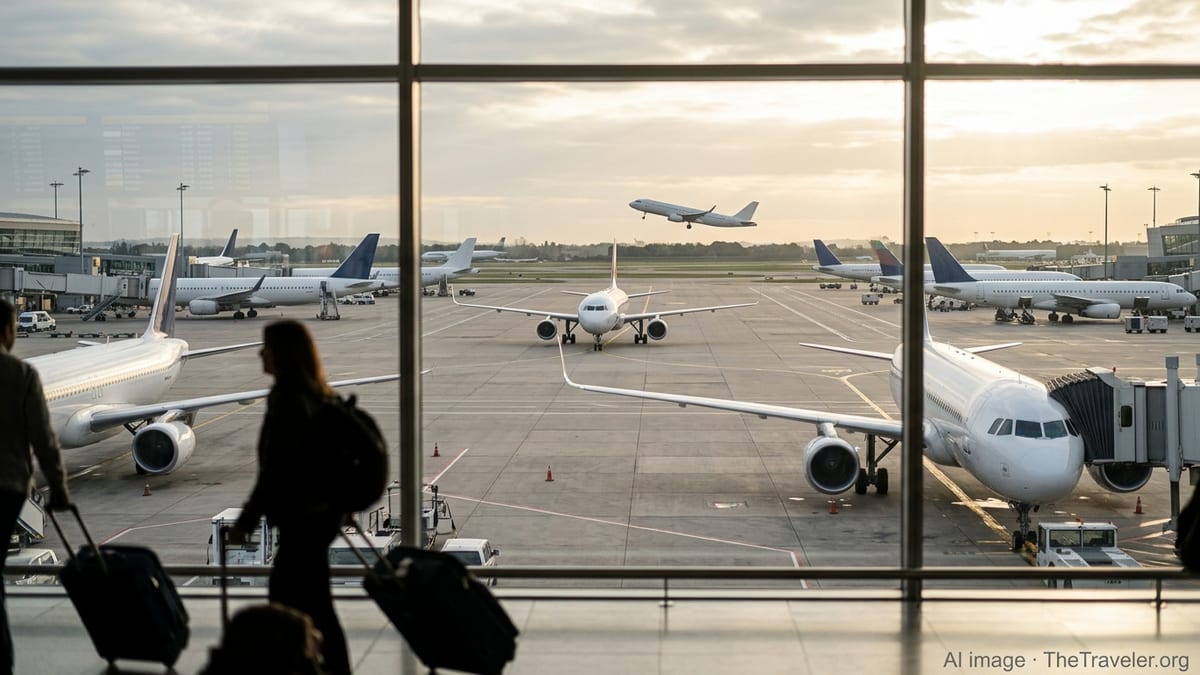
Istanbul’s Dual-Airport System Powers Network Scale
Publicly available airport data for the first half of 2026 shows Istanbul consolidating its role as one of the world’s busiest transfer points, a trend that continues to underpin Turkish Airlines’ network-focused business model. Figures from the State Airports Authority indicate that Istanbul Airport and Sabiha Gokcen Airport together handled about 63.45 million passengers in the first six months of the year, more than half of all air travelers in Türkiye.
Analysts note that this concentration of traffic in a single city allows Turkish Airlines to sustain an exceptionally dense global schedule, particularly across Europe, the Middle East, Africa and Asia. The carrier has long marketed Istanbul as a one-stop gateway between continents, and the latest traffic numbers suggest that connecting flows remain resilient despite intense competition from Gulf and European rivals.
Istanbul Airport alone is reported to have served nearly 40 million passengers in the January to June period, with Sabiha Gokcen delivering some of the fastest growth rates among major European airports. Aviation data published in recent weeks indicates that Istanbul now regularly rivals or surpasses leading European hubs by scheduled seat capacity, reinforcing Turkish Airlines’ ability to add frequencies and open new routes from a strong home base.
For Turkish Airlines’ second-quarter 2026 performance, these dynamics translate into higher load factors on trunk routes and more efficient use of widebody capacity on long-haul sectors. The carrier has continued to prioritize connectivity, timing banks of arrivals and departures through Istanbul to capture transfer traffic from secondary cities that are not always well served by other global airline groups.
Q2 2026 Traffic Indicators Point to Solid Momentum
While Turkish Airlines’ full Q2 2026 financial statement has yet to be dissected in detail by markets, the company’s monthly traffic disclosures and broader Turkish airspace statistics provide an early picture of robust operational growth. Data posted to the Public Disclosure Platform for June 2026 shows continued year-on-year gains in passenger numbers and available seat kilometers, extending the recovery and growth trend seen through 2025.
Separate figures released for Turkish airspace overall report that more than 1.1 million flights crossed the country’s skies in the first half of 2026, an increase on the previous year. This reflects not only the strength of Turkish Airlines’ schedule but also the rising importance of Türkiye as a corridor for overflights linking Europe, the Middle East, Central Asia and beyond. Higher traffic density generally correlates with strong hub activity and underpins airline revenue from both passengers and cargo.
Industry observers highlight that domestic and international passenger flows in Türkiye continued to edge higher in the first six months of 2026, even after the strong rebound from the pandemic years. Nationwide, airports handled close to 112 million travelers over the period, according to official statistics, with Istanbul’s dual-airport system capturing the largest share. For Turkish Airlines, this creates favorable conditions for both point-to-point demand and connecting traffic onto its international network.
The second quarter is typically a ramp-up period ahead of the peak summer season, and early indicators suggest that 2026 has followed that pattern. Market reports point to healthy forward bookings on European and Middle Eastern routes, as well as renewed strength on long-haul services to North America and East Asia, where Turkish Airlines continues to expand frequencies and deploy larger aircraft.
Tourism Rebound and Long-Haul Demand Support Revenues
Türkiye’s tourism sector is playing a significant role in Turkish Airlines’ recent performance. Passenger numbers into key Mediterranean and Aegean gateways, including Antalya, Dalaman and Bodrum, have risen steadily in the first half of 2026, supported by strong demand from European leisure markets. Industry coverage notes that airports serving the country’s main tourism destinations welcomed more than 23 million passengers over the six-month period, including a high proportion of international visitors.
Turkish Airlines has been able to capture a meaningful share of this traffic by feeding tourists through Istanbul onto domestic connections, while at the same time filling its long-haul flights with travelers continuing beyond Türkiye. The carrier’s network strategy, which emphasizes multiple frequency options and competitive connection times, appears to be resonating with both price-sensitive leisure passengers and higher-yield corporate travelers.
Long-haul demand has been particularly significant for revenue quality in Q2 2026. Travel industry reports indicate that transatlantic and Far East routes are seeing firm premium-cabin demand and improved yields compared with earlier years. Turkish Airlines’ widebody fleet deployment out of Istanbul, combined with the city’s role as a midway point between regions, has allowed the airline to maintain strong load factors without the deep discounting that affected parts of the market in the immediate post-pandemic period.
At the same time, cargo operations remain an important stabilizer. Although global air freight markets have cooled from their pandemic-era peak, Turkish airspace data and airport throughput figures show continued strength on key trade lanes. Turkish Airlines has traditionally leveraged Istanbul’s geographic position for cargo flows between Europe, the Middle East and Asia, and this has supported overall Q2 performance even as yields normalize.
Competitive Positioning Among Global Hub Carriers
In the broader competitive landscape, Turkish Airlines’ Q2 2026 momentum places it firmly in the group of global hub carriers benefiting from diversified traffic flows. Aviation intelligence providers continue to rank Istanbul Airport among Europe’s busiest by seat capacity, putting the Turkish carrier in direct competition with established network airlines based at London, Paris, Frankfurt and Amsterdam, as well as with hubs in the Gulf.
Recent capacity data suggests that Istanbul’s growth has been more measured than in the immediate post-reopening surge, yet it is still outpacing many peer hubs in terms of passenger totals. Sabiha Gokcen’s recognition as one of Europe’s fastest-growing major airports underscores the depth of the Istanbul market and its ability to support multiple carriers and business models, from full-service networks to low-cost operations. Turkish Airlines, with its large share of movements and seats at Istanbul Airport, remains the primary beneficiary of this growth.
Analysts point out that the airline’s strategy of serving a broad spectrum of tier-one and tier-two cities gives it resilience against regional demand shocks. With more than a hundred countries connected through Istanbul and a schedule that targets short connection times, Turkish Airlines can redirect capacity toward routes showing the strongest demand while still preserving the underlying hub structure that supports its business model.
Looking ahead to the remainder of 2026, market commentary suggests that Turkish Airlines is well positioned to sustain its expansion if macroeconomic conditions remain stable and geopolitical risks do not materially affect travel flows. Continued investment in fleet modernization, digital services and airport infrastructure at Istanbul is expected to shape how effectively the carrier can convert today’s strong traffic indicators into lasting profitability and global market share gains.