


The Tweed region of northern New South Wales is where subtropical coastline, a wide tidal river and lush volcanic hinterland all meet within an easy drive of Queensland’s Gold Coast. For travellers who like their beach time balanced with art, food, rainforest and small town life, it offers a quieter and more characterful alternative to the high-rise resort strips further north and south.
Get the latest updates straight to your inbox!
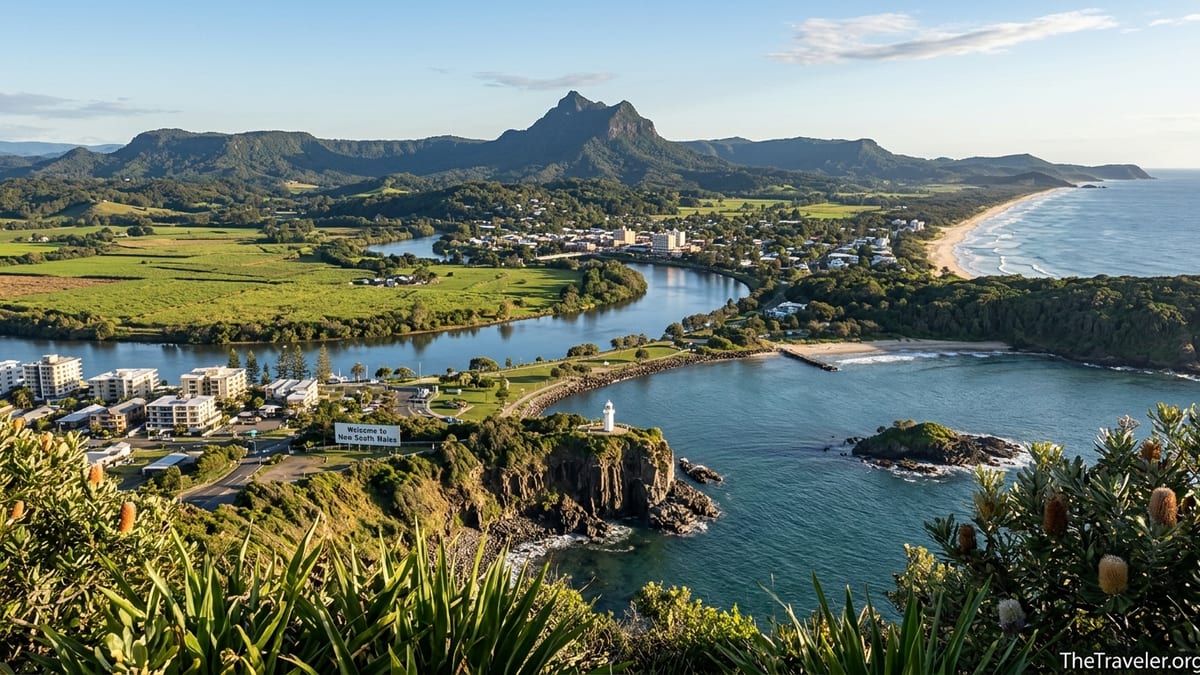
Understanding the Tweed: Where It Is and How It Fits Together
The Tweed sits in the far north of New South Wales, directly over the border from Queensland’s Gold Coast. Tweed Heads, at the mouth of the Tweed River, is the northernmost coastal city in New South Wales and merges almost seamlessly with Coolangatta on the Queensland side of the state line. From here, the Tweed Shire stretches south along the coast past Kingscliff, Casuarina, Cabarita Beach, Hastings Point and Pottsville, and inland along the river valley to the town of Murwillumbah and the surrounding rural villages.
Tweed Heads feels like the Tweed’s urban hub, with apartments, clubs, shopping centres and medical services, but step a few minutes down the coast and the character changes. Kingscliff is a low-rise beach town set around a long, patrolled surf beach and a dining strip along Marine Parade. South again, Cabarita Beach fronts a beautiful headland and surf break, with a compact village focused on holiday apartments, a caravan park and a well-known boutique hotel. Pottsville has more of a residential and family-holiday feel, wrapped around an estuary, caravan parks and a small café cluster near the beach.
Murwillumbah, inland on the Tweed River, is the historic heart of the shire. It has art deco and federation-era main streets, the Tweed Regional Gallery just outside town and easy access to cane fields, dairy country and rainforest-clad hills. Beyond Murwillumbah lie rural hinterland communities such as Uki, Tyalgum, Burringbar and Tumbulgum that feel a world away from the coast, reached by winding roads with views back to the volcanic rim.
It helps to distinguish the Tweed Shire from the neighbouring Gold Coast and Byron areas. The Gold Coast lies entirely in Queensland and includes Surfers Paradise, Broadbeach and Burleigh Heads, while Byron Bay and Brunswick Heads are in Byron Shire further south in New South Wales. Tweed attractions such as Fingal Head, Point Danger, Kingscliff or the Tweed Regional Gallery are all in New South Wales, under the Tweed Shire local government, even though many visitors stay on the Gold Coast and cross the border for day trips.
Coastal Towns, Beaches and Walking Routes
Kingscliff Beach runs for several kilometres, with main access near the Marine Parade shops and the central park. The beach is usually patrolled by lifesavers in the warmer months, roughly from spring to late autumn, with flagged areas clearly signposted. Conditions range from gentle shore breaks to stronger surf after swells or storms. Families with younger children often use the northern stretch near the creek mouth on calm days when the tidal flow is lighter, while confident swimmers and surfers head for the open beach sections. Parking is free but time-limited around the main foreshore, with larger untimed areas a short walk away.
To the south, Cabarita Beach combines a sweeping sandy bay with the short walk up Norries Headland for expansive coastal views. The headland track is a manageable sealed path and stairs that most visitors can tackle in 10 to 20 minutes each way, although it can be slippery after rain. The beach is popular with intermediate and advanced surfers; the headland creates rips and shifting banks, so swimming is safest between any seasonal flags and on days when conditions are calm. There is a foreshore car park behind the dunes, which can fill quickly during school holidays, so arriving early in the day is sensible.
Fingal Head, north of Kingscliff but still in Tweed Shire, offers a quieter coastal experience. A short sandy walking track leads from the village to the headland and its basalt columns, with views to Cook Island just offshore. The main Fingal beach has a local surf club that patrols the sand across the warmer months, though exact hours change through the season, so visitors should check patrol times on arrival and always swim between the red and yellow flags. Surf conditions can vary from gentle to hazardous, especially near the river mouth; heed any warning signs and avoid rock fishing in heavy swell.
Point Danger, sitting right on the state border above Duranbah Beach, provides a panoramic lookout over the river mouth, Tweed bar and both the New South Wales and Queensland coastlines. There are short, paved paths suitable for most visitors and free parking around the memorials. Confident walkers often combine foreshore paths between Greenmount, Rainbow Bay and Point Danger on the Queensland side with riverside paths on the Tweed Heads side, creating a scenic coastal loop without needing a car once they have reached the area.
The Tweed River: Walks, Cruises, Kayaking and Fishing
The Tweed River shapes much of the region’s character. Broad and tidal near its mouth, it narrows and winds through sugar cane fields and dairy farms as it approaches Murwillumbah and the upper valley. In Tweed Heads and Chinderah, shared paths follow the riverbank, passing fishing spots, boat ramps and picnic areas. These flat paths suit relaxed evening strolls or family bike rides and give good views of the changing light over the water and hinterland ranges.
A range of operators run river cruises from Tweed Heads and Terranora in most seasons, often focusing on wildlife, lunch cruises or sunset departures. Some small-group tours use quieter side channels to look for birdlife such as pelicans, sea eagles and herons, and may include commentary on the river’s history, mangrove ecosystems and Indigenous stories shared with permission. Kayak and stand-up paddleboard hire is available at several points along the lower Tweed and its creeks, especially near Tumbulgum and Cudgen Creek, for those who prefer to explore under their own power in sheltered waters.
Fishing is part of everyday life along the Tweed, with local anglers targeting flathead, bream and whiting from the riverbanks, rock walls and small boats. Visitors who want to fish need to check New South Wales recreational fishing licence requirements and current bag and size limits before heading out. Bait and tackle stores in Tweed Heads, Kingscliff and Murwillumbah can advise on seasonal species, safe locations and any temporary closures after heavy rain or flooding, when water quality can be affected.
Environmental awareness is increasingly central to how the river is used. Floods in recent years have highlighted how quickly conditions can change, particularly in the wetter months from late summer into autumn. Many cruise and kayak operators now emphasise low-impact practices such as staying clear of nesting sites, using electric or low-emission motors on smaller vessels and collecting any rubbish encountered along the way. Travellers can contribute simply by sticking to established launch sites, avoiding sensitive mangrove roots and saltmarsh, and taking all waste back to shore.
Murwillumbah, Art and Food in the Hinterland
Murwillumbah sits on a bend of the Tweed River framed by views to Wollumbin and the surrounding caldera peaks. Its compact town centre features art deco facades, traditional pubs and a growing cluster of cafés and bakeries. Weekdays bring a steady rhythm of locals running errands and farmers in high-vis workwear, while weekends see more day-trippers and road cyclists stopping for coffee and pastries before or after exploring nearby villages like Uki and Tyalgum.
On a ridge a short drive outside town, the Tweed Regional Gallery and Margaret Olley Art Centre has become one of the region’s cultural anchors. According to current gallery information, it opens from Tuesday to Sunday during daytime hours, with free general admission and occasional ticketed special exhibitions. The complex combines rotating exhibitions of Australian and regional art with the dedicated Margaret Olley wing, where rooms from the famous painter’s Sydney home studio have been carefully re-created. Large windows frame views over the river and valley, and there is a café that uses local produce where possible.
Across Murwillumbah, old industrial spaces and riverfront warehouses now house small galleries, studios and creative businesses. Pop-up exhibitions, live music evenings and makers’ markets occur throughout the year, often timed around weekends or school holidays. The town’s main farmers’ market, typically held weekly at a showground or community site, brings together stallholders selling Tweed-grown fruit and vegetables, artisan bread, small-batch coffee, macadamia products and locally produced cheeses. Sugar cane, bananas, avocados and pasture-based dairy remain mainstays of regional agriculture, and more visitors are encountering these products through paddock-side stalls and farm-gate shops in the valley.
The food scene reflects both this agricultural base and the region’s proximity to Brisbane and the Gold Coast. In and around Murwillumbah you will find casual cafés serving single-origin coffee and baked goods, family-run Asian restaurants, country pubs with large verandas and more contemporary venues experimenting with seasonal menus and natural wines. Compared with Byron Bay, many travellers notice that prices for a good café breakfast or bistro dinner are a little gentler, and bookings outside peak holiday weekends are easier to secure.
Volcanic Landscapes, Rainforest Parks and Wollumbin
The Tweed region sits within one of the world’s largest erosion calderas, formed from the long-extinct Tweed volcano. Wollumbin, also known as Mount Warning, is the central remnant plug that rises above the surrounding farmlands. Its silhouette, visible from many points along the coast and river, has deep spiritual significance for Bundjalung peoples and other First Nations communities connected to this country.
Visitors should be aware that the Wollumbin summit track and the Aboriginal Place at the summit are officially closed to the public at least until 30 June 2027, under New South Wales National Parks regulations. The closure reflects both long-standing Aboriginal cultural concerns about people climbing a sacred site and safety and erosion issues on the track. Travellers should not attempt to access closed areas or seek informal routes; instead they can appreciate Wollumbin from designated lookouts, roadsides and galleries that frame the mountain respectfully from a distance.
For those wanting to immerse themselves in rainforest, Nightcap National Park lies to the south-west of the Tweed in the wider Northern Rivers region. Access from the Tweed is usually via Murwillumbah and Uki, then over the hills toward villages such as Nimbin or via the Kyogle Road, depending on which section of the park is open. Shorter, more accessible walks take visitors through World Heritage listed Gondwana Rainforests, with boardwalks and graded tracks to waterfalls and giant trees. After periods of heavy rain or landslip, roads and some walking tracks can close at short notice, so it is essential to check the latest park alerts before driving in.
Border Ranges National Park, to the west on the Queensland border, offers dramatic lookout points over the Tweed caldera and into Lamington National Park. Access is by mountain roads, typically requiring at least a standard vehicle and confident driving on unsealed surfaces in sections. Popular stops include lookouts near the rim and short loop walks through mossy, high-altitude rainforest, while longer day walks require good fitness, sturdy footwear, wet-weather gear and food and water for the day. Many visitors base themselves in Murwillumbah or Uki, then commit a full day to driving up into the ranges and back without rushing.
First Nations History and Respectful Cultural Experiences
The Tweed lies within the traditional lands of Bundjalung peoples, including the Minjungbal community around the lower river and coast. Stories of the creation of the Tweed volcano, the significance of Wollumbin and long-standing connections to the river, estuaries and rainforest country underpin much of what visitors see today, even when this is not immediately obvious in the landscape.
Travellers interested in Aboriginal culture should look for Indigenous-led or co-designed experiences, such as guided walks that interpret local plants and seasonal foods, cultural performances at community events or educational centres that work directly with Traditional Owners. These change over time and are often promoted through visitor information centres in Tweed Heads and Murwillumbah or regional tourism bodies. When choosing tours, preference operators that name the communities they partner with and describe how they share fees or decision-making.
Respectful behaviour in culturally significant areas includes keeping to marked tracks, not climbing or entering locations that Traditional Owners have asked visitors to avoid, and refraining from taking photos of certain sites if requested. At Wollumbin, the current closure of the summit track is both a safety measure and a response to cultural concerns, so ignoring it is considered deeply disrespectful. More broadly, engaging with local stories on their own terms, listening before asking personal questions and understanding that some knowledge is not for public sharing are all part of being a considerate guest.
Many local festivals, markets and gallery programs now incorporate First Nations artists, performers and stallholders. Buying artworks, bush foods or hand-crafted items directly from Aboriginal makers, when available, is one meaningful way to support community livelihoods and maintain living cultural practices, provided the work is clearly attributed and fairly priced.
Getting Around, Time Zones and Practicalities
Most visitors arrive via Gold Coast Airport at Bilinga, which sits only a few kilometres from Tweed Heads. The terminal is on the Queensland side of the border, but Tweed accommodation in Coolangatta-Tweed Heads can be reached by taxi or rideshare in around 10 minutes in light traffic. Public bus route 760 runs from the airport to Tweed Heads and also north to Varsity Lakes and Robina, connecting with the Gold Coast’s tram and train network. Services usually operate at least every 30 to 60 minutes during the day, with reduced frequency at night.
Brisbane Airport lies roughly 90 to 120 minutes’ drive to the north, depending on traffic. Travellers can connect from Brisbane Airport to the Tweed using an airport train to Brisbane city and then onward train and bus combinations to the southern Gold Coast and Tweed Heads. Because these multi-stage journeys require careful timetable coordination and can be affected by weekend track work, many visitors choose a direct coach transfer or pick up a rental car at either Brisbane or Gold Coast airports instead.
In practice, having a car greatly expands what you can see in the Tweed, particularly if you plan to visit hinterland villages, national parks or beaches away from Tweed Heads and Kingscliff. Several national and local car hire firms operate near Gold Coast Airport and around Tweed Heads, with recent advertised daily rates for a basic compact car often starting somewhere in the tens of Australian dollars per day outside peak holiday periods, and higher for SUVs and school holiday dates. Parking in the main business areas of Tweed Heads, Kingscliff, Cabarita, Pottsville and Murwillumbah is generally free but time-limited in central streets, with untimed spaces a little further out.
One quirk of visiting the Tweed is the New South Wales and Queensland time-zone difference during daylight saving. Queensland does not observe daylight saving, while New South Wales does, usually from early October to early April. That means that for much of the peak beach season, Tweed Heads, Kingscliff and Murwillumbah are one hour ahead of the Gold Coast, even though they sit side by side. This can complicate airport transfers and tour departures. As a rule of thumb, always confirm whether given times are in Queensland or New South Wales time, especially for flights, bus services and restaurant bookings.
Where to Stay and What It Costs
Tweed Heads and adjoining Coolangatta form the most urban accommodation cluster, with a mix of high-rise apartments, mid-range hotels, motels and holiday parks. This area suits visitors who want easy walking access to both Gold Coast and Tweed beaches, supermarkets, clubs and regular public transport. Nightlife is livelier here than in smaller Tweed towns, with venues that stay open late and a steady buzz during school holidays, though many streets are quiet by big-city standards.
Along the Tweed Coast, Kingscliff and Cabarita Beach are popular for their family-friendly yet upmarket feel. Kingscliff’s beachfront stretch combines serviced apartments, a few resort-style complexes, holiday homes and caravan parks strung along the foreshore. Cabarita, though smaller, offers stylish boutique hotels and holiday rentals within walking distance of the headland and cafés. In both towns, true beachfront or ocean-view properties often command some of the highest nightly rates in the region, especially during Christmas, New Year and Easter school holidays, while properties a few blocks back from the water or in nearby villages can be notably less expensive.
Murwillumbah and the rural hinterland appeal to travellers who prioritise space, views and quieter evenings over immediate beach access. Around Murwillumbah you will find motels, guesthouses, small hotels and riverbank cabins. Out in the hills, former farmhouses have been converted into self-catering cottages, eco-lodges and architect-designed retreats that look across rolling paddocks to the caldera rim. These rural stays may require driving on unlit roads at night and usually demand a rental car, but they offer dark skies, bird calls at dawn and the feeling of being embedded in the landscape rather than just visiting it.
On costs, the Tweed sits roughly between the Gold Coast and Byron Bay. Beachfront accommodation in Kingscliff or Cabarita can approach Gold Coast prices in peak weeks, while inland stays, Tweed Heads motels and holiday parks tend to be more affordable. Day-to-day expenses such as café meals, groceries and casual activities are often lower than in central Byron Bay, though still higher than in inland country towns. When planning a detailed budget, it is worth checking a few real-time accommodation and car hire quotes for your intended month of travel and building your figures from there, rather than relying on averages that shift with fuel prices, exchange rates and demand.
Weather, Seasons, Budgets and Itineraries
The Tweed has a humid subtropical climate with warm to hot summers and mild winters. From about November to March, daytime temperatures often sit in the high 20s to low 30s Celsius, with high humidity and the chance of heavy afternoon showers or thunderstorms. This period also overlaps with the broader cyclone season in the Coral Sea, which can generate large swells, strong currents and beach erosion along the Tweed Coast even when storms stay far offshore. Lifesavers may close beaches or limit swimming on days of hazardous surf.
Autumn and winter, roughly April to August, bring cooler but still comfortable days that suit hiking, hinterland drives and long beach walks. Ocean temperatures usually stay warm enough for swimming without a wetsuit well into autumn, with cooler but manageable water through winter for those used to temperate conditions. The region receives significant rainfall across the year, with some of the heaviest falls linked to east coast lows and La Niña phases. Flooding of the Tweed River and its creeks can cut roads and close walking tracks; visitors should check local weather and emergency service updates if heavy rain is forecast.
Daily budgets vary, but some broad planning figures are possible. A budget-conscious couple might secure a basic motel in Tweed Heads or Murwillumbah and a compact rental car for a combined cost in the low to mid hundreds of Australian dollars per day in shoulder seasons, then allow additional funds for fuel, groceries, a café meal or two and paid activities such as a river cruise or gallery exhibition. Families booking self-contained apartments near the beach, larger vehicles and multiple paid attractions will spend more, especially in school holidays. Free or low-cost experiences, from patrolled beach days and riverside walks to gallery visits with free admission, help balance the overall spend.
For an indicative three-day stay focused on the coast, you might base yourself in Kingscliff or Cabarita and spend one full day exploring local beaches and the headland walks, a second day taking a Tweed River cruise and visiting Fingal Head, and a third day driving as far as Pottsville and back with café stops and creek swims. A five-day itinerary allows you to add Murwillumbah and the Tweed Regional Gallery, plus a sampler drive into the hinterland to villages like Uki or Tyalgum. With a full week, you can incorporate a dedicated rainforest day in Border Ranges or Nightcap National Park, spread your beach time more thinly across quieter coves and estuaries, and build in rest days to account for humid weather or wet spells.
How the Tweed Compares and Final Considerations
Comparing the Tweed with nearby destinations helps clarify what sort of traveller it suits. The Gold Coast offers denser high-rise accommodation, extensive public transport, shopping centres and theme parks, along with busy beaches and nightlife zones. Byron Bay, to the south, leans toward boutique, bohemian and wellness-oriented experiences but now faces heavy visitor numbers, higher average prices and congestion on its small road network during peak times.
The Tweed, by contrast, feels more residential and locally grounded. Its beaches are lined with low-rise apartments, holiday parks and nature reserves rather than continuous skyscrapers, and many venues primarily serve locals as well as visitors. You are more likely to share a headland lookout with a dog walker than a tour bus, especially outside school holidays. This does mean fewer big-ticket attractions and nightlife options, but for many travellers, the trade-off in space, quiet and the mix of river, coast and hinterland is worthwhile.
There are, however, real drawbacks to consider. Car dependence is significant once you move beyond Tweed Heads and central Kingscliff. Public buses link the main towns, but frequencies drop at night and on weekends, and services rarely reach trailheads in national parks or the smaller hinterland lanes where rural retreats are located. Many activities are weather-sensitive: strong surf can close beaches, heavy rain can make rainforest tracks slippery or unsafe, and fog or cloud can obscure the views that make long drives into the ranges worthwhile. Travellers without private transport may find it challenging to combine beaches, river and hinterland in a short visit.
For those prepared to embrace its rhythms, the Tweed rewards slow, attentive travel. Planning around daylight saving time differences, checking up-to-date park alerts and surf conditions, and building flexibility into your itinerary will make the most of what the region offers. The combination of coastal towns, a living river system, fertile farmlands and rainforest-clad volcanic remnants creates a sense of place that feels distinct from both the Gold Coast glitter to the north and the well-trodden paths of Byron Bay to the south.