


More news on this day
Hong Kong downgraded its storm warning on Sunday as Typhoon Noul weakened and moved further away, but about 360 flights were cancelled and thousands of passengers continued to face delays and disruption at one of Asia’s busiest aviation hubs.
Get the latest news straight to your inbox!
Storm signal lowered as Noul weakens
According to publicly available information, the Hong Kong Observatory replaced the No. 3 Strong Wind Signal with the No. 1 Standby Signal on Sunday afternoon as Noul weakened from a severe tropical storm and tracked west of the city. The step-down followed an earlier downgrade from the No. 8 Gale or Storm Signal to No. 3 around midday, marking a rapid easing in official warnings as winds gradually subsided.
Reports indicate that rain bands and occasional strong gusts were still affecting parts of the territory, particularly over the western New Territories and offshore waters, although the core of the system had already moved inland over southern China. Forecasters noted that localised squalls and showers would likely persist into the evening, but the risk of destructive winds in the urban areas had diminished.
The city’s tiered tropical cyclone warning system, which jumps from T1 to T3 and then to higher alerts such as T8 and T9, is closely watched by residents, businesses and travellers. The downgrade sequence on Sunday signalled a shift from severe disruption during the night and early morning to a cautious return to routine in the afternoon.
Major disruption at Hong Kong International Airport
Flight operations at Hong Kong International Airport were heavily affected throughout the weekend as Noul approached and then passed the city. Based on figures from the airport authority and multiple media outlets, about 360 flights in total were cancelled from Saturday into Sunday, with cancellations peaking while the higher warning signals were in force.
Published coverage describes departure boards filled with cancellations and long queues at airline counters as passengers sought rebooking options. Some long-haul services were postponed until later on Sunday or into Monday, while a significant number of regional flights to mainland Chinese cities, Taiwan and Southeast Asia were scrapped altogether as carriers opted to wait for more stable conditions.
Airport data shows that more than 600 flights had been scheduled for Sunday, meaning well over half of the day’s movements were either cancelled or significantly delayed at the height of the storm. Ground handling operations were also constrained as high winds limited the use of airbridges and ground equipment, further slowing the turnaround of aircraft that did operate.
Several airlines, including low-cost and full-service carriers, announced advance cancellations on Saturday, citing the anticipated escalation of the typhoon signal. This preemptive approach limited last-minute airport congestion but still left thousands of travellers needing alternative itineraries once conditions improved.
Passengers stranded and scrambling for options
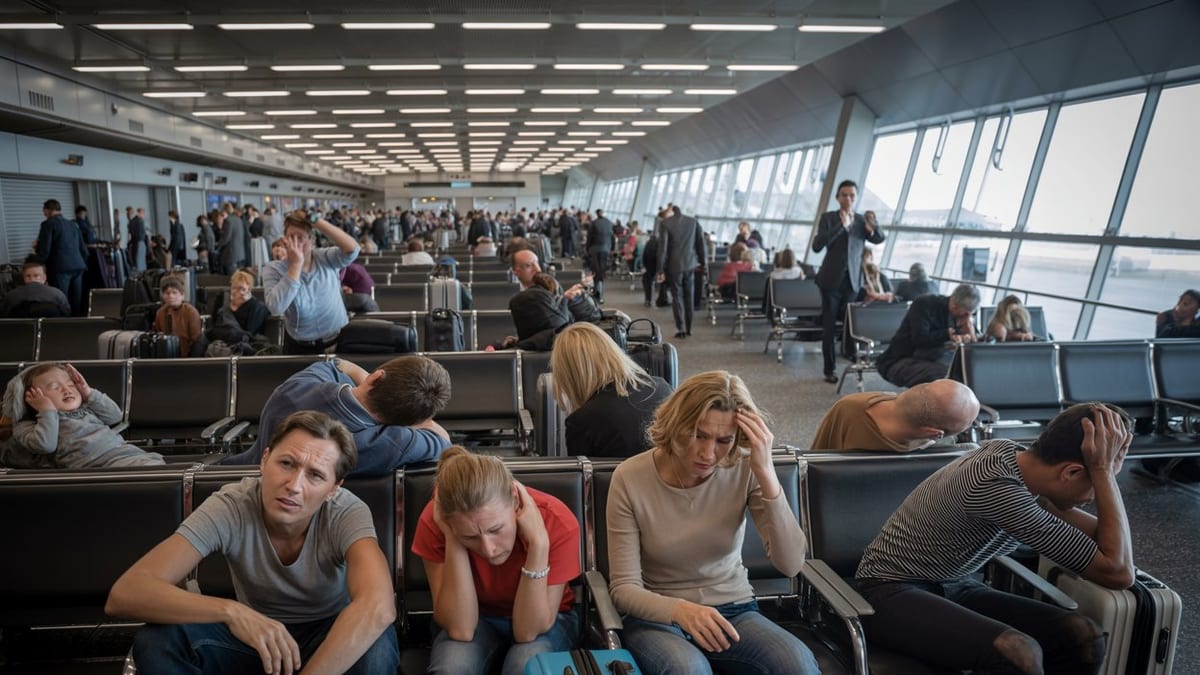
According to local news reports, around 2,000 passengers were stranded overnight at Hong Kong International Airport as Noul’s strongest winds reached the territory. Many travellers had already checked out of hotels or arrived from other cities before learning that onward flights had been cancelled, leaving them to sleep in terminal seating or on makeshift bedding.
Publicly available accounts from travellers describe crowded rest areas, long waits to speak with airline staff and difficulty securing affordable last-minute accommodation near the airport. With demand spiking, some hotels in the Lantau Island and Tung Chung area reportedly raised room rates, adding to the frustration of those unexpectedly grounded.
For connecting passengers, the disruption was particularly acute. Some travellers bound for Europe, North America and Australia missed onward connections and faced rebookings one or two days later, depending on seat availability. Others chose to re-route via alternative hubs in the region once flights gradually resumed on Sunday afternoon under the lower storm signals.
Most airlines extended change-fee waivers for passengers booked to travel during the height of the storm, allowing date or routing changes without penalty. However, travellers still needed to navigate limited seat availability at the start of the busy summer holiday period, with some opting to postpone trips altogether.
City inches toward normal as transport resumes
With the storm signal lowered, key transport services in Hong Kong began to restore more regular schedules. Reports from local operators show that airport rail services, bus routes and some ferry lines that had been reduced or suspended under higher signals gradually resumed on Sunday afternoon, although crowding and residual delays were common.
Businesses that had remained closed during the T8 and T9 warnings reopened in phases, particularly in central commercial districts and major shopping areas such as Causeway Bay and Tsim Sha Tsui. Many employers kept flexible arrangements in place for staff affected by transport disruptions or childcare issues stemming from earlier school and childcare centre closures.
Local media coverage indicates that Noul’s direct impact on the city’s infrastructure was limited compared with some past severe storms, with scattered reports of fallen trees, minor flooding and loose scaffolding rather than large-scale damage. Despite that, emergency and clean-up crews were deployed across districts to clear debris and inspect slopes before further rain bands passed over the territory.
Insurance and logistics firms are now assessing the wider ripple effects on cargo operations and supply chains. With Hong Kong serving as a major transshipment hub for goods moving between mainland China and global markets, even short-term outages at the airport and container terminals can have knock-on effects for shipments spanning retail, electronics and manufacturing sectors.
Travellers urged to stay alert as typhoon season continues
Meteorological agencies across the region highlight that Noul is one of several tropical systems to affect the South China Sea this season, and sea-surface conditions remain conducive to further storm development in the coming weeks. Historical records for Hong Kong indicate that strong typhoons can still form and impact the city well into September and October.
Airlines and travel operators are encouraging passengers with upcoming itineraries during the summer and early autumn period to monitor weather forecasts closely and to check flight status before heading to the airport. Many carriers now offer real-time notifications via mobile apps or text messages, which can provide earlier warning of schedule changes when storm signals are raised.
Travel industry commentators note that the disruption surrounding Noul underlines the importance of flexible booking policies and comprehensive travel insurance, particularly for complex itineraries involving multiple connections. For visitors, booking accommodation with generous change terms and allowing buffer time around key events or cruises can reduce the risk of missed departures.
As Hong Kong’s skies gradually clear, attention is already turning to the next potential storms forming in the Western Pacific. For now, with the warning signal back to T1 and flight schedules slowly stabilising, travellers and the city’s tourism sector are focused on recovering from one of the most disruptive weather events of the current typhoon season.