


More news on this day
A newly updated U.S. travel advisory for France, issued on October 21, 2026, is putting fresh attention on how Americans plan and experience trips to one of the world’s most visited countries, as security alerts and images of street protests raise questions about safety, itineraries and insurance coverage.
Get the latest news straight to your inbox!
Advisory Raised in Profile, Not in Level
Publicly available information from the U.S. Department of State shows that France remains at Level 2 on the four-tier U.S. travel advisory scale, meaning travelers are urged to “exercise increased caution” rather than avoid travel outright. The most recent update for France, dated October 21, 2026, cites the risk of terrorism and ongoing civil unrest as the key reasons for the alert, following several weeks of demonstrations that have periodically turned violent in major cities.
The wording aligns with a broader Worldwide Caution notice that the State Department issued in July 2026, advising U.S. citizens everywhere to maintain a higher level of awareness in light of global tensions and the risk that locations associated with the United States could be targeted. While that global alert is not specific to France, its coexistence with an elevated France advisory is prompting many U.S. travelers and tour planners to reassess how they interpret risk when booking European trips.
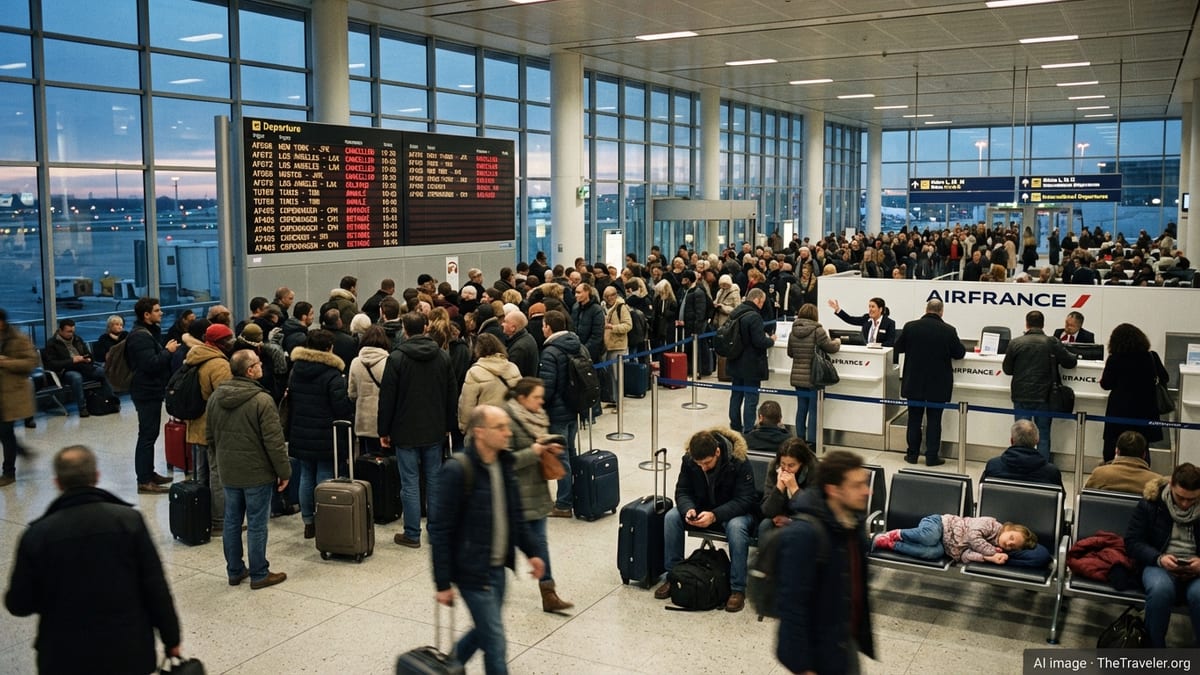
The Level 2 status places France in the same advisory category as several other popular destinations, but the timing of the update, coming after high-profile clashes between protesters and police, has increased its visibility. Travel industry reports note that inquiries from U.S. clients about security in Paris and other French cities have risen since mid-October.
Violent Protests, Curfews and Localized Disruption
Recent coverage by travel and mainstream news outlets describes a series of protests in France tied to cost-of-living concerns and broader political grievances. Reports indicate that some demonstrations in early and mid-October escalated into riots, with vehicles set on fire, shopfront damage, and confrontations between demonstrators and police in central Paris and several regional cities.
According to publicly accessible security alerts, local authorities have responded in some areas with temporary curfews and restrictions on public gatherings. Information compiled from embassy notices and foreign-government advisories indicates that measures have included early-evening closures of certain metro stations, diversion or suspension of tram and bus lines near protest routes, and the deployment of additional security forces around government buildings and major squares.
Travel publications that track destination risk report that the unrest has led, on some days, to delays around hubs such as Paris Gare du Nord and Gare de Lyon, as well as temporary closures of cultural sites situated directly along protest routes. However, these disruptions have generally been localized in time and place rather than nationwide shutdowns. Outside the affected zones, regular tourism infrastructure, including high-speed train services and regional flights, has mostly continued to operate.
How the Warning Affects Paris City Breaks
Paris remains the primary concern for many U.S. visitors, both because of its density of high-profile landmarks and its role as the focal point of recent marches. Travel industry analysis notes that areas such as the Left Bank, the vicinity of the National Assembly, and major east–west boulevards have seen repeated gatherings that can swell quickly and move from peaceful protest to confrontation.
Based on current advice from multiple national foreign ministries, travelers are being urged to avoid large gatherings, stay clear of police lines and barricades, and build flexibility into their itineraries. Practical steps include checking metro and bus service updates before leaving a hotel, allowing extra time to reach rail stations and airports on announced protest days, and carrying identification in case of spot checks when police cordons are in place.
Travel commentary also highlights the importance of monitoring local news in English, as well as security alerts from official channels, to track which neighborhoods are affected on a given day. Many tour operators are adapting by adjusting walking-tour routes away from expected protest locations, rescheduling evening activities when curfews are announced, and arranging private transfers to reduce exposure to sudden transport changes.
Beyond Paris: Regional Travel and Theme Park Visits
The renewed focus on safety is not limited to the capital. Updated advisories reference the possibility of unrest and security incidents in other large cities and tourist centers, from Marseille and Lyon to coastal hubs along the Mediterranean. Foreign-government travel pages accessed in late October 2026 describe France’s national alert system as set at an “enhanced vigilance” level, meaning visible security around transport nodes, shopping districts and major attractions is likely to remain in place through at least the autumn travel period.
For many U.S. families, the France advisory has prompted specific questions about trips to Disneyland Paris and other theme parks near the capital. Coverage from travel news outlets notes that the Level 2 designation does not single out these attractions but advises visitors to remain alert in crowded environments, be prepared for bag checks and occasional entry delays, and review park and train-operator announcements on days when protests in greater Paris could affect regional rail services.
Rail connections between central Paris and suburban attractions have continued to run, but union calls for demonstrations and strikes can lead to reduced frequency or short-notice cancellations. Travel reports underscore that having backup options, such as earlier return trains or pre-booked private transport when traveling late, can reduce stress if schedules shift during a day out.
What U.S. Travelers Are Being Urged to Do
While the current U.S. travel warning has intensified attention on France, publicly available guidance stops short of recommending that Americans cancel trips outright. Instead, official and third-party advisories emphasize risk management steps. These include enrolling in the U.S. government’s travel enrollment program to receive security updates, sharing itineraries and contact details with family, and confirming that travel insurance explicitly covers civil unrest and related disruptions.
Travel insurance specialists quoted in industry coverage note that policies can differ on whether interruptions caused by demonstrations, curfews or government-ordered closures are covered. Travelers are therefore being encouraged to verify, before purchase, whether their policy includes “cancel for any reason” options or specific provisions for missed connections and nonrefundable tours in the event of unrest.
Security briefings and travel-risk firms continue to rate France as a generally low to moderate threat environment in comparison with some other destinations, pointing to the capacity of local authorities to deploy resources quickly when tensions rise. Nonetheless, the combination of a high-volume tourist destination, a visible protest movement and a standing global caution notice means that American travelers planning France trips in late 2026 are being asked to approach their itineraries with more preparation, more flexibility and a greater awareness of their surroundings than in quieter years.