


More news on this day
Canelo Álvarez has arrived in Riyadh ahead of his October 31 title clash with Christian Mbilli, touching down in a city where a surge of travel warnings and recent airport attacks now frame one of the year’s biggest boxing events.
Get the latest news straight to your inbox!
Star arrival amid tightened security
Images and social media posts shared in the last 24 hours show Álvarez landing in the Saudi capital and beginning final preparations for the Riyadh Season main event, which is scheduled to take place on Saturday, October 31. The fight is set to headline a large-scale card at a temporary outdoor arena in the King Abdullah Financial District, part of the wider Riyadh Season 2026 entertainment program.
The champion’s arrival comes less than three weeks after a series of missile and drone strikes on Saudi airports, including Riyadh’s King Khalid International Airport, which serves as the main air gateway for international fans heading to the fight. Publicly available reports indicate that the October attacks killed more than twenty people and injured hundreds, prompting an international wave of concern over air travel into the kingdom.
Despite those incidents, Saudi organizers have continued to promote the Álvarez–Mbilli showdown as a cornerstone of Riyadh Season. Ticket sales opened earlier this month with hospitality packages marketed to overseas visitors, particularly from Europe and North America, even as aviation and security conditions around the Saudi capital remained fluid.
Boxing coverage in recent weeks has noted that clauses in Álvarez’s contract would reportedly guarantee his purse even if the event were postponed or relocated, which may help explain why the headline bout has stayed on the schedule while other sports properties weigh contingency plans.
US evacuation order and global travel advisories
The boxing spectacle is unfolding against a backdrop of rapidly evolving government advice. On October 23, the United States raised its travel advisory for Saudi Arabia to “Level 3: Reconsider Travel” and ordered the departure of non-emergency government employees and family members from the country, citing safety risks and repeated attacks on airports and other infrastructure.
The updated advisory highlights the potential for further missile and drone activity, warning that operations at major airports could be disrupted with little notice. It also notes that photographic or social media documentation of missile and drone activity may attract scrutiny from local security services, adding another layer of concern for visitors who might normally broadcast their travel experiences online.
The US move followed earlier alerts from its embassy in Riyadh, which urged extreme caution at Saudi airports. Regional media and specialist sports outlets report that the advisory has already complicated logistics for some teams and broadcasters preparing to travel for the fight, with several organizations reassessing staffing levels on the ground.
Other governments have issued similarly stark guidance. Travel advisories from Canada, Australia, New Zealand and several European and Asian countries now urge citizens to avoid non-essential trips to Saudi Arabia, with some specifically advising against using King Khalid International Airport in Riyadh and King Fahd International Airport in Dammam due to the risk of further strikes and sudden closures.
Air travel disruptions reshape fan itineraries
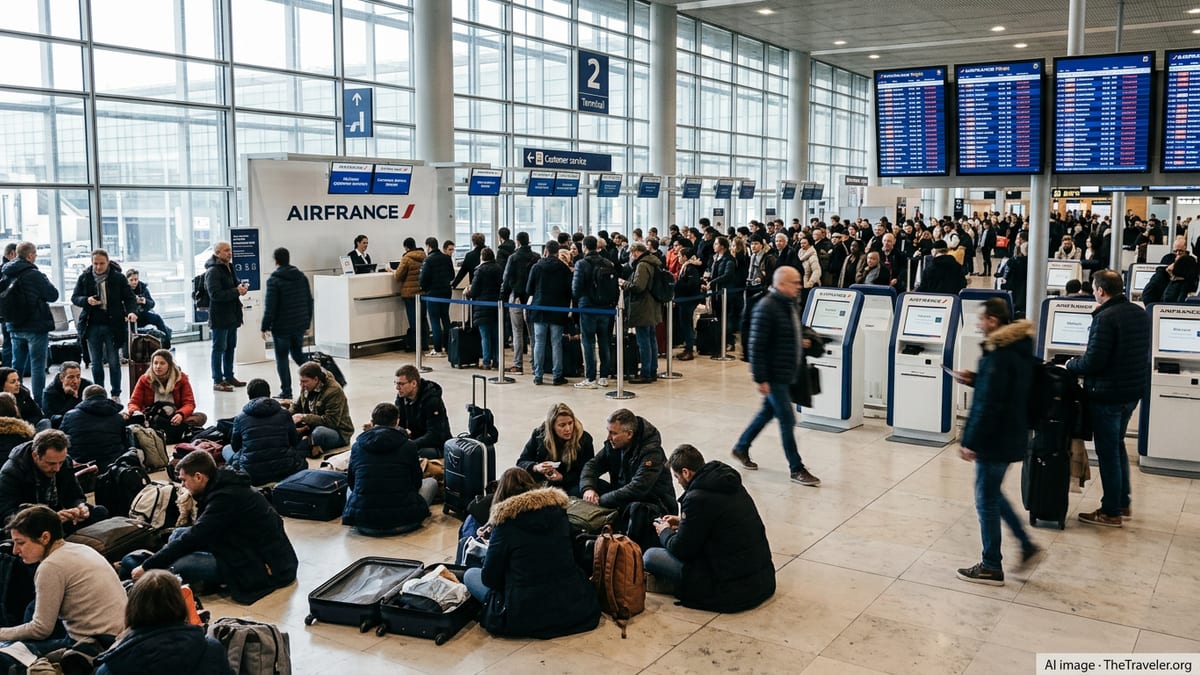
The changing risk picture is already influencing how fans and industry personnel plan their journeys. Aviation and consular updates show that while King Khalid International Airport has reopened to limited traffic after the October attacks, flight schedules remain vulnerable to short-notice cancellations and extended security checks. Domestic operations have resumed more quickly than some long-haul routes, leaving overseas spectators to piece together multi-leg itineraries through neighboring hubs.
Online forums and boxing community discussions reflect this shift. Some travelers describe abandoning direct flights into Riyadh in favor of routing through nearby countries such as Bahrain or the United Arab Emirates, then continuing overland by car, bus or rail. This approach mirrors advice on several official travel portals, which suggest that travelers already in the kingdom consider ground transport options to reach alternative aviation hubs if commercial air links are interrupted.
Published travel guidance for Saudi Arabia also stresses that conditions in the south of the country and along the border with Yemen remain particularly volatile, with flights in those regions susceptible to abrupt schedule changes. While Riyadh lies far to the north of those areas, the October airport strikes have demonstrated that the capital is not insulated from regional tensions, raising questions about how quickly airspace or individual terminals could be closed again.
For tour operators that built packages around the Álvarez–Mbilli contest and the wider Riyadh Season calendar, these uncertainties pose operational challenges. Industry commentary suggests that flexible booking policies and last-minute itinerary changes have become standard, as agencies try to balance demand for the event with the possibility that key air corridors could narrow further.
Boxing undercard reshuffles and safety debates
The security climate has already begun to reshape the fight card beneath Álvarez and Mbilli. In interviews and social media statements cited by combat sports media, trainer Robert Garcia has expressed concern about missile alerts, flight uncertainty and what he described as an unrealistic travel schedule for his fighter Lindolfo Delgado, who has now been withdrawn from the undercard. Garcia indicated that, in his view, boxers outside the main event may not receive the same level of travel support and protection as the headliner.
Other participants and officials have taken a different stance, portraying the event as an opportunity to showcase resilience through sport. Public comments from boxing administrators in recent days suggest that some governing figures still plan to travel to Riyadh, framing major events as symbolic gestures of normalcy amid geopolitical tension.
The divergence of opinion reflects a broader debate within boxing about the risks and rewards of high-profile shows in politically sensitive locations. Critics argue that the compressed travel timelines and reliance on a limited number of air routes heighten exposure for fighters, fans and media crews. Supporters counter that organizers are working closely with local partners to monitor conditions and that large events can proceed safely with appropriate protocols.
For now, the official messaging from promoters and Riyadh Season partners continues to emphasize the scale of the show rather than the uncertainty around it. Posters, trailers and social campaigns lean into the “Mexico versus the world” narrative and the promise of a global audience tuning in, even as ticket buyers in several countries are advised by their governments to reconsider traveling at all.
Balancing spectacle with on-the-ground reality
Álvarez’s decision to fly into Riyadh ahead of fight week underscores the determination of the main stakeholders to deliver the event as advertised. Training footage from local gyms and promotional appearances around the city are expected to accelerate over the coming days, presenting images of business as usual even as security alerts remain active.
For travelers still intent on making the trip, official advisories point to a series of practical precautions. These include maintaining flexible exit plans, registering itineraries with consular services where available, and staying closely informed about airport operations through airlines and local authorities. Some travel notices also suggest considering travel insurance products that explicitly cover security-related disruptions, though availability and terms differ by market.
Riyadh itself is preparing for an intense stretch of events beyond boxing, with professional wrestling and mixed martial arts cards also scheduled as part of Riyadh Season. Each additional event increases the number of international visitors funneling through the same transportation nodes, potentially compounding the impact of any renewed disruption.
As fight night approaches, the juxtaposition is growing sharper: one of boxing’s biggest stars has now physically arrived to anchor a global spectacle, while the path into and out of his host city remains shadowed by missile warnings, elevated travel advisories and a nervous aviation sector. How comfortably fans and support staff navigate that tension over the next few days will go a long way toward defining the legacy of Canelo Álvarez’s latest Saudi venture.