


More news on this day
A recent update to the United States travel advisory for France is putting new scrutiny on trips to Paris and other French destinations, as officials highlight ongoing unrest and a persistent terrorism risk while stopping short of telling Americans to stay away.
Get the latest news straight to your inbox!
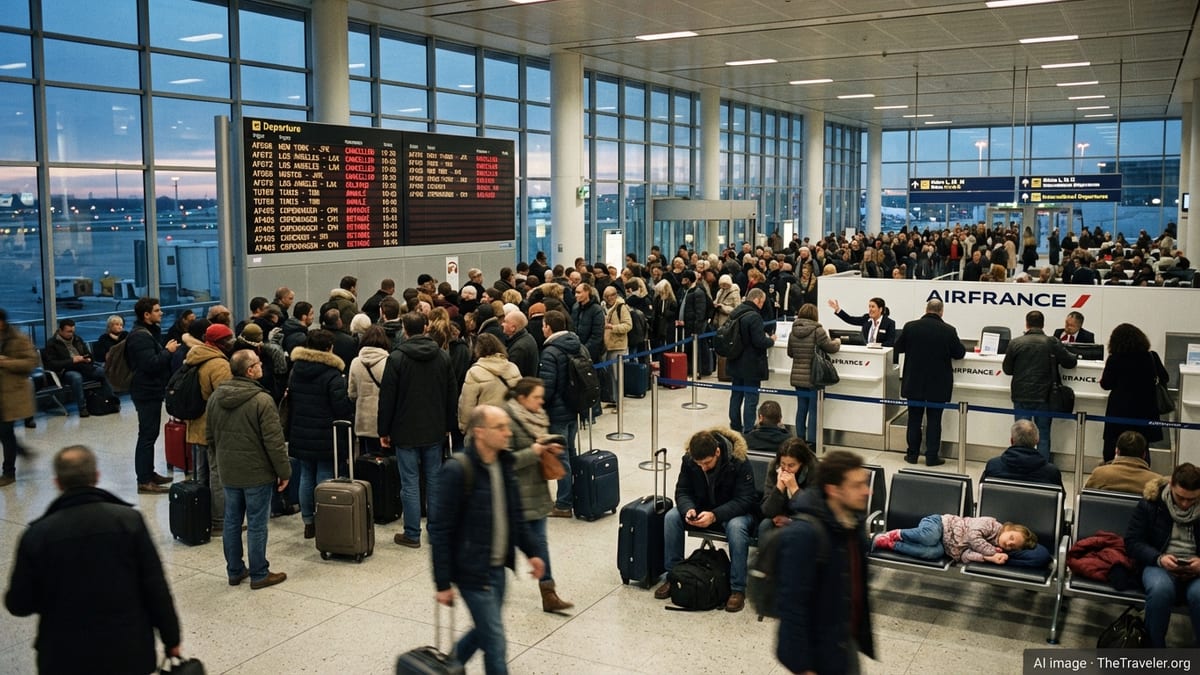
Advisory Updated but Risk Level Remains at “Exercise Increased Caution”
The U.S. Department of State revised its countrywide advisory for France on October 21, 2026, keeping the overall rating at Level 2, which urges travelers to exercise increased caution. Publicly available information on the State Department site links the advisory to concerns about unrest and terrorism, reflecting weeks of demonstrations and sporadic rioting in major cities.
According to recent coverage of the update, the advisory notes that violence and rioting have taken place in parts of France and cautions travelers to avoid demonstrations, areas of unrest, and locations with a heavy security presence. The language underscores that protests can materialize with little notice and that large crowds can quickly shift from peaceful gatherings to confrontations that disrupt transport and local services.
The Level 2 rating for France aligns with the way the State Department categorizes many popular destinations where there is an identifiable but managed security risk. The agency’s general explanations for Level 2 advisories emphasize that travel can continue, but visitors should pay close attention to their surroundings, follow local instructions, and remain prepared for fast-changing conditions.
The reassessment comes after several months in which France’s domestic political tensions have spilled into the streets, prompting other governments, including the United Kingdom, Canada, Ireland, Australia, and New Zealand, to update their own travel advice while still allowing regular tourism to proceed.
Civil Unrest and Curfews Put Demonstrations in the Spotlight
Recent reports from international and French media describe waves of demonstrations linked to living costs, labor grievances, and student mobilizations, some of which have escalated into looting, arson, and clashes with police. Paris and other large cities have seen late-night disturbances, with boarded-up shopfronts and burned road surfaces in affected districts.
Coverage indicates that French authorities have responded in some urban areas with temporary curfews and a heightened security posture, including larger deployments of police, gendarmes, and military patrols around key transport hubs and government buildings. These measures are designed to contain unrest but can also lead to sudden street closures, diversions, and the shutdown of nearby metro or tram stations, particularly in central Paris.
Foreign ministries in Canada, Ireland, the United Kingdom, Australia and New Zealand have all highlighted the possibility of demonstrations and advised travelers to monitor local media, stay clear of protest routes, and be prepared for disruptions to urban transit. Their advisories echo the U.S. guidance that gatherings advertised as peaceful can quickly grow or change character, especially around symbolic squares, major boulevards, and university districts.
For travelers, the practical impact is most likely to be local and short-term: delays reaching rail stations, changes to museum hours, or difficulty accessing certain neighborhoods during scheduled marches or after isolated outbreaks of vandalism. However, in a small number of situations, curfew orders and large-scale policing operations have effectively shut down night-time activity in specific districts for several evenings in a row.
Persistent Terrorism Concerns Shape Security Posture
In addition to unrest, the revised U.S. advisory cites terrorism as a key factor affecting the risk assessment for France. Public documents and open-source analyses continue to describe the terrorism threat as moderate, with France maintaining a prominent profile in European counterterrorism efforts after a series of attacks in the past decade.
France operates a three-tier national vigilance and security framework, commonly referred to in foreign travel advisories, which outlines how authorities escalate alert levels in response to intelligence or incidents. Allied governments note that the country is currently operating at an elevated level of vigilance, with reinforced patrols at transport hubs, tourist attractions, religious sites, and large public events.
International travel advisories for France consistently warn that attacks could target locations frequented by foreigners, including popular city centers, transportation nodes and cultural venues, and that incidents could occur with limited or no warning. While large-scale attacks have become less frequent than during the mid-2010s, several countries still treat the risk as an enduring feature of travel to France rather than a short-term spike.
This long-standing security posture means that visitors are likely to encounter visible security checks at museums, department stores, and major train stations, along with bag scans and occasional random inspections. For many travelers, the heightened presence is more noticeable than restrictive, but it underscores why many governments, including the United States, classify France under an advisory level that calls for increased awareness.
How the Warning Affects U.S. Travelers’ Plans
The renewed U.S. advisory is prompting some Americans with upcoming holidays, study programs, or business trips to reconsider their itineraries, but the guidance does not recommend canceling overall travel to France. Travel industry briefings and insurance risk assessments still characterize the country as broadly accessible, with tourism infrastructure functioning and major attractions open, even during periods of political tension.
Insurance and security reports consulted by travel planners typically rate France as a low to moderate threat environment, emphasizing that protests and occasional unrest are generally localized and that most trips proceed without incident. They recommend avoiding known demonstration points when events are scheduled, allowing extra time for airport and train station security, and maintaining flexible day plans that can be adjusted if streets or metro lines temporarily close.
U.S. and allied government advisories also encourage travelers to register their trips with official enrollment services where available and to ensure that contact details are up to date so they can receive security updates or alerts. Publicly available guidance stresses the value of carrying identification, knowing the local emergency number, and keeping digital copies of passports and key documents in case of theft or disruption.
For many would-be visitors, the central question is not whether they may legally travel to France, but how comfortable they feel with the possibility of encountering demonstrations, heavily policed city centers, or short-notice schedule changes. Travel guidance suggests that those who build in extra time, stay informed, and remain flexible are better positioned to navigate the current environment.
Balancing Risk, Perception, and On-the-Ground Reality
The latest U.S. travel warning for France arrives at a moment when images of street unrest are circulating widely, contributing to a perception among some prospective visitors that the country is in a state of constant turmoil. At the same time, accounts from foreign travelers and long-term residents, reflected in public forums and media commentary, often describe a more mixed picture, with localized disturbances contrasted against largely routine daily life in most neighborhoods.
Other national travel advisories stress that while France faces real and ongoing security challenges, tourism remains a major part of the country’s economy and continues to operate across regions, from Paris and Lyon to Provence, Bordeaux and the Riviera. Crowds around landmarks such as the Eiffel Tower, the Louvre, and Montmartre have remained substantial, even during recent protest periods.
Analysts who track global risk ratings point out that France’s advisory status is similar to that of several other major European destinations that manage periodic unrest and terrorism concerns. In this context, the U.S. Level 2 warning is being interpreted less as a call to abandon travel plans and more as an invitation for would-be visitors to engage more seriously with safety planning, local information sources, and contingency arrangements.
For now, the advisory ensures that any American heading to France in late 2026 will do so with a clearer understanding that demonstrations, security alerts, and tight policing are part of the current backdrop. How travelers weigh those factors against the continued draw of French culture, history, and cuisine will shape whether bookings slow or simply adapt to a new awareness of the risks.