


More news on this day
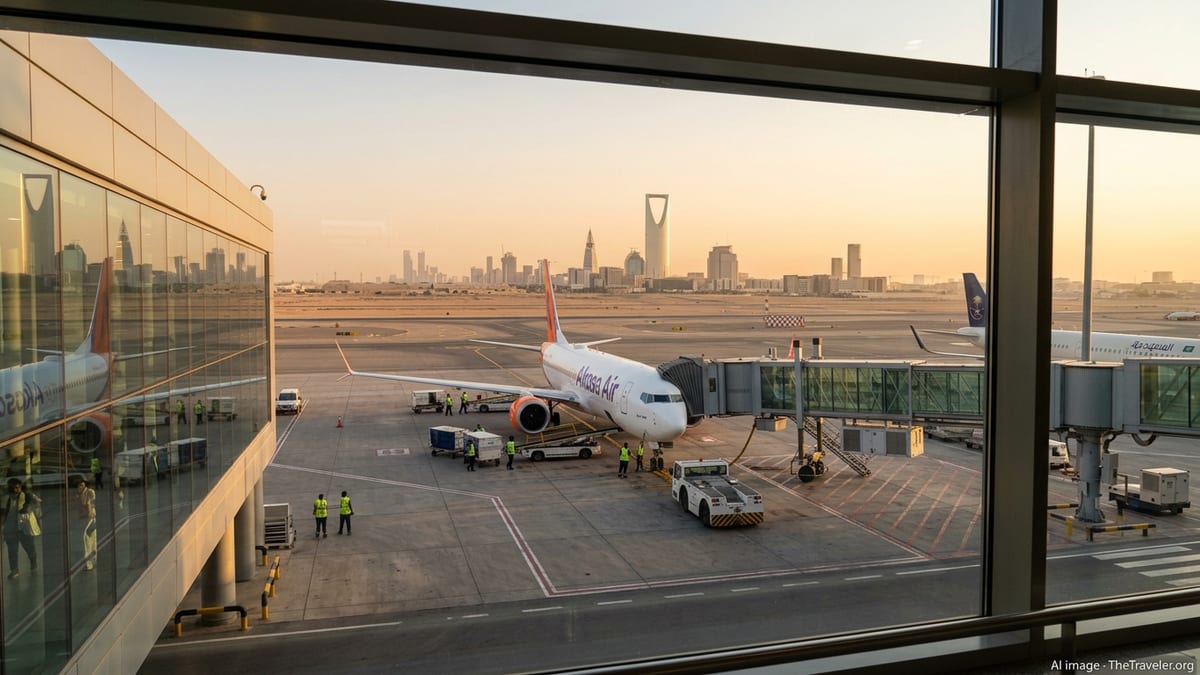
Saúl “Canelo” Álvarez has touched down in Riyadh ahead of his October 31 title fight with Christian Mbilli, arriving in Saudi Arabia just as a sharply upgraded United States travel alert urges Americans to reconsider trips to the kingdom.
Get the latest news straight to your inbox!
Star arrival sets tone for high‑stakes Riyadh fight week
Published coverage shows Álvarez landing in the Saudi capital on Monday, October 26, greeted by local organizers and fans as he begins final preparations for his WBC super middleweight title challenge. Reports indicate that undercard fighters on the “Mexico vs the World” bill have also arrived, with the main event still scheduled for Thursday, October 31 at Riyadh Season’s boxing venue.
According to specialist boxing outlets, Álvarez’s appearance in Riyadh is part of a multi‑fight agreement with the entertainment initiative backing Saudi Arabia’s recent slate of major combat sports events. The bout against Mbilli is billed as a chance for the Mexican star to regain a full title at 168 pounds after losing a decision in 2025, and it is set to headline a card marketed heavily to international streaming audiences.
Event guides circulated by promoters list fight‑week activities beginning on Tuesday, October 27, including a public “grand arrivals” event in central Riyadh, an open workout, and a final press conference. The schedule echoes previous Riyadh Season boxing promotions, with local organizers again timing ring walks in the early‑morning hours Saudi time to align with prime‑time viewing in North America and Europe.
Despite the shifting regional backdrop, publicly available ticketing information shows seats for October 31 still on sale as of October 27, with hospitality packages aimed at flying in high‑spending visitors. Travel industry trackers note that hotel availability around key Riyadh Season dates has tightened, indicating ongoing demand from international sports fans.
New US advisory tells citizens: do not travel to Saudi Arabia
Álvarez’s arrival comes just days after the US Department of State raised its Saudi Arabia advisory to Level 4, the highest on its four‑step scale, effectively telling Americans not to travel. An updated notice dated October 23 states that Washington has ordered non‑emergency US government employees and eligible family members to depart the country, citing security risks following a series of attacks linked to Yemen’s Houthi movement.
The advisory cites what it describes as continued threats of missile and drone strikes targeting civilian airports and infrastructure in Saudi Arabia, including incidents that have caused casualties and disrupted flights. The updated guidance highlights the possibility of further attacks on transport hubs, energy facilities, and crowded public venues, locations that often overlap with the itineraries of visiting sports fans.
Under the revised advisory, publicly available consular information shows that US government employees face strict limits on internal travel, especially near the border with Yemen and in several named provinces and cities. While private citizens are not legally barred from visiting, the Level 4 designation signals that Washington sees the risks as high enough that it may have only limited ability to assist if something goes wrong.
Travel risk firms that monitor government warnings note that the US move aligns Saudi Arabia with a small group of countries currently carrying a “do not travel” notice. Analysts say the decision is unusual at a moment when Saudi authorities are promoting the kingdom as a mass‑market tourism and events destination and preparing for an expanded calendar of sports, cultural shows, and conferences in Riyadh and other cities.
Houthis attacks and regional tensions darken the backdrop
The upgraded US warning follows what international news outlets describe as an escalation in cross‑border attacks from Houthi‑controlled areas of Yemen into Saudi territory. Recent reporting highlights strikes and intercepted projectiles aimed at Riyadh’s main airport and other sites, as well as broader threats to Gulf airspace and maritime traffic.
According to recent coverage, Washington’s ordered departure of some diplomatic staff is driven by concern that further long‑range attacks could target critical infrastructure or areas frequented by foreigners. Security analysts quoted in open reports say sporting events and major concerts, by virtue of their visibility and concentration of visitors, are typically evaluated as potential targets even when organizers and local authorities insist they can be secured.
At the same time, Saudi Arabia continues to press ahead with high‑profile gatherings. The Riyadh Season program lists a run of entertainment events stretching across late 2026, while separate schedules show major business forums and other sports competitions still planned in the capital and along the Red Sea coast. For now, there is no public indication that Álvarez’s bout or the broader fight card is being reconsidered.
Published commentary around Álvarez’s decision to proceed has emphasized the financial and symbolic importance of the event for both the fighter and his Saudi partners. Observers point out that Riyadh has staked significant political capital on presenting itself as a safe, modern host for global sport, even as regional fault lines remain acute.
What the new alert means for US fans heading to the fight
For American boxing fans who already have tickets and flights booked, the Level 4 advisory does not automatically cancel civilian travel, but it changes the risk environment. Airlines and tour operators generally continue operating unless local authorities suspend services or carriers decide routes are no longer commercially or operationally viable. As of October 27, publicly available airline timetables still list regular services from major US and European hubs into Riyadh.
However, travel insurers and corporate security providers typically treat a Level 4 notice as a trigger for policy reviews. Some insurance policies exclude coverage once a country reaches a “do not travel” status, while others may maintain medical and evacuation benefits but exclude claims related to terrorism or conflict. Travelers are being advised by industry specialists to check policy wording carefully and to confirm whether security evacuation is included.
The US advisory places particular emphasis on personal security planning. It urges Americans who do choose to travel to Saudi Arabia to maintain a low profile, avoid large gatherings that are not essential, and stay alert in and around transport hubs, hotels, and entertainment districts. For fight‑week visitors, that could mean minimizing time spent in crowded fan zones, limiting nightlife in unfamiliar neighborhoods, and relying on vetted transportation instead of informal ride offers.
Consular guidance also recommends that US citizens enroll in the Smart Traveler Enrollment Program so they can receive security updates and be easier to reach in an emergency. While embassy operations may be scaled back due to staff departures, the State Department notes that routine services can be disrupted for weeks when security conditions deteriorate, leaving travelers with fewer options if they lose their passport or face legal or medical issues.
Balancing spectacle and security in Saudi Arabia’s tourism push
The collision between Álvarez’s high‑visibility arrival and the tougher US travel warning encapsulates the twin tracks of Saudi Arabia’s current global strategy. On one side, Riyadh is investing heavily in entertainment, sport, and tourism as it seeks to diversify its economy away from oil and reposition itself as a leisure and business hub. Multi‑fight deals with marquee boxers, world‑class football signings, and large‑scale festivals are central to that ambition.
On the other, the security environment remains shaped by regional rivalries and proxy conflicts that periodically spill over in the form of missile and drone attacks. For foreign visitors, that translates into a complex calculus in which the allure of once‑in‑a‑lifetime events must be weighed against government advisories, insurance limitations, and personal risk tolerance.
Travel data from previous Riyadh Season editions suggests that high‑end travelers and committed fans often continue to attend in spite of elevated warnings, especially when events are framed as historic or rare. Analysts say the real test will be whether mainstream tourism growth can be sustained if Level 4 advisories remain in place for an extended period or are echoed by other Western governments.
In the immediate term, the October 31 Álvarez vs Mbilli showdown is set to proceed as planned, serving both as a showcase for Saudi Arabia’s sports‑led branding and as a case study in how major events operate under heightened security alerts. For American visitors, the spectacle inside the ring is likely to be matched by a more sober awareness of the risks beyond it.