


More news on this day
Mexican boxing star Canelo Alvarez has arrived in Riyadh ahead of his October 31 super middleweight title bout against Christian Mbilli, touching down in the Saudi capital just as the United States issues a sharper warning to travelers over missile, drone and terrorism risks in Saudi Arabia.
Get the latest news straight to your inbox!
High-stakes title fight meets a shifting security backdrop
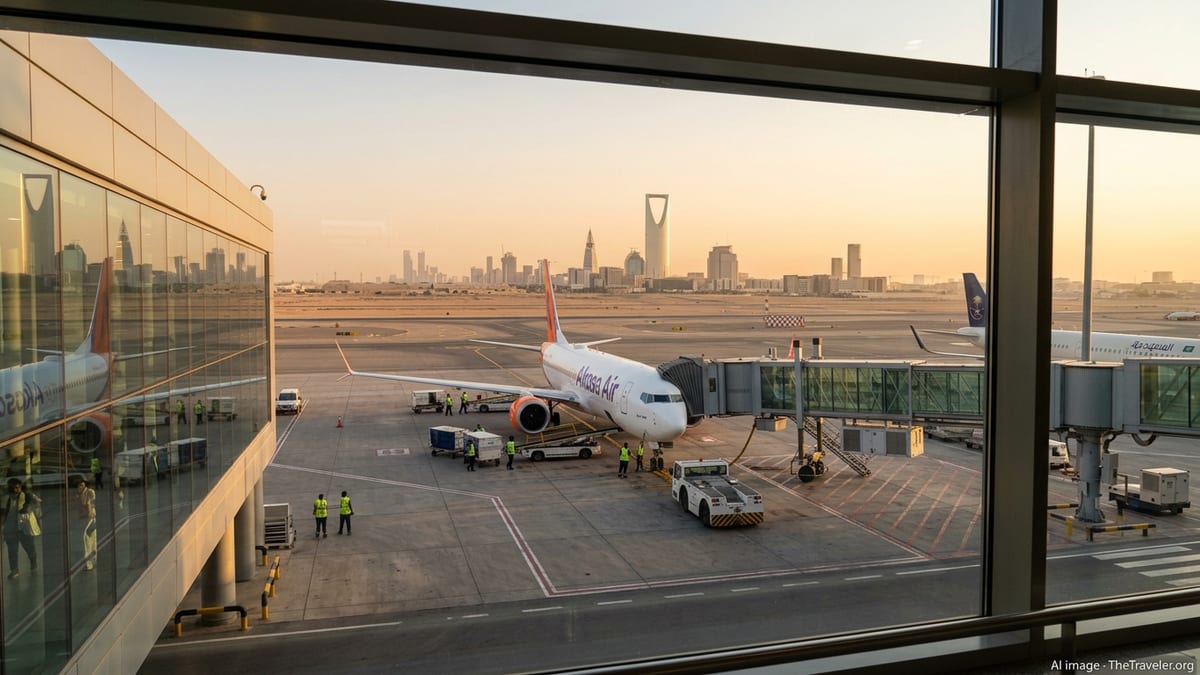
Alvarez’s landing in Riyadh on October 26 follows weeks of uncertainty over whether one of the year’s biggest boxing events would proceed in a city recently rattled by aerial attacks. Regional coverage indicates that King Khalid International Airport, the main gateway for international visitors, only recently resumed more regular operations after an October 10 strike that killed at least a dozen people and injured hundreds, temporarily disrupting commercial flights.
The bout, scheduled for October 31 as the main event of a "Mexico vs the World" card, is part of the wider Riyadh Season entertainment program that aims to draw foreign tourists and global media attention. Organizers continue to promote the fight night as planned, with ring walks expected in the evening local time and related fan events clustered around central Riyadh.
Sporting calendars for the city still feature a dense run of international fixtures, from domestic football in the Saudi Pro League to visiting combat sports promotions. Publicly available information shows that, despite the recent attacks, local authorities have allowed major events to continue, reinforcing Riyadh’s position as a high-profile stage for global sport even as travel advisories grow more cautious.
For inbound spectators, Alvarez’s early arrival serves as a visible signal that fighters and teams are proceeding with fight-week routines, including open workouts, media appearances and the official weigh-in. Travel specialists note, however, that this does not diminish the need for visitors to track fast-moving security updates around the capital’s transport hubs.
US travel advisory moves to the foreground
The sharpened warning from Washington forms the backdrop to Alvarez’s entry into Saudi Arabia. The US Department of State currently lists the kingdom at Level 3, "Reconsider Travel," on its public advisory, citing risks that include drone and missile targeting linked to Iranian-supported Houthi forces, terrorism, armed conflict, exit bans and restrictive local laws.
According to recent State Department updates and US Embassy security alerts, the guidance highlights that attacks can occur with little or no warning and may target civilian infrastructure such as airports, public venues, hotels and large gatherings. Entertainment events, including sports cards drawing international crowds, are specifically mentioned in broader regional advisories as locations that could face elevated risk in the event of further escalation.
US-focused security reporting indicates that Washington has also ordered the departure of nonessential government staff and family members from its mission in Saudi Arabia and several neighboring states in response to the same threat environment. Analysts describe this step as one level below a full "Do Not Travel" designation, underscoring the seriousness with which officials are treating the situation while still stopping short of advising all citizens to stay away.
For American travelers considering a trip to Riyadh for fight week, the combination of a high-profile sporting event and a Level 3 advisory means travel insurers, airlines and employers may apply stricter conditions. Publicly available guidance encourages anyone who does travel to register with consular services, maintain flexible itineraries and prepare for the possibility of sudden flight changes or heightened security checks around key venues.
Riyadh Season pushes on amid postponements and adjustments
Alvarez’s fight with Mbilli remains one of the flagship attractions of this year’s Riyadh Season, a multi-week schedule of concerts, festivals and elite sports designed to draw visitors during the cooler late-October and early-winter months. Event information circulated by organizers and international sports outlets shows that, while the boxing card is still on the calendar, other elements of the program have already shifted in response to the regional climate.
Most notably, the Six Kings Slam exhibition tennis tournament, set to feature Novak Djokovic and Carlos Alcaraz, has been postponed from its original October 21 launch date and moved to late December, with organizers citing organizational and logistical factors. Coverage of the decision points to the combined impact of airspace disruptions, rescheduled flights and broader risk assessments affecting players and fans.
By contrast, boxing and professional wrestling events attached to Riyadh Season remain in place. Reports on ticket sales indicate ongoing demand for seats at The Venue in Riyadh, where Alvarez and Mbilli are due to headline, and for a major professional wrestling card scheduled in the city in November. Domestic football fixtures in Riyadh have also continued, though at least one high-profile match recently saw its kickoff delayed after a civil defense alert.
The mixed picture illustrates how Saudi Arabia’s effort to anchor itself as a year-round sports and entertainment hub is being tested by security developments. For visitors, it means that individual events may proceed as planned, be postponed or change format with little notice, reinforcing the importance of monitoring both official event channels and airline communications in the days before departure.
Practical considerations for fans traveling to Riyadh
Travel logistics for fans following Alvarez to Riyadh now hinge on a more complex risk calculation than is typical for a boxing trip. Air connectivity into King Khalid International Airport has resumed after its mid-October closure, and flight schedules from major European and Middle Eastern hubs show services operating again, though with occasional cancellations and retimings around periods of heightened alert.
Public security updates advise travelers to leave generous buffers for connections, particularly when routing through regional hubs that share similar Level 3 advisories. Those planning short stays centered on the fight may find it prudent to arrive at least a full day earlier than originally intended to account for possible delays and added screening at immigration and baggage claim.
Within Riyadh, hotel availability around October 31 remains relatively strong according to major booking platforms, but some properties closer to event venues and central entertainment districts are tightening payment and cancellation terms. Travel industry commentary suggests that visitors should opt for refundable rates where possible and confirm whether hotels maintain internal safety procedures such as shelter-in-place guidance and direct communication channels with guests.
In terms of local movement, ride-hailing services and licensed taxis continue to operate, with no widespread curfews reported in the capital. However, risk consultants advising corporate travelers recommend minimizing time spent near government buildings, diplomatic areas and critical infrastructure, and keeping copies of identification and travel documents readily accessible in case of sudden checkpoints or controls.
Balancing spectacle, security and Saudi Arabia’s tourism ambitions
Alvarez’s decision to proceed with his second major fight in Saudi Arabia, after previous appearances in Riyadh, underlines the deepening ties between top-level boxing and the kingdom’s tourism strategy. Event announcements and past contracts made public by promoters show that Saudi organizers have invested heavily in long-term relationships with headline fighters and international broadcasters, positioning Riyadh as a recurring host for title bouts that once would have been associated primarily with Las Vegas.
The current security environment, however, places those ambitions under sharper scrutiny. Commentary from regional and international media notes that each new airport alert or missile interception not only raises safety concerns for residents but also tests the willingness of athletes, touring companies and fans to travel. High-profile events such as Alvarez vs. Mbilli become symbols of resilience to some observers, and sources in the sports business community suggest that significant financial guarantees are helping keep top cards on the schedule.
For travelers, the juxtaposition is stark: a blockbuster fight offering the lure of a once-in-a-year live experience set against official guidance urging careful reconsideration of any nonessential trip. Publicly available risk assessments advise individuals to weigh factors such as their tolerance for disruption, access to alternative travel options and the extent of local support they might have if conditions change rapidly while they are in the country.
As Alvarez settles into final preparations in Riyadh, attention over the coming days will be split between the usual storylines of form, tactics and legacy, and the broader question of how comfortably large-scale tourism and live entertainment can coexist with an evolving security picture that continues to generate stark warnings far beyond the boxing ring.