


More news on this day
Saul “Canelo” Álvarez touched down in Riyadh this week ahead of his October 31 world title fight, just as a new U.S. government alert urged Americans to reconsider travel to Saudi Arabia following a series of attacks targeting airports and critical infrastructure.
Get the latest news straight to your inbox!
High‑stakes fight week unfolds amid regional tension
Published coverage of the bout indicates that Álvarez is in the Saudi capital to headline a Riyadh Season card against WBC super middleweight champion Christian Mbilli on October 31, with the main event scheduled at a purpose-built arena in Riyadh. The event, marketed locally under a “Mexico vs The World” theme, is the latest in a series of major fight nights bankrolled by Saudi entertainment authorities.
Reports from boxing outlets and Saudi event organizers describe a packed fight week running from October 28 to 31, including public workouts, media events and fan experiences clustered around Riyadh’s Boulevard entertainment districts and the fight venue. Tickets for the card went on sale earlier this month, with organizers maintaining that the show will proceed in the Saudi capital despite heightened security concerns.
The bout marks Álvarez’s first appearance since his high‑profile loss to Terence Crawford in Las Vegas in September 2025, a defeat that ended his undisputed reign at super middleweight. Mbilli, who later picked up the WBC belt after Crawford vacated, is making his first defense, adding competitive intrigue to a night already under intense global scrutiny for its geopolitical backdrop.
Riyadh Season, the winter‑long entertainment festival that has brought heavyweight boxing, mixed martial arts and major concerts to the kingdom, has become a focal point of Saudi Arabia’s push to position itself as a global sports destination. That strategy is now intersecting directly with fresh security warnings and operational disruptions to air travel.
New U.S. travel alert keeps Saudi Arabia at Level 3
According to the latest advisory published on the U.S. State Department’s travel website, Saudi Arabia remains at Level 3, meaning U.S. citizens are urged to reconsider travel. The advisory was updated in October 2026 and retains terrorism and other security risks as key concerns, while also highlighting the possibility of missile and drone attacks affecting civilian areas.
A separate security message issued in recent days ordered the departure of non‑emergency U.S. government employees and family members from missions in Saudi Arabia. Publicly available information notes that this staffing change was prompted by a series of attacks attributed to Yemen‑based Houthi forces, which have targeted airports and infrastructure in and around Riyadh and other cities.
Travel.state.gov materials specify that the overall advisory level for Saudi Arabia did not change with the October 23 update, but the new alert draws attention to the deteriorating security picture and the potential for further disruptions. Areas near the border with Yemen remain at Level 4, or “do not travel,” reflecting the heightened risk of cross‑border fire and militant activity in the south.
The advisory also underscores operational limits for official U.S. travelers, noting that U.S. government employees in the country now require special authorization to use any Saudi airport. While these internal rules do not apply directly to private citizens, they signal how U.S. authorities assess risks to aviation and ground movements inside the kingdom.
Airport attacks and flight disruptions concern visiting fans
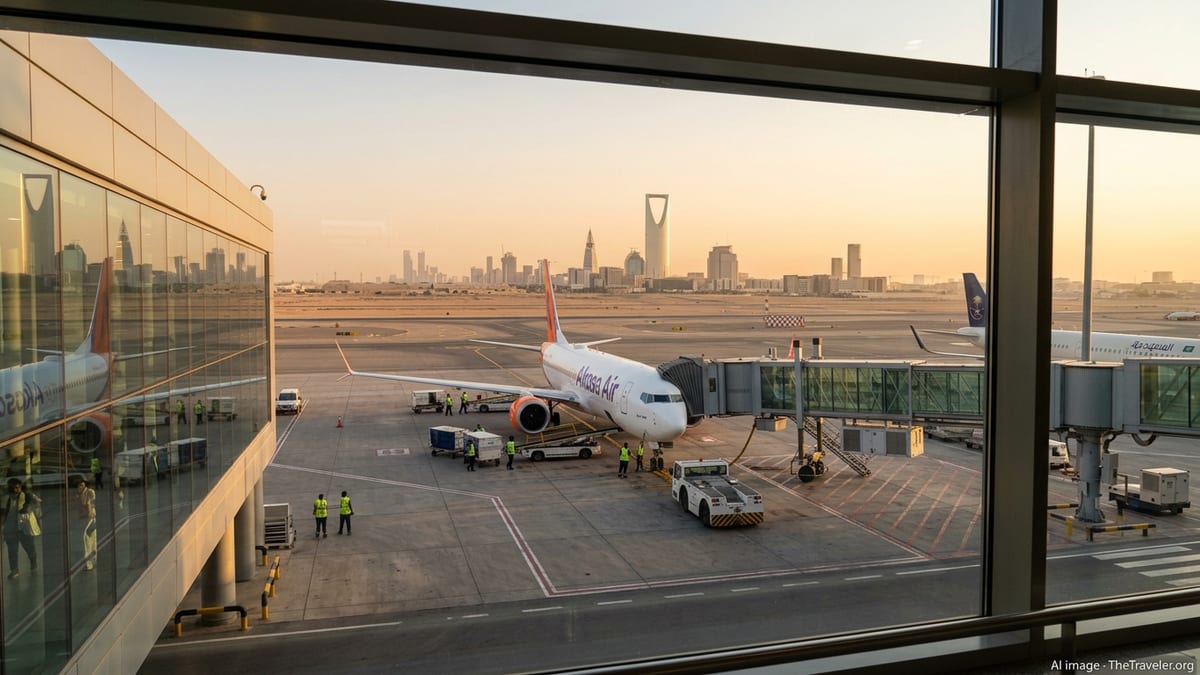
Recent reporting from international news agencies describes multiple attacks on Riyadh’s King Khalid International Airport this month, attributed to Houthi forces, which led to temporary shutdowns and a reduction to limited traffic. Coverage indicates that missiles and drones have struck or threatened airport facilities and nearby infrastructure, resulting in casualties and forcing airlines to reroute or delay services.
The U.S. travel alert specifically references these incidents, warning that Iranian‑supported Houthis have carried out hostilities against Saudi Arabia that include strikes on civilian airports and critical infrastructure. The advisory notes that such attacks can cause severe travel disruptions, an issue of direct concern to boxing fans planning to fly into Riyadh for the October 31 event.
Local reports suggest that while Riyadh’s main airport has reopened with restricted operations following recent closures, schedules remain fluid and subject to sudden change if security conditions worsen. Carriers serving Saudi routes have periodically adjusted flight frequencies and routings across the region in response to shifting risk assessments and airspace advisories.
For travelers, the combination of high‑profile events and volatile security conditions introduces a layer of uncertainty. Last‑minute delays, diversions or cancellations are possible if new attacks occur or if authorities impose further restrictions on airport use during fight week.
What the alerts mean for U.S. travelers heading to the fight
For U.S. citizens weighing a trip to Riyadh for Canelo–Mbilli, the State Department’s Level 3 designation signals that travel is not prohibited but is considered risky. Official guidance urges travelers who decide to go to have contingency plans that do not rely on U.S. government assistance, maintain a high level of situational awareness and register their trip with the Smart Traveler Enrollment Program so they can receive security updates.
The advisory encourages travelers to monitor local media and U.S. mission channels for information on changing conditions. Given the recent order for some diplomatic staff and family members to depart, consular capacity in the country may be reduced, potentially affecting how quickly services can be provided in an emergency.
Insurance considerations are also coming into sharper focus. Many underwriters treat Level 3 and Level 4 destinations differently, and some policies exclude coverage for trip disruption or evacuation linked to war, terrorism or civil unrest. Travelers are being advised in public commentary to read policy fine print closely and to confirm whether medical evacuation and security assistance services are included for Saudi Arabia under current conditions.
Event organizers in Saudi Arabia have continued to promote October’s Riyadh Season programming, including combat sports shows and a major professional wrestling event scheduled for early November. Published schedules have not been formally altered for the Canelo card, but the broader Middle East conflict has already prompted postponements and cancellations of other international competitions in the region, reinforcing the importance of flexible arrangements.
Balancing boxing spectacle with evolving security realities
Álvarez’s decision to press ahead with his Saudi return reflects the growing financial and sporting pull of Riyadh, even as the security backdrop darkens. Previous boxing nights backed by Saudi funding, including heavyweight title unifications and crossover events, have offered sizable purses and global exposure that are difficult for fighters to match elsewhere.
At the same time, the convergence of a marquee boxing event with a newly sharpened U.S. travel alert is putting an unusual spotlight on the risks associated with destination mega‑events in politically sensitive regions. Analysts tracking sports and geopolitics note that the same investments that have raised Saudi Arabia’s profile in boxing, football and motorsport are now intersecting with the practical challenges of keeping fans and participants moving safely.
For travelers, the equation is increasingly complex. Riyadh’s modern hotels, entertainment districts and air‑conditioned arenas remain attractive, and many fans will still choose to attend, weighing the low probability of being directly affected against the draw of seeing a generational star in person. Others may decide to watch from afar, deterred by images of damaged runways and the prospect of sudden airspace closures.
In the coming days, attention will focus not only on Álvarez’s preparations and Mbilli’s first title defense, but also on how smoothly thousands of visiting supporters are able to arrive and depart. The outcome will serve as a test case for the resilience of Saudi Arabia’s sports tourism ambitions at a time when security warnings and marquee events are unfolding side by side.