


More news on this day
The United States has raised its travel advisory for Kenya to Level 3, urging travelers to reconsider nonessential trips as regional Ebola infections climb and imported cases are confirmed in Nairobi, sharpening questions about how to visit East Africa safely during a fast-moving health emergency.
Get the latest news straight to your inbox!
Advisory lifted to Level 3 as outbreak reaches Kenya
Publicly available information from the US Department of State shows that on October 19, 2026, the Kenya travel advisory was elevated to Level 3, a tier that translates to “reconsider travel.” The update cites the expanding Ebola Bundibugyo virus outbreak in the Democratic Republic of the Congo and its spread into neighboring countries, including Kenya, alongside existing concerns about crime, terrorism, and sporadic civil unrest.
The revised advisory notes that the US Centers for Disease Control and Prevention has issued a travel health notice related to Ebola Bundibugyo virus disease in Kenya, linking the change in guidance directly to the emerging health risk. While Kenya had previously been flagged primarily for security issues, this marks the first time during the current East and Central Africa Ebola emergency that the health situation has figured prominently in the overall risk assessment for the country.
According to recent World Health Organization and regional media reporting, the wider 2026 Ebola epidemic, centered in eastern Democratic Republic of the Congo, has already generated thousands of confirmed cases and spilled into Uganda and Kenya along some of East Africa’s busiest travel corridors. Health experts cited in these reports describe one of the fastest-growing Ebola outbreaks recorded in the region, with response efforts racing to keep pace with new infections.
The shift to Level 3 does not prohibit travel, but it signals a significant escalation in perceived risk. For American travelers and tour operators that had been banking on a robust late‑year safari and beach season, the timing of the change, just as peak holiday bookings build, introduces a new layer of uncertainty.
Imported Ebola cases in Nairobi fuel traveler anxiety
Kenya’s Ministry of Health has publicly confirmed multiple Ebola Bundibugyo virus cases in recent days, most of them linked to an index patient who traveled from outbreak zones in the Democratic Republic of the Congo. Government statements describe this as an imported cluster, concentrated in Nairobi, with patients identified and isolated after arrival.
International and regional coverage indicates that the initial case was a Kenyan citizen who had been living and working in eastern Congo before flying back to Nairobi in early October. Subsequent updates from news agencies and health bulletins have reported several additional infections among close contacts and health workers, bringing the total number of confirmed cases to a small but closely monitored tally.
Reports from outlets such as the Associated Press describe the first patient’s death shortly after arrival and note that a number of medical staff who cared for him later tested positive. These accounts also highlight the rapid expansion of the underlying outbreak in Congo, where thousands of cases and several thousand deaths have been recorded since May 2026.
For travelers, the key point emerging from these reports is that, as of mid‑October, Kenyan authorities continue to characterize the event as a limited chain of transmission with no evidence of sustained community spread. However, the appearance of cases in the capital, combined with intense regional mobility, has been sufficient to prompt a more cautious stance from US and international health agencies.
Heightened screening and new entry rules for travelers
In response to the imported Ebola cases and the broader regional threat, Kenyan authorities have introduced a series of enhanced health measures targeting international travelers. Public statements and advisories indicate that Nairobi’s Jomo Kenyatta International Airport now channels flights from ten outbreak‑affected or higher‑risk countries through a dedicated gate, where passengers undergo additional screening.
The updated US travel advisory for Kenya points to specific procedures for travelers arriving from the three countries experiencing the most intense Ebola transmission, as well as several neighboring states designated as elevated risk. These passengers are required to complete an electronic traveler health surveillance form before disembarkation in Kenya, providing contact information, recent travel history, and health details for follow‑up by Kenyan public health teams.
According to current travel health notices, Kenya is also maintaining temperature checks, symptom questionnaires, and visual screening at key airports and land borders, particularly along routes connecting to Uganda and eastern Democratic Republic of the Congo. World Health Organization and Africa CDC materials describe broader regional efforts to strengthen surveillance at points of entry, including rapid isolation areas and reinforced protective equipment for frontline staff.
For visitors, the immediate practical effect is longer processing times on arrival and a greater likelihood of secondary screening if they have recently spent time in affected provinces or countries. Travelers connecting through other regional hubs before entering Kenya can expect their travel history to be scrutinized carefully, especially if they have been in the Democratic Republic of the Congo, Uganda, or South Sudan within the previous 21 days.
What the CDC and WHO currently advise about travel
US public health guidance currently draws a distinction between the epicenter countries of the Ebola Bundibugyo outbreak and destinations like Kenya that are dealing with imported cases. CDC travel notices continue to list parts of the Democratic Republic of the Congo and Uganda under stricter health advisories, including calls for enhanced precautions and, in some circumstances, deferred nonessential travel.
By contrast, CDC’s specific notice for Ebola Bundibugyo virus disease in Kenya, as listed on its Travelers’ Health portal, advises travelers to practice usual precautions. The guidance emphasizes avoiding direct contact with people who have symptoms compatible with Ebola or with their body fluids, and seeking immediate medical care if fever or other signs of illness develop after potential exposure.
World Health Organization situation reports stress that Ebola is transmitted through close contact with the blood or body fluids of an infected person, or through contaminated objects, rather than through casual contact in public spaces, hotel lobbies, or airplanes. Current summaries underline that the overall risk to the general traveling public remains relatively low where outbreaks are detected early and prompt isolation, contact tracing, and infection prevention measures are in place.
At the same time, both CDC and WHO materials underscore that the trajectory of the 2026 outbreak is dynamic. Travelers are urged to monitor advisories frequently in the weeks leading up to departure, as levels and recommendations may change in response to new data, including any sign of wider community transmission in Kenya or neighboring states.
Impact on tourism, safaris, and traveler planning
Kenya’s tourism sector, which had been rebounding on the back of strong demand for wildlife safaris, coastal stays, and business events, now faces renewed headwinds. Local and regional media reports describe a wave of inquiries to tour operators and hotels from international clients seeking clarity on cancellation terms, rerouting options, and on‑the‑ground safety measures.
Industry commentary suggests that some travelers with imminent departures are opting to postpone or redirect trips to southern African destinations, while others are continuing with plans but seeking more flexible booking conditions. For organized tours, especially those combining Kenya with Uganda or the Democratic Republic of the Congo, the evolving patchwork of national entry rules, health screenings, and airline policies is adding complexity to itineraries.
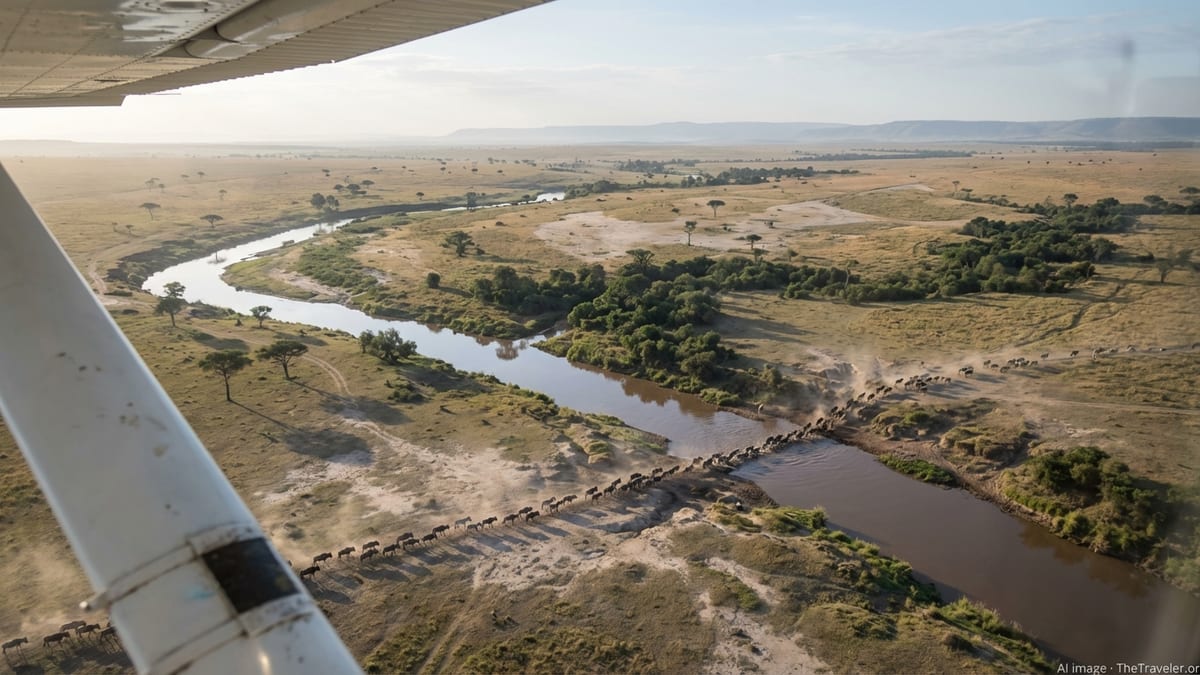
Within Kenya, public communications from the Ministry of Health emphasize that key tourism regions such as the Maasai Mara, the Kenyan coast, and the country’s main safari circuits remain open. The primary focus of Ebola‑related activity is in Nairobi’s health facilities and transport hubs, where case isolation and contact monitoring are underway.
Travel analysts point out that traveler risk is not uniform across the country. Visitors who spend most of their time in remote conservancies, beach resorts, or private camps may have limited interaction with health facilities or urban settings where Ebola patients are treated. However, almost all international travelers pass through Nairobi or Mombasa at some stage, making airport and city‑level precautions central to individual risk calculations.
Practical steps for travelers weighing a trip to Kenya
For prospective visitors, the raised US advisory level and the presence of Ebola cases in Nairobi do not automatically mean that travel is impossible, but they call for more deliberate planning. Travelers are encouraged by public health agencies to start by reviewing the detailed language of the Level 3 advisory and CDC’s Kenya health notices, paying close attention to any conditions that could affect their ability to depart, transit, or return home.
Travel medicine specialists, in publications aimed at the general public, recommend a pre‑trip consultation several weeks before departure, including a discussion of vaccinations, routine medications, and personal protective strategies. This typically includes reinforcing hand hygiene, avoiding unnecessary visits to hospitals and clinics, and understanding the early symptoms of Ebola so that medical attention can be sought quickly if needed.
Airlines and tour companies have begun reminding customers to keep contact details up to date and to monitor their booking portals for schedule changes or route adjustments linked to the outbreak. Some carriers serving East Africa have already adjusted frequencies or aircraft types on certain routes in response to shifting demand, according to aviation industry reporting.
Ultimately, the decision to travel rests on each visitor’s risk tolerance, health status, and flexibility. With the situation evolving rapidly across East and Central Africa, travelers considering Kenya in the coming weeks may find it prudent to maintain alternative plans, ensure that their insurance covers epidemic‑related disruption, and stay alert to further updates that could tighten or relax current guidance.