


More news on this day
Temporary restrictions in United Arab Emirates airspace have resulted in 19 flight cancellations and 412 delays across the country’s main hubs, disrupting travel for thousands of passengers and underscoring the continued fragility of regional aviation routes.
Get the latest news straight to your inbox!
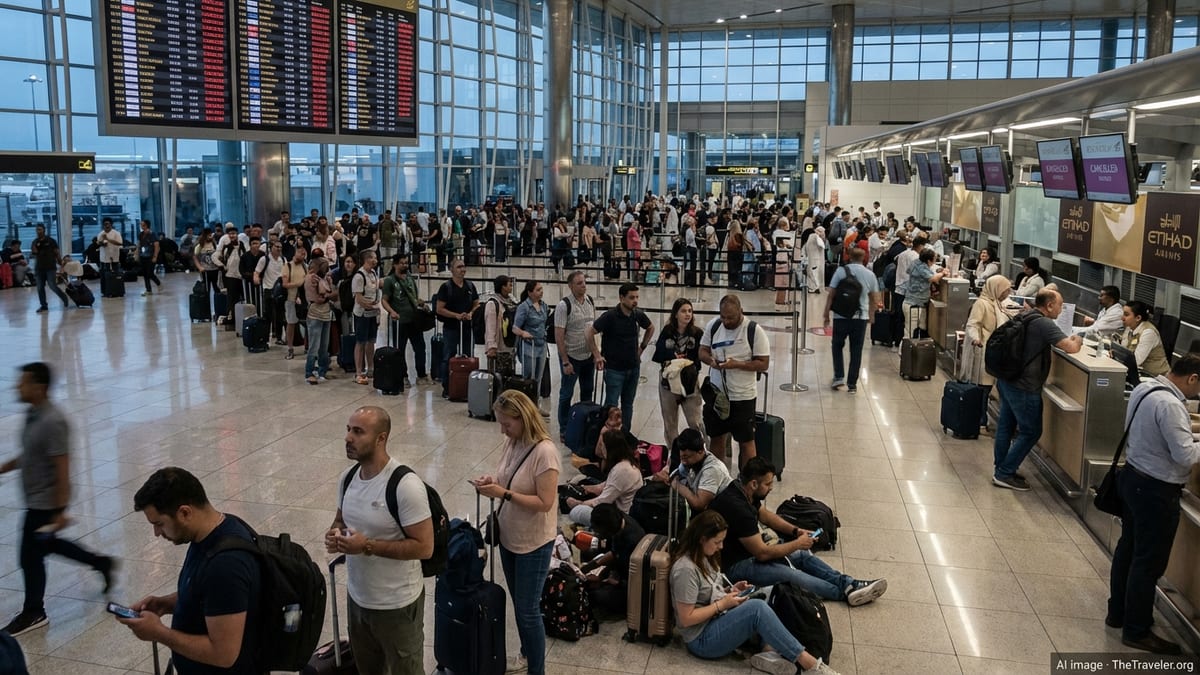
Airspace Measures Ripple Across Major UAE Hubs
Recent disruptions in regional airspace led to a short but sharp impact on flight operations at key UAE airports, including Dubai International, Zayed International in Abu Dhabi, Sharjah and other commercial hubs. Publicly available aviation data and regional media coverage indicate that 19 flights were cancelled and 412 experienced delays over a compressed period, as airlines adjusted routings and schedules to comply with evolving airspace restrictions.
Reports indicate that the disruptions were linked to precautionary measures in response to heightened regional tensions affecting established flight corridors across the Gulf. While the restrictions were time limited, they coincided with heavy traffic periods, compounding congestion in terminals and on aprons as aircraft were held, rerouted or grounded.
Operational updates from airports and carriers show that most affected services were short and medium haul routes within the Gulf and wider Middle East, along with a smaller number of long haul connections using UAE hubs as transit points. In several cases, aircraft departed late but completed their journeys on modified routings that avoided restricted areas, adding flight time and creating knock-on delays across the network.
Aviation tracking platforms reviewed by regional outlets highlighted clusters of delayed departures and arrivals through the UAE on the affected day, with some services pushed back by more than two hours. However, the number of outright cancellations remained comparatively limited relative to the country’s overall daily flight volume.
Airlines Adjust Schedules as Regional Conflict Lingers
According to published coverage in Gulf-based and international media, the latest disruptions form part of a broader pattern of schedule changes prompted by the ongoing conflict environment involving the United States, Israel, Iran and neighboring states. Since late winter, several Middle East airspace closures and restrictions have forced carriers to reroute or temporarily suspend flights, particularly on links to Kuwait, Saudi Arabia and parts of the Levant.
Public advisories from major UAE carriers describe a mix of measures: selective cancellations on specific regional routes, one off suspensions during peak security alerts, and increased use of longer alternative routings to keep long haul services operating. Aviation analysts cited in regional coverage note that these adjustments add cost and complexity for airlines, but are seen as necessary to preserve safety and maintain as much of the schedule as possible.
In the period surrounding the 19 cancellations and 412 delays, airlines serving the UAE continued to emphasize that most flights were operating normally, even as they monitored regional airspace conditions hour by hour. Operational notices urged travelers to check their flight status before leaving for the airport, reflecting the possibility of late changes as restrictions were updated.
The pattern in recent months shows that while full airspace shutdowns across the UAE and neighboring states have been relatively rare and short lived, partial route closures and altitude restrictions continue to appear with little notice. This dynamic environment has turned schedule planning into a moving target, particularly for carriers with dense networks across the Gulf.
Impact on Passengers at Dubai, Abu Dhabi and Sharjah
For travelers passing through the UAE on the affected day, the 19 cancellations and hundreds of delays translated into missed connections, extended layovers and, in some cases, overnight stays. Passenger accounts shared through regional media and online forums describe crowded transfer desks, longer security and check in queues, and difficulty in securing updated information during peak disruption periods.
Published airport advisories show that operators in Dubai and Abu Dhabi activated contingency procedures to manage terminal flow, including directing passengers to dedicated rebooking counters and using additional staff to handle customer inquiries. Some carriers offered complimentary hotel stays and meal vouchers for those facing long waits, in line with their standard disruption policies.
Travelers with onward journeys to Asia, Europe and Africa were among the most affected, as delays on incoming feeder flights from the region caused connections to be missed. In several instances reported by travel news outlets, passengers were rebooked onto later services via alternative routings, sometimes involving extra stops or transfers through different Gulf hubs.
Despite the scale of the disruption, publicly available information suggests that airport infrastructure in the UAE remained resilient. Runway operations continued, ground handling adapted to the revised bank structures, and airports avoided the kind of prolonged gridlock seen during earlier, more extensive shutdowns earlier in the year.
Data Highlights Scale and Pattern of Disruption
Flight tracking data referenced by regional business publications illustrates how quickly operational conditions in the UAE can change when airspace measures are introduced. On the day of the disruption, cancellations were concentrated within a relatively narrow time window, while delays spread through the schedule in waves as aircraft, crews and slots fell out of sequence.
The figure of 19 cancellations, set against 412 delays, points to a clear operational preference for preserving services where possible. Aviation specialists cited in industry analyses note that in constrained environments, carriers typically favor delaying and rerouting flights instead of cancelling outright, both to protect revenue and to keep passengers moving, even if not on time.
Data also show that knock on effects can persist beyond the immediate window of airspace restrictions. Aircraft arriving late into the UAE then depart late on subsequent legs, propagating delays across multiple regions for several hours or more. This cascading effect helps explain why the number of delayed flights significantly exceeded direct cancellations in the latest disruption.
Over the medium term, aviation consultancies tracking regional performance have observed that repeated, short term airspace restrictions contribute to a gradual erosion of on time performance averages across Middle East hubs. However, they also point out that recovery times in the UAE remain comparatively fast due to high levels of spare capacity and flexible scheduling at the country’s major airports.
What Travelers Should Know for Upcoming Trips
For travelers planning to fly to, from or through the UAE in the coming weeks, recent events highlight the importance of preparation and flexibility. Public guidance from airlines, airports and travel industry advisories consistently recommends confirming flight status before heading to the airport, using official apps and notification services, and ensuring contact details are up to date in booking profiles.
Travel experts quoted across regional and international outlets emphasize that passengers should allow extra time for connections through Gulf hubs while the regional security situation remains volatile. Booking slightly longer layovers, where possible, can provide a buffer if inbound flights are delayed by rerouting or air traffic management restrictions along the way.
Specialists also point to the value of flexible tickets and robust travel insurance that clearly addresses delays and cancellations linked to security events or airspace closures. Policy wording varies widely, and several recent case studies from the region show that not all products provide the same level of protection when disruptions are tied to conflict related developments.
While normal operations have resumed following the episode that generated 19 cancellations and 412 delays, public information from the aviation sector in the Gulf indicates that conditions remain fluid. For now, travelers using UAE hubs can expect broadly stable schedules, but should remain prepared for occasional sudden changes as airlines and air navigation authorities respond to events beyond their control.